TorontoOntario · 36 tours
 Niagara FallsOntario · 25 tours
 New York CityNew York · 30 tours
 Las VegasNevada · 8 tours
 San FranciscoCalifornia · 16 tours
 VancouverBritish Columbia · 17 tours
 DubaiUAE · 54 tours
 Abu DhabiUAE · 5 tours
 Buenos AiresArgentina · 23 tours
 AthensGreece · 31 tours
 AucklandNew Zealand · 38 tours
 CancunMexico · 54 tours
No destinations match “”. Try searching all tours instead — that search understands full questions, not just place names.
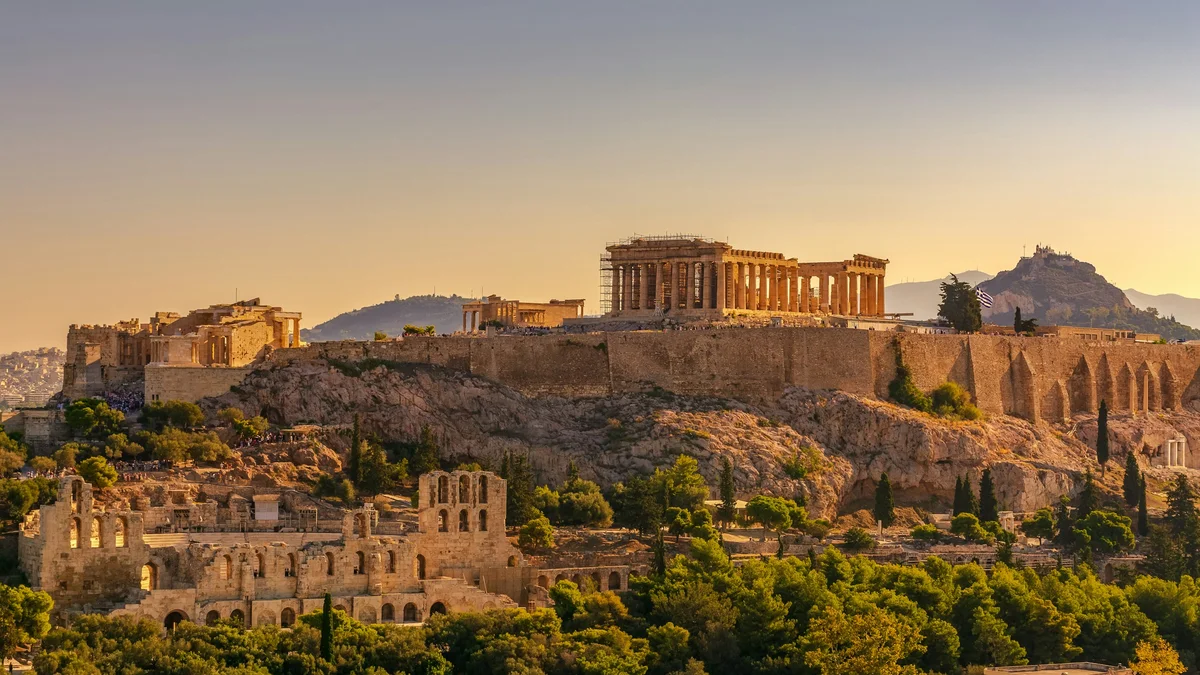
Voyzo runs 47 tours across 1 destination in Greece, covering 14 attractions. A private tour means your own guide, driver, and vehicle and an itinerary built around your group rather than a fixed bus schedule.
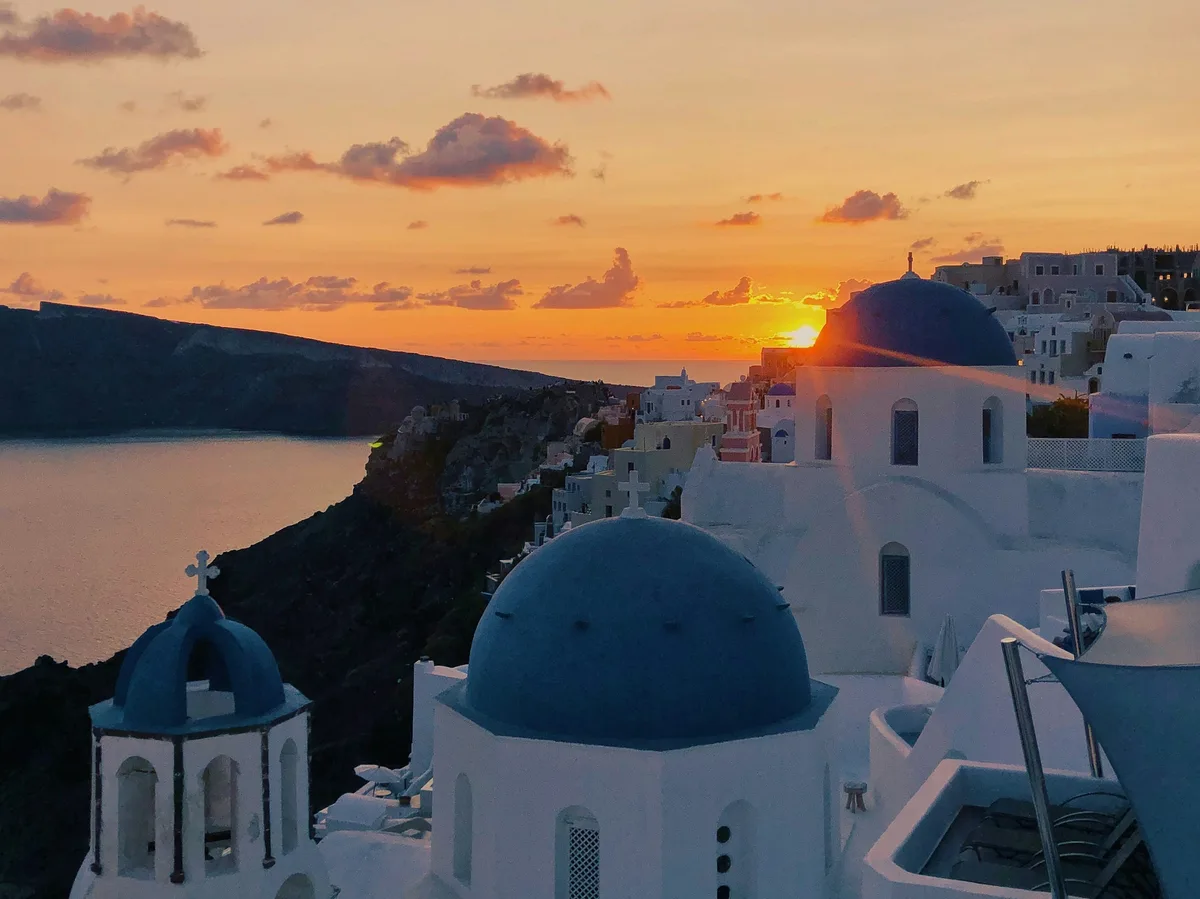 Multi-Day Tours Popular Pick
A 10-day island-hopping circuit from Athens through Mykonos, Delos, Paros, Santorini, and Crete, closing with a final day back in the capital — ferries between every island, Acropolis included.
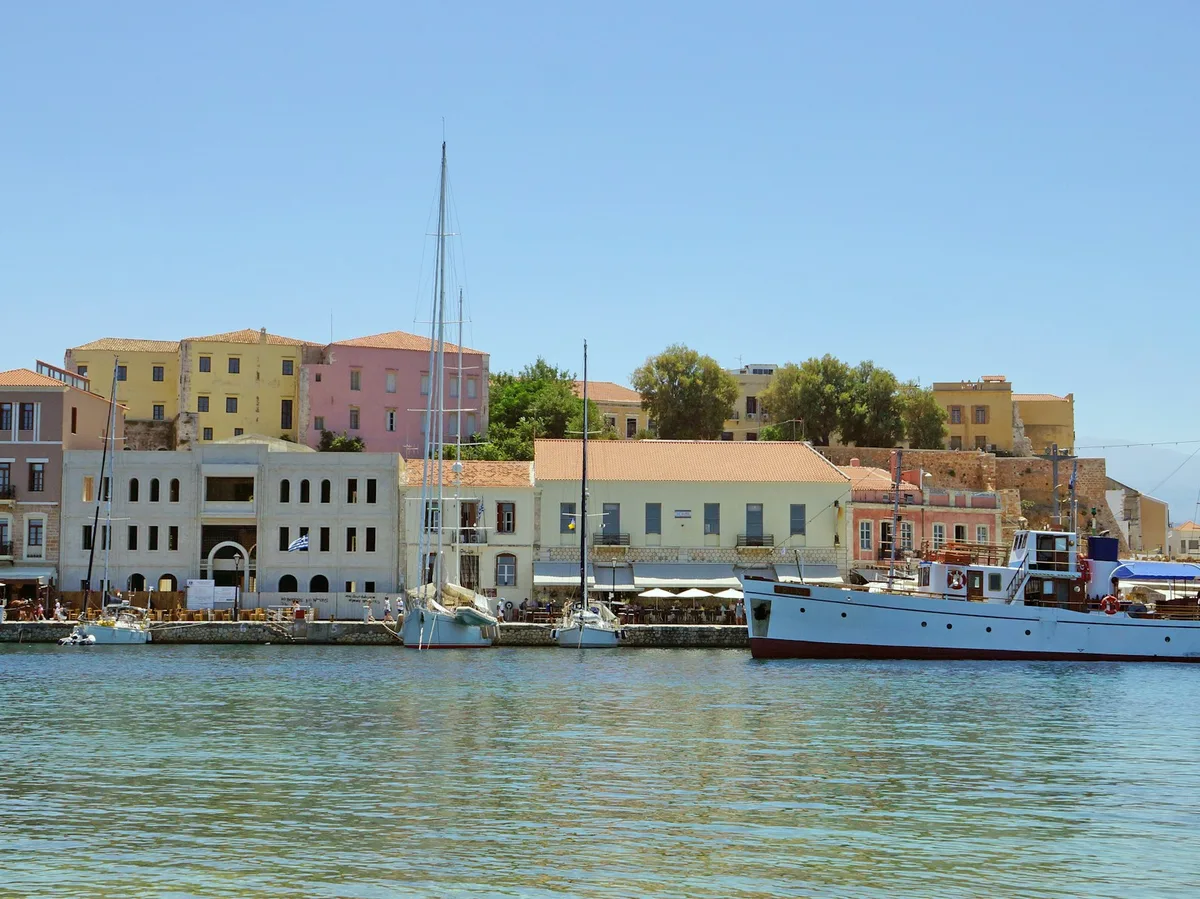 Multi-Day Tours
An 8-day loop entirely around Crete — Chania's Venetian Old Town, the Fortezza of Rethymno, the fortress island of Spinalonga, and the Palace of Knossos — never leaving the island.
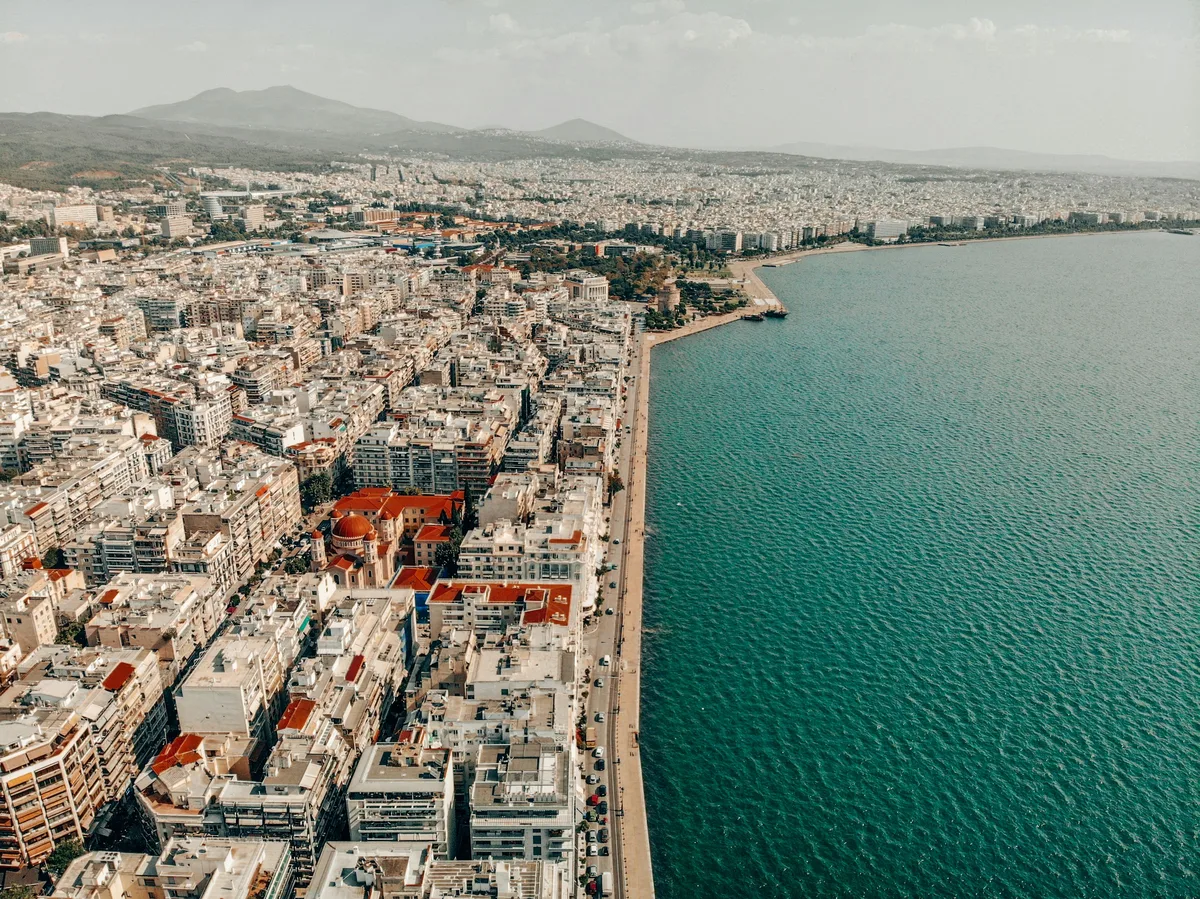 Multi-Day Tours
A 7-day loop out of Thessaloniki through Kavala's fortress old town, wine tasting in Drama, and the beaches and pine forests of the Halkidiki peninsula, finishing with the royal tombs of ancient Aegae.
 Multi-Day Tours
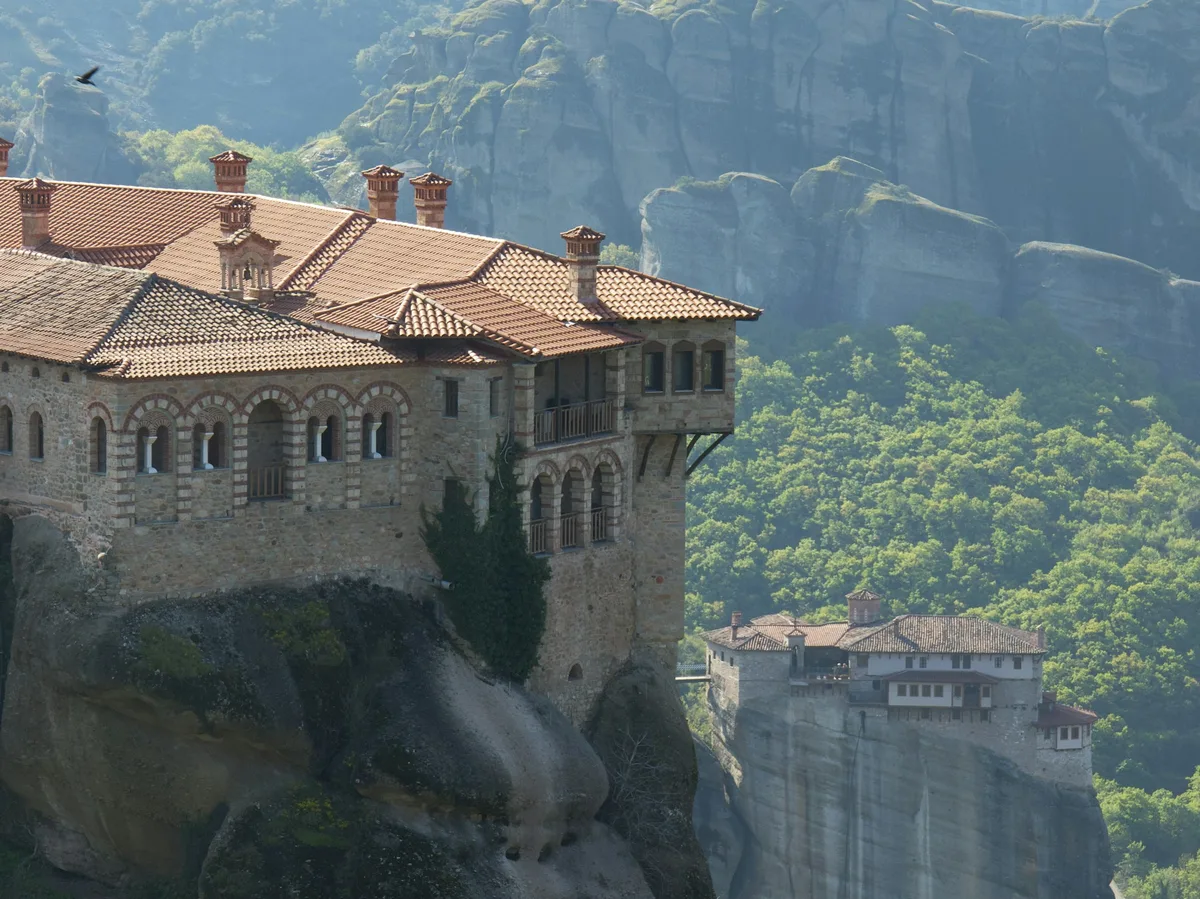
A 12-day mainland circuit from Athens through Delphi, the Meteora monasteries, the remote Zagori villages and Vikos Gorge, ancient Olympia, and the Peloponnese coast to Monemvasia and Nafplio.
 Multi-Day Tours
A comprehensive 16-day journey from Athens through Olympia, Delphi, Meteora, and Thessaloniki on the mainland, then Mykonos, Santorini, and Crete by ferry — the essential grand tour of Greece.
 Multi-Day Tours
A 10-day autumn-season circuit from Athens to Mykonos, Santorini, and Crete by high-speed ferry and domestic flight, built around the smaller shoulder-season crowds at the Acropolis and the islands.
 Multi-Day Tours
A 10-day romantic circuit from Athens — including a dinner suspended above the city — to Mykonos and Santorini, with a sailing excursion to Delos, wine tasting, and caldera views.
 Multi-Day Tours
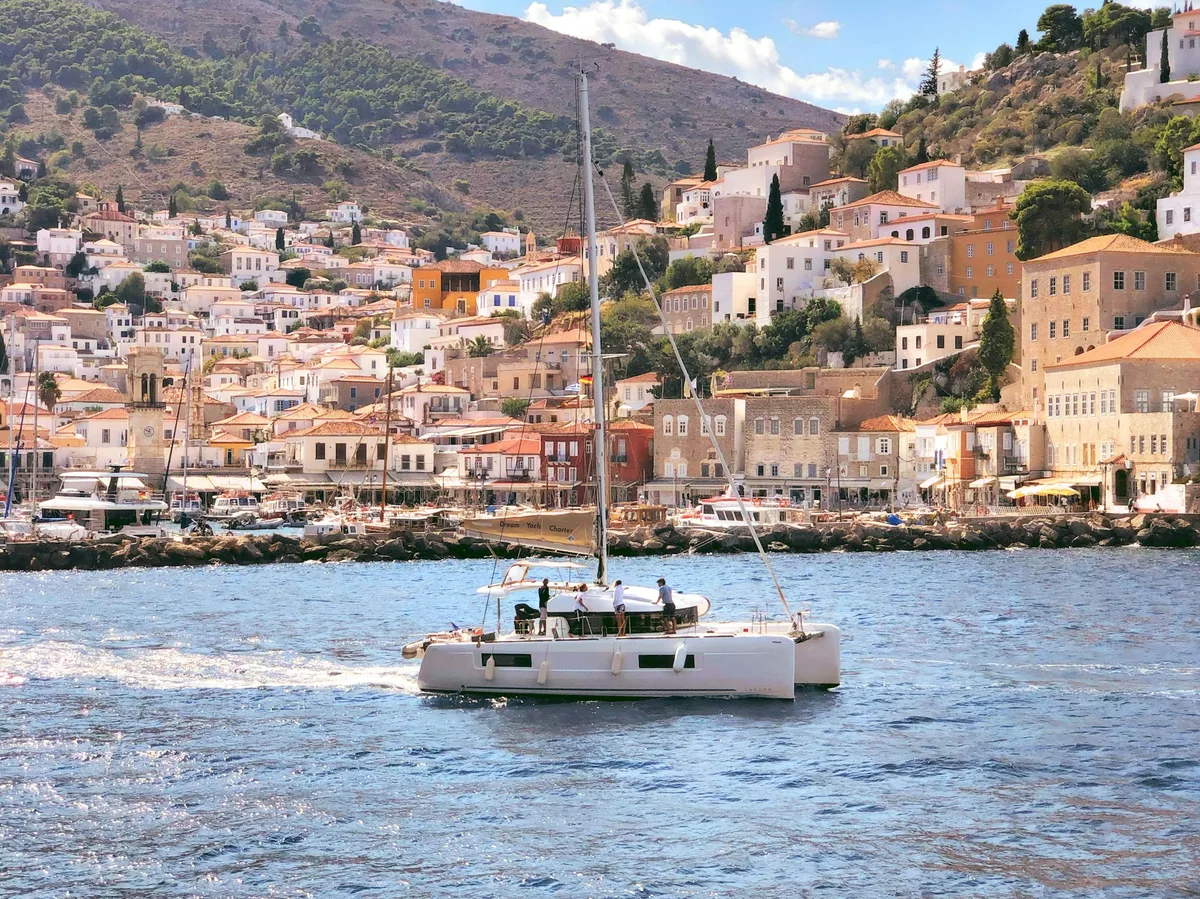
A slower-paced 8-day trip from Athens to the Saronic islands of Hydra (car-free) and Spetses (cars strictly limited) — donkey transport, captains' mansions, and quiet, uncrowded beaches.
The real stops Voyzo's own itineraries are built around — tap any attraction to learn more.
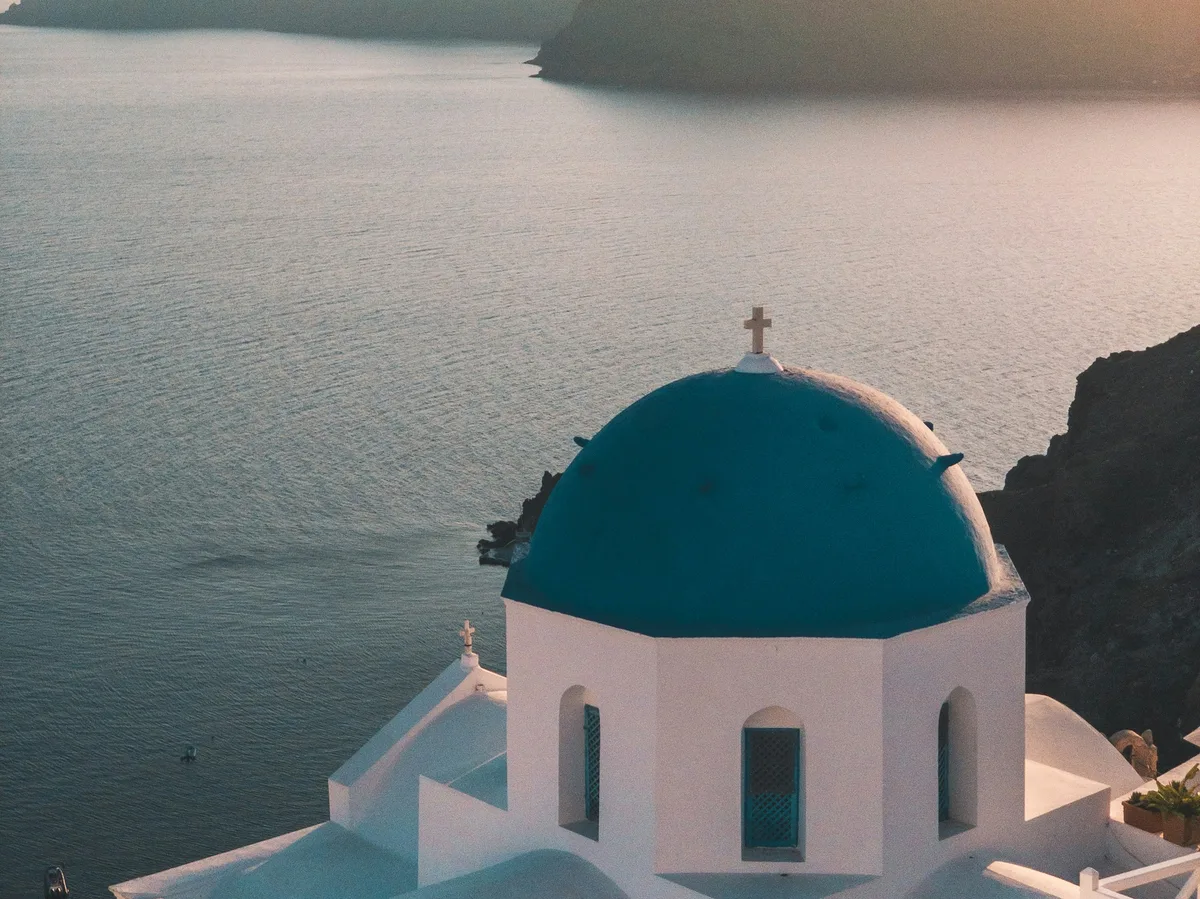
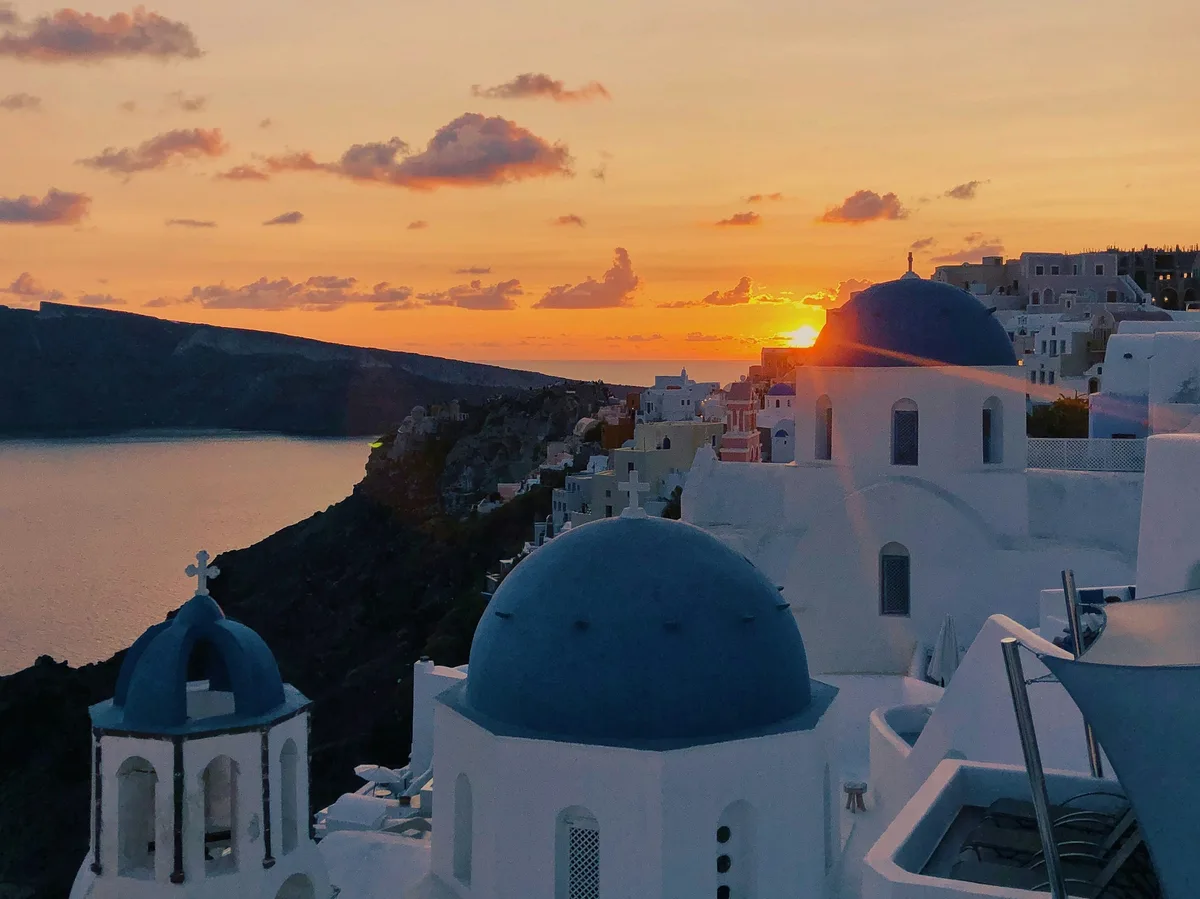 Santorini Caldera & Oia
Greece
The dramatic volcanic caldera of Santorini, ringed by whitewashed clifftop villages, with the village of Oia famous for its blue-domed churches and sunset views over the Aegean.
2
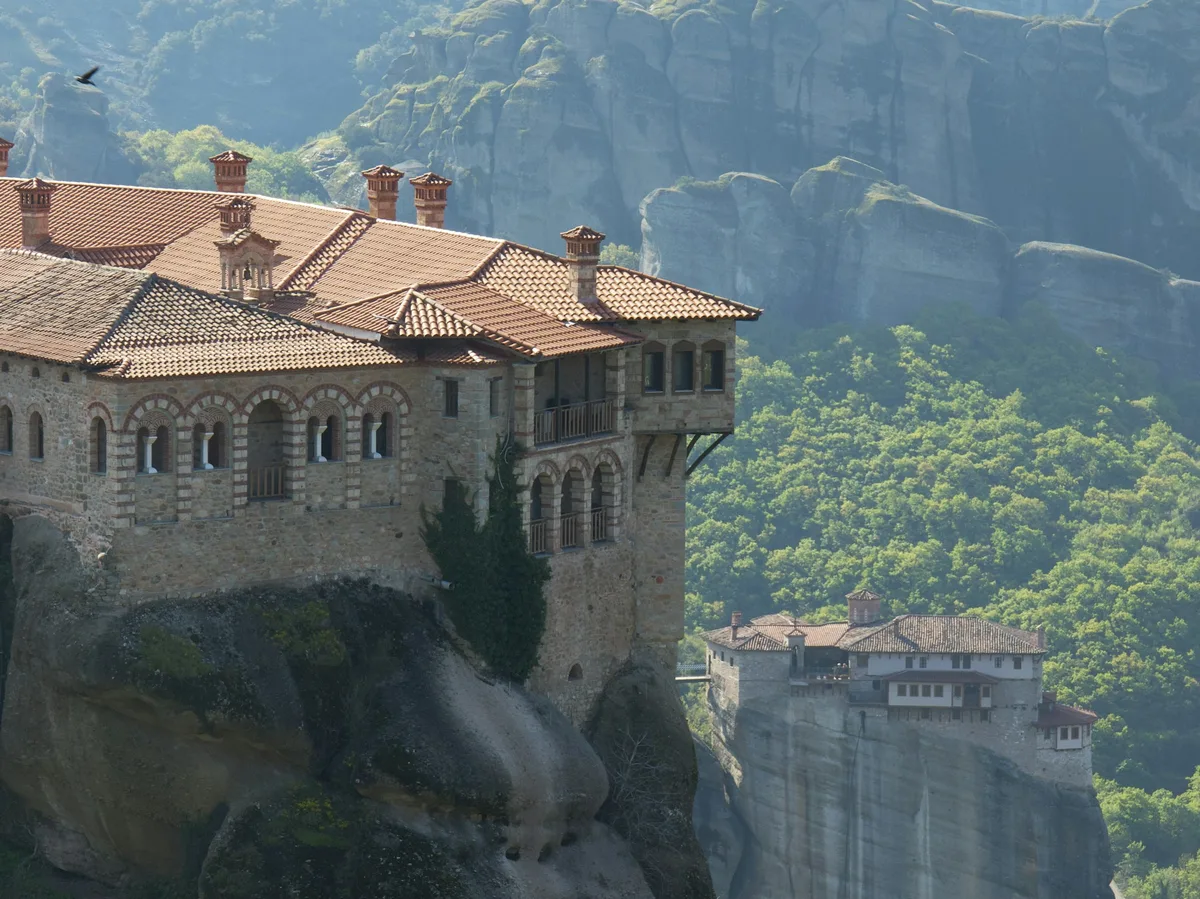 Meteora Monasteries
Greece
A UNESCO World Heritage complex of Eastern Orthodox monasteries built atop towering sandstone rock pillars in central Greece, among the country's most important monastic centers.
3
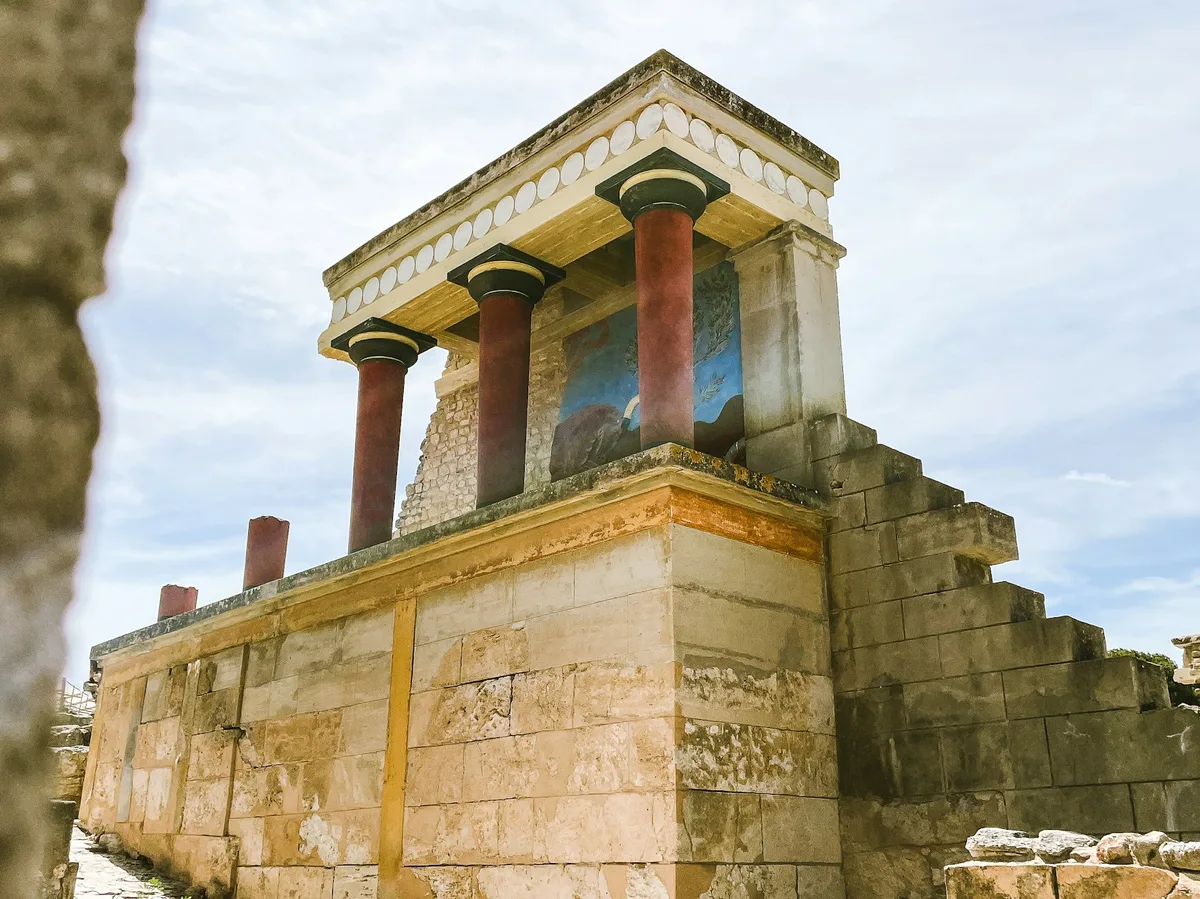 Palace of Knossos
Greece
The largest Bronze Age archaeological site on Crete, dating to around 1900 BC, once the ceremonial and political center of the Minoan civilization and linked in myth to the Minotaur.
4
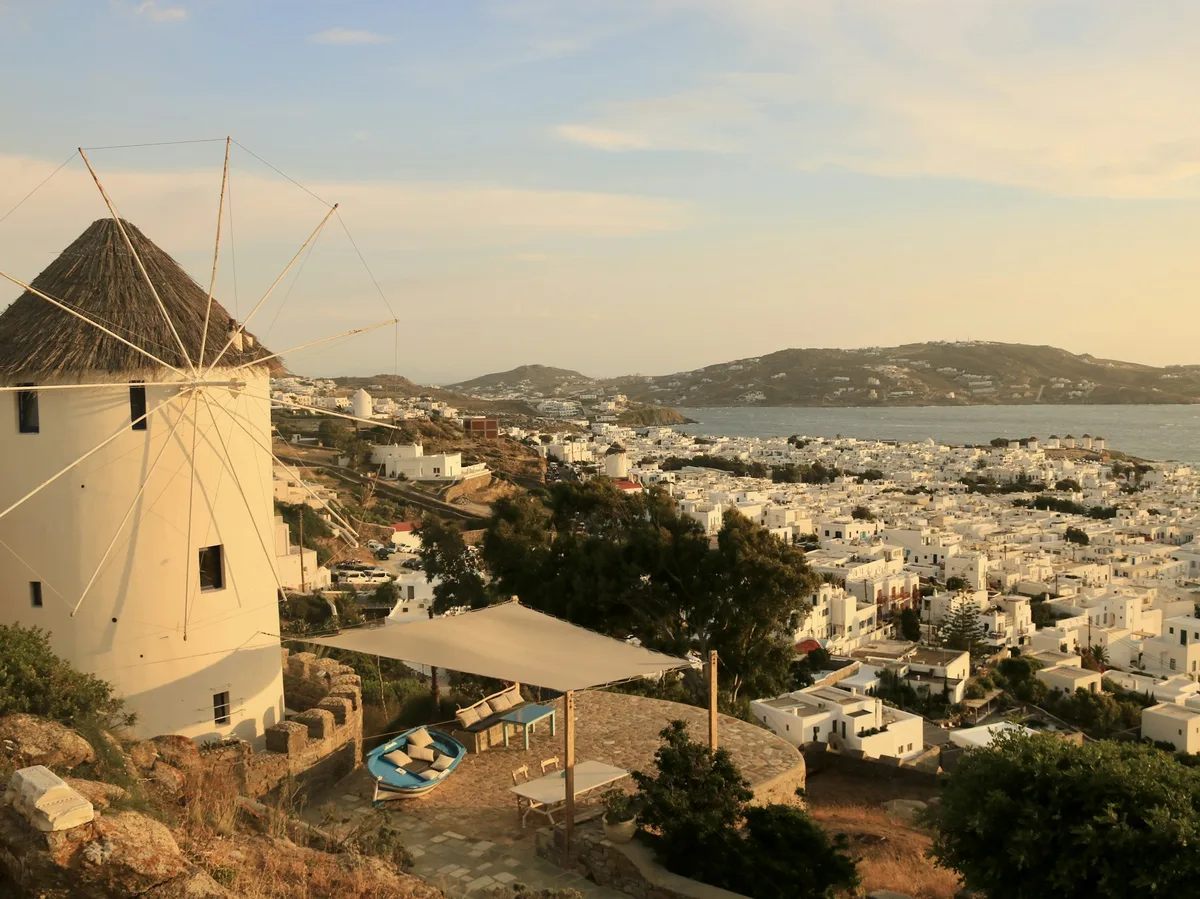
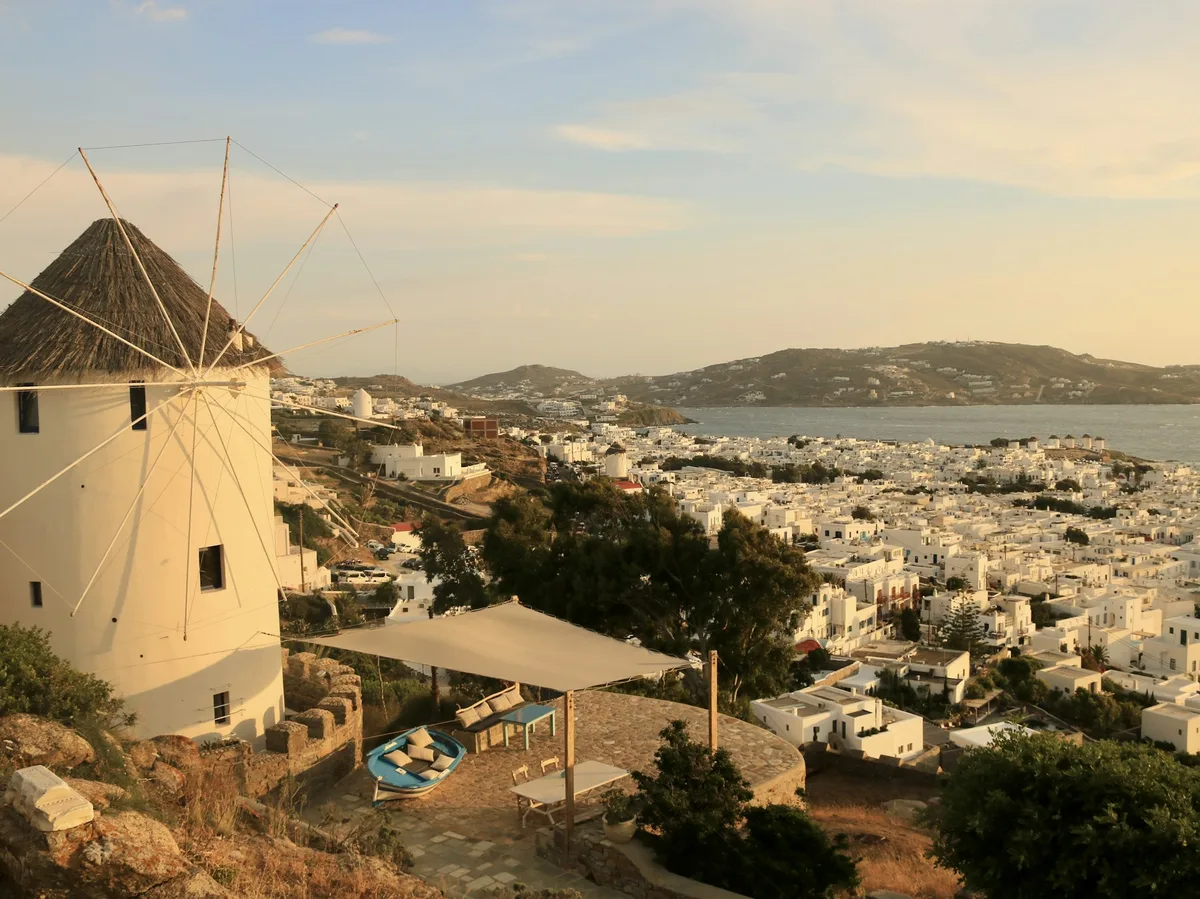 Mykonos Windmills
Greece
The row of iconic 16th-century windmills overlooking Mykonos Town's Little Venice waterfront, among the most photographed landmarks in the Greek islands.
5
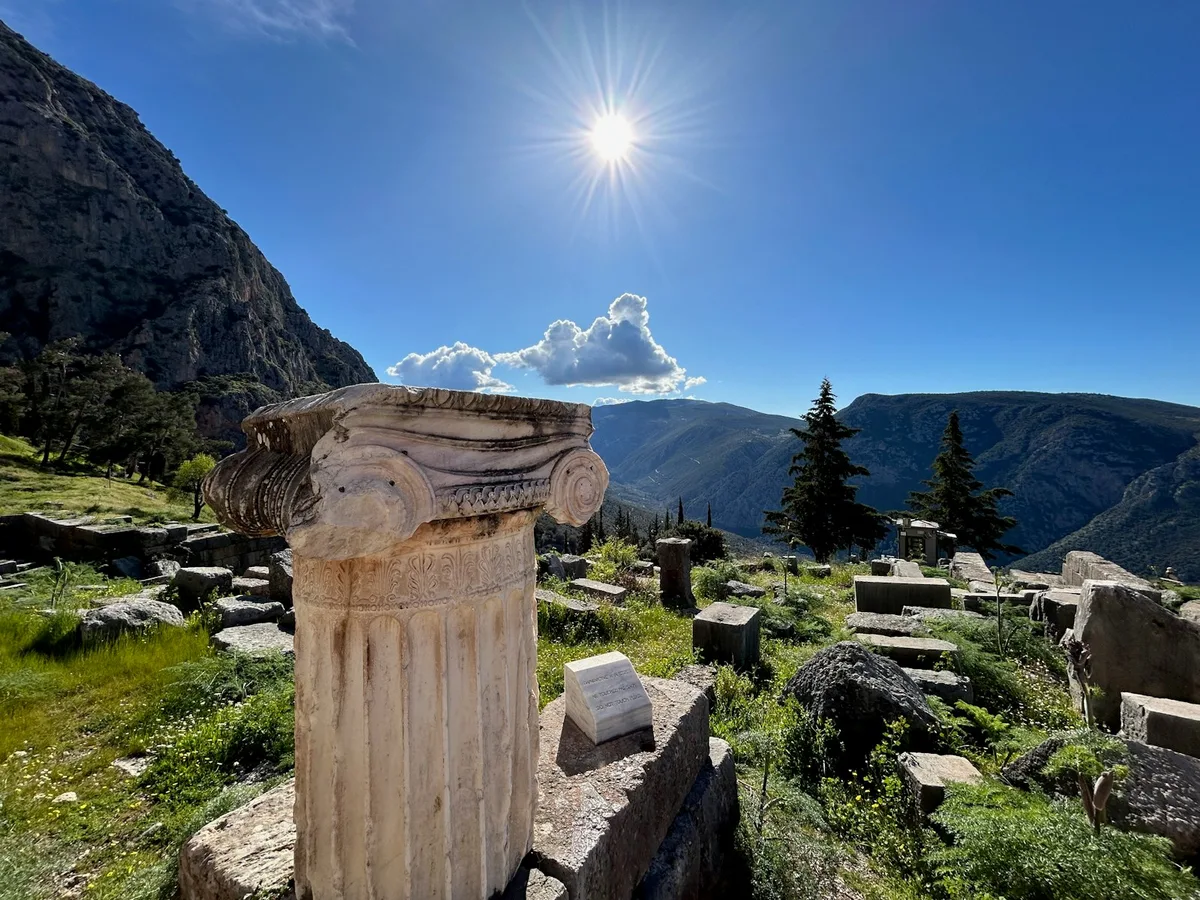 Delphi Archaeological Site
Greece
The sanctuary of Apollo on the slopes of Mount Parnassus, seat of the ancient world's most famous oracle, with the Temple of Apollo, a well-preserved theatre, and a museum of finds from the site.
6
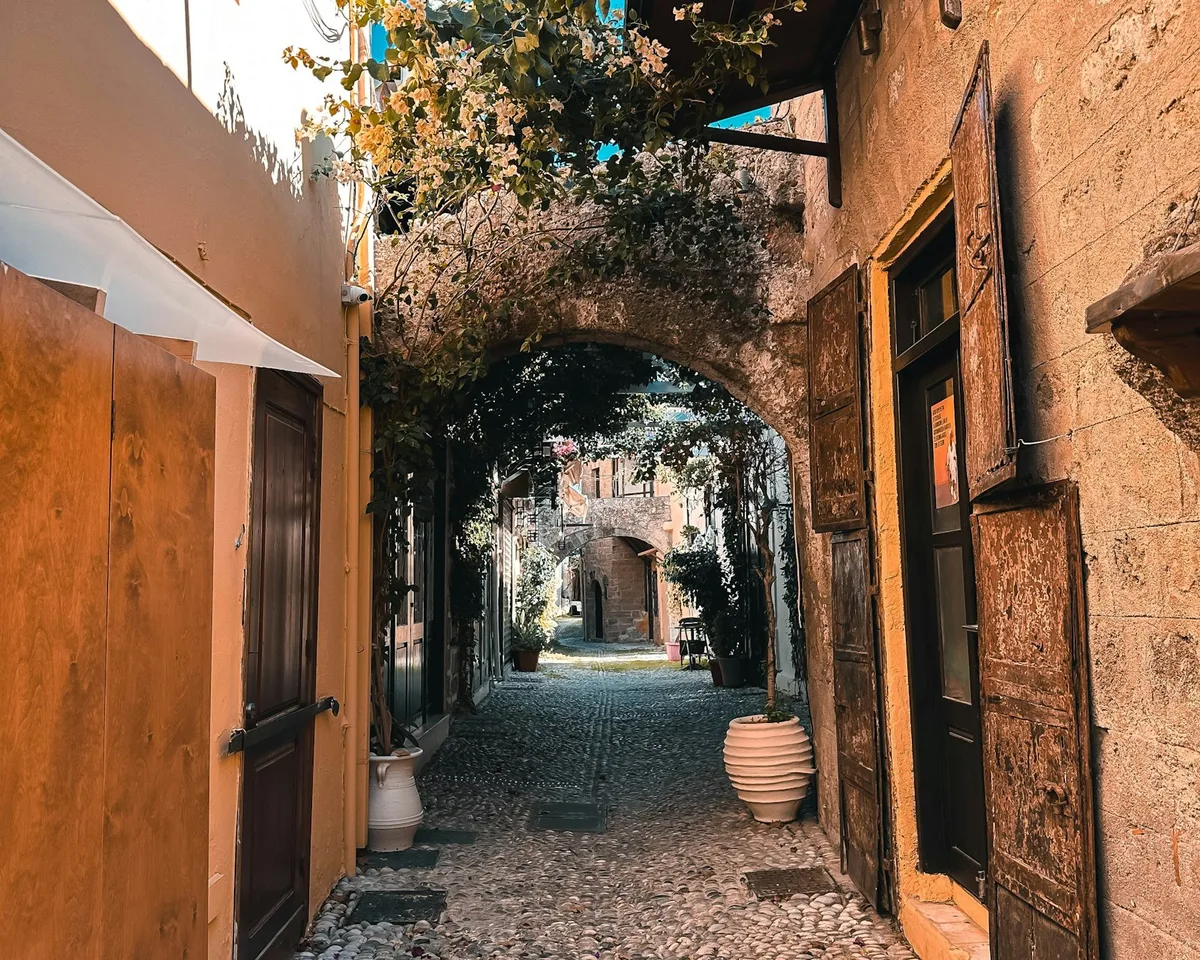 Rhodes Old Town
Greece
A walled medieval old town on the island of Rhodes, built by the Knights Hospitaller in the 14th and 15th centuries around the Street of the Knights and the Palace of the Grand Master.
7
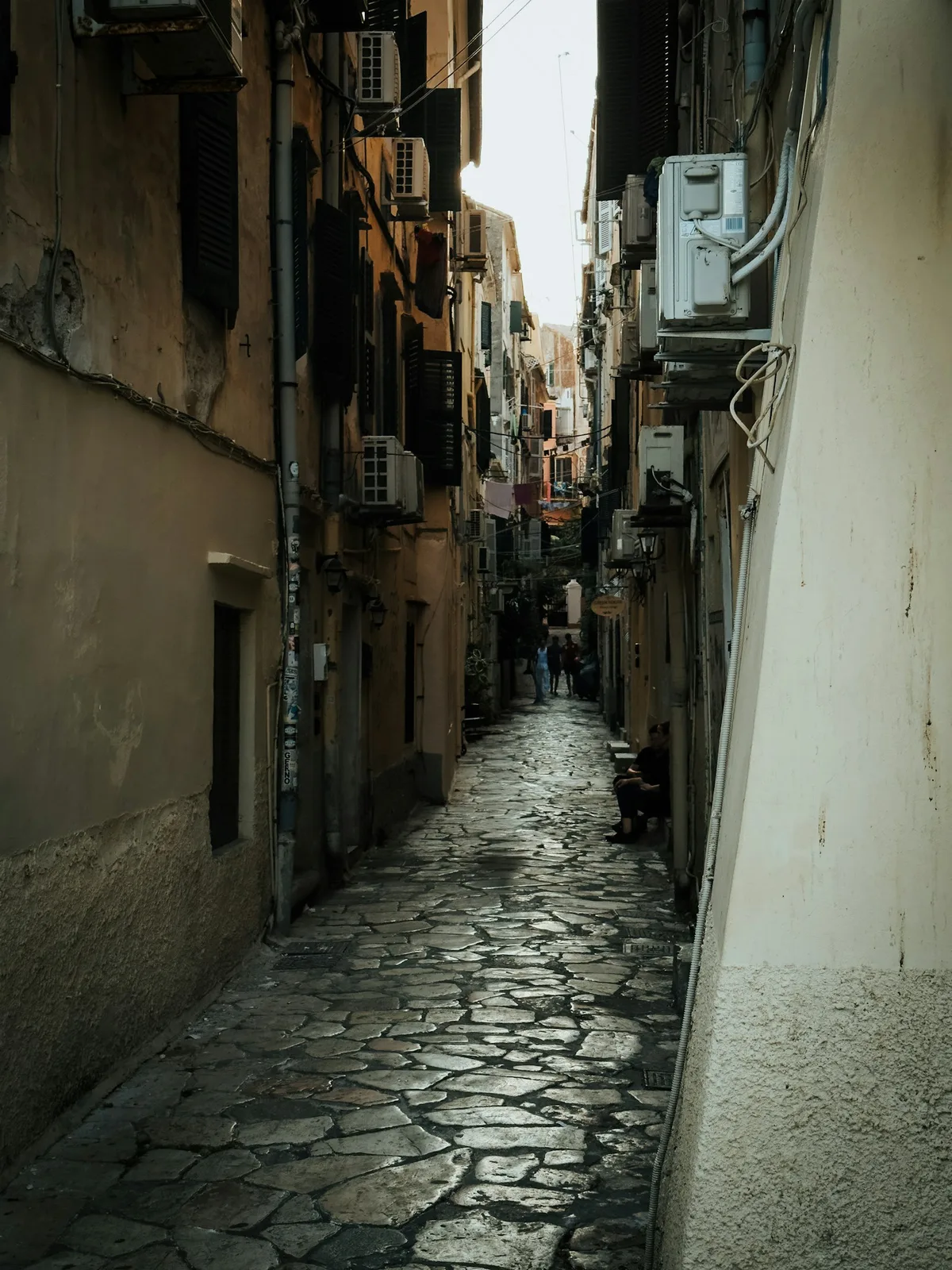 Corfu Old Town
Greece
A UNESCO-listed old town on the Ionian island of Corfu, shaped by centuries of Venetian, French, and British rule, with narrow lanes, two Venetian fortresses, and the wide Liston esplanade.
8
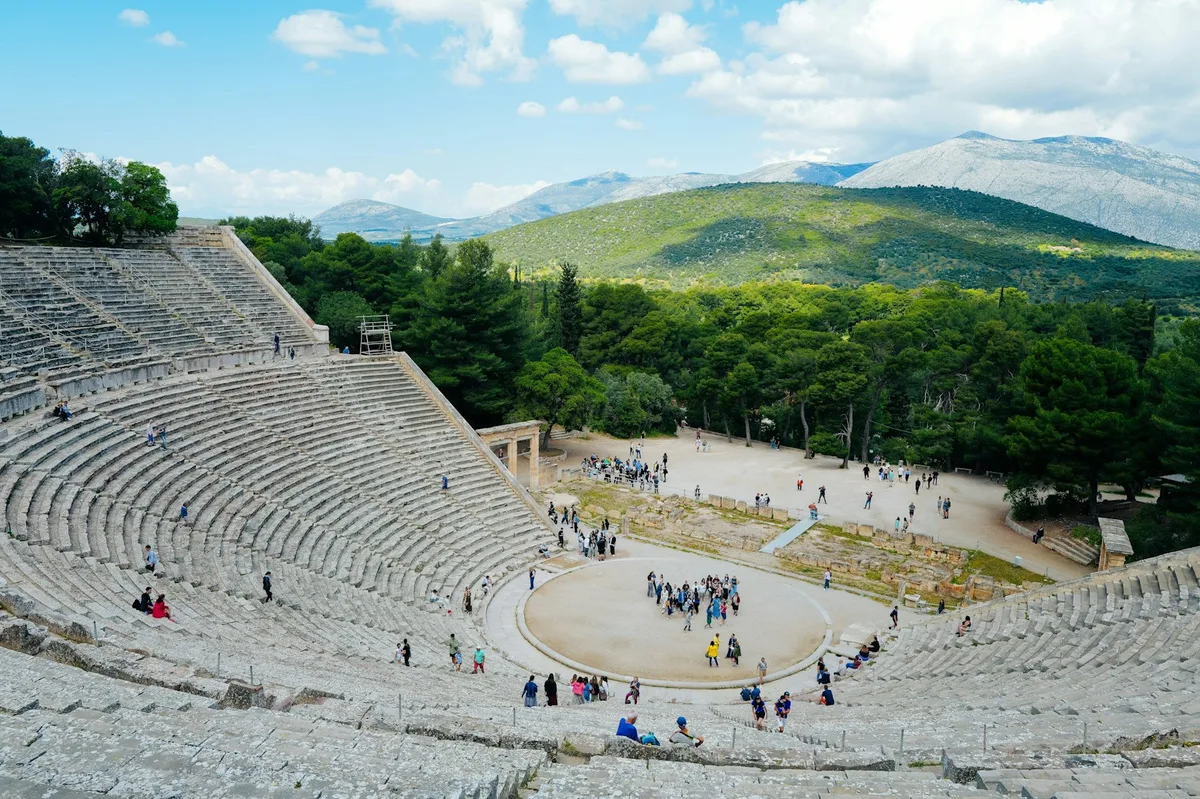 Ancient Theatre of Epidaurus
Greece
A 4th-century BC theatre in the Peloponnese famed for its near-perfect acoustics, still used for performances today and considered one of the best-preserved ancient Greek theatres.
9
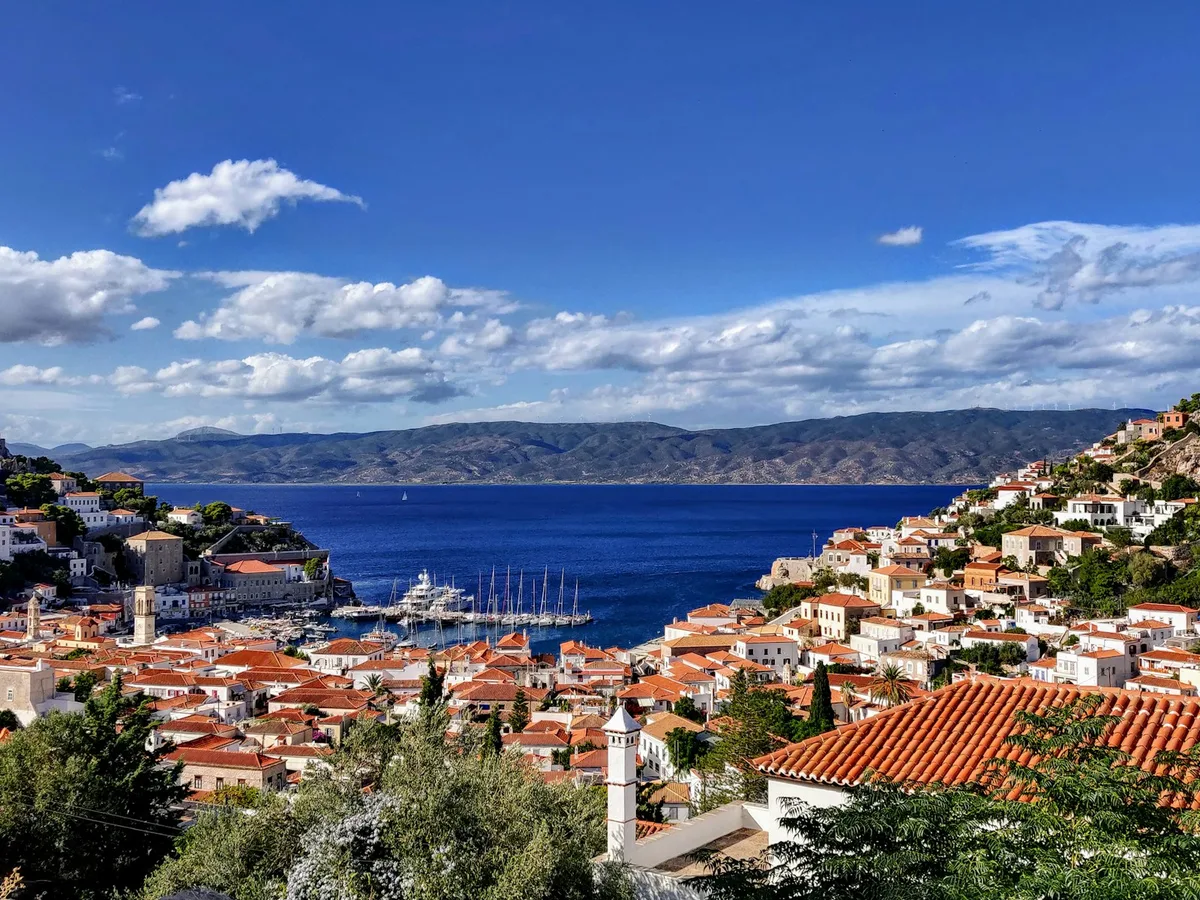 Hydra Island
Greece
A car-free Saronic island about 1 hour 20 minutes by hydrofoil or catamaran from Piraeus, where donkeys and water taxis do the work cars would elsewhere, and stone mansions climb the hillside above a small stone harbor.
10
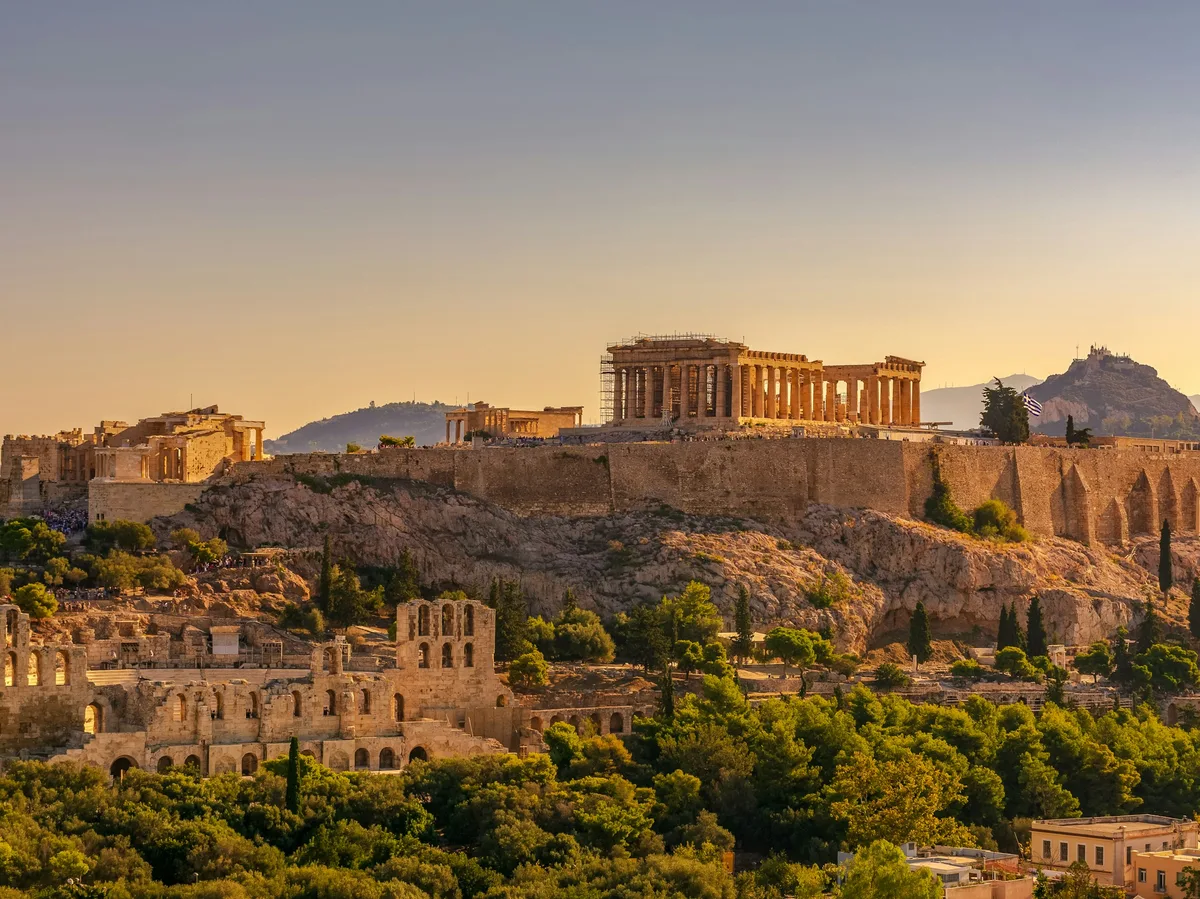
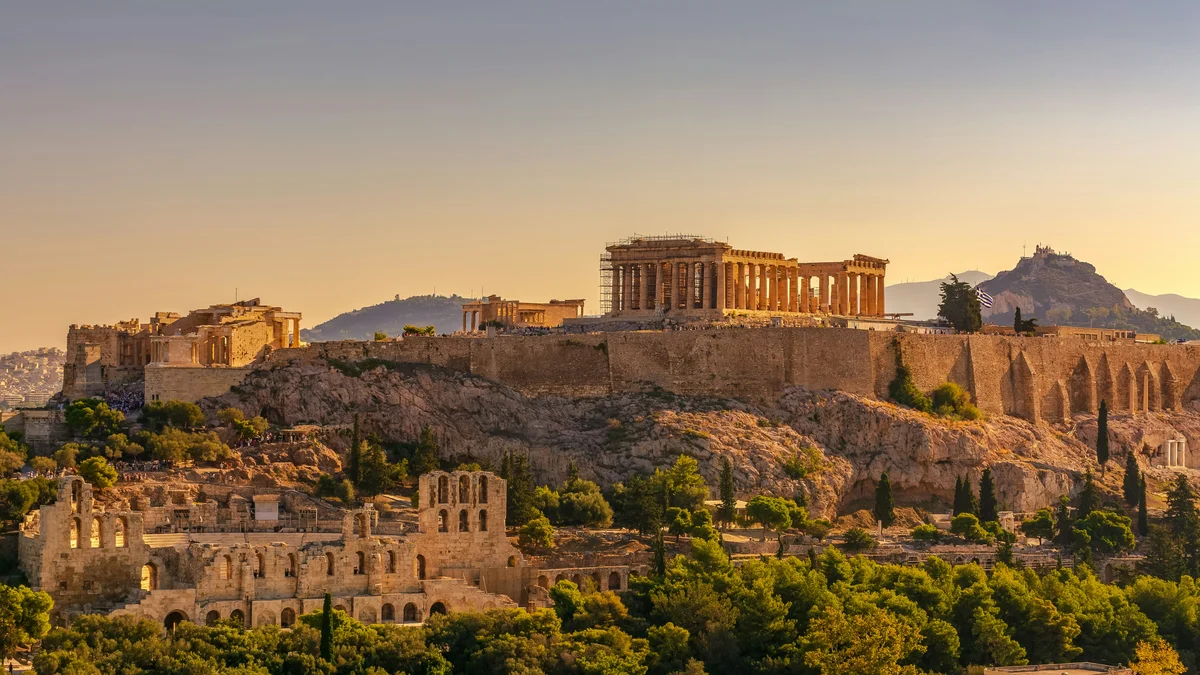 The Acropolis
Athens
The Acropolis is the ancient citadel crowning central Athens, home to the Parthenon and among the most significant surviving monuments of classical Greek civilization. Built in the 5th century BC under the statesman Pericles, its temples were dedicated to the goddess Athena, the city's patron. Visiting early in the morning is the best way to beat both the crowds and the midday heat on the shadeless marble summit.
11
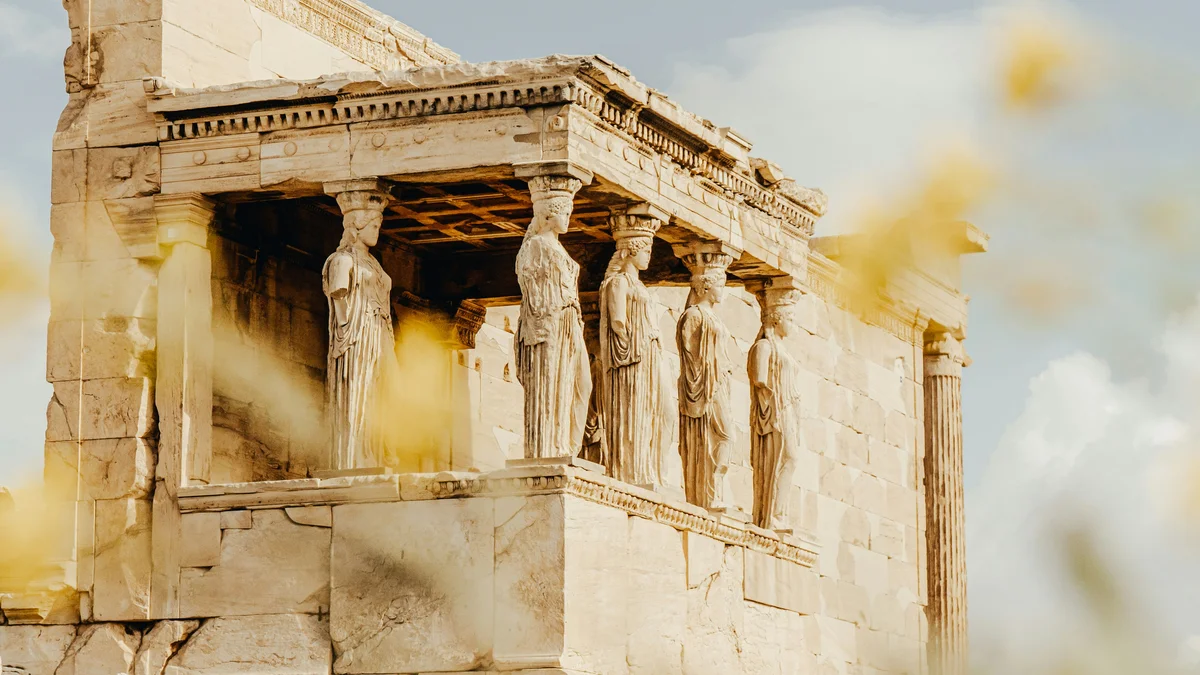 Acropolis Museum
Athens
The Acropolis Museum, opened in 2009 at the foot of the Acropolis, displays artifacts recovered from the site, including original sculptures from the Parthenon frieze and the surviving Caryatids from the Erechtheion. Its top floor is set at an angle to match the orientation of the Parthenon, so visitors can see how the frieze originally wrapped around the temple. Glass floor sections let you look down onto the excavated remains of an ancient Athenian neighbourhood beneath the museum itself.
12
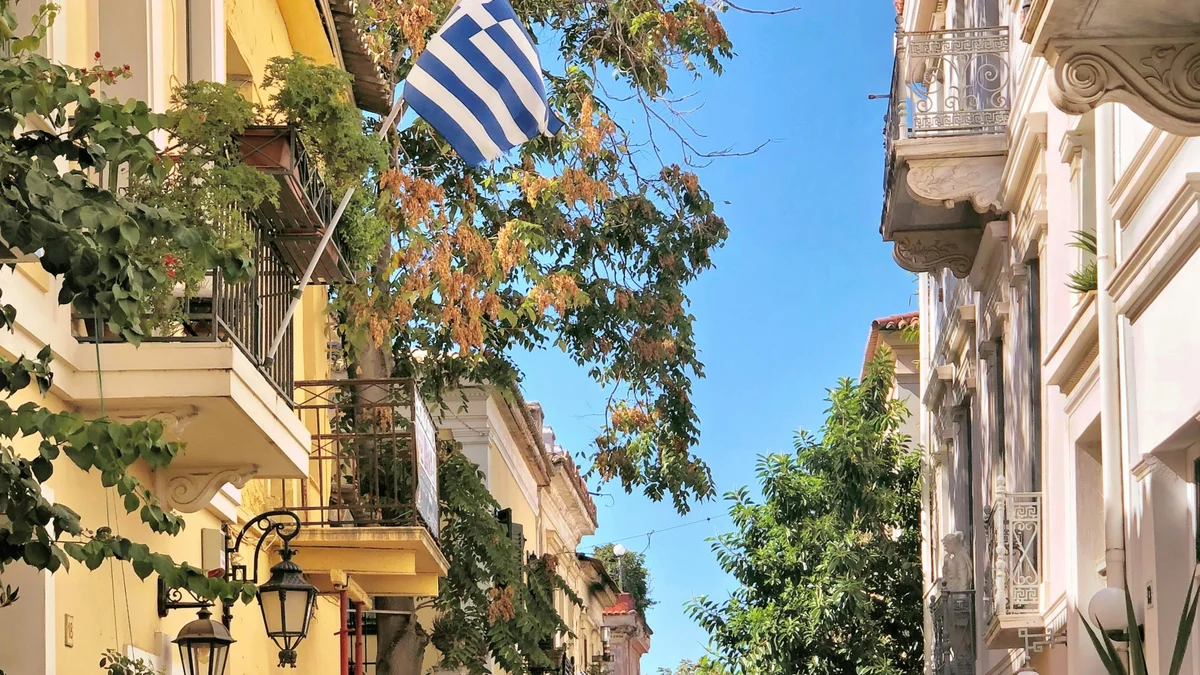 Plaka
Athens
Plaka is Athens' oldest continuously inhabited neighborhood, a maze of narrow, pedestrian-friendly lanes and neoclassical houses tucked directly beneath the Acropolis. Its layout still traces the footprint of the ancient city, and small squares open up unexpectedly between tavernas, jewelry shops, and Byzantine-era churches. It's an easy, walkable way to experience old Athens between visits to the major ancient sites nearby.
May–June and September–October bring warm weather without peak-summer crowds or heat. July–August is hottest and busiest, especially on the islands.
Athens and the mainland connect by road. Moving between islands — Santorini, Mykonos, Crete, Rhodes, and others — is done by ferry or short domestic flight, which is routine for Greek travel rather than unusual.
A Mediterranean climate with hot, dry summers (often 30°C+/86°F+ on the islands) and milder, wetter winters. Comfortable walking shoes matter for uneven ancient sites like the Acropolis, Delphi, and Mycenae.
Greece uses the euro. Rounding up the bill or leaving roughly 5–10% at restaurants is appreciated but not obligatory.
The Acropolis and other major ancient sites get crowded and hot by midmorning — an early start makes a real difference, both for comfort and for photos without crowds.
Greece is in the Schengen Area, and many nationalities (including US, Canadian, UK, and Australian passport holders) don't need a visa for short tourist stays — check current requirements for your own passport before booking.
Greece occupies the southern tip of the Balkan Peninsula plus thousands of islands scattered across the Aegean and Ionian seas — only around 200 of which are inhabited. It's home to roughly 10 million people, with Athens as its capital, Greek as the official language, and the euro as its currency since 2001; as an EU and NATO member with a Mediterranean climate, it draws visitors for both ancient history and island life in roughly equal measure.
Voyzo's Greece coverage spans both. On the mainland, routes run from Athens through Delphi's oracle site, the cliffside monasteries of Meteora, the Peloponnese's ancient theatres and ruins at Olympia and Mycenae, and the lesser-visited mountain villages of Epirus and Zagori. Island routes island-hop by ferry or short domestic flight between Mykonos, Santorini, Crete, Rhodes, Kos, Corfu, and the car-free Saronic islands of Hydra and Spetses, each with a confirmed hotel wherever the group is sleeping that night.
Island-hopping between Athens and two or more islands is standard practice for Greek travel, not a border crossing, since every stop stays within Greece. A couple of Voyzo's private mainland routes were adapted from self-drive itineraries and are run instead with a private driver and vehicle for the whole trip.
Tell us your group size and dates — we'll take care of the rest.