TorontoOntario · 36 tours
 Niagara FallsOntario · 25 tours
 New York CityNew York · 30 tours
 Las VegasNevada · 8 tours
 San FranciscoCalifornia · 16 tours
 VancouverBritish Columbia · 17 tours
 DubaiUAE · 54 tours
 Abu DhabiUAE · 5 tours
 Buenos AiresArgentina · 23 tours
 AthensGreece · 31 tours
 AucklandNew Zealand · 38 tours
 CancunMexico · 54 tours
No destinations match “”. Try searching all tours instead — that search understands full questions, not just place names.
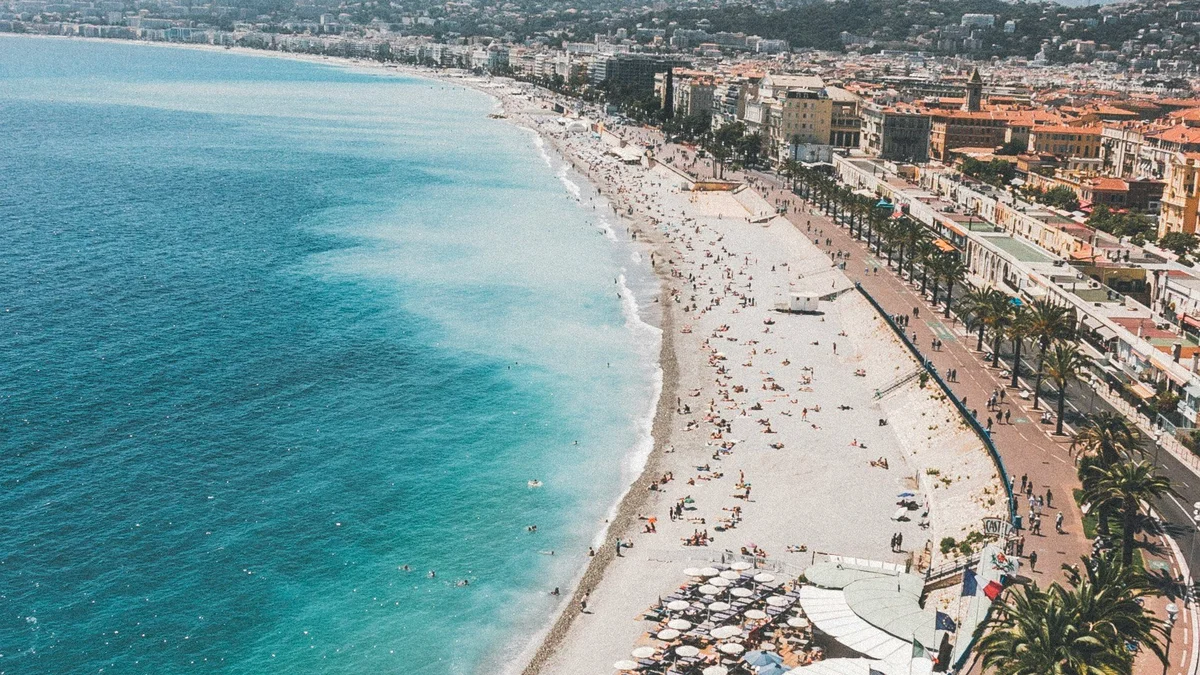
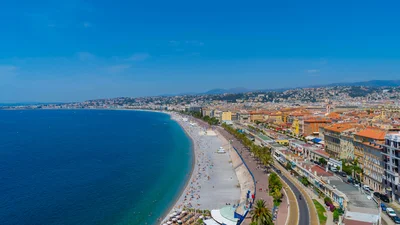
Nice's famous seafront walkway takes its name, meaning 'Promenade of the English,' from the wealthy British winter visitors who funded its earliest construction in the 1820s. It now stretches roughly four miles along the curve of the Baie des Anges, lined with Belle Époque hotels like the Negresco and rows of palm trees, backed by the pebble beaches that define Nice's coastline. The promenade remains the city's most iconic public space for walking, cycling, and simply taking in the Mediterranean.
Visitor guide
The Promenade des Anglais (literally the Walkway of the English) is a seafront promenade along the Mediterranean coast of Nice, France. It runs for approximately 7 kilometres from Nice Cote d'Azur Airport in the west to the Quai des Etats-Unis in the east and forms part of Route nationale 98, which runs between Toulon and Menton.
From the second half of the 18th century, English aristocrats took to spending winters in Nice, drawn by its mild climate and coastal views. According to Wikipedia, in the early 1820s a particularly harsh winter further north brought an influx of poor people to the city, and members of the English community proposed that they be employed building a walkway along the sea. The work was funded by the Reverend Lewis Way and members of Holy Trinity, the Anglican church in Nice.
The city of Nice, interested in the idea of a pleasant promenade, greatly expanded the scope of the work. The Nicois at first called it the Camin deis Angles, the English Way, in their local dialect. After France annexed Nice in 1860 the name was translated into French; the city museum dates the official name Promenade des Anglais to a council decision of 1844, so sources differ. Wikipedia's article on Nice adds that the main promenade was inaugurated after refurbishment in 1931 by Prince Arthur, Duke of Connaught, and that its name owes much to the English visitors who wintered there, including Queen Victoria and her son Edward VII.
Locals simply call it the Promenade or La Prom. It is popular with cyclists, families with strollers, skateboarders and in-line skaters, especially on Sundays. A broad pavement, the bay of Nice and the long line of the shore make it a natural place for walks at any time of day. The seafront sets the tone for the city's Riviera image and is closely tied to the story of Nice as a winter resort for European aristocrats, which was a reason UNESCO proclaimed Nice a World Heritage Site in 2021, according to Wikipedia.
The promenade has also hosted major cycling events. It was the site of the team time trial in the 2013 Tour de France on 2 July 2013, a start and finish location for the first two stages of the 2020 Tour de France, and, because of the Paris Olympics, the finish of the 2024 Tour de France, which usually ends on the Champs-Elysees.
The promenade is best appreciated on foot or by bicycle, strolling between the old town end and the western districts, with the sea on one side and a mix of grand hotels and apartment buildings on the other. It sits close to Place Massena and the old town, so a private tour with a driver can combine it with other central Nice sights, and with the Riviera villages and Monaco along the coast to the east.
See every tour and attraction we cover in Nice.