TorontoOntario · 36 tours
 Niagara FallsOntario · 25 tours
 New York CityNew York · 30 tours
 Las VegasNevada · 8 tours
 San FranciscoCalifornia · 16 tours
 VancouverBritish Columbia · 17 tours
 DubaiUAE · 54 tours
 Abu DhabiUAE · 5 tours
 Buenos AiresArgentina · 23 tours
 AthensGreece · 31 tours
 AucklandNew Zealand · 38 tours
 CancunMexico · 54 tours
No destinations match “”. Try searching all tours instead — that search understands full questions, not just place names.
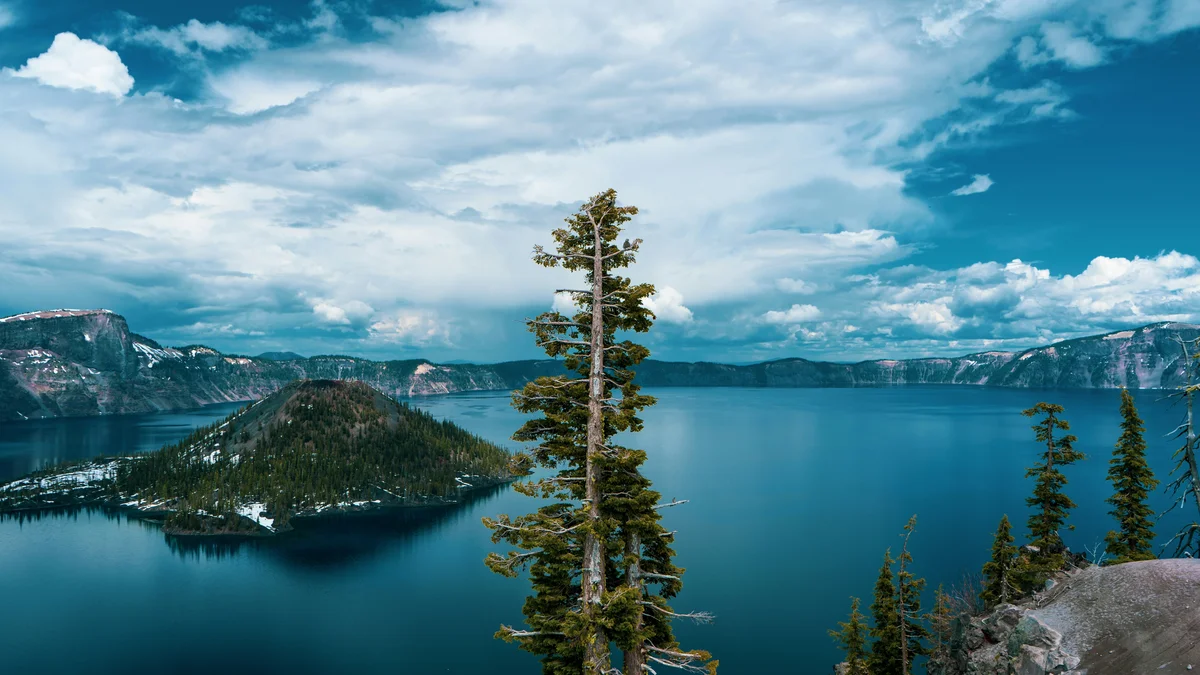
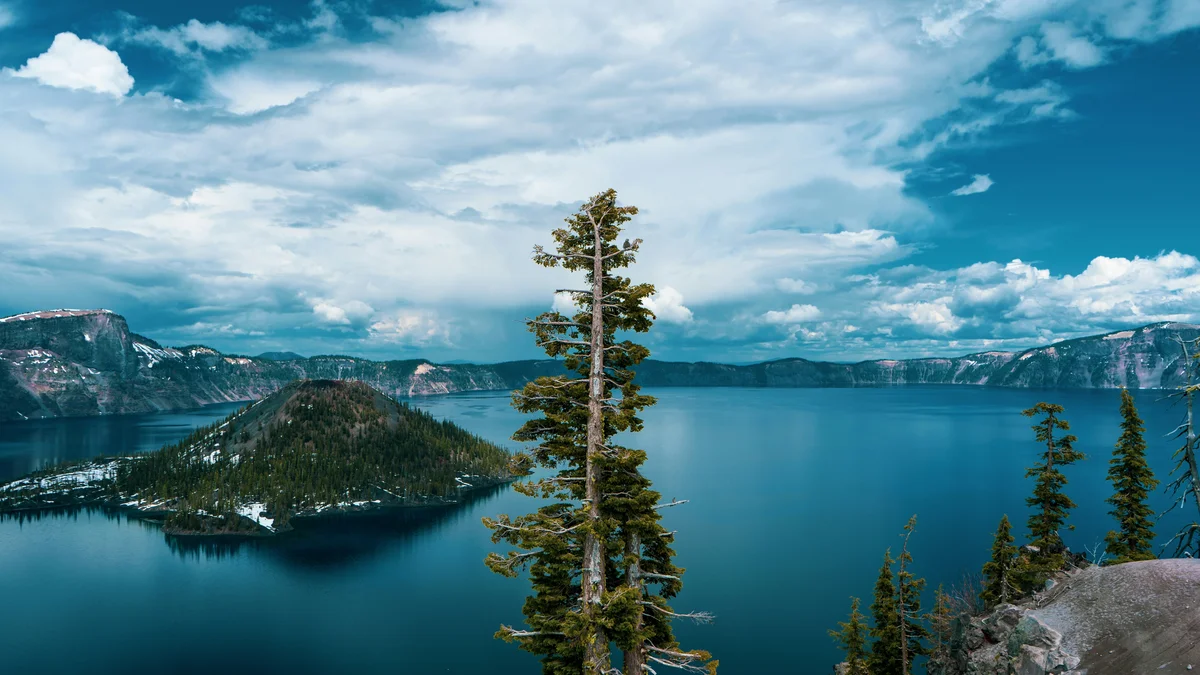
Rim Drive is a real 33-mile scenic road that circles the entire caldera of Crater Lake, the deepest lake in the United States at nearly 1,950 feet. The route passes about 30 overlooks, including Phantom Ship, a small rocky island resembling a ghostly sailing vessel, and Watchman Overlook, one of the most popular viewpoints for sunset. Heavy snowfall closes most of the drive for much of the year, typically fully open only from around July through October.
Visitor guide
Rim Drive is the 33-mile (53 km) scenic loop that circles the caldera of Crater Lake in Crater Lake National Park, Oregon. Built in its present form in the 1930s by the Bureau of Public Roads and the National Park Service with federal work relief funding, it is listed on the National Register of Historic Places as the Rim Drive Historic District (2008). It is the standard way to see the lake from a series of different vantage points.
Crater Lake fills a caldera formed about 7,700 years ago when the volcano now called Mount Mazama collapsed after a major eruption. William Gladstone Steel, who took part in a U.S. Geological Survey trip led by Clarence Dutton in 1886, named landmarks such as Wizard Island and Llao Rock and then campaigned for park status; President Theodore Roosevelt signed the bill creating the park on May 22, 1902. By 1905 a steep, winding road reached the rim.
In 1913 Congress funded the U.S. Army Corps of Engineers to build a loop road. The original 12-foot-wide road was finished in 1919, when the Park Service took over maintenance, but its grades reached 10 percent and an upgrade was needed soon after. The new route was surveyed and graded in 1931-1932, the foundation built up in 1933-1934, and initial paving completed in 1935, after which the old roadbed was removed and the landscape restored. Drainage, stone guardrails, and observation points were completed by 1941, and the project cost about $2 million. Designers credited include John Sargent and Francis Lange.
The modern road is 18 feet wide with 3-foot shoulders and has gentle curves rather than switchbacks, despite the terrain. Rustic stone guardrails line curves, drainage channels, and most viewpoints; the aim was to blend the road into the landscape. The American Automobile Association has named it one of the ten most beautiful roads in the United States.
The Park Service counts about 30 overlooks, built between 1931 and 1938, and notes that some have exhibits while most carry no names. Wikipedia lists eight main viewing areas: Pumice Point, Skell Head, Cloudcap, and Kerr Notch beside the road, and Sinnott Memorial, Discovery Point, Watchman Lookout, and Merriam Point reached by short walks. Elevation along the loop runs from roughly 6,500 feet to almost 7,900 feet at Cloudcap.
On the east side Cleetwood Cove is the start of the only trail down to the water. At the southern end the drive passes Vidae Falls, a cascade of about 100 feet with a picnic area, and the Castle Crest Wildflower Garden. The trailheads for Watchman Peak and Mount Scott are also reached from the drive, and Wizard Island is seen from several overlooks.
Crater Lake receives very heavy snow, averaging about 41 feet (roughly 490 inches) a year, according to the National Park Service, so sections of Rim Drive are open only in summer and can close or reopen with conditions. Check the National Park Service current-conditions page for which sections are open, along with entry requirements and any construction. Allow roughly two hours for the drive with eight or more stops, the Park Service suggests.
Rim Drive suits a private tour well: with a private vehicle and driver, the group can stop wherever the light is good without anyone needing to drive or find a space at each overlook. Pickup is door to door, and the loop can be shaped around whichever viewpoints and short walks your group wants.
See every tour and attraction we cover in Crater Lake National Park.