TorontoOntario · 36 tours
 Niagara FallsOntario · 25 tours
 New York CityNew York · 30 tours
 Las VegasNevada · 8 tours
 San FranciscoCalifornia · 16 tours
 VancouverBritish Columbia · 17 tours
 DubaiUAE · 54 tours
 Abu DhabiUAE · 5 tours
 Buenos AiresArgentina · 23 tours
 AthensGreece · 31 tours
 AucklandNew Zealand · 38 tours
 CancunMexico · 54 tours
No destinations match “”. Try searching all tours instead — that search understands full questions, not just place names.
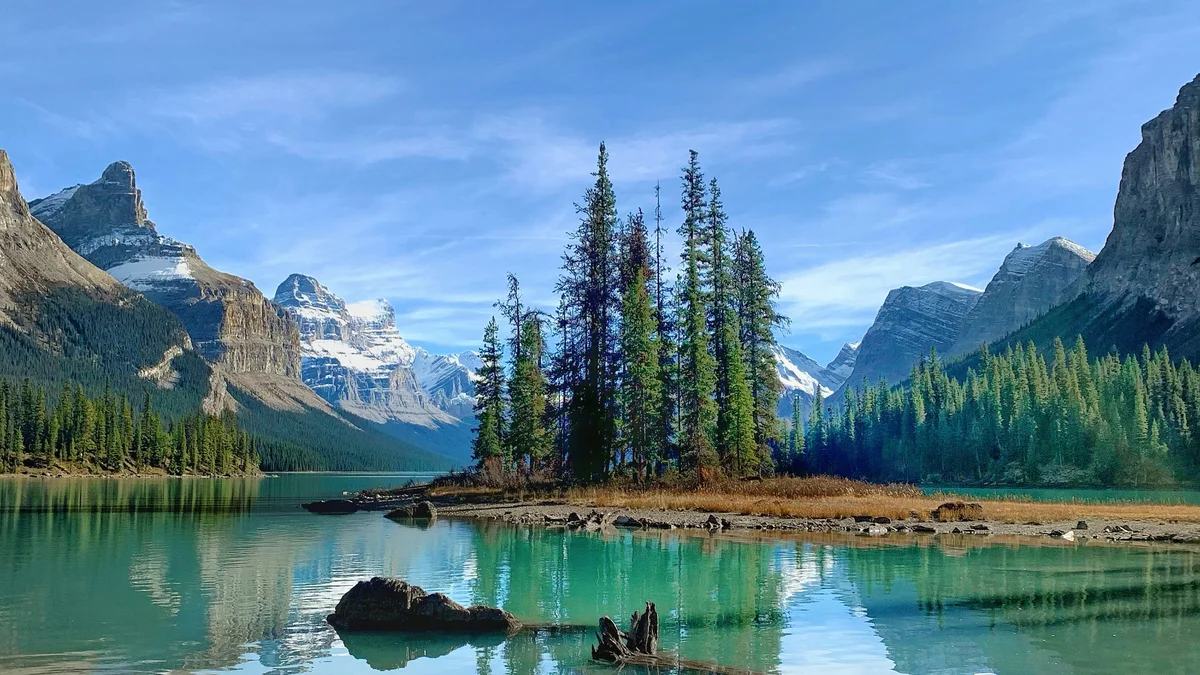
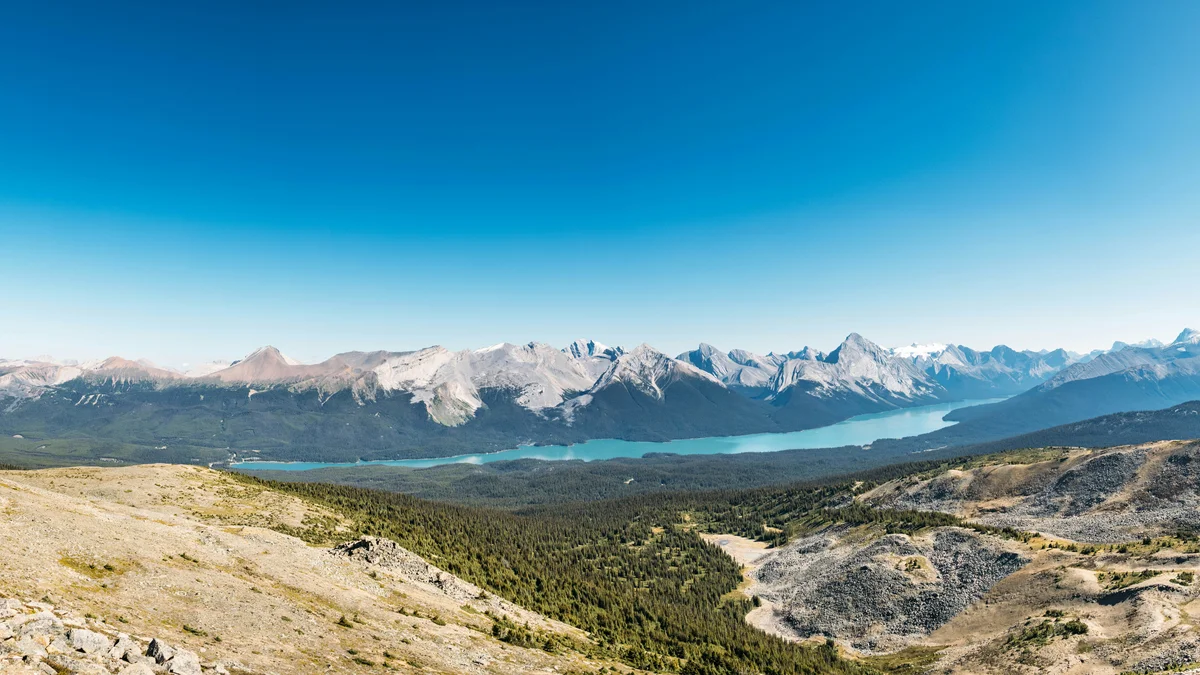
Maligne Lake is the largest natural lake in the Canadian Rockies, its turquoise water colored by fine glacial rock flour suspended from the surrounding icefields. At its far end sits Spirit Island, a small tree-covered peninsula framed by jagged peaks that has become one of the most photographed scenes in Canada, though it's reachable only by a scenic boat cruise across the lake.
Visitor guide
Maligne Lake is a long, narrow lake in Jasper National Park, about 44 km south of Jasper townsite. It is widely described as the largest natural lake in the Canadian Rockies, and Parks Canada describes it as 22 km long, and it is best known for Spirit Island, a small wooded islet reached only by boat.
Wikipedia gives the lake a length of about 22.5 km, a maximum width of 1.5 km, an area of 19.71 square kilometres and an elevation of about 1,670 m. The average depth is around 35 m, with a maximum of about 97 m at the south end. Meltwater from glaciers including the Charlton-Unwin, Maligne and Coronet feeds the lake, and the suspended glacial rock flour contributes to its colour. Parks Canada describes the north end as open lodgepole pine and spruce forest where moose and Harlequin Ducks may be seen.
The Indigenous people who lived in the Jasper area knew the lake as Chaba Imne, which Parks Canada translates as Beaver Lake. The name Maligne is French for wicked or malignant and was first applied by Father Pierre-Jean De Smet to the treacherous river flowing from the lake; it later spread to the lake, canyon, mountain and range.
Samson Beaver, a First Nations guide, drew a map of the lake and the route to it in 1907. Mary Schaffer, a Quaker from Philadelphia, used it to reach the lake in 1908, and her writing helped make the valley a tourist destination; she returned in 1911 at the government's request to survey it more closely. In 1927 Fred Brewster built the Maligne Lake Chalet, and in 1928 the guide Donald Curly Phillips built a boathouse and launched the first tour boat, Leah, according to Wikipedia. Several of the original buildings are historic structures maintained by the operator.
Spirit Island lies about 14 km up the lake with no road or trail access; Parks Canada says it can be reached only by tour boat or by private, non-motorised craft. Boat tours run in the spring to autumn season. A popular story links the island's name to young lovers from feuding tribes, but it appears in travel writing rather than documented history, and one source says the name's origin is unknown and that it only came into wide use in the late 1960s, so treat the tale as legend. The setting is nonetheless famous for its backdrop of surrounding mountains.
Parks Canada lists year-round hiking and winter cross-country skiing, along with three lakeside campsites for paddlers. The Skyline Trail, a 44 km multi-day route that is largely above the treeline, starts near the lake, and Opal Hills and Bald Hills are well-known day hikes. Anglers should note that rainbow and brook trout now sustain themselves in the lake, but fishing regulations apply. The painter Lawren Harris made a painting of the lake in 1924.
See every tour and attraction we cover in Jasper.