TorontoOntario · 36 tours
 Niagara FallsOntario · 25 tours
 New York CityNew York · 30 tours
 Las VegasNevada · 8 tours
 San FranciscoCalifornia · 16 tours
 VancouverBritish Columbia · 17 tours
 DubaiUAE · 54 tours
 Abu DhabiUAE · 5 tours
 Buenos AiresArgentina · 23 tours
 AthensGreece · 31 tours
 AucklandNew Zealand · 38 tours
 CancunMexico · 54 tours
No destinations match “”. Try searching all tours instead — that search understands full questions, not just place names.
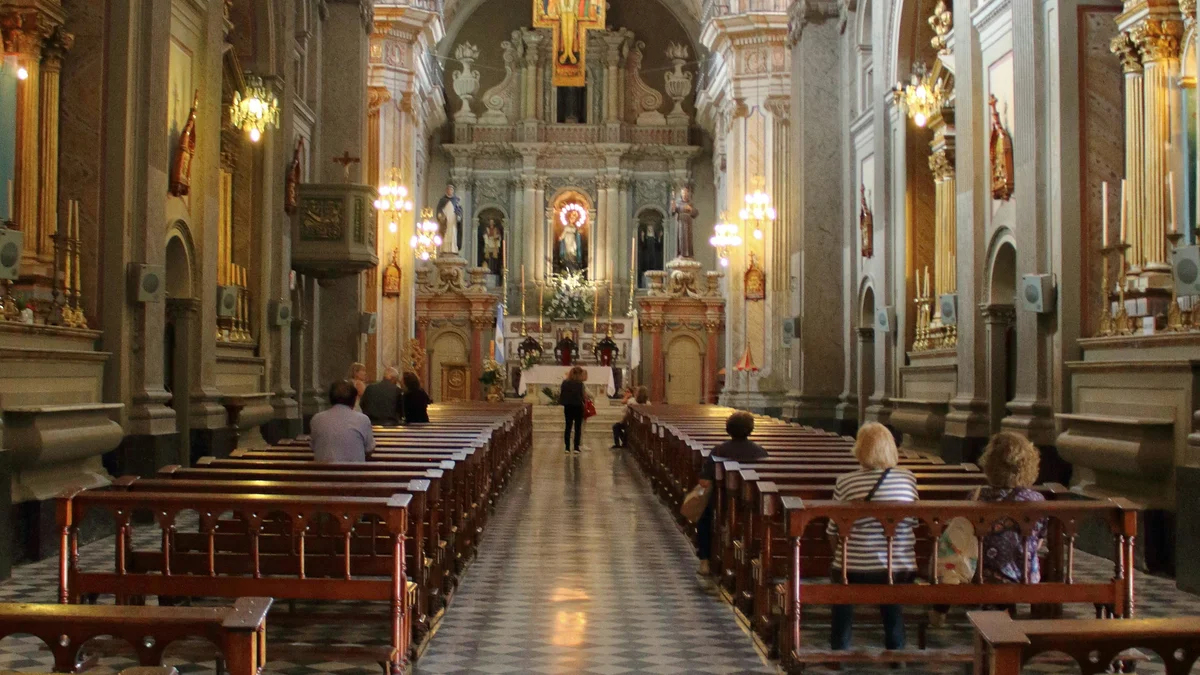
The Cathedral of Salta anchors the city's central 9 de Julio Square, a richly decorated 19th-century church holding the remains of key figures from Argentina's independence history.
 Private Tours Popular Pick
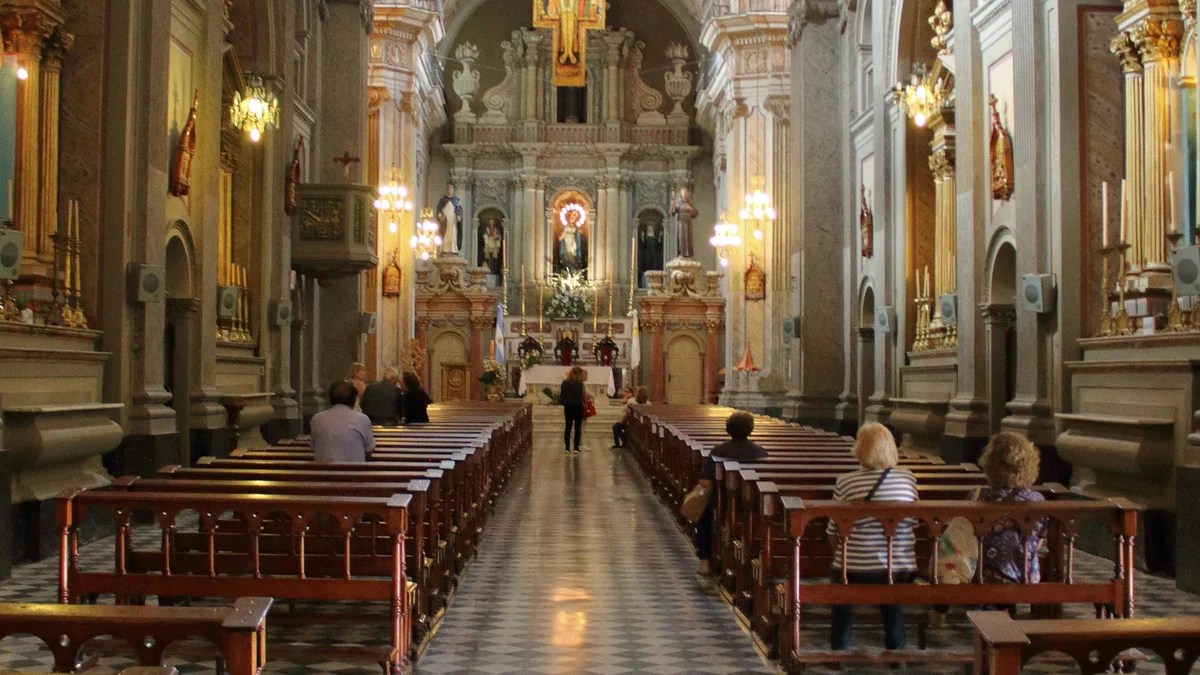
Discover Salta from the comfort of a private vehicle, accompanied by a local guide and driver who stay with you throughout the journey, blending the city's history, colonial architecture, stunning mountain views, and everyday life into one real introduction to Salta.
 Private Tours
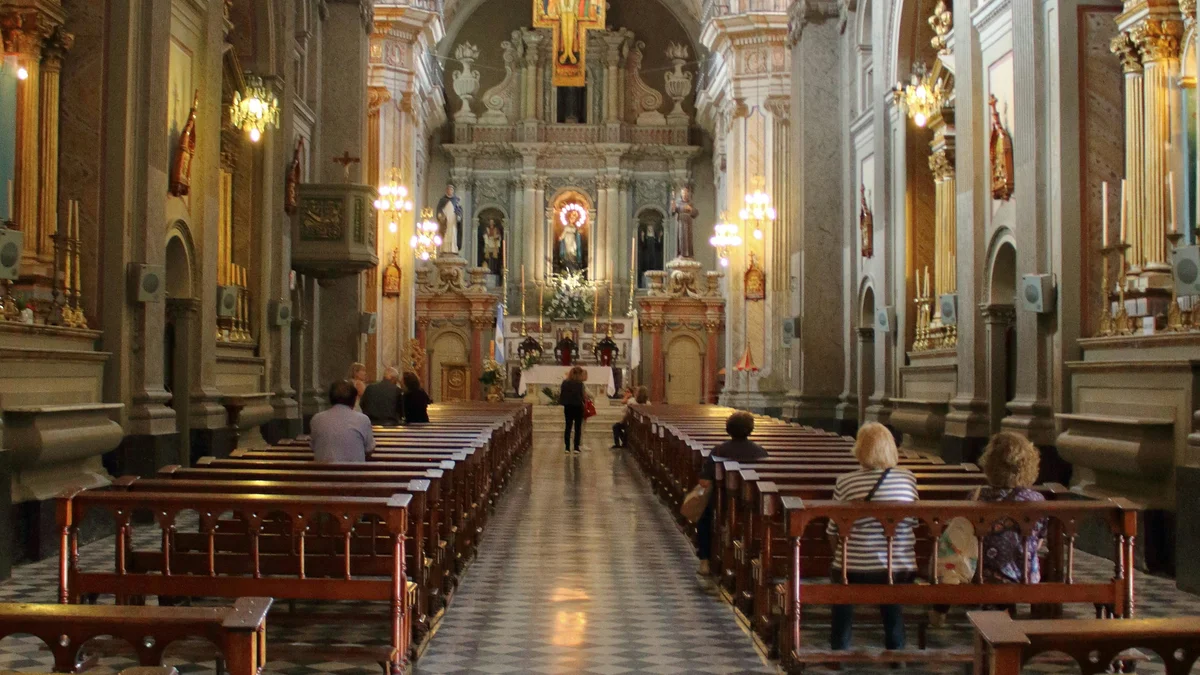
A private guided tour of Salta's historic center, adapted and run exclusively for your own group, led by a professional photojournalist who includes a real photography session as part of the experience — covering the city's cathedral, the 9 de Julio Square, the colonial Cabildo, the San Francisco church, and the Güemes monument.
Visitor guide
The Salta Cathedral, formally the Catedral Basílica de Salta, is the metropolitan cathedral of the Archbishop of Salta in northwest Argentina. It stands on the city's central 9 de Julio Square and is dedicated to Jesus Christ as the Lord of Miracles and the Virgin Mary as Our Lady of the Miraculous Rosary.
Wikipedia says a new cathedral was built beginning in 1856 after an earthquake destroyed the old building; Spanish Wikipedia dates the damaging quake to 1844. Services began in 1858 under Bishop José Eusebio Colombres, and the project was completed in 1882 by most accounts, although an Argentine congressional resolution gives 1876. The commission went to the Franco-American engineer Felipe Bertrés, who according to Spanish Wikipedia died in Salta in 1856 before work started, so the construction was carried on by others. Work resumed in 1873 under the brothers Nicolás and Agustín Cánepa, and the church was blessed in 1878, before the facade, towers and atrium were finished. Spanish Wikipedia notes that recent research attributes the present facade and towers to the architect Noé Macchi, though earlier sources named other figures. The shrine was inaugurated to the public on 20 October 1918 and was declared a national monument on 14 June 1941, although the Spanish article also lists 14 July.
Descriptions differ: English Wikipedia lists the style as Baroque, while the Spanish article calls it neobaroque, with a neoclassical facade and atrium of ten Corinthian columns beneath a triangular pediment, and Italianate towers. A baroque-inspired crown sits between the towers with a quadrilobe stained-glass window. The plan is rectangular with three naves, a deep choir and a semicircular apse, and the crossing is covered by a drum dome topped with a lantern. The high altar was designed by Friar Luis Giorgi, and the interior combines a neoclassical layout with baroque touches in stucco, carvings and marble.
The cathedral houses two venerated images, the Lord of Miracles and Our Lady of the Miraculous Rosary. Pope Leo XIII granted a decree of pontifical coronation for both on 23 July 1899, and Bishop Matías Linares y Sanzetenea carried out the public coronation rite on 13 September 1902. Spanish Wikipedia's article on the devotion recounts a local tradition that the images were sent from Spain in 1592, and that after a destructive earthquake on 13 September 1692, which levelled the town of Esteco, a voice was said to have promised the tremors would stop if the Christ were carried in procession. These accounts are tradition rather than documented history. Each September the city holds the Fiesta del Milagro, with a novena from 6 September, a triduum from 13 to 15 September and a main procession on 15 September, and pilgrims walk long distances to attend.
The cathedral holds the remains of General Martín Miguel de Güemes, a hero of the independence struggle in the north, along with other figures including General Antonio Álvarez de Arenales and General Rudecindo Alvarado. A cathedral museum behind the building holds 18th- and 19th-century paintings, polychrome carvings, silverwork and vestments.
Salta was founded on 16 April 1582 by the Spanish conquistador Hernando de Lerma. Around the central 9 de Julio Square, Wikipedia lists the cathedral, a French-style Museum of Contemporary Art, the Cabildo, which was once the town hall and is now a historical museum, and the Museum of High Altitude Archaeology, which houses Inca artefacts. The plaza is almost completely surrounded by a gallery of arcades.
Within walking distance are the Church of Saint Francis and the pedestrian streets Alberdi, Florida and Caseros. Wikipedia describes Salta as probably the most Spanish-looking city in Argentina by appearance, with a local culture blending Spanish and gaucho traditions.
The cathedral and square are in the heart of the old centre, so they work well as a starting point for a walk to the nearby museums and churches. Salta has a subtropical highland climate with distinct seasons and a rainy summer. A private guided visit can set the cathedral in the context of the city's history.
See every tour and attraction we cover in Salta.