TorontoOntario · 36 tours
 Niagara FallsOntario · 25 tours
 New York CityNew York · 30 tours
 Las VegasNevada · 8 tours
 San FranciscoCalifornia · 16 tours
 VancouverBritish Columbia · 17 tours
 DubaiUAE · 54 tours
 Abu DhabiUAE · 5 tours
 Buenos AiresArgentina · 23 tours
 AthensGreece · 31 tours
 AucklandNew Zealand · 38 tours
 CancunMexico · 54 tours
No destinations match “”. Try searching all tours instead — that search understands full questions, not just place names.
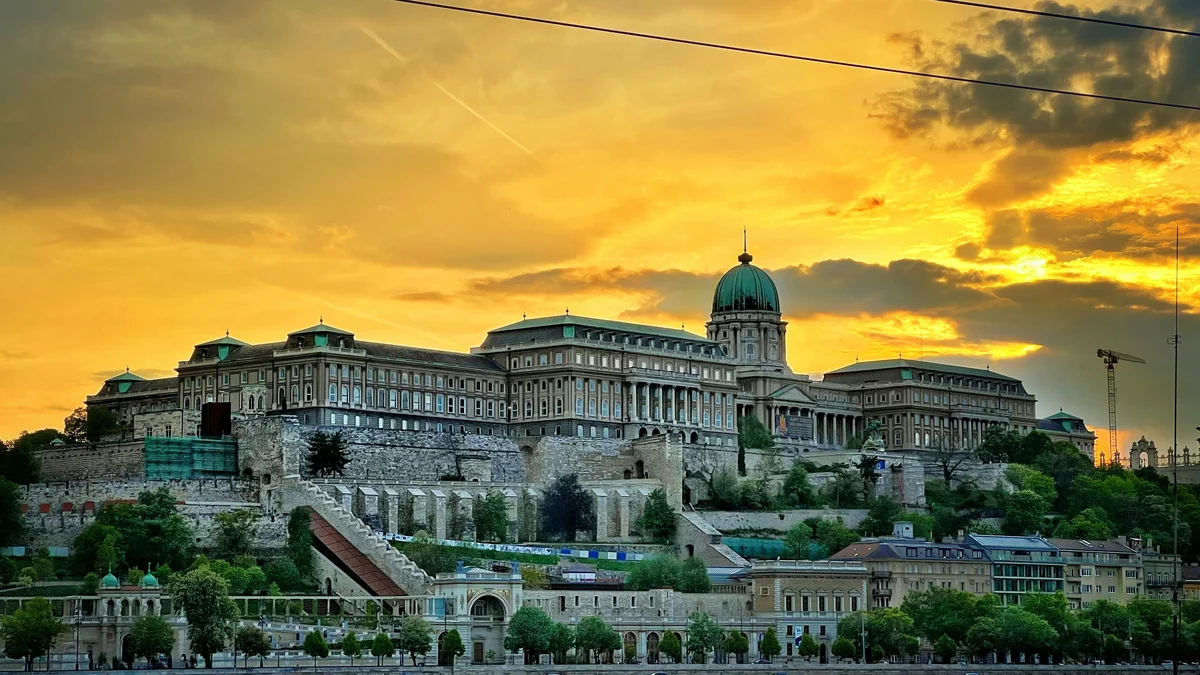
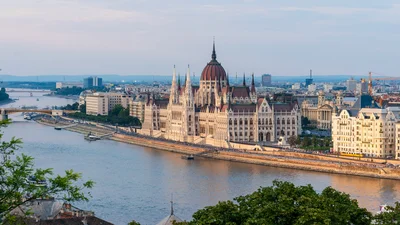
Buda Castle is the real historic palace complex crowning Castle Hill on the western bank of the Danube, first built in the 13th century and rebuilt many times since, most recently after World War II damage. Once the seat of Hungarian kings, it now houses the Hungarian National Gallery and the Budapest History Museum. Its terraces give some of the best panoramic views over the Danube and Pest's Parliament building across the water.
Visitor guide
Buda Castle, in Hungarian the Budavari Palota, is the historic castle and palace complex of the Hungarian kings on the southern tip of Castle Hill in Budapest. Overlooking the Danube from the Buda side, it has been built, destroyed and rebuilt many times over seven centuries, and today it houses the Hungarian National Gallery, the Budapest History Museum and the National Szechenyi Library.
According to Wikipedia, the first royal residence on Castle Hill was built by King Bela IV between 1247 and 1265, although its exact location is uncertain. In the fourteenth century Stephen, Duke of Slavonia, built the oldest surviving part of the palace, including a keep called Stephen's Tower, of which only foundations remain. King Sigismund of Luxembourg later expanded the palace and its fortifications, and Wikipedia says it probably became the largest Gothic palace of the late Middle Ages. The surviving Gothic Hall and Palace Chapel date from this period.
King Matthias Corvinus rebuilt much of the palace in the early Renaissance style after his marriage to Beatrice of Naples in 1476 brought Italian humanists and artists to Buda. Additions included an Italian loggia and the famous Bibliotheca Corviniana library. Buda became one of the first Renaissance centres north of the Alps, but only fragments of his palace survive.
After the Battle of Mohacs in 1526 the Ottomans occupied Buda, and from 1541 it was the seat of the Ottoman province of Budin. The palace decayed and parts were used as barracks and a gunpowder store. When a Holy League army retook Buda in 1686, the gunpowder store in Stephen's Tower exploded during the siege, and the medieval palace was largely destroyed.
A smaller Baroque palace was built from 1715, and a large new palace was commissioned under Empress Maria Theresa. The foundation stone was laid in 1749 and the building was completed in 1769. Fighting in the 1848 to 1849 revolution destroyed the central and southern wings.
Between 1875 and 1912 the palace was greatly expanded, with Miklos Ybl and later Alajos Hauszmann doubling its size and adding a domed north wing. It was officially opened in 1912. In the Siege of Budapest in 1944 to 1945, the castle was among the last strongholds in the city, and the palace was reduced to ruins.
Reconstruction began immediately after the war. Archaeologists uncovered medieval remains, and the medieval fortifications were largely rebuilt. The postwar government chose to modernise rather than fully restore the palace, removing much Neo-Baroque ornament and replacing the dome with a modernist version in 1961. The main structures were finished by 1966, with interiors completed in the 1980s. Wikipedia mentions a restoration programme begun in 2016.
The Matthias Fountain by Alajos Strobl stands in the western forecourt, and the Turul, a mythical bird of the Magyars, sits on a pillar in the eastern forecourt overlooking the city. The Hungarian National Gallery presents Hungarian art from the medieval period to the present, while the Budapest History Museum includes medieval rooms uncovered during reconstruction.
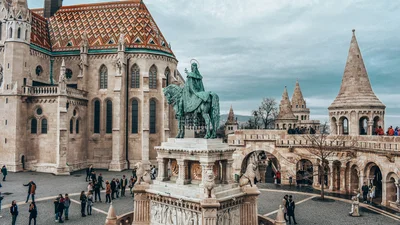
UNESCO listed the wider Budapest area, including the Buda Castle Quarter, as a World Heritage Site, first in 1987 and extended in 2002. The castle is a natural pairing with nearby Matthias Church and Fisherman's Bastion on Castle Hill, which suits a private guided walk with a driver arranging the transfer up the hill.
See every tour and attraction we cover in Budapest.