TorontoOntario · 36 tours
 Niagara FallsOntario · 25 tours
 New York CityNew York · 30 tours
 Las VegasNevada · 8 tours
 San FranciscoCalifornia · 16 tours
 VancouverBritish Columbia · 17 tours
 DubaiUAE · 54 tours
 Abu DhabiUAE · 5 tours
 Buenos AiresArgentina · 23 tours
 AthensGreece · 31 tours
 AucklandNew Zealand · 38 tours
 CancunMexico · 54 tours
No destinations match “”. Try searching all tours instead — that search understands full questions, not just place names.
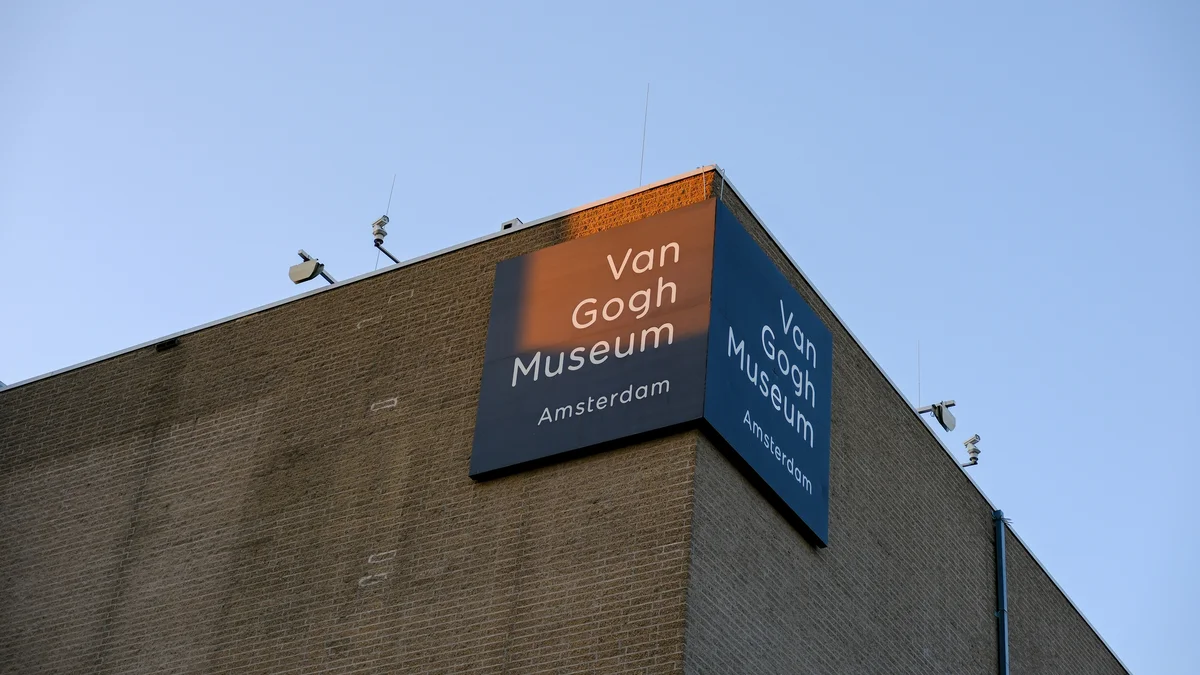
The Van Gogh Museum in Amsterdam holds the world's largest collection of Vincent van Gogh's paintings, drawings, and letters, including 'The Bedroom' and 'Sunflowers.' Opened in 1973 in a building designed by Gerrit Rietveld, the museum traces the artist's evolution chronologically alongside letters he exchanged with his brother Theo. It's consistently one of the most-visited museums in the Netherlands, so an early or late time slot generally means shorter lines.
Visitor guide
The Van Gogh Museum is an art museum on Museumplein in Amsterdam-Zuid, in the Netherlands, devoted to the life and work of Vincent van Gogh. It opened on 2 June 1973 and holds the largest collection of his paintings, drawings and letters, according to its own description and widely repeated accounts.
Vincent van Gogh's brother Theo died six months after Vincent, and Theo's widow, Johanna van Gogh-Bonger, kept the collection and later sold a number of works. Her son Vincent Willem van Gogh inherited it in 1925. The collection was loaned to the Stedelijk Museum and in 1962 passed to the Vincent van Gogh Foundation, a state-initiated foundation, which led to the creation of the museum. Wikipedia lists about 200 paintings, 400 drawings and 700 letters by Van Gogh in the collection. The letters are central to the museum's approach, because Vincent wrote many of them to Theo, who supported him, and they let visitors read the artist's own account of what he was trying to achieve. The family's decision to keep the works together, first with Johanna and then with her son, is the reason so much of his output stayed in the Netherlands and formed the basis of a national museum.
The architect Gerrit Rietveld was commissioned in 1963 and died a year later, and the building was completed in 1973. A separate exhibition wing was designed by the Japanese architect Kisho Kurokawa and added during a renovation in 1998 to 1999. The museum stands between the Rijksmuseum and the Stedelijk Museum on Museumplein.
Notable works include The Potato Eaters from 1885, The Bedroom in Arles from 1888 and Sunflowers from 1889. The museum presents his career in chronological order, from his early Dutch period to his late years in France, and uses letters to show how he described his work. Alongside Van Gogh's own paintings it shows work by other artists of his time, including Paul Gauguin and Claude Monet, as well as Manet and Seurat, which puts his art in the context of 19th-century painting.
The museum has been the target of two thefts. In 1991 twenty paintings were stolen and all were recovered from an abandoned car within 35 minutes, though three were badly torn. In 2002 two paintings, Congregation Leaving the Reformed Church in Nuenen and View of the Sea at Scheveningen, were stolen, and they were found in Italy in 2016.
The museum is one of the most visited in the Netherlands, so busy periods are common, and tickets and time slots are normally arranged in advance with the museum. Its location on Museumplein makes it easy to visit alongside the Rijksmuseum, and a private guide can plan a route that focuses on a chosen period of Van Gogh's life. Visitors who want a quieter experience often choose the first or last part of the day, although crowd levels vary by season.
See every tour and attraction we cover in Amsterdam.