TorontoOntario · 36 tours
 Niagara FallsOntario · 25 tours
 New York CityNew York · 30 tours
 Las VegasNevada · 8 tours
 San FranciscoCalifornia · 16 tours
 VancouverBritish Columbia · 17 tours
 DubaiUAE · 54 tours
 Abu DhabiUAE · 5 tours
 Buenos AiresArgentina · 23 tours
 AthensGreece · 31 tours
 AucklandNew Zealand · 38 tours
 CancunMexico · 54 tours
No destinations match “”. Try searching all tours instead — that search understands full questions, not just place names.
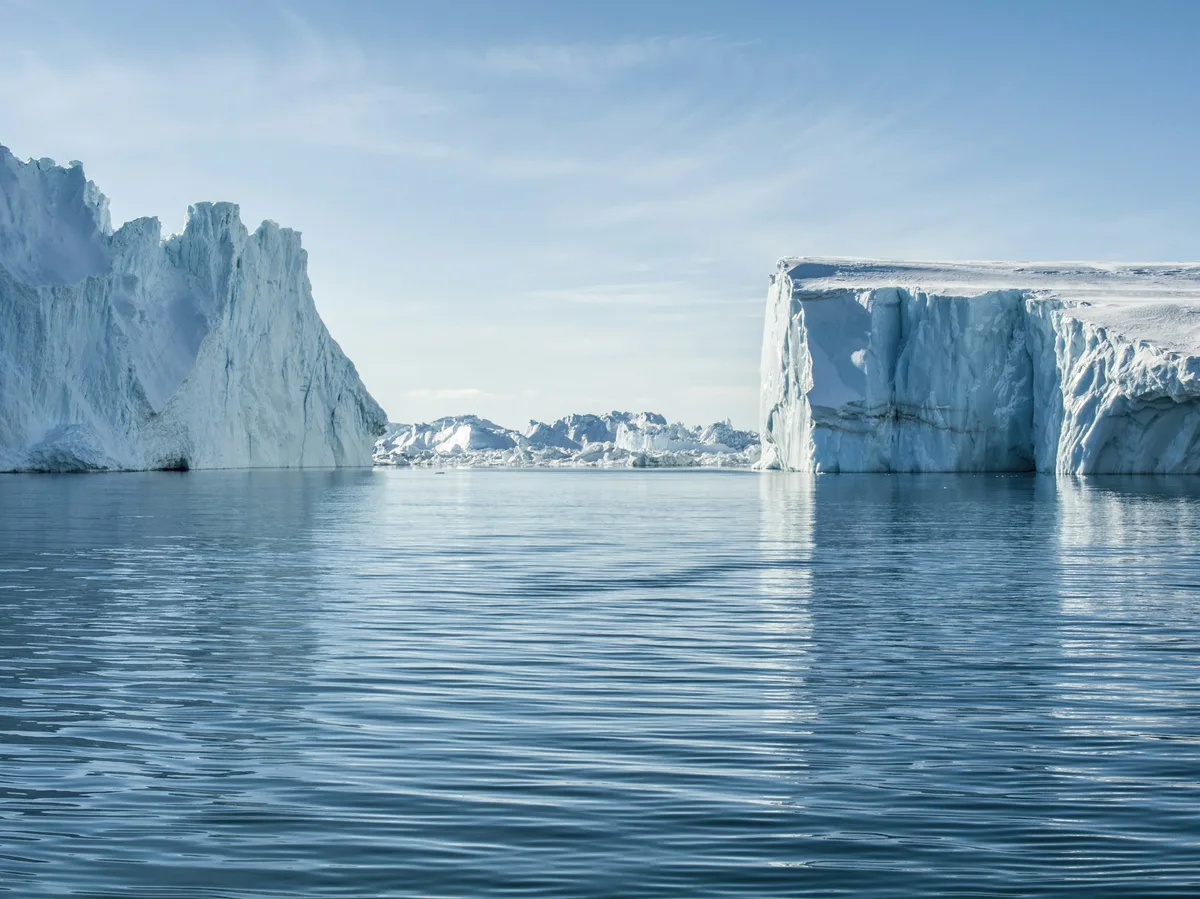
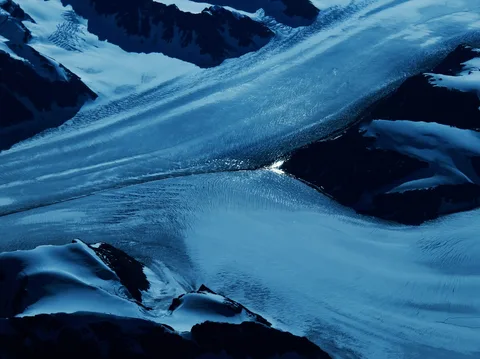
A UNESCO World Heritage Site since 2004, this ice fjord empties one of the fastest-moving glaciers outside Antarctica into Disko Bay, calving a steady procession of giant icebergs right beside the town of Ilulissat.
 Multi-Day Tours
A private 5-day Arctic escape based in Ilulissat, West Greenland — a boat trip to the calving Eqi glacier, a day at the colonial-era Ilimanaq settlement, a kaffemik with a local Inuit family, and evening cruises among the icebergs of Disko Bay.
 Multi-Day Tours
A private 5-day Ilulissat itinerary pairing Arctic adventure with real comfort — a boat trip to the calving Eqi glacier, a hike through the Sermermiut Valley, with settlement remains more than 4,000 years old, a kaffemik with a local Inuit family, and an evening in a private hot tub overlooking Disko Bay's icebergs.
Visitor guide
The Ilulissat Icefjord is a fjord on the west coast of Greenland, about 250 kilometres north of the Arctic Circle, where one of the world's fastest-moving glaciers sheds icebergs into Disko Bay. UNESCO inscribed it as a World Heritage Site in 2004 for its natural beauty and its importance to the scientific understanding of climate change.
Known in Greenlandic as Ilulissat Kangerlua, the fjord runs roughly 40 to 60 kilometres (sources differ) west from the Greenland ice sheet to Disko Bay, just south of the town of Ilulissat. The listed area covers about 402,400 hectares and lies in the Avannaata municipality. UNESCO's listing, in 2004 at the 28th session of the World Heritage Committee, cites natural criteria (vii) and (viii).
The glacier feeding the fjord is Sermeq Kujalleq, also known as Jakobshavn Isbrae, which Wikipedia describes as the most productive glacier in the Northern Hemisphere. Reported speeds vary by source and period, from about 19 metres per day to as much as 35 metres per day and to produce roughly 20 billion tonnes of icebergs a year. The ice cap behind the fjord preserves a long climate record, which makes it valuable for studying past climate. The glacier's speed and its role in research on human-caused climate change are central to the World Heritage listing.
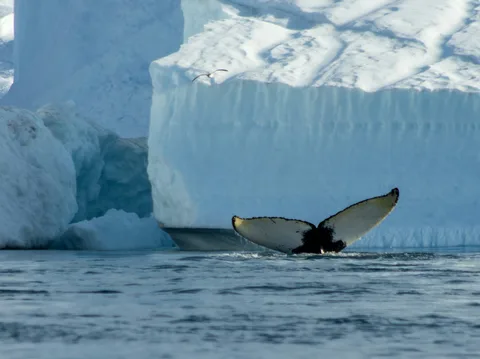
Some icebergs reach roughly a kilometre in height and are too tall to float down the fjord, so they can lie grounded on shallow areas for years until the glacier's force and other icebergs break them up. Once at sea, they drift north with the currents and then turn south into the Atlantic, and larger icebergs typically do not melt until they reach latitudes of 40 to 45 degrees north, farther south than the United Kingdom.
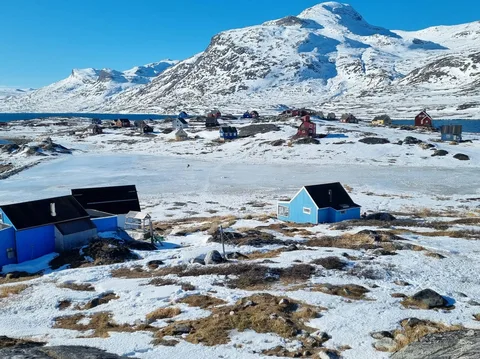
People have lived here for roughly 4,000 years or more; GEUS dates the Saqqaq settlement at Kangia to about 4,400 years ago. The Sermermiut site at the fjord mouth contains remains of the Saqqaq, Early Dorset and Thule cultures. Modern settlements nearby include Ilulissat, Ilimanaq and Qasigiannguit. Residents fish and hunt in the fjord, including for Greenland halibut and ringed seals, mainly in winter when the ice is thinnest, and dog sleds are the usual means of transport, though ice clearance linked to climate change is allowing more boat use. Tourism began in the 1980s and grew significantly after the World Heritage designation.
UNESCO's criterion (viii) rests on the site as an outstanding example of a stage in Earth's history, the last ice age of the Quaternary, while criterion (vii) rests on the fact that a huge ice sheet and a fast-moving ice stream calving into an iceberg-filled fjord is a phenomenon seen only in Greenland and Antarctica. The Geological Survey of Denmark and Greenland (GEUS) notes that published observations of the ice go back more than 250 years, and it reports that the glacier front retreated about 26 kilometres between 1851 and 1950. It also describes a re-advance of the ice margin to a maximum position in the 19th century, followed by renewed retreat. Reported speeds and calving volumes differ between UNESCO documents, so figures are best read as approximate.
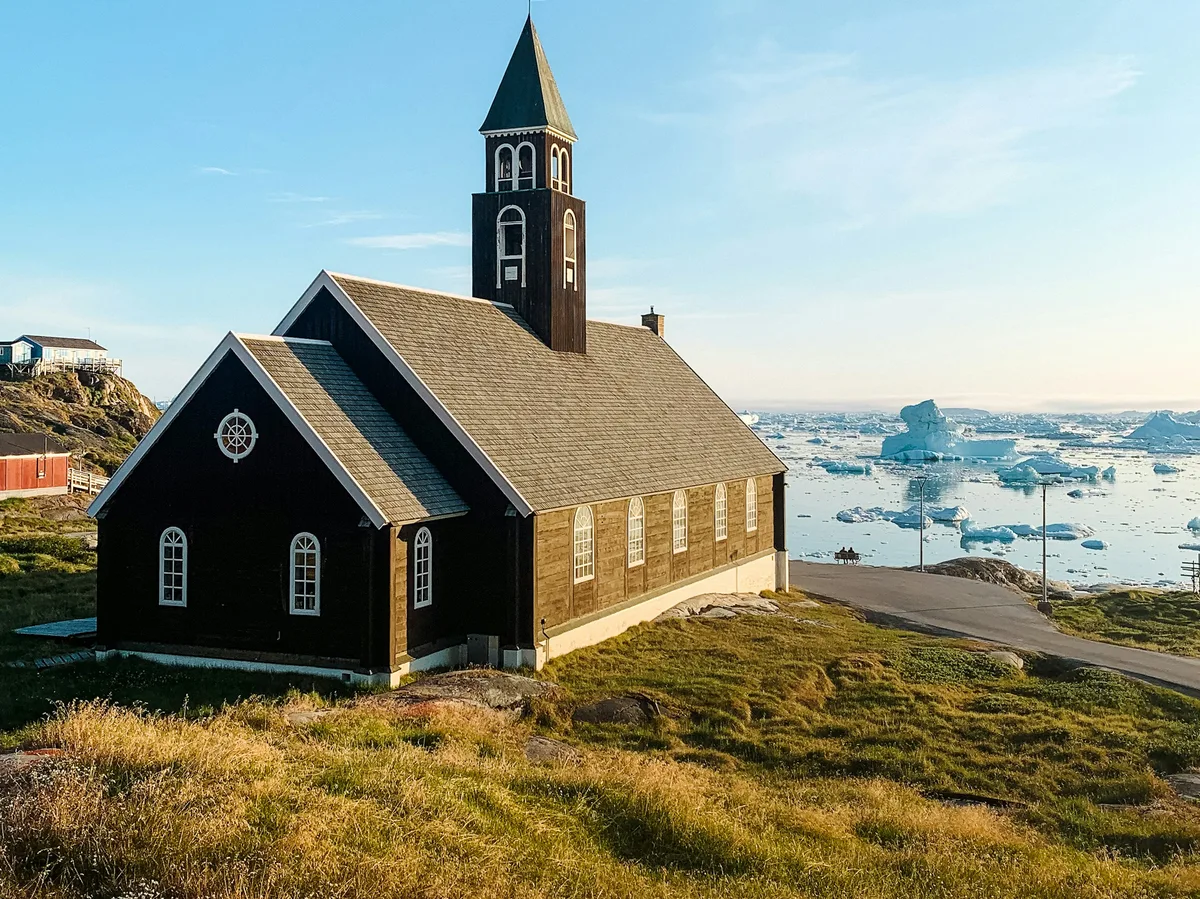
Ilulissat itself was founded as a trading post by Jacob Severin's company in 1741 and was long known as Jakobshavn. Wikipedia describes it as Greenland's third-largest town, with 5,149 residents in 2025, and says tourism is now its main industry. Zion's Church and Knud Rasmussen's birthplace, now a museum, are among the town's landmarks, and the icefjord is the reason most visitors come.
The icefjord can be seen from viewpoints near Ilulissat and from boats in summer, while conditions in winter are very different. A local guide can explain what is happening to the ice, and a private vehicle and driver can handle transfers around the town.
See every tour and attraction we cover in Greenland.