TorontoOntario · 36 tours
 Niagara FallsOntario · 25 tours
 New York CityNew York · 30 tours
 Las VegasNevada · 8 tours
 San FranciscoCalifornia · 16 tours
 VancouverBritish Columbia · 17 tours
 DubaiUAE · 54 tours
 Abu DhabiUAE · 5 tours
 Buenos AiresArgentina · 23 tours
 AthensGreece · 31 tours
 AucklandNew Zealand · 38 tours
 CancunMexico · 54 tours
No destinations match “”. Try searching all tours instead — that search understands full questions, not just place names.
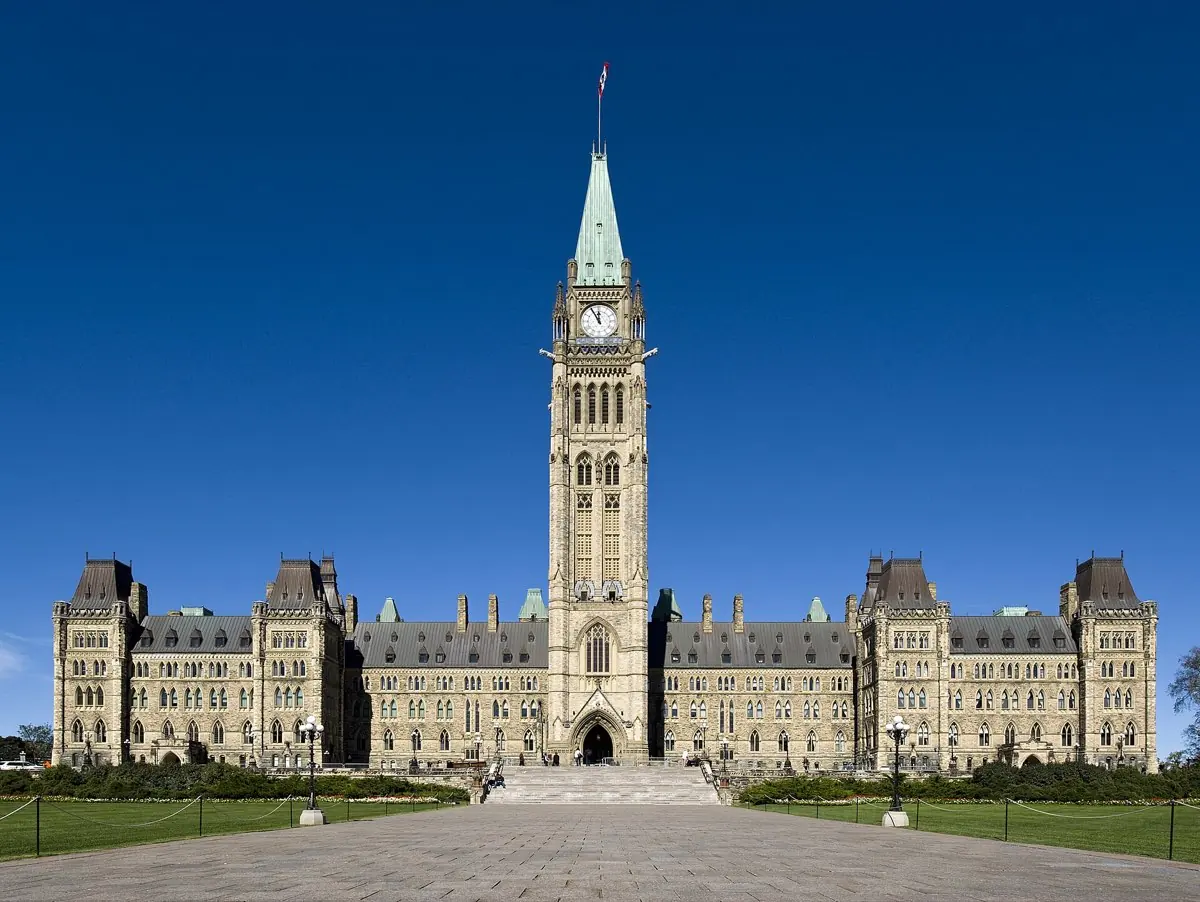
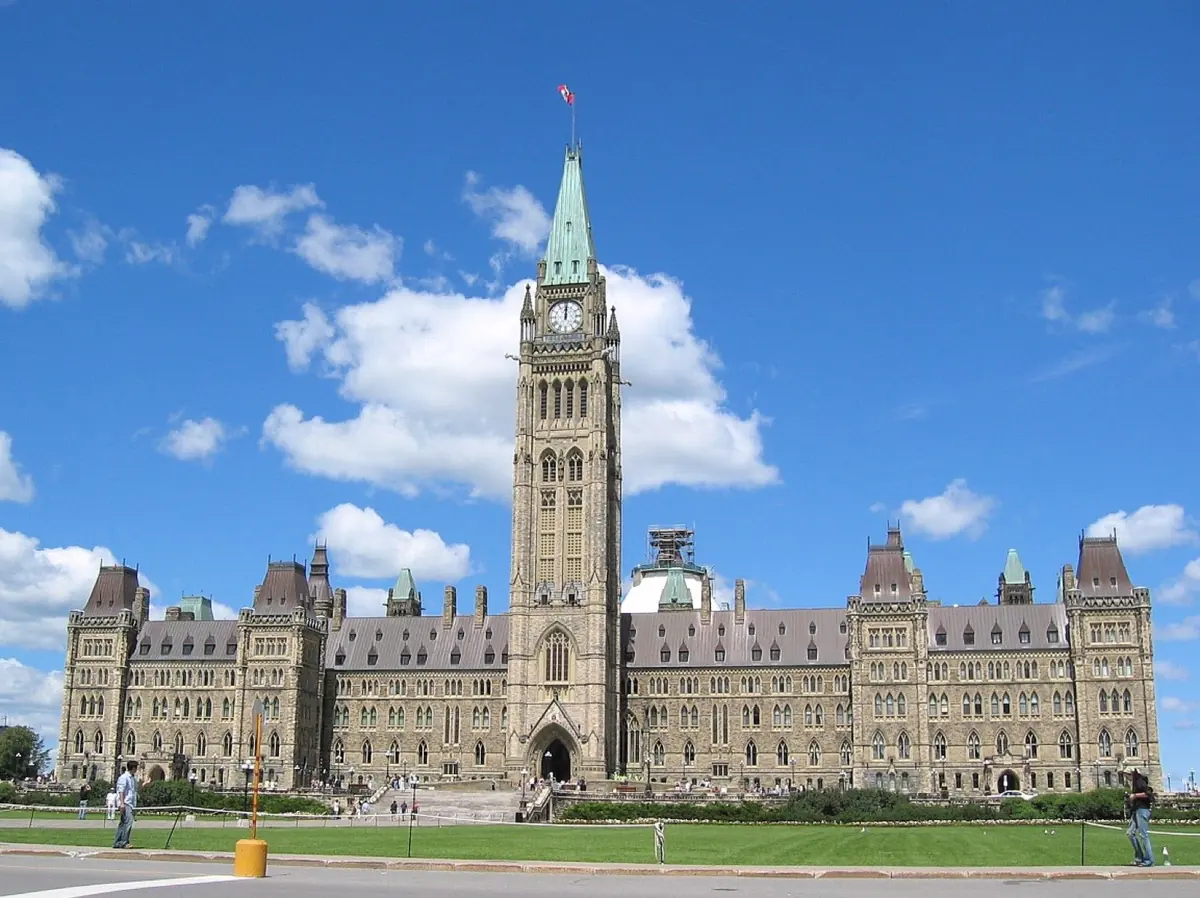
Canada's Gothic Revival Parliament buildings and the Peace Tower, overlooking the Ottawa River.
Visitor guide
Parliament Hill is the seat of Canada's federal government, a Gothic Revival cluster of stone buildings on a bluff above the Ottawa River in downtown Ottawa. The Centre Block, with its Peace Tower, is the silhouette most people know from postcards, flanked by the East and West Blocks and the round-domed Library of Parliament behind. It is a working legislature as well as a landmark, so what you can see on any given day depends on the ongoing restoration programme.
The site was a limestone outcrop already in Crown hands, known as Barrack Hill, and it was chosen for its prominence. After Queen Victoria selected Ottawa as capital of the Province of Canada in 1858, the Department of Public Works called for designs on 7 May 1859 and received 298 submissions. Winners were announced on 29 August 1859: Thomas Fuller and Chilion Jones for the Centre Block, and Thomas Stent and Augustus Laver for the departmental East and West Blocks, all in Victorian High Gothic style. Ground was broken on 20 December 1859, and the Prince of Wales laid the Centre Block cornerstone on 1 September 1860. Costs ballooned and work stopped in September 1861 after more than $1.4 million had been spent; it resumed in 1863 after a commission of inquiry, and the buildings were substantially complete by 1876.
On 3 February 1916 fire destroyed the original Centre Block. The Library of Parliament, set apart at the rear, is the part of the original construction that survived. The Governor General re-laid the cornerstone on 1 September 1916, and the rebuilt Centre Block was completed in 1927. Its new centrepiece, the Peace Tower, was designed by architects Jean Omer Marchand and John A. Pearson as a war memorial: Prime Minister Robert Borden dedicated the site on 1 July 1917, and the cornerstone was laid in 1919. Public Services and Procurement Canada gives its height as 92.2 metres, though some other sources quote about 98 metres. Inside, the Memorial Chamber honours Canadians who died in the First World War, with Books of Remembrance whose pages are turned daily, and the 53-bell carillon was inaugurated on 1 July 1927, the 60th anniversary of Confederation.
Parliament Hill is in the middle of a major, multi-decade rehabilitation. The West Block was completed in November 2018, with the House of Commons meeting in a glass-roofed former courtyard, and the Senate of Canada Building (the former Union Station) was renovated so the Senate could move out of Centre Block; that move came in 2019. The Auditor General reported in 2023 that the Centre Block programme, approved in 2016, targets construction completion around 2030 to 2031, with reopening about a year later, and a new Parliament Welcome Centre is planned in front of the Centre Block. Cost estimates run into the billions of dollars.
Even with the Centre Block under wraps, the grounds reward a slow walk. The Centennial Flame was dedicated by Prime Minister Lester Pearson on 1 January 1967 to mark the start of Canada's centennial year. The Famous Five monument, Women Are Persons!, by sculptor Barbara Paterson, shows Emily Murphy, Irene Parlby, Nellie McClung, Louise McKinney and Henrietta Edwards, with an empty chair for visitors; construction has moved it to the Plaza Bridge near the Senate building. Statues of prime ministers and monarchs dot the lawns, and the view across the river toward Gatineau is one of the best in the capital.
Tours, the Changing of the Guard and access to individual buildings change with the restoration and the parliamentary calendar, so check the Parliament of Canada website for current tours, tickets and security rules before you go. If you only have a short window, the lookout behind the Hill along the river and the view of the Hill from the Alexandra Bridge are open to the public.
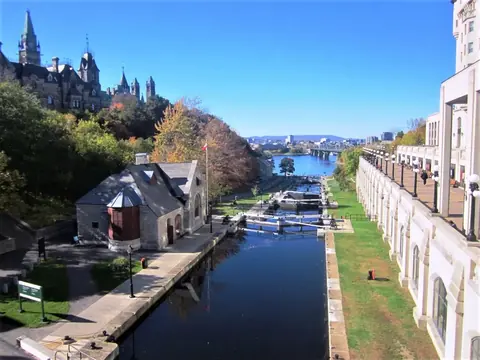
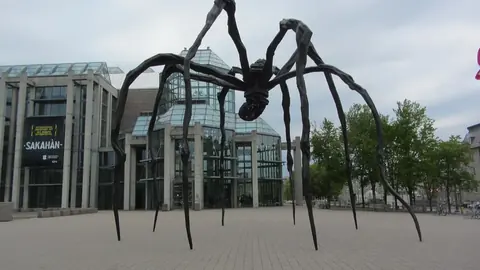
The Hill is a few minutes' walk from the Rideau Canal locks, the ByWard Market and the National Gallery. On a Voyzo private tour, your driver can collect you door to door and drop you at the Hill's edge, then pick you up at the end of the walking loop so you are not retracing your steps.
See every tour and attraction we cover in Ottawa.