TorontoOntario · 36 tours
 Niagara FallsOntario · 25 tours
 New York CityNew York · 30 tours
 Las VegasNevada · 8 tours
 San FranciscoCalifornia · 16 tours
 VancouverBritish Columbia · 17 tours
 DubaiUAE · 54 tours
 Abu DhabiUAE · 5 tours
 Buenos AiresArgentina · 23 tours
 AthensGreece · 31 tours
 AucklandNew Zealand · 38 tours
 CancunMexico · 54 tours
No destinations match “”. Try searching all tours instead — that search understands full questions, not just place names.
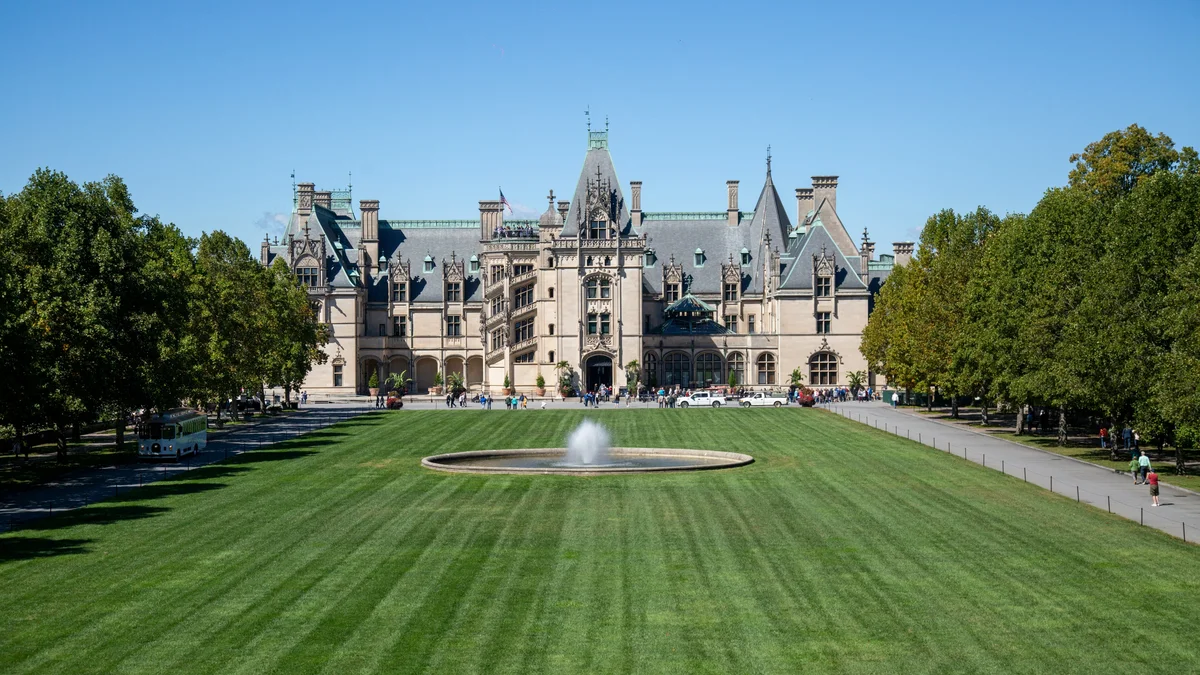
Built between 1889 and 1895 for George Washington Vanderbilt II, Biltmore is the largest privately owned house in the United States at about 175,000 square feet of floor space. Designed by architect Richard Morris Hunt with grounds by Frederick Law Olmsted, the Gilded Age estate remains owned by Vanderbilt's descendants and is open to visitors on its working winery and gardens.
Visitor guide
Biltmore Estate in Asheville, North Carolina, is the Gilded Age country home George Washington Vanderbilt II built in the Blue Ridge Mountains. Its Chateauesque main house, designed by Richard Morris Hunt, is usually described as the largest privately owned house in the United States, and the estate is still privately owned.
In 1888, George Vanderbilt, then 25, bought land near Asheville and asked Frederick Law Olmsted for advice. The National Park Service records that Olmsted found the soil poor and the woods degraded, and suggested a garden area near the house with the rest returned to managed forest, giving the house long views. Construction of the house ran from 1889 to 1895, and the estate opened on Christmas Eve 1895. Hunt drew on French chateaux, and Olmsted's final plan included an approach road of about three miles, according to Biltmore, designed to hide the house behind trees until the forest suddenly opens to reveal it.
Floor space is quoted as roughly 175,000 to 179,000 square feet depending on the source, about four acres. Wikipedia gives 178,926 square feet, with 250 rooms, 35 bedrooms, 43 bathrooms and 65 fireplaces. Vanderbilt originally assembled about 125,000 acres; about 8,000 acres make up the estate today. The grounds include some 75 acres of formal gardens, a conservatory, and Olmsted's park and farmland landscape, plus water features such as the Bass Pond.
Biltmore's forests mattered far beyond its gardens. Vanderbilt hired Gifford Pinchot to prepare a management plan, and Carl Schenck later founded the Biltmore Forest School in 1898, billed as the first forestry school in the United States. After Vanderbilt's death in 1914, his widow Edith carried out his wish to sell land that became the core of Pisgah National Forest; the estate says nearly 87,000 acres of its former forest land are now part of Pisgah. The estate's own history says the original National Historic Landmark nomination of May 23, 1963 rested on the theme of conservation of natural resources.
Biltmore ceased to be a family residence in 1956 and became a historic house museum. Wikipedia dates its first public opening to March 1930, at Asheville's request during the Depression. During World War II, the house was closed to visitors and paintings from the National Gallery of Art were moved there for safekeeping in 1942, according to the same source. The former dairy barn became Biltmore Winery in 1985, and the estate has since added lodging and Antler Hill Village. In 2005 the Landmark designation was expanded to cover architecture, landscape architecture and social history, and the estate was added to the National Register of Historic Places in 1966.
Access and admission are managed by the estate, so check Biltmore directly for current hours, tickets and house-tour options. On a Voyzo private tour, your driver can collect you at your door in Asheville and take you to the estate, making it easy to pair with a Blue Ridge Parkway drive, which also crosses land that was once part of Biltmore.
See every tour and attraction we cover in Asheville.