TorontoOntario · 36 tours
 Niagara FallsOntario · 25 tours
 New York CityNew York · 30 tours
 Las VegasNevada · 8 tours
 San FranciscoCalifornia · 16 tours
 VancouverBritish Columbia · 17 tours
 DubaiUAE · 54 tours
 Abu DhabiUAE · 5 tours
 Buenos AiresArgentina · 23 tours
 AthensGreece · 31 tours
 AucklandNew Zealand · 38 tours
 CancunMexico · 54 tours
No destinations match “”. Try searching all tours instead — that search understands full questions, not just place names.
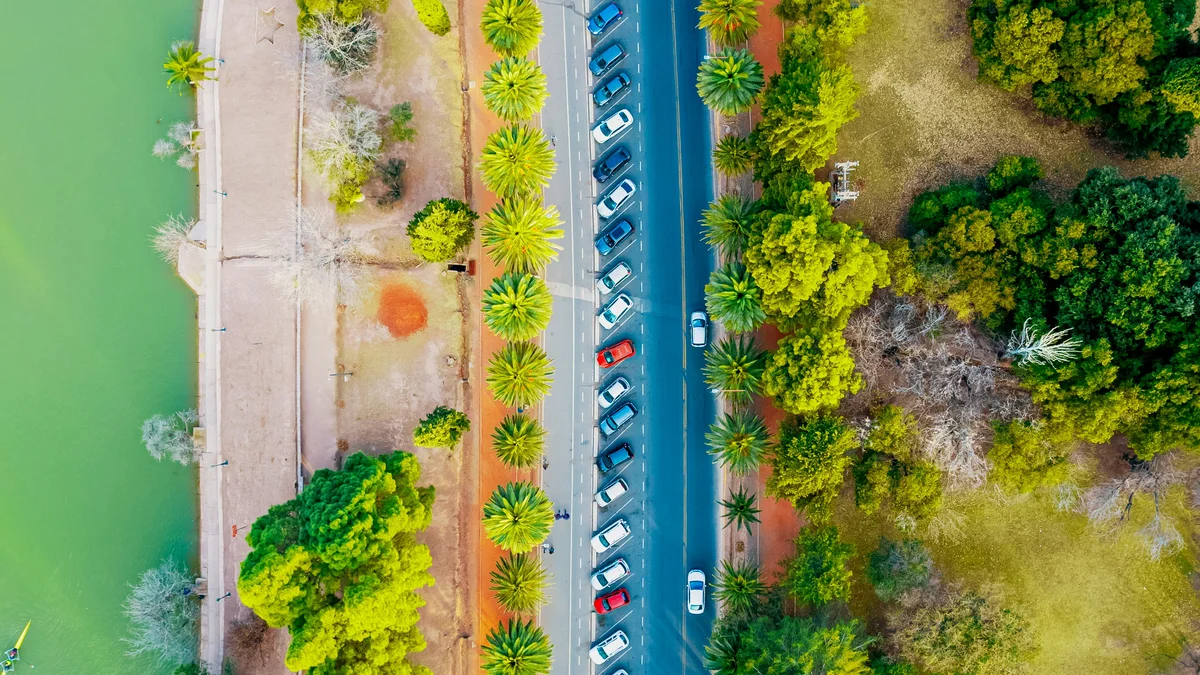
A sprawling city park created by law in 1896 and designed by landscape architect Carlos Thays, with a man-made lake, rose garden, the Mendoza Zoo grounds, and the university's own soccer stadium — the green heart of Mendoza City and the starting point of the drive up Cerro de la Gloria.
Visitor guide
Parque General San Martín is a large urban park in Mendoza, Argentina, laid out from 1896 and designed by the landscape architect Carlos Thays. Wikipedia gives its size as 393 hectares, and it holds lakes, gardens, sculptures, the national university and the Monument to the Army of the Andes on the Cerro de la Gloria.
The 1861 earthquake left Mendoza struggling with epidemics and public health problems, and its reconstruction plans were drawn up by the Minister of Works and Utilities, Emilio Civit. Law No. 19 of 1896, signed by Governor Juan Cornelio Moyano, created a Parque del Oeste, or Western Park, and commissioned the French-Argentine landscape architect Carlos Thays for the design. Construction caused political debate, since the opposition argued the money would be better spent on sewers, water works and irrigation ditches. Spanish Wikipedia says the park was also seen as part of the city's flood defences, and that it was renamed after General José de San Martín by a law of 1947.
Wikipedia says the park proved beneficial over the long term, improving air quality and investment in the Greater Mendoza area. Spanish Wikipedia describes it as the largest man-made park in South America and gives 394 hectares, of which about 307 are cultivated. Thays also designed other major Argentine parks, including Parque Tres de Febrero in Buenos Aires.
Thays combined English and French 19th-century styles. The main entrance gates were bought by Civit in Paris and, according to Spanish Wikipedia, were made by a Scottish foundry for a sultan who fell from power. The central opening is about 6.3 m wide, and the gates are crowned by an Andean condor and the Mendoza coat of arms, replacing the sultan's imperial crown. Pedestrian gates and balustrades were added in 1909. The park has 34 sculptures along its paths and roads, and its rose garden, El Rosedal, is a promenade inaugurated in 1919. A large lake, inaugurated in 1906, is the home of the Club Mendoza de Regatas, established in 1909.
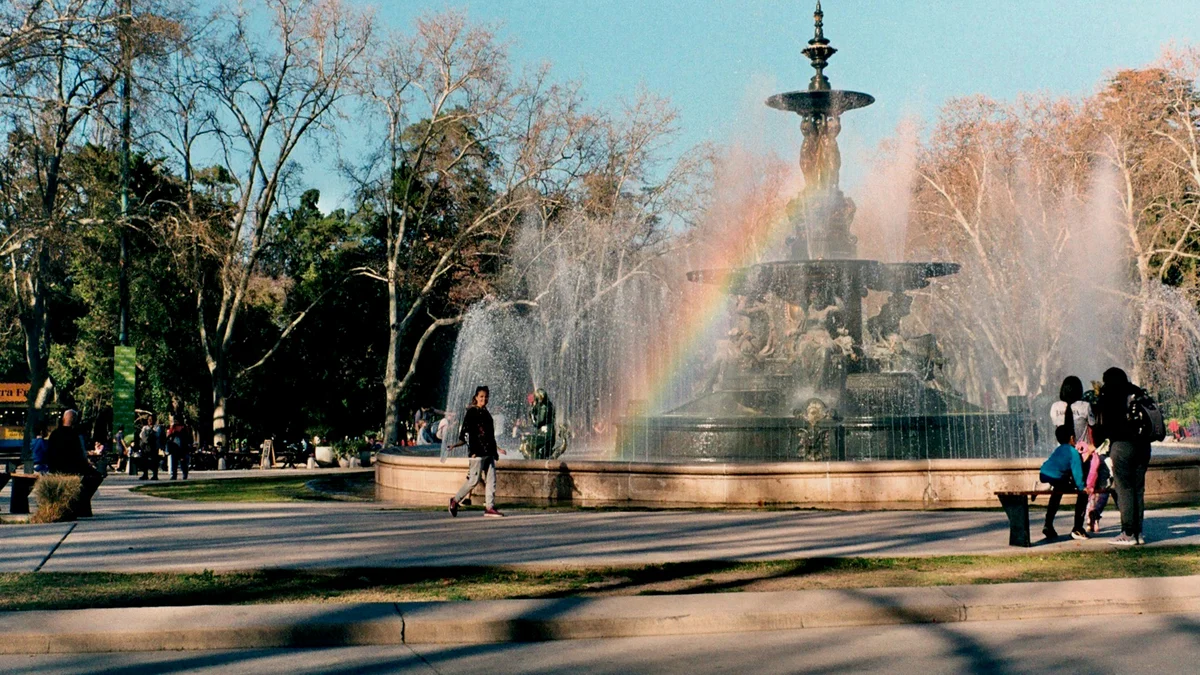
In front of the rose garden stands the Fuente de los Continentes, representing Europe, America, Africa and Asia; Spanish Wikipedia notes that calling it the Fountain of the Americas is a common error. The park also has replicas of the Caballitos de Marly, the horse statues whose originals stand in Paris.
The park also contains a botanical garden, the Universidad Nacional de Cuyo, the Estadio Malvinas Argentinas, a hippodrome and a velodrome. The stadium, built in 1976, hosted matches of the 1978 World Cup and the 2011 Copa América. A zoo, created in 1903 as part of the Thays plan, closed in early 2016 for remodelling, according to Spanish Wikipedia. The Cornelio Moyano Museum of Anthropology and Natural Sciences maintains about 40,000 exhibits. The Frank Romero Day Greek Theatre, usually called the amphitheatre, has been the site of the annual Fiesta Nacional de la Vendimia, the national grape harvest festival, since 1936 in Wikipedia's account, while Spanish Wikipedia says the main show has been staged there since 1963.
The Monument to the Army of the Andes, created by Juan Manuel Ferrari and unveiled in 1914, stands on the Cerro de la Gloria within the park and overlooks the city.
The park is large enough that visitors usually pick a few highlights, such as the rose garden, the lake and the hilltop monument. Mendoza's tree-lined streets and acequias, the irrigation channels along its roads, give the city a green character that the park extends. A private guided visit with a driver is a convenient way to see the park's main sites and views.
See every tour and attraction we cover in Mendoza.