TorontoOntario · 36 tours
 Niagara FallsOntario · 25 tours
 New York CityNew York · 30 tours
 Las VegasNevada · 8 tours
 San FranciscoCalifornia · 16 tours
 VancouverBritish Columbia · 17 tours
 DubaiUAE · 54 tours
 Abu DhabiUAE · 5 tours
 Buenos AiresArgentina · 23 tours
 AthensGreece · 31 tours
 AucklandNew Zealand · 38 tours
 CancunMexico · 54 tours
No destinations match “”. Try searching all tours instead — that search understands full questions, not just place names.
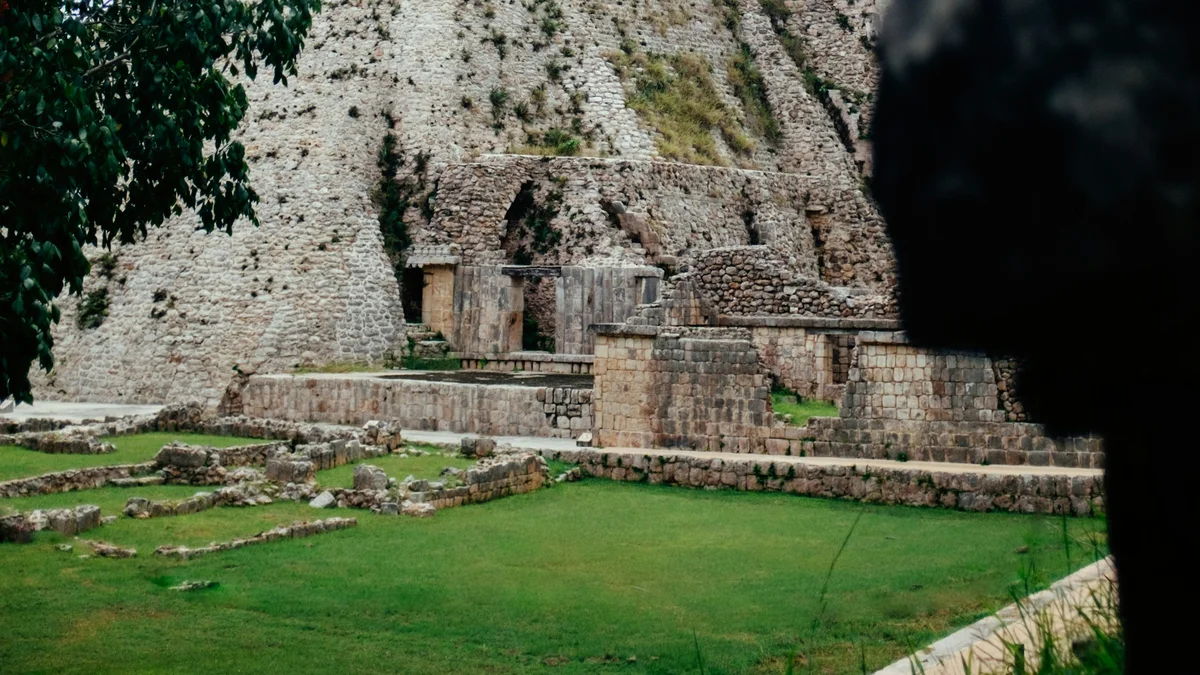
One of the most important Maya cities on the Puuc architectural route, dominated by the elliptical Pyramid of the Magician, built up in five distinct construction stages. The Nunnery Quadrangle and Governor's Palace nearby feature some of the finest stone mosaic facades in the Maya world, and Uxmal is a UNESCO World Heritage Site.
 Private Tours
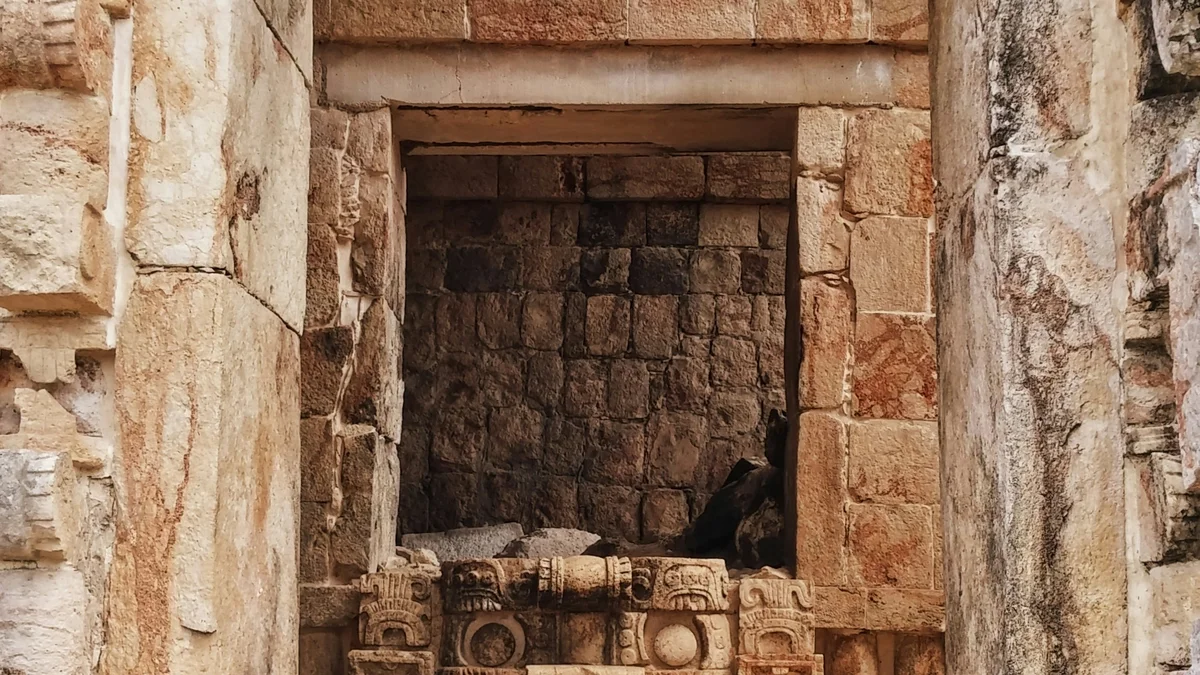
Travel the real Puuc Route with a certified guide specialized in Maya culture, taking in the distinctive architecture of Uxmal, Kabah, Sayil, and Labna.
 Private Tours Popular Pick
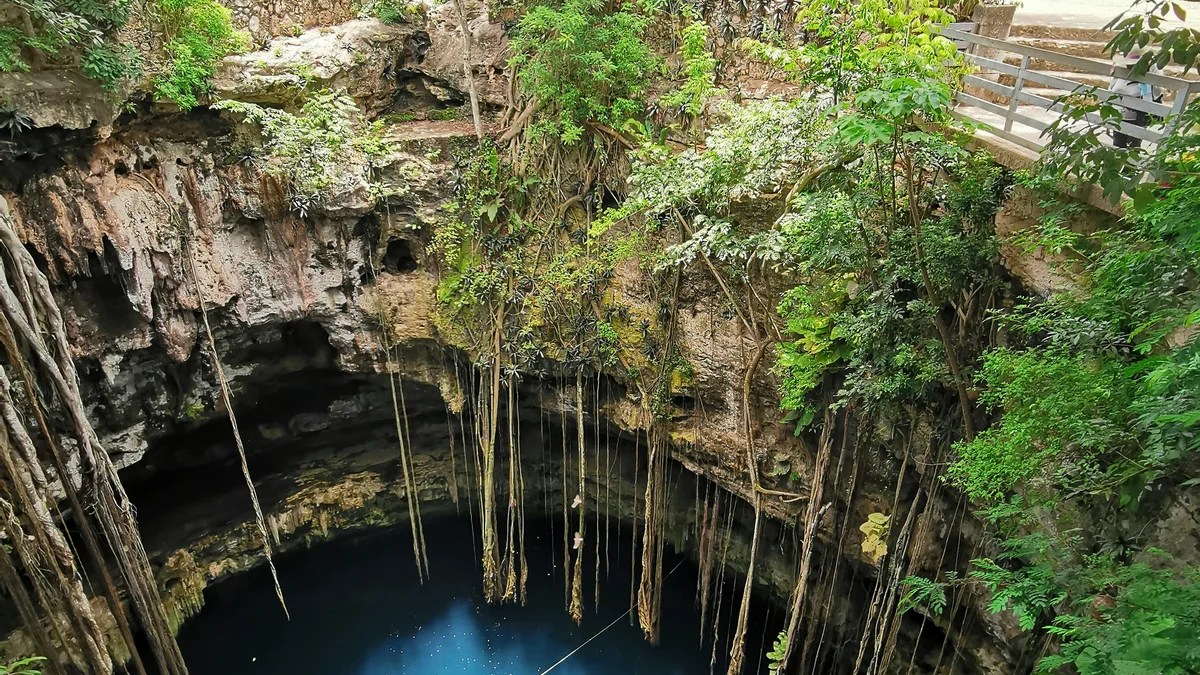
Explore Uxmal with a certified guide, then swim in Cenote Carlota and the cave cenote Cenote Azul at Hacienda Mucuyche, a restored henequen estate.
 Private Tours
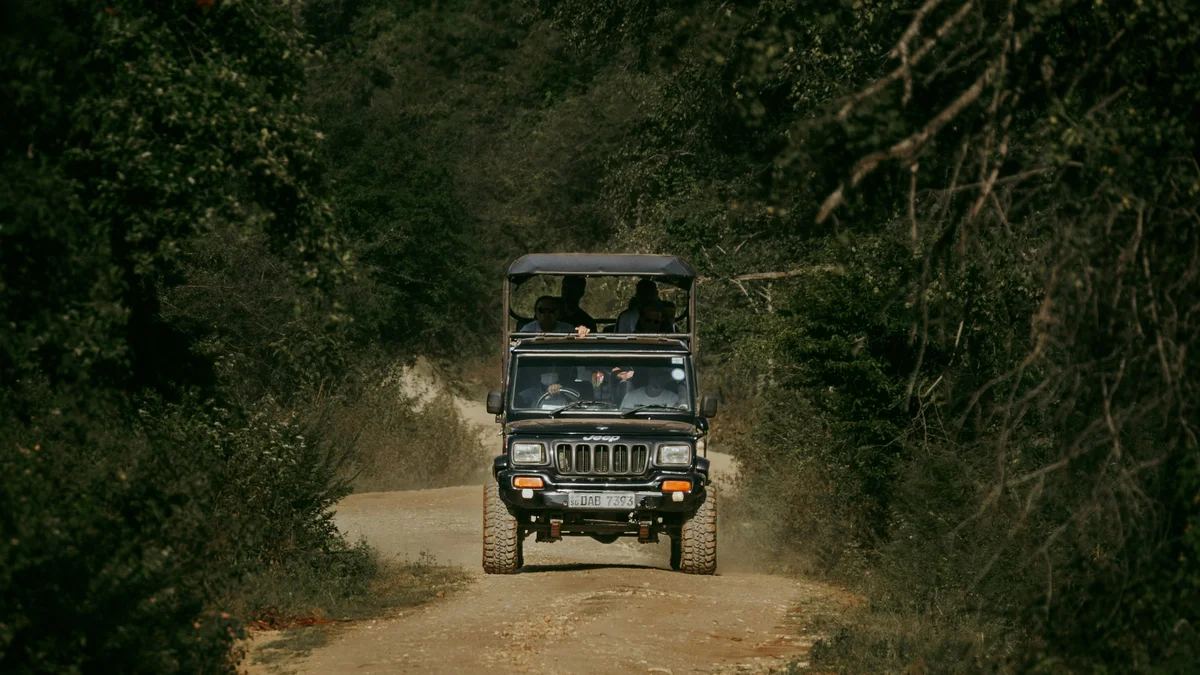
Journey through the grounds of the former Hacienda Uxmal in a safari-style open vehicle, take in a private viewpoint of the Pyramid of the Magician, and share a curated Mayan brunch made by Doña Mirna and Victor.
Visitor guide
Uxmal is an ancient Maya city of the Classic period in the Puuc region of Yucatan state, Mexico, about 62 kilometres south of Merida. It is inscribed by UNESCO as the Pre-Hispanic Town of Uxmal and is celebrated for the refined Puuc style of its stone buildings.
Wikipedia gives a construction date of around AD 700 and an abandonment in the 13th century. The present name may derive from a phrase meaning three times built, although the etymology is disputed. UNESCO inscribed the site in 1996, alongside the nearby sites of Kabah, Sayil and Labna.
Puuc buildings have smooth, low walls topped by ornate friezes that imitate traditional Maya huts, with columns standing for reeds and trapezoidal shapes standing for thatched roofs. Masks of the rain god Chaac, often with entwined snakes and long noses, are a recurring motif.
The best-known building is the Pyramid of the Magician, a five-level stepped pyramid. Its layers have oval or elliptical outlines, which is unusual among Maya structures, which mostly use rectangular plans. A newer pyramid was built over an older one, so the older temple survives on the west side. The common name comes from a folk tale popularised by John Lloyd Stephens in 1841, in which a dwarf, helped by his mother, a witch, built the pyramid overnight. Local tradition also describes Uxmal as an invisible city built in one night; this is legend rather than history.
The Governor's Palace is a long, low building on a huge platform, with what Wikipedia describes as the longest facades in pre-Columbian Mesoamerica. Its orientation has been linked to the movements of Venus, and its facade has nearly 400 Venus glyphs in Chaac masks. The Nunnery Quadrangle, dated to roughly AD 900 to 1000, was named in the 16th century because it resembled a convent. Four palaces on different levels surround a courtyard and their facades are elaborately carved inside and out.
Wikipedia reports that the Governor's Palace orientation, at roughly 118 degrees, points toward the small pyramid of Cehtzuc about 5 kilometres to the southeast, and from there Venus as an evening star at its northernmost extreme would have set behind the northern edge of the palace, an event that recurs about every eight years around the start of the rainy season. The palace covers more than 1,200 square metres, and eight two-headed serpents sit above the main entrance.
A large ball court at Uxmal bears an inscription saying it was dedicated in 901, though it is now badly deteriorated and its original stone rings have been replaced with reproductions. Sylvanus Morley produced a map of the site in 1909, and the Mexican government began a first protection project in 1927. In 1930 a Tulane University expedition made plaster casts of the Nunnery facades, and a Mexican repair and consolidation programme began in 1936.
Uxmal is a common excursion from Merida and is often visited with other Puuc sites. A private tour with a driver and guide allows time to explore the larger structures and understand the stories attached to them.
See every tour and attraction we cover in Merida.