TorontoOntario · 36 tours
 Niagara FallsOntario · 25 tours
 New York CityNew York · 30 tours
 Las VegasNevada · 8 tours
 San FranciscoCalifornia · 16 tours
 VancouverBritish Columbia · 17 tours
 DubaiUAE · 54 tours
 Abu DhabiUAE · 5 tours
 Buenos AiresArgentina · 23 tours
 AthensGreece · 31 tours
 AucklandNew Zealand · 38 tours
 CancunMexico · 54 tours
No destinations match “”. Try searching all tours instead — that search understands full questions, not just place names.
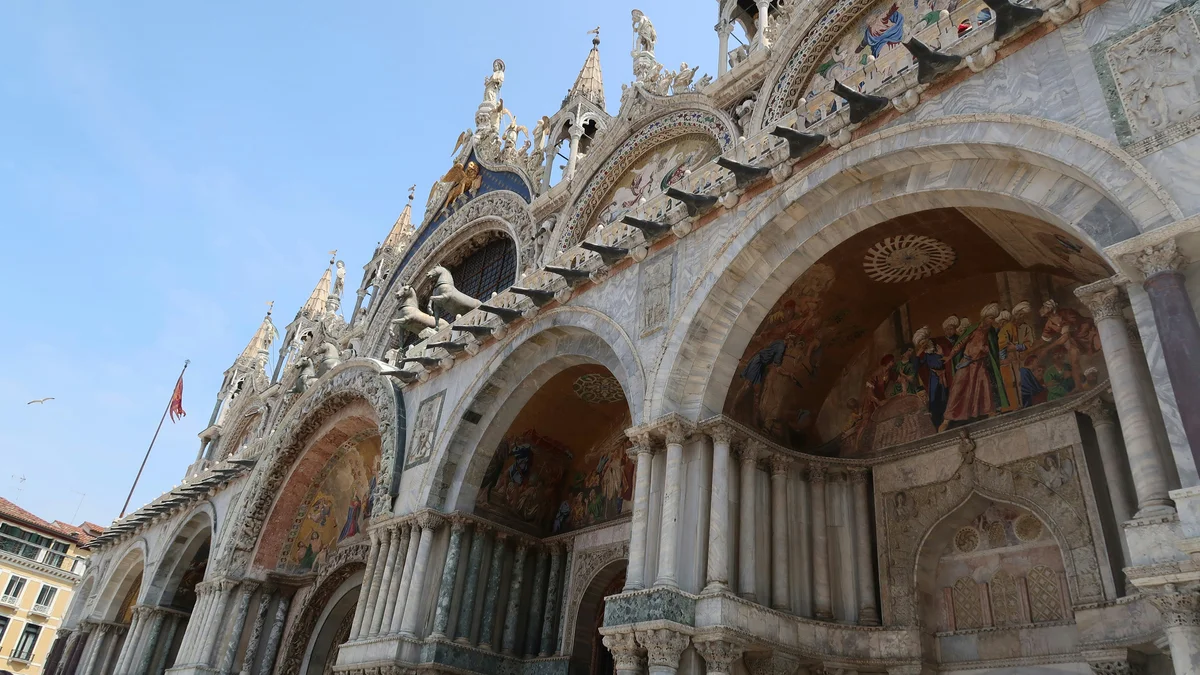
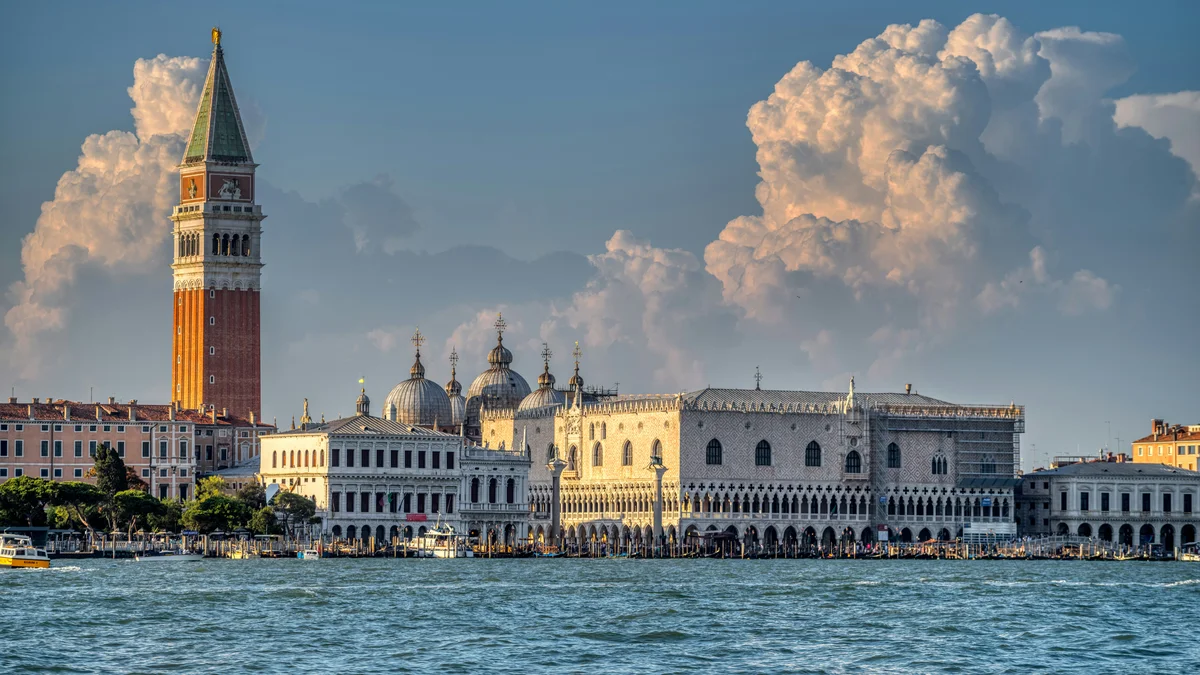
St. Mark's Basilica is Venice's Byzantine-style cathedral on Piazza San Marco, famous for its golden mosaics covering more than 8,000 square meters of interior surface and for the Pala d'Oro, a jewel-encrusted gold altarpiece dating back to the 10th century. Its distinctive domes and bronze horses on the Loggia dei Cavalli reflect centuries of Venice's trade links with Constantinople.
Visitor guide
St Mark's Basilica, formally the Patriarchal Cathedral Basilica of Saint Mark, is the cathedral church of the Patriarchate of Venice in Italy. It stands at the eastern end of Saint Mark's Square, attached to the Doge's Palace, and holds the relics of Saint Mark the Evangelist, the patron saint of the city. It is known for its Byzantine-influenced architecture and its gold-ground mosaics.
Medieval chronicles say that the body of Saint Mark was removed from Alexandria in Egypt by two Venetian merchants and brought to Venice in 828 or 829. The first church built to house the relics was consecrated in 832, according to the basilica's own chronology, and excavations indicate it was a cruciform church from the start. According to Wikipedia, it was modelled on the Church of the Holy Apostles in Constantinople, a radical break from local tradition that underscored St Mark's role as a state sanctuary rather than a mere ecclesiastical seat. Until the fall of the Republic of Venice in 1797 it served as the chapel of the Doge, and it became the cathedral of Venice only in 1807.
The first church was severely damaged in 976, when a fire set during an uprising against Doge Pietro IV Candiano spread from the Doge's fortress, and it was repaired within two years. The present structure is the third church, probably begun in 1063 to express Venice's growing civic pride. Like its predecessors, it followed the Constantinople model, with Middle-Byzantine, Romanesque and Islamic influences, and Gothic elements added later.
The original brick facades and interior walls were embellished over the centuries, mostly in the thirteenth century, with precious stones and rare marbles. Many columns, reliefs and sculptures were spoils taken from Constantinople after Venetian participation in the Fourth Crusade, including the four ancient bronze horses placed over the entrance. The west facade has five deeply recessed portals, and its mosaic lunettes narrate the transfer of Saint Mark's relics. Only one of these, over the left portal, survives from the thirteenth century; the others were remade in later centuries.
The upper facade has a Gothic crowning of ogee arches and statues, with the winged lion of Saint Mark at the centre. Inside, the domes, vaults and upper walls were slowly covered with gold-ground mosaics of saints, prophets and biblical scenes. Many were retouched or remade over time, so the mosaics represent about eight hundred years of artistic styles, and some are based on drawings by Renaissance artists including Titian and Tintoretto.
The floor, made mostly in opus sectile, dates to the late eleventh or early twelfth century. It consists of geometric patterns and animal designs, including lions, eagles, griffons, deer and peacocks, in coloured marbles and limestones. Many windows were later walled up to create more wall space for mosaics, so the interior can seem dim, which gives the golden surfaces much of their character.
The basilica sits on St Mark's Square beside the Doge's Palace, in a car-free part of Venice reached on foot or by boat. A guide can help explain the mosaics, the Constantinople connection and the relics of Saint Mark in the time available, and a private tour for your group can be planned around the rest of the square.
See every tour and attraction we cover in Venice.