TorontoOntario · 36 tours
 Niagara FallsOntario · 25 tours
 New York CityNew York · 30 tours
 Las VegasNevada · 8 tours
 San FranciscoCalifornia · 16 tours
 VancouverBritish Columbia · 17 tours
 DubaiUAE · 54 tours
 Abu DhabiUAE · 5 tours
 Buenos AiresArgentina · 23 tours
 AthensGreece · 31 tours
 AucklandNew Zealand · 38 tours
 CancunMexico · 54 tours
No destinations match “”. Try searching all tours instead — that search understands full questions, not just place names.
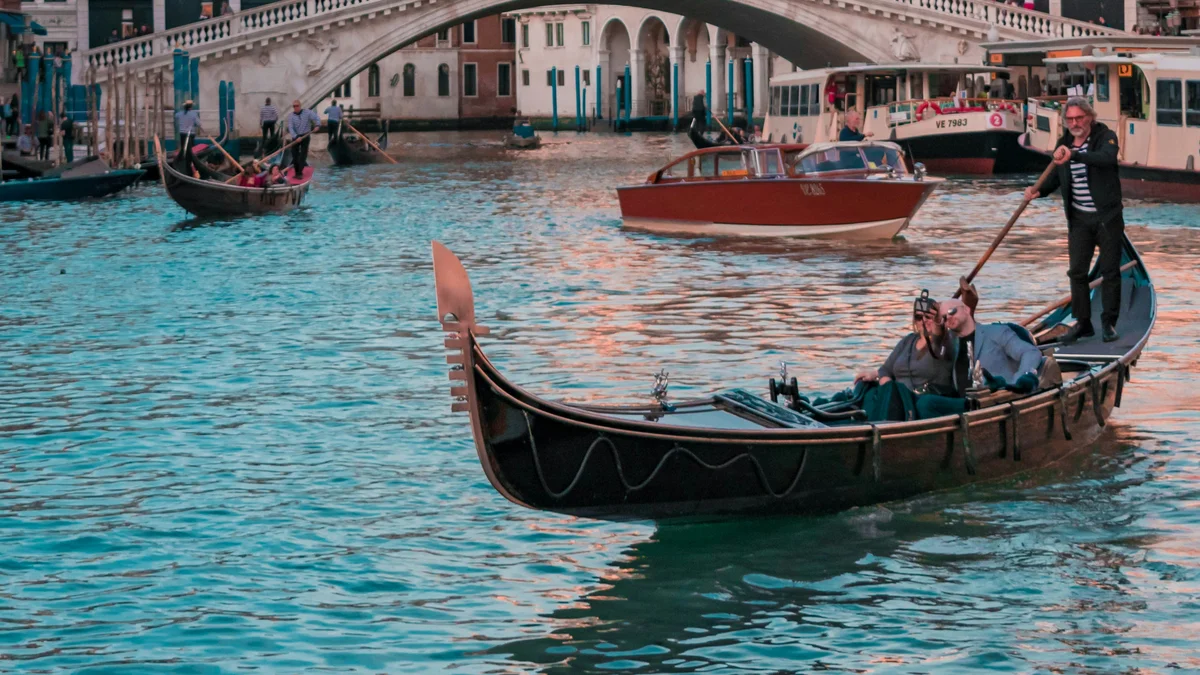
The Rialto Bridge is the oldest of the four bridges spanning the Grand Canal, completed in 1591 to replace earlier wooden crossings. Its stone arch, lined with shops, has long marked the commercial heart of Venice, overlooking the lively Rialto Market where locals still buy fresh fish and produce.
Visitor guide
The Rialto Bridge is a stone bridge across the Grand Canal in Venice, Italy, connecting the districts of San Marco and San Polo. Wikipedia describes it as the oldest of the four bridges spanning the Grand Canal. It has been rebuilt several times since a first crossing was built in the twelfth century, and it remains one of the architectural icons of Venice.
The first dry crossing of the Grand Canal was a pontoon bridge, built in 1181 by Nicolo Barattieri and called the Ponte della Moneta, presumably because of a mint near its eastern end. As the Rialto market grew, it was replaced in 1255 by a wooden bridge with two ramps meeting at a movable central section that could be raised to let tall ships pass. In the first half of the 15th century, two rows of shops were built along it, and their rents helped maintain the bridge.
The timber bridge needed constant care. It was partly burnt in the revolt led by Bajamonte Tiepolo in 1310, and it collapsed in 1444 under the weight of a crowd coming to watch a wedding procession, and again in 1524. The idea of rebuilding in stone was first proposed in 1503, and in 1551 authorities asked for proposals. Plans came from famous architects including Sansovino, Palladio and Vignola, but all used a classical multi-arch approach that was judged inappropriate, and Michelangelo was also considered.
The present stone bridge, a single span designed by Antonio da Ponte, was built between 1588 and 1591. It is similar to the wooden bridge it replaced, with two ramps leading up to a central portico and covered ramps on each side carrying rows of shops. The engineering was considered so audacious that the architect Vincenzo Scamozzi predicted its ruin, but the bridge has defied its critics.
The bridge links to the Rialto, which Wikipedia calls the financial and commercial heart of Venice for many centuries. The district was settled by the ninth century, and it became important in 1097 when the city's market moved there. The daily Erberia produce market and the fish market at Campo della Pescheria still operate nearby. A fire in 1514 destroyed most of the buildings in the area, with only the church of San Giacomo di Rialto surviving.
The bridge appears in literature too. In Shakespeare's The Merchant of Venice, Shylock refers to the Rialto, and Robert Browning's poem A Toccata of Galuppi's calls it Shylock's bridge.
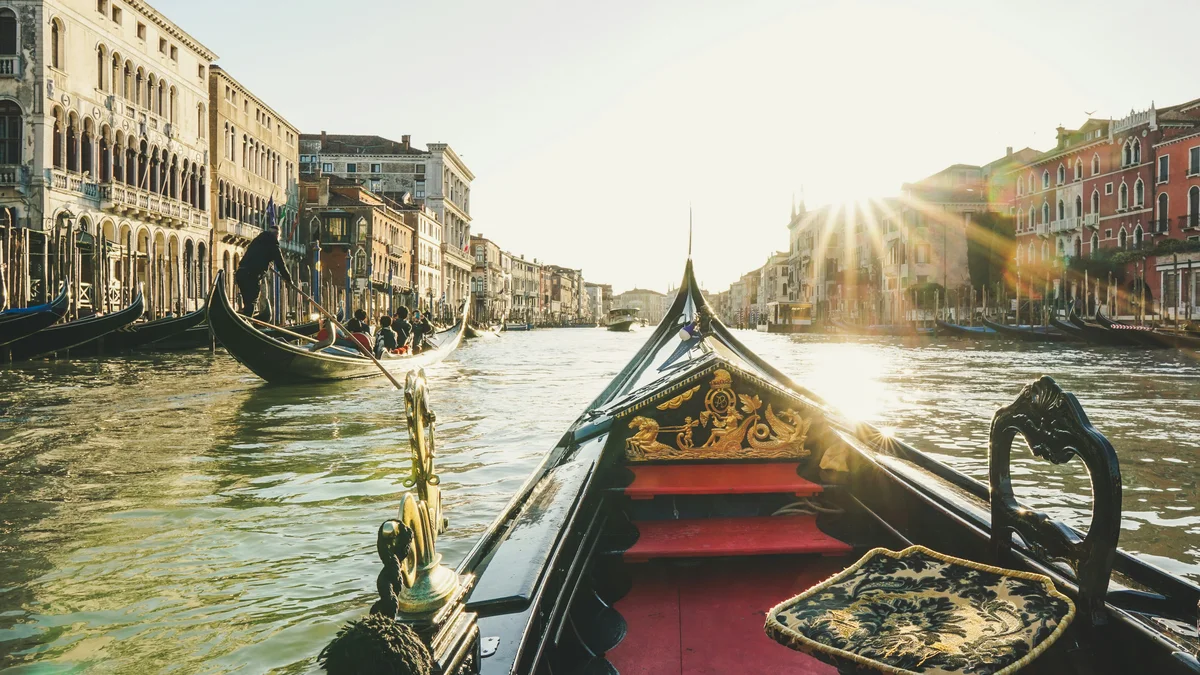
The Rialto Bridge is best appreciated both from the span, with views along the Grand Canal, and from the water or the embankments. Venice has no road traffic, so a private guide can plan the walking route and boat transfers for your group as part of a wider Venice visit.
See every tour and attraction we cover in Venice.