TorontoOntario · 36 tours
 Niagara FallsOntario · 25 tours
 New York CityNew York · 30 tours
 Las VegasNevada · 8 tours
 San FranciscoCalifornia · 16 tours
 VancouverBritish Columbia · 17 tours
 DubaiUAE · 54 tours
 Abu DhabiUAE · 5 tours
 Buenos AiresArgentina · 23 tours
 AthensGreece · 31 tours
 AucklandNew Zealand · 38 tours
 CancunMexico · 54 tours
No destinations match “”. Try searching all tours instead — that search understands full questions, not just place names.
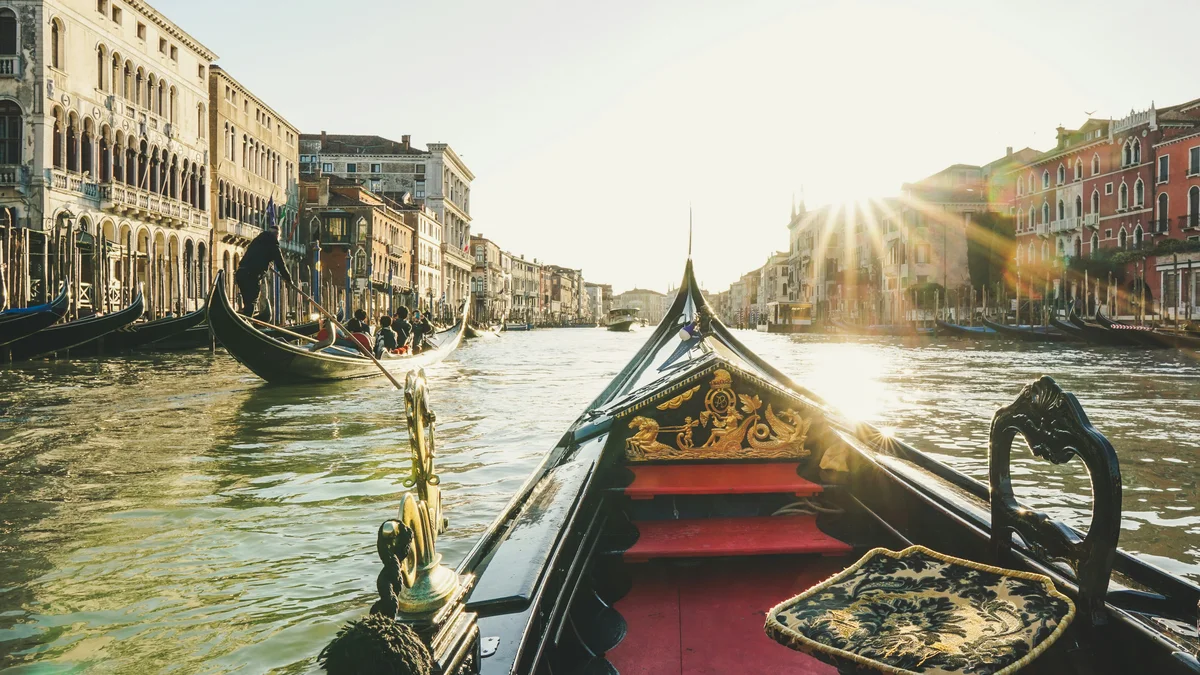
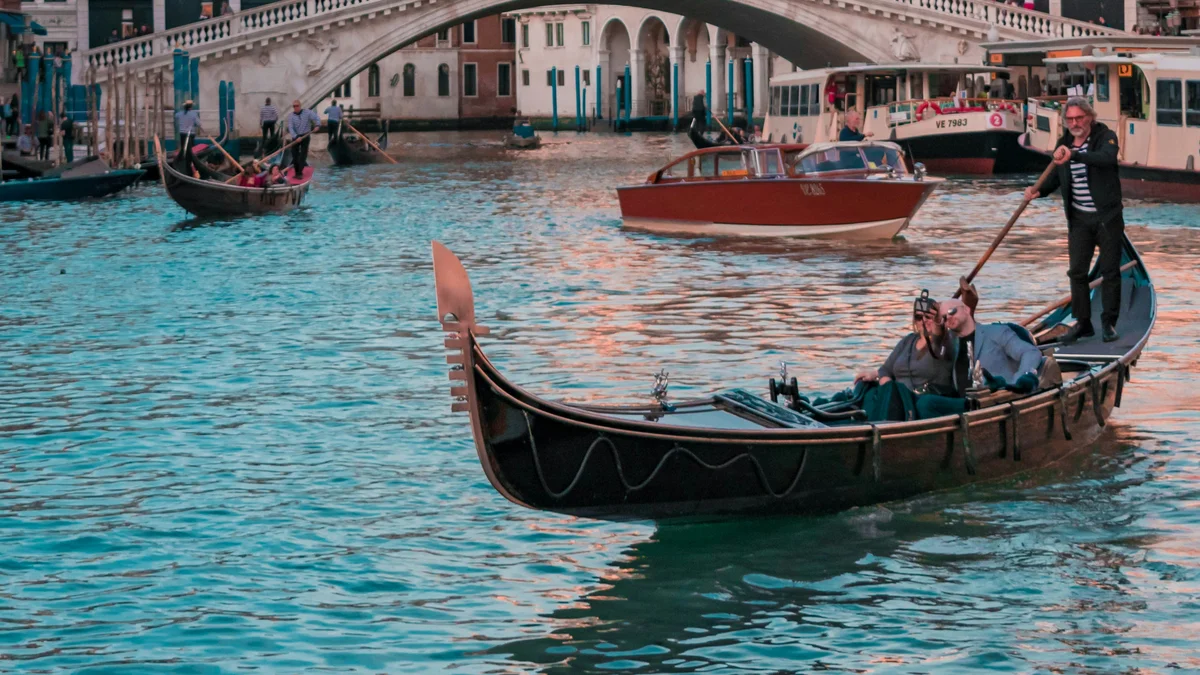
The Grand Canal is Venice's main waterway, winding in a reverse-S shape through the city and lined with centuries of palazzos, churches, and merchant houses built by Venice's noble families. It's traditionally traveled by vaporetto, gondola, or private water taxi, offering one of the best vantage points for the city's architecture.
Visitor guide
The Grand Canal is the largest channel in Venice, Italy, and one of the city's major water-traffic corridors. It forms a large reverse-S shape through the central districts, running from the lagoon near the Santa Lucia railway station to the basin at San Marco. According to Wikipedia it is 3.8 kilometres long, 30 to 90 metres wide, and about 5 metres deep on average.
The canal probably follows the course of an ancient river, possibly a branch of the Brenta, flowing into the lagoon. Before the Roman age, Adriatic Veneti groups lived beside it in stilt houses, relying on fishing and trade in salt. In the early 9th century the doge moved his seat from Malamocco to the safer Rivoaltus, the Rialto area, and increasing trade followed, making the deep canal a safe port.
Merchants built fondaco houses along the water, buildings that combined a warehouse and a merchant's residence, with a portico for unloading ships. The Fondaco dei Tedeschi and the Fondaco dei Turchi reflect the many foreign merchants who worked in Venice. Public buildings for commerce and finance were also built near the Rialto, and a pontoon bridge was constructed there in 1181.
The banks of the Grand Canal are lined with more than 170 buildings, most dating from the 13th to the 18th century, which reflect the wealth and art of the Republic of Venice. Noble families competed to show off their riches in palaces. The Venetian-Byzantine style appears in houses such as Ca' Farsetti, Ca' Loredan and Ca' da Mosto, with large loggias and abundant coloured marble. Later came Venetian Gothic palaces such as Ca' d'Oro and Ca' Foscari, now home to the University of Venice.
Renaissance architecture arrived with Mauro Codussi, whose Palazzo Corner Spinelli and Ca' Vendramin Calergi stand on the canal, and with Jacopo Sansovino, who arrived from Rome in 1527. Other palaces named by Wikipedia include Palazzo Barbaro, Ca' Rezzonico, Palazzo Dario and Palazzo Venier dei Leoni, which houses the Peggy Guggenheim Collection. The basilica of Santa Maria della Salute stands among the churches along the canal.
Because most traffic goes along the canal rather than across it, only one bridge crossed the Grand Canal until the 19th century, the Rialto Bridge. Three more now exist: the Ponte degli Scalzi, the Ponte dell'Accademia and the Ponte della Costituzione, designed by Santiago Calatrava and opened in 2008. People can still cross by traghetto, a simple gondola ferry, although the service is less common than it was.
Most of the palaces rise directly out of the water without a pavement, so the facades are best seen from the water. Traditions such as the Historical Regatta continue along the canal each year.
Because the palaces front the water, a boat trip is the natural way to see the facades, and a private guide can help identify the main palaces and bridges. The canal's busy water traffic includes water buses, water taxis and gondolas, so views change from moment to moment.
See every tour and attraction we cover in Venice.