TorontoOntario · 36 tours
 Niagara FallsOntario · 25 tours
 New York CityNew York · 30 tours
 Las VegasNevada · 8 tours
 San FranciscoCalifornia · 16 tours
 VancouverBritish Columbia · 17 tours
 DubaiUAE · 54 tours
 Abu DhabiUAE · 5 tours
 Buenos AiresArgentina · 23 tours
 AthensGreece · 31 tours
 AucklandNew Zealand · 38 tours
 CancunMexico · 54 tours
No destinations match “”. Try searching all tours instead — that search understands full questions, not just place names.
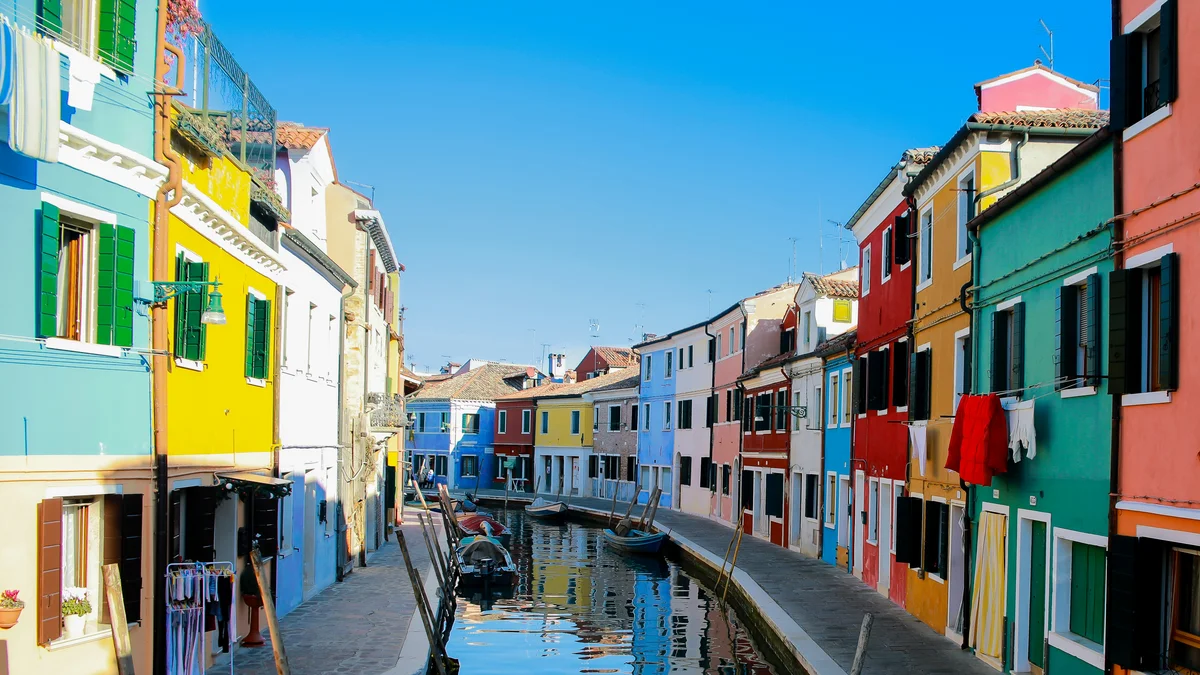
Murano and Burano are two of the Venetian Lagoon's most visited islands: Murano has been the center of Venice's glassmaking tradition for centuries, with factories where visitors can watch glass being blown by hand, while Burano is known for its brightly painted fishermen's houses and its centuries-old lacemaking tradition.
Visitor guide
Murano and Burano are two islands in the Venetian Lagoon in northern Italy, each with its own craft tradition. Murano, about 1.5 kilometres north of Venice, is famous for glassmaking, while Burano, near Torcello at the northern end of the lagoon, is known for lace work and brightly coloured houses. Both are reached from Venice by water bus.
Murano is a series of seven islands linked by bridges over eight channels. According to Wikipedia, it was settled by the Romans and from the sixth century by people from Altinum and Oderzo, and it once prospered through fishing and salt. In 1291 all the glassmakers of Venice were required to move to Murano, reportedly out of fear that furnaces might set the mostly wooden city on fire. The island became famous for glass beads and mirrors, and for a while was the main producer of glass in Europe.
By the fourteenth century glassmakers enjoyed privileges such as being allowed to wear swords, though they were forbidden to leave the Republic. Murano's glassmakers developed or refined technologies including optically clear glass, enamelled glass, aventurine, millefiori, milk glass and imitation gemstones, and the island later became known for chandeliers. The Murano Glass Museum is housed in the Palazzo Giustinian, and many glassworks remain, with a regional trademark certifying artistic glass made on the island.
The Church of Santa Maria e San Donato is known for its twelfth-century Byzantine mosaic pavement and is said to house the bones of a dragon slain by Saint Donatus, which is a legend. The church of San Pietro Martire has artworks by Giovanni Bellini. The Camaldolese monastery of San Michele on a nearby island was a centre of learning and printing, and the mapmaker Fra Mauro was a monk there.
Burano lies about 7 kilometres from Venice, reached by vaporetto, and is linked by a bridge to Mazzorbo. The island is made up of what were originally five islands, and has a population of around 2,800. It rose in importance only in the 16th century, when women began making needle lace, a trade that reached the island through Venetian-ruled Cyprus. The lace was exported across Europe, but trade declined in the 18th century and revived after a lace school opened in 1872. Few now make lace in the traditional manner because it is very time-consuming.
Burano is also known for its small, brightly painted houses. Wikipedia reports that the colours follow a system dating from the island's golden age, and that owners must apply to the authorities for permitted colours. The only square, Piazza Baldassare Galuppi, is named for the composer born on the island in 1706, and nearby are the Lace Museum and the church of San Martino with its leaning campanile.
The islands are reached by boat, and since Venice has no road traffic, a private guide can plan the transfers, timing and what to see on each island, such as a glassmaking demonstration on Murano and the streets of Burano.
See every tour and attraction we cover in Venice.