TorontoOntario · 36 tours
 Niagara FallsOntario · 25 tours
 New York CityNew York · 30 tours
 Las VegasNevada · 8 tours
 San FranciscoCalifornia · 16 tours
 VancouverBritish Columbia · 17 tours
 DubaiUAE · 54 tours
 Abu DhabiUAE · 5 tours
 Buenos AiresArgentina · 23 tours
 AthensGreece · 31 tours
 AucklandNew Zealand · 38 tours
 CancunMexico · 54 tours
No destinations match “”. Try searching all tours instead — that search understands full questions, not just place names.
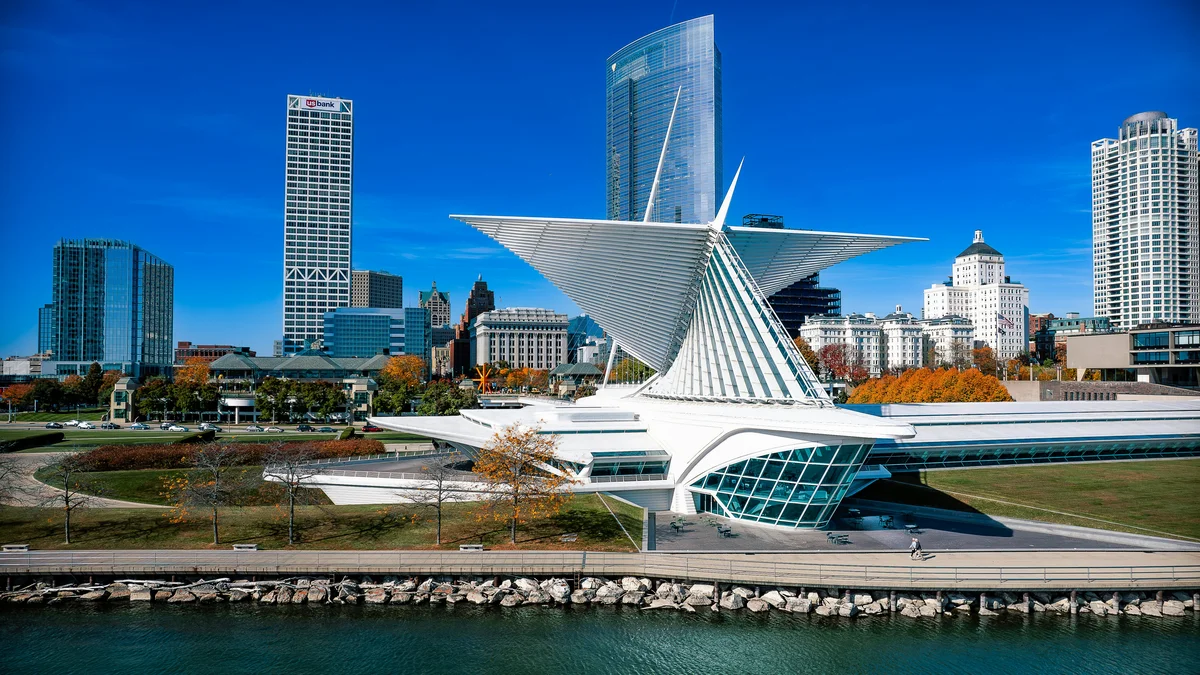
Milwaukee's lakefront art museum is best known for its Santiago Calatrava-designed Quadracci Pavilion, whose Burke Brise Soleil — a moving, wing-like sunscreen with a roughly 217-foot wingspan — opens and closes daily, weather permitting. The museum describes itself as Wisconsin's largest art institution, with a collection spanning American, European, and contemporary works.
 Private Tours
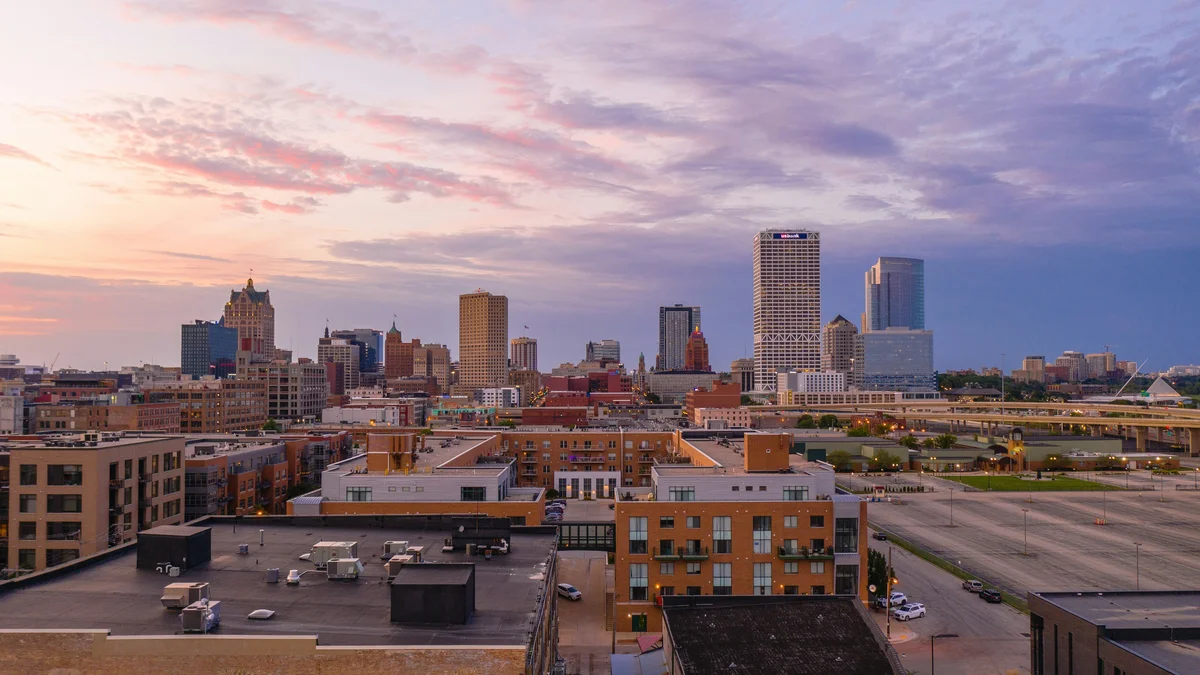
A private 10-15 minute helicopter flight over downtown Milwaukee, passing the Milwaukee Art Museum, Veterans Park, Fiserv Forum, and the Harley-Davidson Museum.
 Private Tours
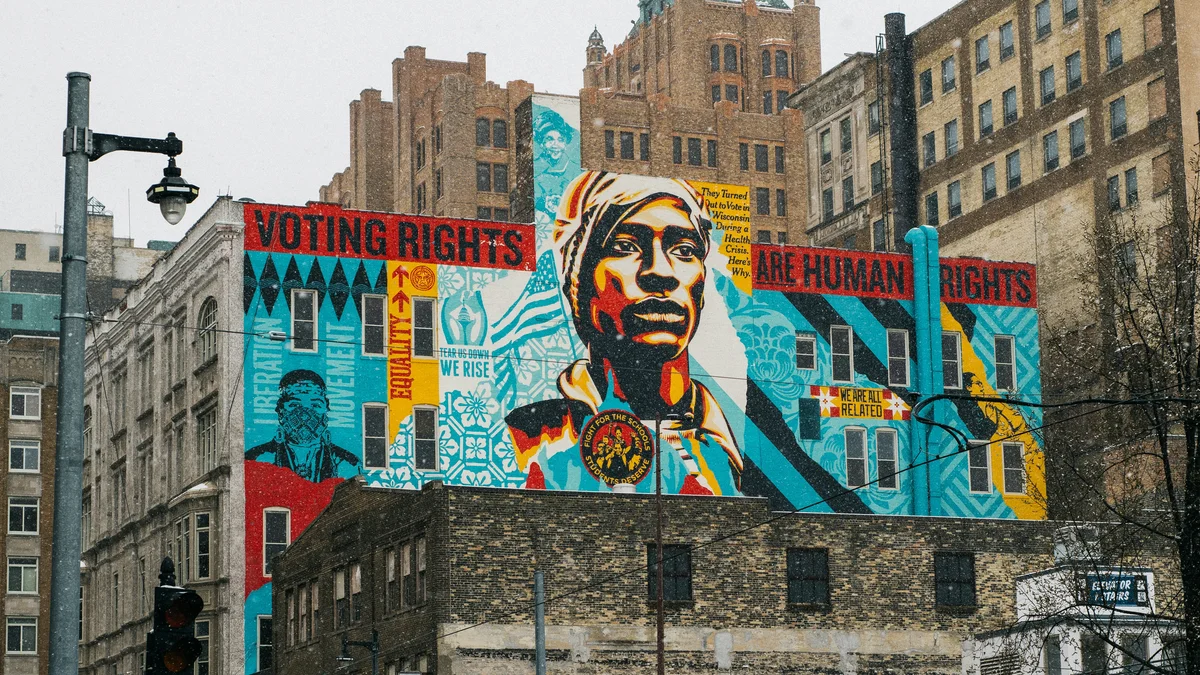
A private 2-hour tour by comfortable vehicle through Milwaukee, taking in Lakefront Brewery, Black Cat Alley's street art, Villa Terrace, the Milwaukee Art Museum, Milwaukee Public Market, and Fiserv Forum.
 Private Tours
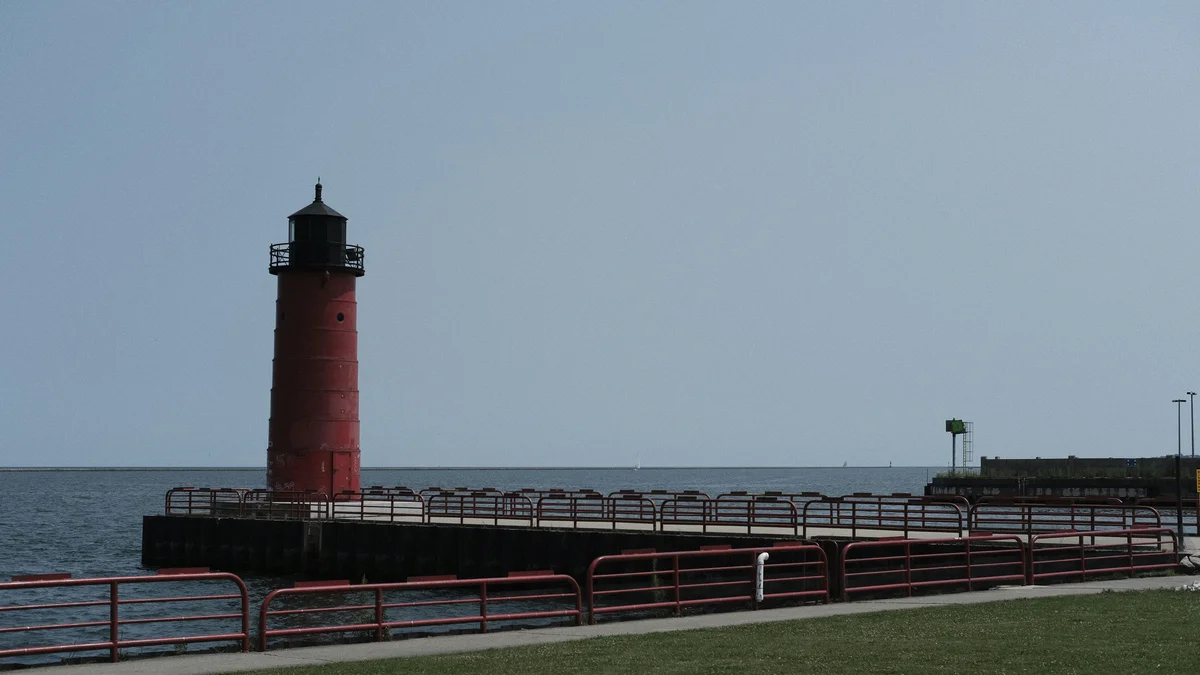
A private 2-hour romantic walking tour along Milwaukee's lakefront, starting at the Milwaukee Art Museum and taking in Lakeshore State Park and the Reiman Pedestrian Bridge.
Visitor guide
The Milwaukee Art Museum stands on a lakeside campus in downtown Milwaukee, with buildings by three architects: Eero Saarinen (1957), David Kahler (1975) and Santiago Calatrava (2001). Its collection holds more than 34,000 works from antiquity to today, and its Calatrava-designed Quadracci Pavilion with a movable sunscreen has become one of the city's best-known images.
The museum traces its roots to 1888, when businessman Frederick Layton, born in Britain, established the city's first permanent art gallery. He gave it a $100,000 endowment and 38 paintings, and the Layton Art Gallery opened in a Greek Revival building designed by the London architects W. J. and G. A. Audsley. The Milwaukee Art Association was also founded in 1888; it later became the Milwaukee Art Society, and in 1916 the Milwaukee Art Institute, which the painter Alfred Pelikan directed from 1926 to 1941.
In 1957 the two institutions combined as the Milwaukee Art Center and moved into Saarinen's Milwaukee County War Memorial, which was dedicated on Veterans Day 1957 with the motto 'To Honor the Dead by Serving the Living.' The name became Milwaukee Art Museum in 1980.
Saarinen's War Memorial sits on Lake Michigan and honors those who served in the U.S. armed services. Inside, a mural by Edmund Lewandowski, installed in 1959, is made of more than a million pieces of glass and marble. Calatrava has said that Saarinen's original building inspired his own design.
Kahler's brutalist building of 1975 added much larger gallery space, including a wing for the gift of Margaret 'Peg' Bradley. Wikipedia describes the gift as more than 600 European and American modern works, while the museum's own history page says nearly 400; the sources differ. Bradley also contributed $1 million toward construction. Highlights include works by Kandinsky and Kirchner.
Calatrava's Quadracci Pavilion was his first commission in the United States. Construction began in December 1997 and it opened in 2001, at a reported cost of $121 million, with a formal dedication in October 2001. The pavilion covers about 142,050 square feet and holds a reception hall, auditorium, exhibition space and store, and the museum's total reached 341,000 square feet. Much of it was built by pouring concrete into custom wooden forms. Major funding came from Betty and Harry Quadracci, who offered a $10 million matching gift in 1997, and from Donald and Donna Baumgartner.
Its central reception space, Windhover Hall, is a take on a Gothic cathedral, with pointed arches, ribbed vaults and a central nave under a glass roof 90 feet tall. The chancel resembles a ship's prow, with floor-to-ceiling windows overlooking Lake Michigan. The movable Burke Brise Soleil opens to a 217-foot wingspan by day and folds at night or in bad weather; it consists of 72 steel fins from 26 to 105 feet long and weighs about 90 tons, and the museum says it takes about three and a half minutes to open or close. Wind sensors close it when winds exceed 23 miles per hour for more than three seconds. A pedestrian bridge links the pavilion to Wisconsin Avenue. The pavilion received the 2004 Outstanding Structure Award from the International Association for Bridge and Structural Engineering.
Outside, the Cudahy Gardens, designed by Dan Kiley, measure 600 by 100 feet and are divided into five lawns by hedges, with a four-foot water curtain fountain at the center. A $34 million expansion opened in November 2015, adding 120,000 square feet, and was designed by Milwaukee architect James Shields with the firm HGA.
The museum lists strengths in Ashcan School paintings, American and European decorative arts, nineteenth-century German art, early twentieth-century German Expressionism, and folk and Haitian art. It holds a substantial group of works by Wisconsin-born Georgia O'Keeffe, including The Flag (1918). Folk and self-taught art was strengthened by the 1989 Michael and Julie Hall Collection and by gifts in 2010 and 2012 that added nearly 500 works, among them pieces by Bill Traylor and Clementine Hunter. Wikipedia also lists a 2004 acquisition of the Ritz collection and the Lanford Wilson collection among major gifts. The museum describes a 24-acre lakeside campus with more than forty galleries on four floors.
The building is an attraction in its own right, so a private tour can pair a gallery visit with time outside on the lakefront. With your own vehicle and driver, pickup and drop-off are door to door. Check the museum for current exhibitions, hours and access.
See every tour and attraction we cover in Milwaukee.