TorontoOntario · 36 tours
 Niagara FallsOntario · 25 tours
 New York CityNew York · 30 tours
 Las VegasNevada · 8 tours
 San FranciscoCalifornia · 16 tours
 VancouverBritish Columbia · 17 tours
 DubaiUAE · 54 tours
 Abu DhabiUAE · 5 tours
 Buenos AiresArgentina · 23 tours
 AthensGreece · 31 tours
 AucklandNew Zealand · 38 tours
 CancunMexico · 54 tours
No destinations match “”. Try searching all tours instead — that search understands full questions, not just place names.
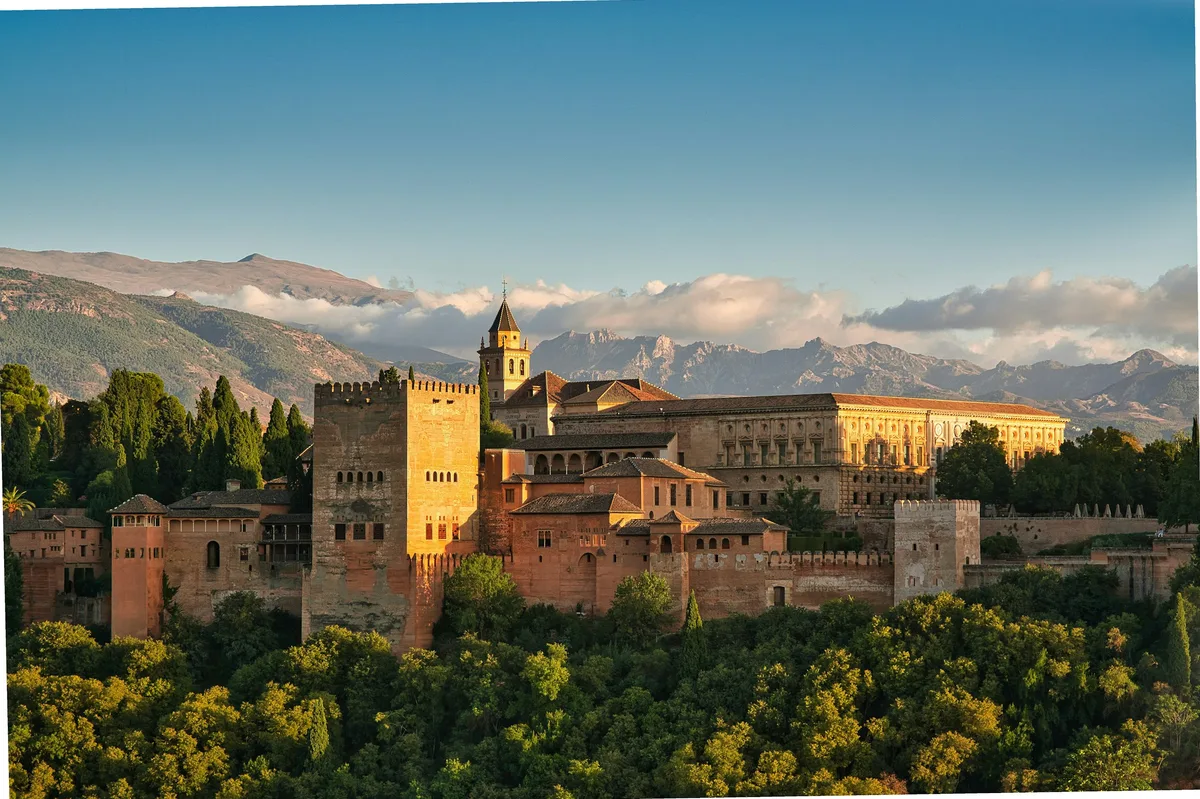
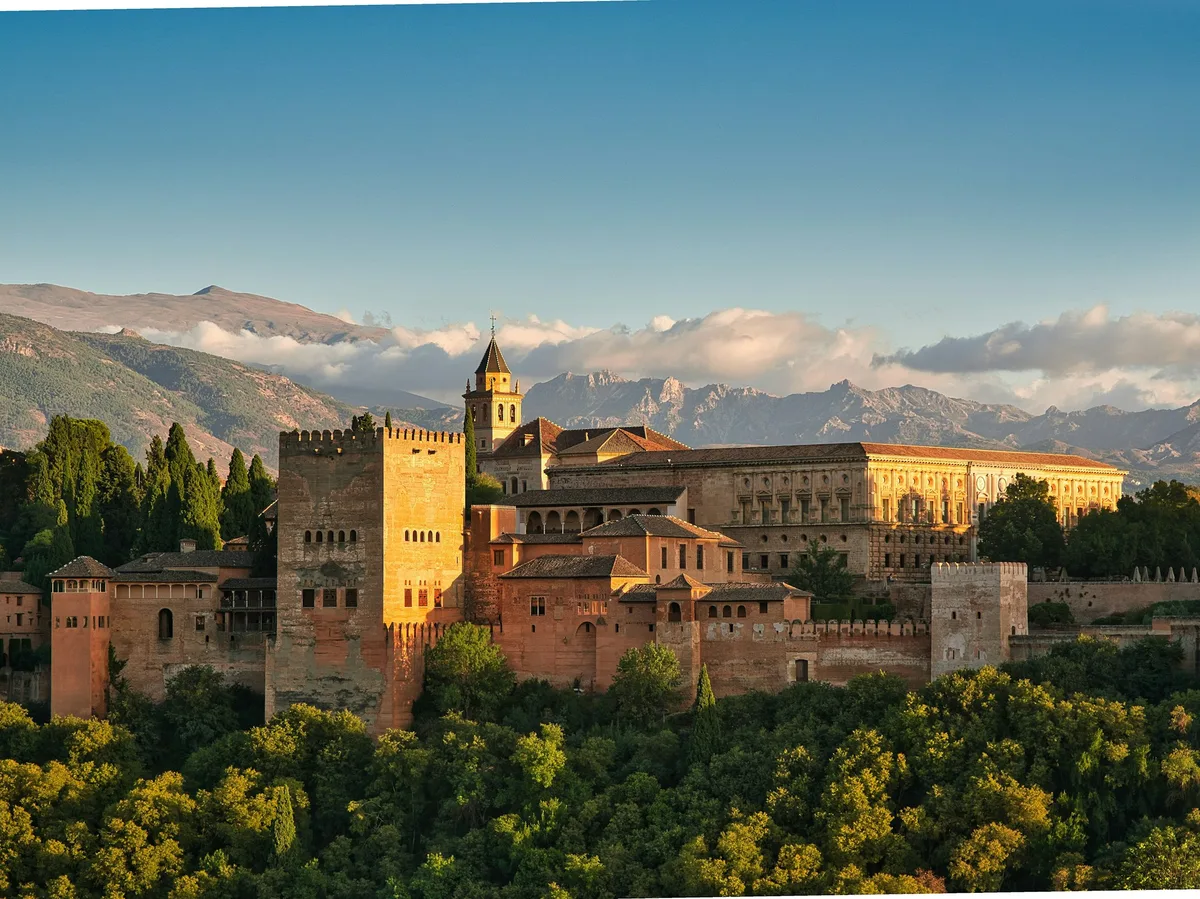
A Moorish palace and fortress complex overlooking Granada, its intricate Nasrid-era stucco work, courtyards, and gardens making it one of Spain's most visited monuments.
Visitor guide
The Alhambra is a palace and fortress complex on the Sabika hill above Granada, in Andalusia, southern Spain. Built largely by the Nasrid dynasty, the last Muslim rulers of the Iberian Peninsula, it combines military walls, royal palaces, gardens and a former summer estate in a single hilltop ensemble. Together with the Generalife and the Albayzin quarter, it is a UNESCO World Heritage Site.
The name comes from the Arabic al-Hamra, meaning 'the red one', usually understood as 'the red fortress'. The reddish tone is attributed to the iron-rich local clay used in the rammed-earth walls. The complex sits on a spur of the Sierra Nevada, giving it a commanding position over the city and the surrounding plain.
Construction of the Nasrid complex began in 1238 under Muhammad I Ibn al-Ahmar, founder of the Emirate of Granada, the last Muslim state in al-Andalus. Under the Nasrids it worked as a small palace-city, with mosques, baths, workshops and a water system fed by a channel known as the Sultan's Canal. Successive rulers added to it, so the site reads as the work of many reigns rather than a single plan.
The best-preserved royal buildings are the Mexuar, the Comares Palace, the Palace of the Lions and the Partal. The Mexuar, at the western edge of the palace area, housed administrative functions and a council hall where the sultan received petitions. The Comares Palace was the sultan's official residence and centres on the Court of the Myrtles, a rectangular courtyard with a long reflecting pool. Its Hall of the Ambassadors has a wooden ceiling made of thousands of interlinked pieces, said to represent the seven heavens.
The Court of the Lions dates from the second reign of Muhammad V, in the later 14th century, a period often regarded as the high point of Nasrid architecture. Its courtyard, stucco work and honeycomb-like muqarnas vaulting are famous, as are the poems carved into the walls, written as if the rooms themselves were speaking. Carved plaster covers the upper walls, glazed tile mosaics decorate the lower ones, and Arabic inscriptions, including the Nasrid motto 'There is no victor but God', recur throughout.
The Alcazaba, at the western tip of the hill, is the oldest surviving part of the complex and served as a military fortress and a quarter for the elite guard. Its watchtower, the Torre de la Vela, is where the flag of Ferdinand and Isabella was raised in January 1492. The Generalife, a Nasrid country estate just outside the main walls, is known for its rectangular garden courtyards, pavilions and water channels.
After Granada surrendered in 1492, the Alhambra passed to the Christian crown. Charles V began a Renaissance-style palace within the complex in 1527, designed by Pedro Machuca, and it was left without a roof when work stopped in 1637. The contrast between the circular courtyard of this palace and the intimate Nasrid courts nearby is one of the site's distinctive features. In 1812, occupying French troops damaged parts of the complex, and in the nineteenth and twentieth centuries restorers worked to stabilise and repair it.
The American writer Washington Irving lived in Granada in 1830, and his Tales of the Alhambra, first published in 1832, drew wide international attention to the monument. The Alhambra and Generalife were inscribed as a UNESCO World Heritage Site in 1984, and the property was extended in 1994 to include the Albayzin quarter.
The complex is large, with uneven paths, steps and slopes, and the palaces, Alcazaba and Generalife are separate areas to explore. Many travellers find that a private guided visit helps them follow the history, the inscriptions and the layout. Voyzo can arrange a private visit with a private vehicle and driver for your group.
See every tour and attraction we cover in Spain.