TorontoOntario · 36 tours
 Niagara FallsOntario · 25 tours
 New York CityNew York · 30 tours
 Las VegasNevada · 8 tours
 San FranciscoCalifornia · 16 tours
 VancouverBritish Columbia · 17 tours
 DubaiUAE · 54 tours
 Abu DhabiUAE · 5 tours
 Buenos AiresArgentina · 23 tours
 AthensGreece · 31 tours
 AucklandNew Zealand · 38 tours
 CancunMexico · 54 tours
No destinations match “”. Try searching all tours instead — that search understands full questions, not just place names.
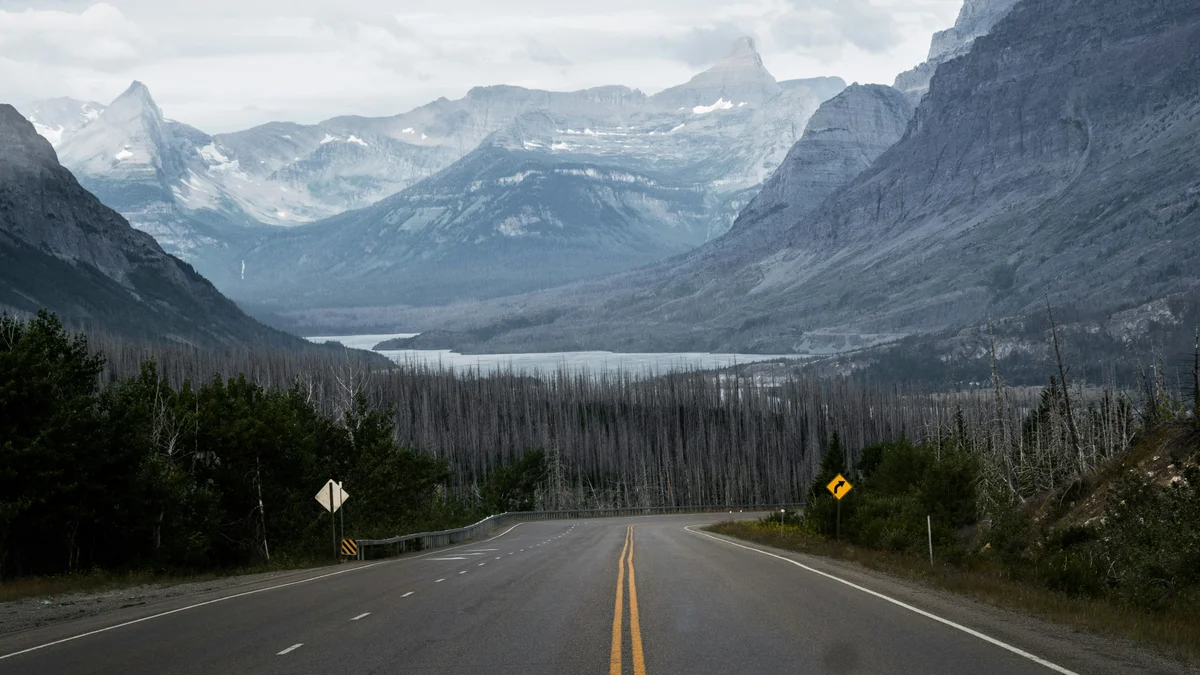
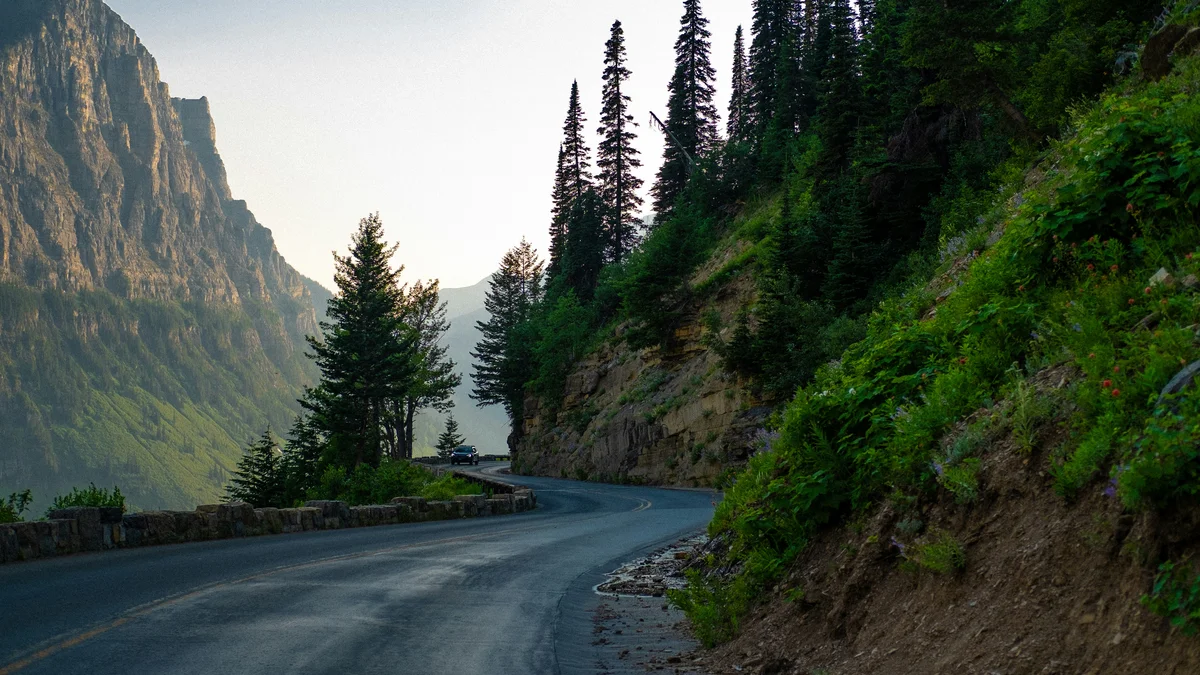
This 50-mile alpine highway is the only road that crosses Glacier National Park, climbing from Lake McDonald's forests up through the burned-but-recovering slopes above Saint Mary Lake to Logan Pass on the Continental Divide. Engineered in the 1920s-30s and now a National Historic Landmark, it's one of the most scenic drives in America, though heavy snowfall keeps the high section closed most of the year, typically open only from mid-June through mid-October.
Visitor guide
Going-to-the-Sun Road is the road across Glacier National Park in Montana, climbing from West Glacier to St. Mary and crossing the Continental Divide at Logan Pass, at 6,646 feet its high point. Sources give its length as nearly 50 miles (the National Historic Landmark nomination cites 48.7), and it is the park's only road linking the east and west sides.
Park superintendent George Goodwin proposed a route for the road in the late 1910s; an NPS lesson plan dates his route proposal to 1918, while other sources say 1917. Construction ran from 1921 to 1932, and the road was formally dedicated on July 15, 1933. Wikipedia puts the cost at about $2.5 million; the figure is sometimes quoted differently, so treat it as approximate. The National Park Service describes it as part of the wider Park-to-Park Highway concept that Stephen Mather first advocated in 1915, and it was among the first National Park Service projects built to bring motorists into the mountains. The last section was paved in the early-to-mid 1950s (NPS gives 1955; other NPS material says 1952).
A famous design dispute shaped the route. According to an NPS account, the engineer's proposed route to Logan Pass needed 15 switchbacks, while landscape architect Thomas Vint favored a route with just one. Vint's higher alignment along the Garden Wall reduced switchbacks and visual scarring but cost more, and Wikipedia says it became the preferred route.
Builders faced sheer cliffs, a short high-elevation building season, and snowdrifts reaching 60 feet, according to the Federal Highway Administration. The design limited heavy blasting, and rock excavated from nearby mountainsides was used to build most of the road's structures. The result is the NPS Rustic style: stone bridges, retaining walls, and tunnels in native materials meant to blend into the landscape. The National Park Service lists the road as a National Historic Landmark, and Wikipedia gives the dates as the National Register of Historic Places in 1983 and National Historic Landmark status on February 18, 1997; it is also a National Historic Civil Engineering Landmark.
The road is two lanes, narrow, with hairpin turns, especially west of Logan Pass, and Wikipedia notes vehicle size limits in places. Along the way it follows the shore of Lake McDonald on the west side, then climbs along the Garden Wall to Logan Pass, and descends the east side past Going-to-the-Sun Mountain, the peak for which the road is named. Historic red touring buses, known as Red Jammers, have run guided tours here; Wikipedia says 33 of the 1930s-era vehicles were rebuilt to run mainly on propane.
Heavy snow means the road is not a year-round route. Seasonal opening, vehicle reservations, and any vehicle-size limits change, so check the National Park Service's Glacier National Park pages for current information before planning a day.
Narrow mountain driving with a lot of pull-offs is a good case for a private vehicle and driver: the group can look out the window instead of watching the drop, and door-to-door pickup removes parking at the busiest stops. Voyzo arranges private tours; ask us how your dates and the park's current rules fit together.
See every tour and attraction we cover in Glacier National Park.