TorontoOntario · 36 tours
 Niagara FallsOntario · 25 tours
 New York CityNew York · 30 tours
 Las VegasNevada · 8 tours
 San FranciscoCalifornia · 16 tours
 VancouverBritish Columbia · 17 tours
 DubaiUAE · 54 tours
 Abu DhabiUAE · 5 tours
 Buenos AiresArgentina · 23 tours
 AthensGreece · 31 tours
 AucklandNew Zealand · 38 tours
 CancunMexico · 54 tours
No destinations match “”. Try searching all tours instead — that search understands full questions, not just place names.
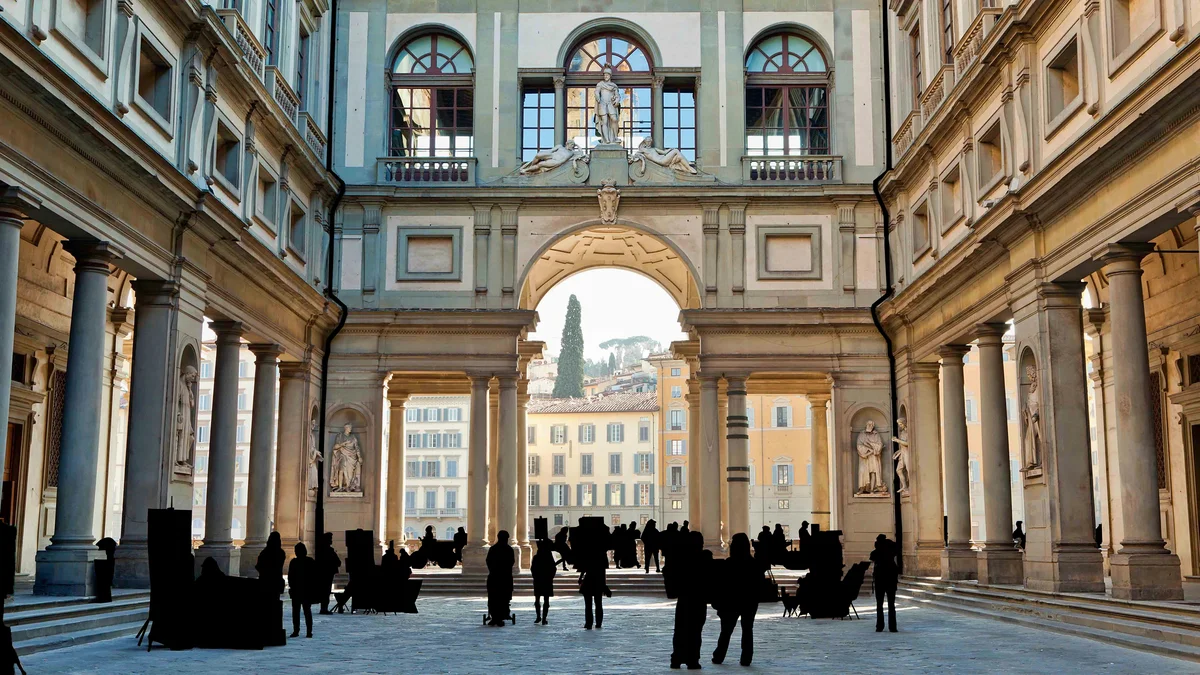
One of the world's most important art museums, the Uffizi houses an extraordinary collection of Italian Renaissance masterpieces, including Botticelli's 'The Birth of Venus' and 'Primavera', works by Leonardo da Vinci, Michelangelo, Caravaggio, and Titian. Originally built in the 16th century as offices for the Medici administration, the U-shaped building overlooking the Arno River has been open to the public since the 18th century.
Visitor guide
The Uffizi Gallery is a prominent art museum next to the Piazza della Signoria in the historic centre of Florence, Tuscany, Italy. It holds one of the world's most important collections of Italian Renaissance art and is one of the best-known museums in the world. Wikipedia describes it as the most visited art gallery in Italy.
The building was begun by Giorgio Vasari in 1560 for Cosimo I de' Medici as a way of bringing together in one place the many administrative committees, agencies and guilds of Florence's Republican past. This is the origin of the name, since uffizi means offices. Construction was continued by Alfonso Parigi and Bernardo Buontalenti and completed around 1580; the Uffizi Galleries site gives the building period as 1560 to 1580. The top floor became a gallery for the family and its guests, including their collection of Roman sculptures.
The long, narrow courtyard, open to the Arno at its far end through a Doric screen, has been called by architectural historians the first regularised streetscape of Europe. Vasari emphasised its perspective with continuous cornices and three continuous steps at the front. Grand Duke Francesco I commissioned Buontalenti to design the Tribuna, an octagonal room completed in 1584 to display masterpieces and jewels in one place, which became an influential stop on the Grand Tour.
After the House of Medici died out, the family's art collections were given to the city under the Patto di famiglia, the family pact negotiated by Anna Maria Luisa, the last Medici heiress. The gallery had been open to visitors by request since the sixteenth century, was officially opened to the public in 1769, and formally became a museum in 1865. Wikipedia counts it among the first modern museums.
The Uffizi holds works from the Italian Renaissance and other periods, including Sandro Botticelli's Primavera and The Birth of Venus. Its holdings also include ancient sculptures such as the Venus de' Medici and the Arrotino. For many years 45 to 50 rooms displayed paintings from the 13th to 18th century. A project finished in 2006 expanded the exhibition space from about 6,000 to almost 13,000 square metres, allowing more works from storage to be shown, and the museum reopened in 2021 after a renovation that added new rooms and more works.
The 1966 flood of the Arno severely damaged collections across Florence, including those of the Uffizi, and staff worked to save as much as possible. In 1993 a car bomb in the nearby Via dei Georgofili damaged parts of the palace, destroyed five works and damaged another thirty, with restoration since. These events are part of the museum's modern history rather than anything visitors need to plan around.
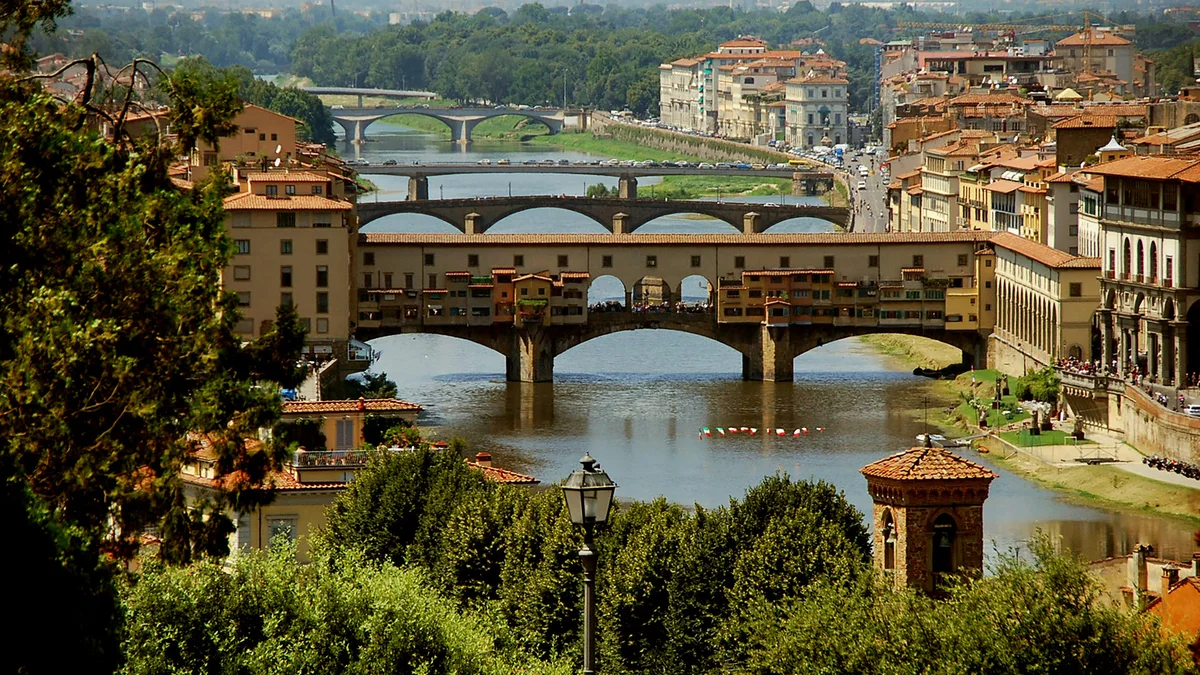
The Uffizi is large, and its rooms are arranged roughly by period, so many visitors choose a few artists or rooms to concentrate on. Wikipedia notes that waiting times at peak periods have been long and that advance booking reduces queues. A private guided visit with a driver can help you plan a focused route and combine the museum with the nearby Piazza della Signoria and Ponte Vecchio.
See every tour and attraction we cover in Florence.