TorontoOntario · 36 tours
 Niagara FallsOntario · 25 tours
 New York CityNew York · 30 tours
 Las VegasNevada · 8 tours
 San FranciscoCalifornia · 16 tours
 VancouverBritish Columbia · 17 tours
 DubaiUAE · 54 tours
 Abu DhabiUAE · 5 tours
 Buenos AiresArgentina · 23 tours
 AthensGreece · 31 tours
 AucklandNew Zealand · 38 tours
 CancunMexico · 54 tours
No destinations match “”. Try searching all tours instead — that search understands full questions, not just place names.
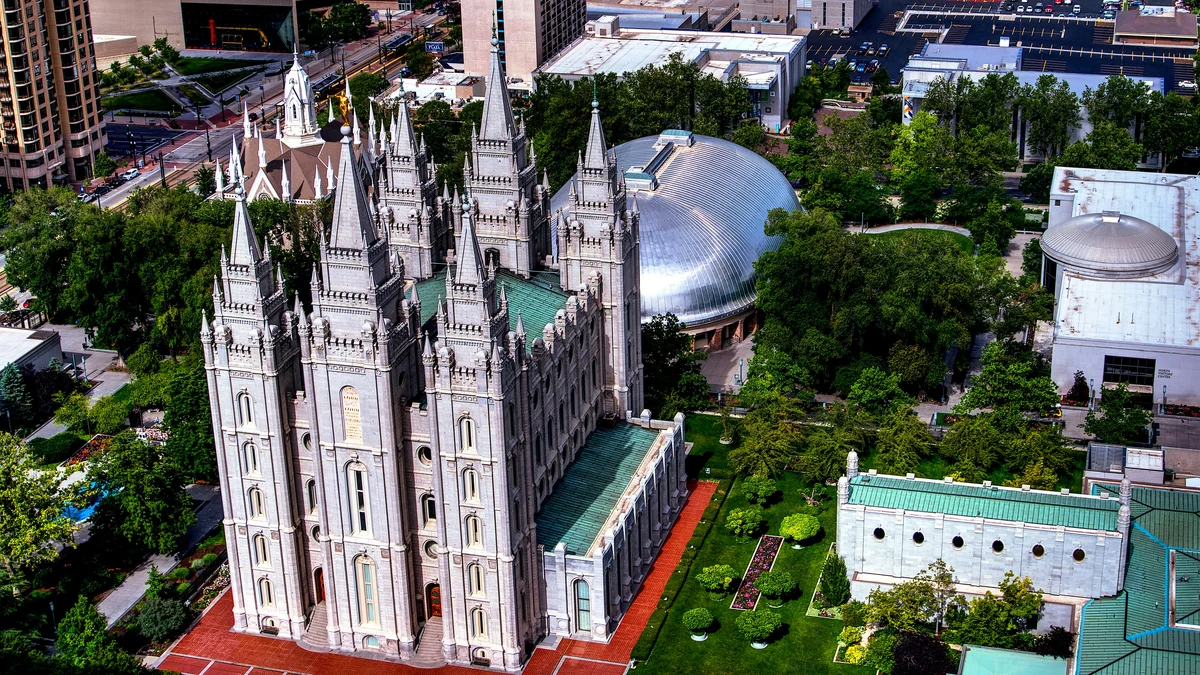
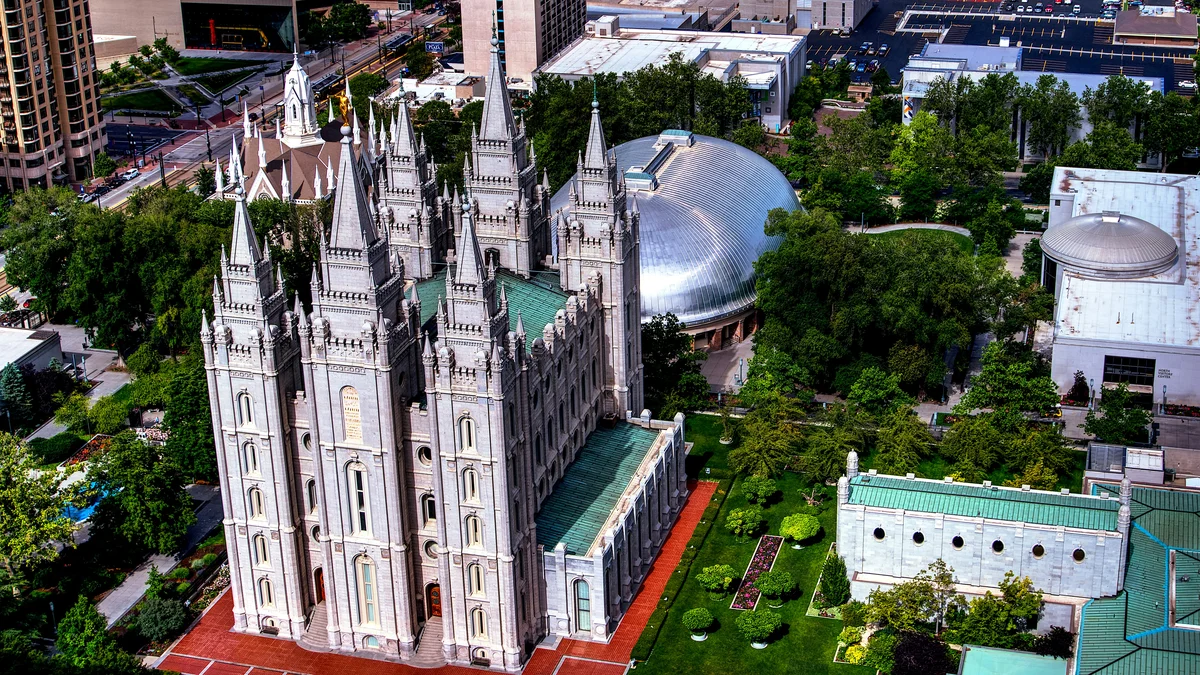
The spiritual and historic heart of Salt Lake City, Temple Square is a historic complex in downtown Salt Lake City built by Mormon pioneers, home to the six-spired Salt Lake Temple and the domed Tabernacle, famous for its pioneer-engineered 'turtle-back' roof and precise acoustics. The surrounding gardens, visitor centers, and the nearby LDS Conference Center make it one of the most visited destinations in Utah, according to the Church.
Visitor guide
The original Temple Square is a 10-acre block in downtown Salt Lake City (the Church now uses the name for a larger 35-acre, five-block area) that serves as the headquarters site of The Church of Jesus Christ of Latter-day Saints and as the starting point of the city's street-numbering grid. It holds the Salt Lake Temple, the domed Tabernacle and the Assembly Hall, and it is one of the most recognisable landmarks in Utah.
The block was selected in 1847 by Brigham Young, who led the first Latter-day Saint pioneer company into the Salt Lake Valley that summer; later accounts quote him declaring that a temple would be built there, though that quotation comes from a later recollection rather than a contemporary record. Salt Lake City's grid of streets is measured outward from the square, and the grid departs from the block's southeast corner.
The Salt Lake Temple was dedicated as a site on February 14, 1853, and Brigham Young laid the cornerstone on April 6, 1853. Construction took forty years, with the building dedicated by Wilford Woodruff on April 6, 1893. The work was interrupted by the Utah War of the late 1850s, when the foundation was buried to hide it from approaching federal troops. Granite-like quartz monzonite was quarried in Little Cottonwood Canyon, about 20 miles southeast of the site, and hauled by ox-drawn wagon until the railroad could carry the remaining stone after 1869. Truman O. Angell served as architect.
The temple blends Neo-Gothic and Neo-Romanesque elements and rises to about 210 feet at its central east spire according to the Church (some sources give 222 feet). It has six spires: the three on the east end are slightly taller and, in church symbolism, represent the First Presidency, while twelve smaller pinnacles represent the Twelve Apostles. The central tower is topped by a 12.5-foot gold-leafed statue of the angel Moroni by sculptor Cyrus Dallin, placed on April 6, 1892. The temple is a house of worship, and its interior is reserved for church members in good standing; it is not open to general visitors.
The oval Tabernacle was built in the 1860s and 1870s, with its first general conference held in October 1867. Its roof, about 150 feet across with no interior columns, uses a lattice-truss arch held together with wooden pegs and rests on 44 sandstone piers; engineer Henry Grow oversaw the design. Because the hall is shaped as an ellipse, sound carries unusually well, and a dropped pin is said to be audible far across the room. The building's pipe organ now has 11,623 pipes, though tourism and church sources round it to "more than 11,600." The Tabernacle has been the home of The Tabernacle Choir at Temple Square for over a century. Church and landmark sources describe the Tabernacle as a National Historic Landmark.
The Assembly Hall, begun in August 1877 and finished in 1882, seats around 2,000. Visitors' centers on the north and south sides date to the 1960s, and the much larger Conference Center, completed in 2000, replaced the Tabernacle for general conference. The grounds include gardens, monuments and the Seagull Monument.
Grounds, gardens and public buildings have historically been open for visitors to walk, while access to individual buildings, tours and organ recitals varies. Because the site is an active religious campus, check the operator, the church's Temple Square website, for current hours, access and any programming before you go.
Downtown Salt Lake City is compact, and Temple Square is easy to include in a private tour with a private vehicle and driver; door-to-door pickup lets your group spend time on the grounds without searching for parking.
See every tour and attraction we cover in Salt Lake City.