TorontoOntario · 36 tours
 Niagara FallsOntario · 25 tours
 New York CityNew York · 30 tours
 Las VegasNevada · 8 tours
 San FranciscoCalifornia · 16 tours
 VancouverBritish Columbia · 17 tours
 DubaiUAE · 54 tours
 Abu DhabiUAE · 5 tours
 Buenos AiresArgentina · 23 tours
 AthensGreece · 31 tours
 AucklandNew Zealand · 38 tours
 CancunMexico · 54 tours
No destinations match “”. Try searching all tours instead — that search understands full questions, not just place names.
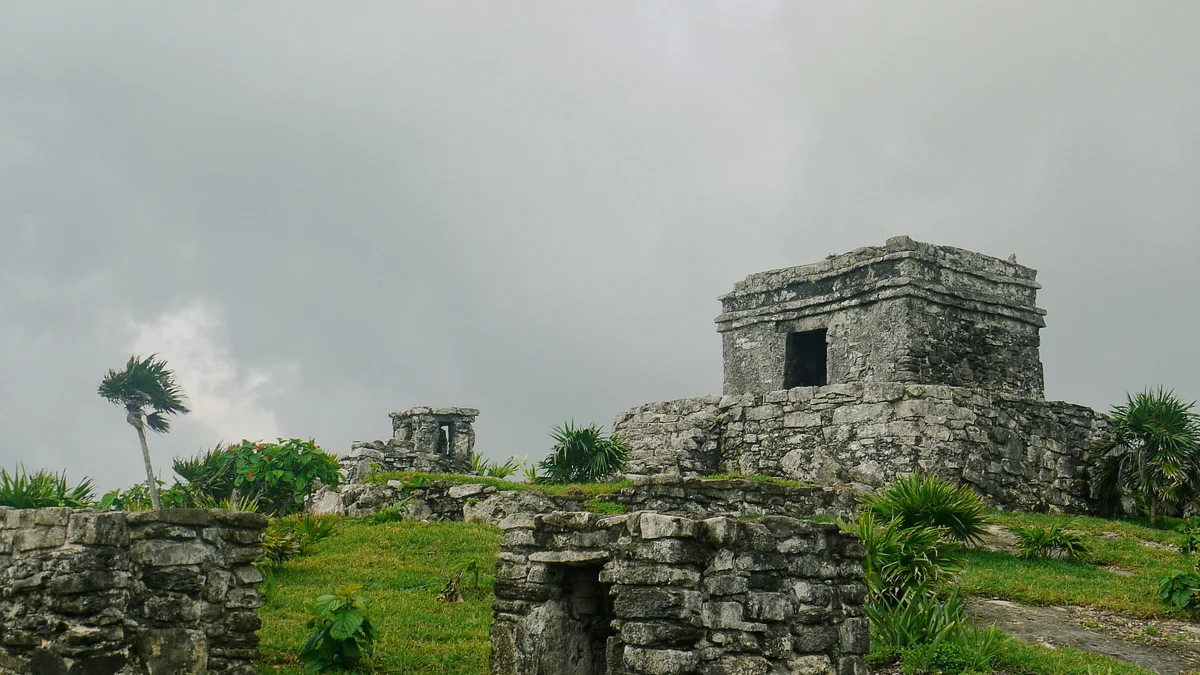
El Meco is a real, compact Maya archaeological site just north of downtown Cancún, centered on El Castillo, a roughly 40-foot pyramid that once served as a watchtower and religious structure overlooking the Nichupté lagoon. It's a smaller, far less crowded counterpart to sites like Chichén Itzá, making it a quieter stop for visitors curious about the Yucatán's Maya history without the crowds. Note: photo shown is a genuine Maya ruin in Mexico used as an honest representative image, not a confirmed photo of El Meco itself, since no verified free photo of this specific site could be found.
 Private Tours
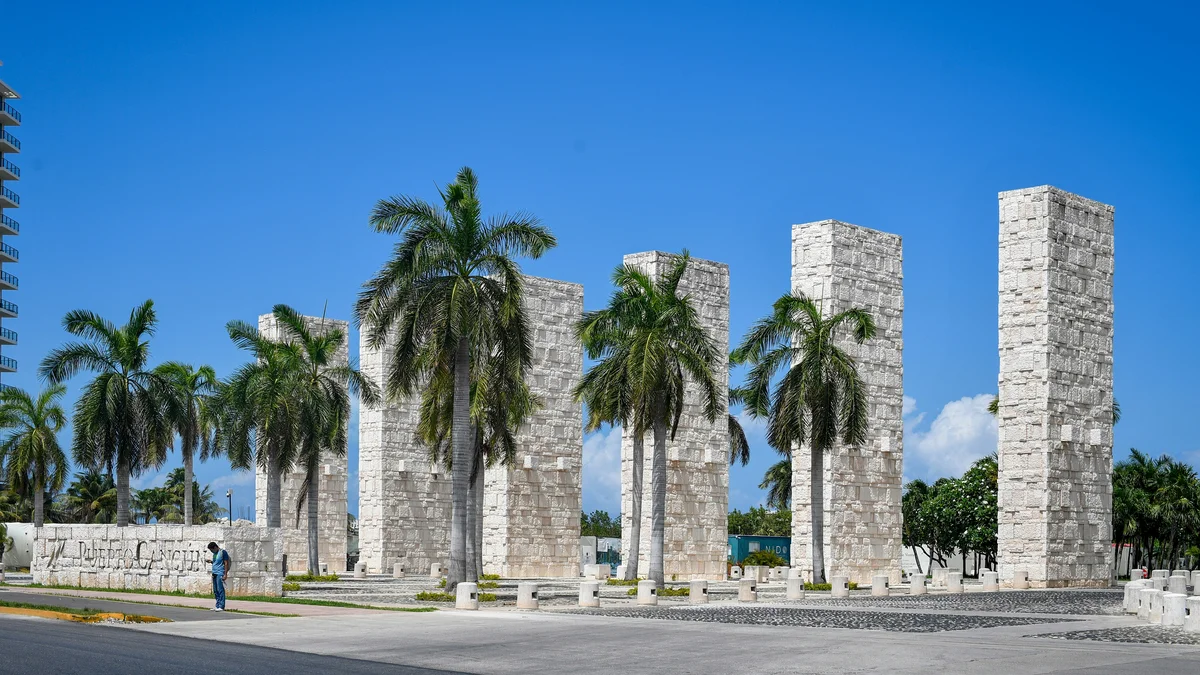
A private tour for your group only, with a real bilingual guide — a walk through Cancún's genuine Maya history and modern culture.
 Private Tours
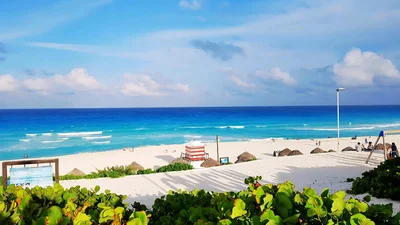
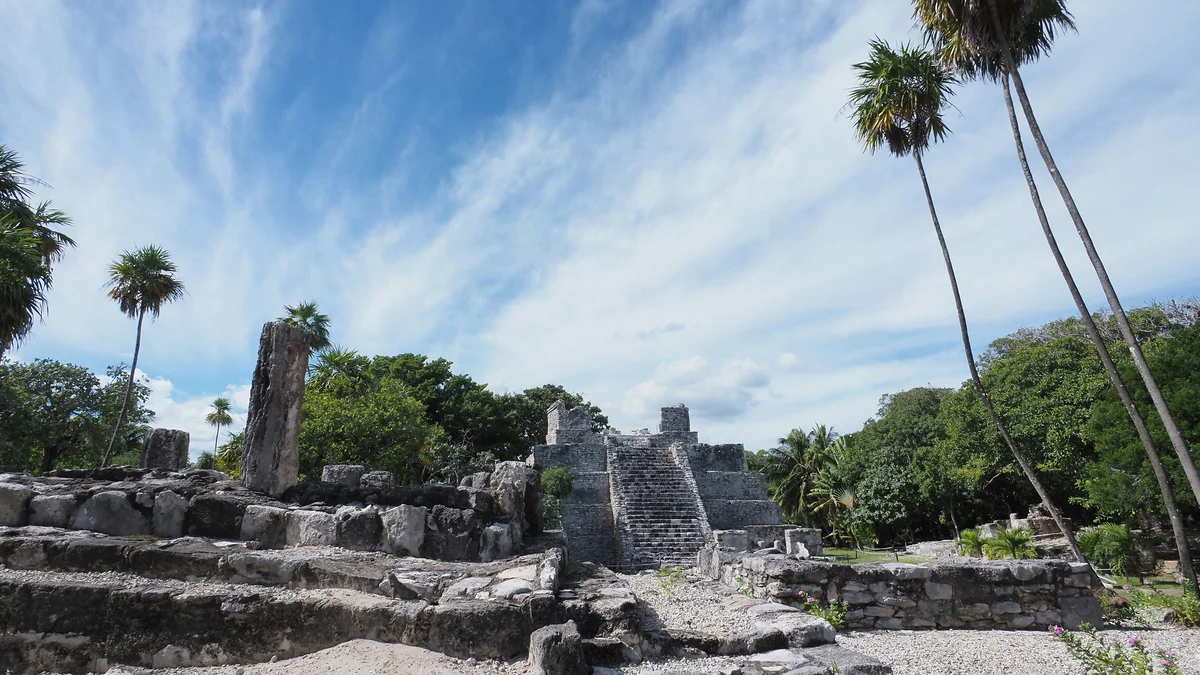
A private tour with private transportation for your group only — the real El Meco Ruins, the Museo Maya de Cancún, and the famous Playa Delfines sign.
Visitor guide
El Meco is a Maya archaeological site on the Caribbean coast of northern Quintana Roo, Mexico, a short distance north of Cancun along the road toward Punta Sam. Its main structure, a stepped pyramid known as El Castillo, rose above a coastal trading settlement that was active for many centuries.
According to Wikipedia, El Meco was founded around 600 AD, in the Classic period, as a small fishing settlement dependent on the larger city of Coba. A regional news account citing archaeological interpretation instead suggests the site may have begun as a self-sufficient fishing community between about AD 300 and 600, was abandoned around 600, and was resettled sometime after about 1000 to 1100, so sources vary on the early sequence. In the Postclassic period the settlement grew in importance and, per Wikipedia, was closely tied to Chichen Itza and Mayapan. It is described as peaking between about 1200 and 1500 AD as a trade center and port on the Maya maritime route, and as occupied until the Spanish arrived. Because the site faces Isla Mujeres, it is thought to have served as a departure point for travel to the island. The original Maya name of the site is uncertain; Wikipedia gives a name translated as trade channel, while another source says the name is unknown.
The site has several ceremonial structures, altars and shrines arranged around a main plaza. The principal building, El Castillo, is a stepped pyramid with a temple on top. Its height is given inconsistently, with INAH, Mexico's national institute of anthropology and history, giving 12.5 meters and one other source citing 17 meters, and the pyramid is described as the tallest Maya building on the east coast of Quintana Roo. Excavations showed it was built in several phases, with an earlier substructure that includes a single-tier platform and a small temple with one entrance, part of which is exposed on the west side. A stairway climbs the front, and eroded serpent heads are noted on the staircase. Finds from excavation have included flint eccentrics and fine imported ceramics, which archaeologists read as evidence of links between maritime trade and the interior. Wikipedia also says the temple front faces the sea, an orientation it says was used to observe the sunset.
The site was documented in the 19th century. Alice and Augustus Le Plongeon visited briefly in 1887 and described the plaza and main pyramid, and in 1891 Teobert Maler published notes, a map and the first known photograph of the central building. The road to Punta Sam was later built through the site, splitting it in two. It has been the subject of more recent research and restoration by Mexico's National Institute of Anthropology and History.
El Meco is one of several Maya sites around Cancun. The Hotel Zone has El Rey and the San Miguelito ruins beside the Maya Museum, while El Meco sits on the mainland to the north and is generally quieter and more compact. It offers a look at the Postclassic coastal trade that linked the northeast Yucatan with the wider Maya world.
The site is small and open, so visits are usually brief, and conditions are hot and humid for much of the year. A private guided visit with a driver is a practical way to include El Meco alongside other coastal and archaeological stops, with background on how the port fitted into regional trade.
See every tour and attraction we cover in Cancun.