TorontoOntario · 36 tours
 Niagara FallsOntario · 25 tours
 New York CityNew York · 30 tours
 Las VegasNevada · 8 tours
 San FranciscoCalifornia · 16 tours
 VancouverBritish Columbia · 17 tours
 DubaiUAE · 54 tours
 Abu DhabiUAE · 5 tours
 Buenos AiresArgentina · 23 tours
 AthensGreece · 31 tours
 AucklandNew Zealand · 38 tours
 CancunMexico · 54 tours
No destinations match “”. Try searching all tours instead — that search understands full questions, not just place names.
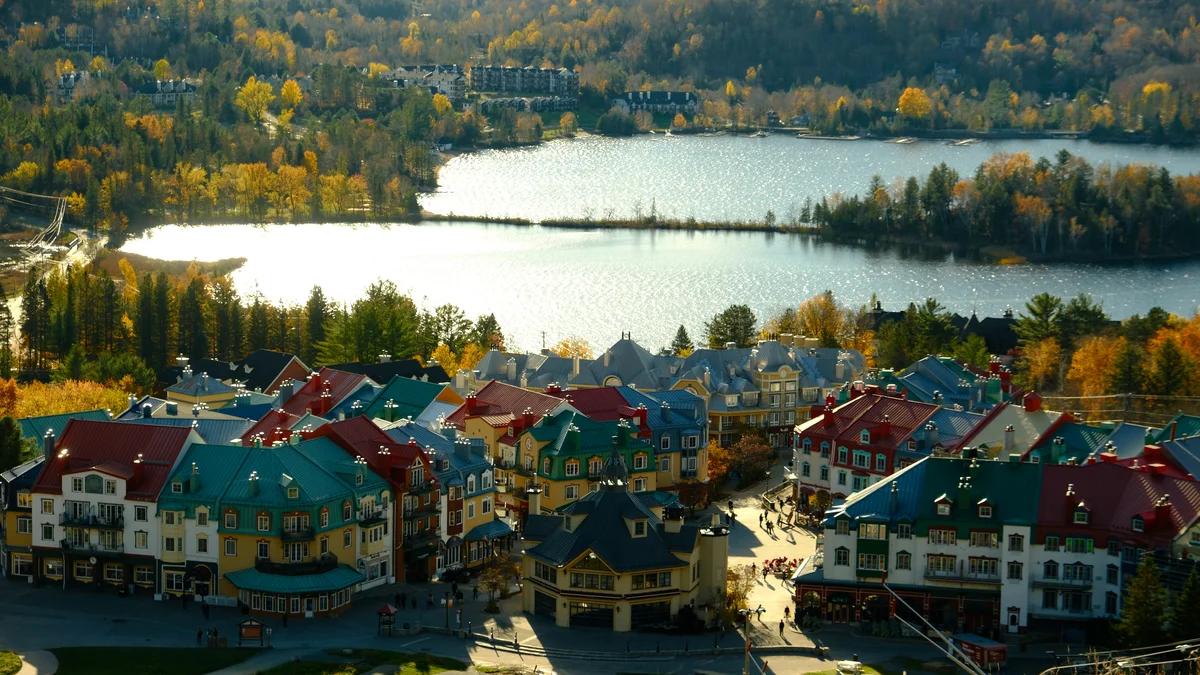
A colourful, car-free pedestrian village of shops, cafes, and dormer-roofed buildings at the base of the mountain.
Private Tours
A private 10 or 20-minute helicopter flight over Mont-Tremblant's resort, pedestrian village, and the forests and lakes of the Laurentian Mountains, with every passenger seated by a window.
 Private Tours
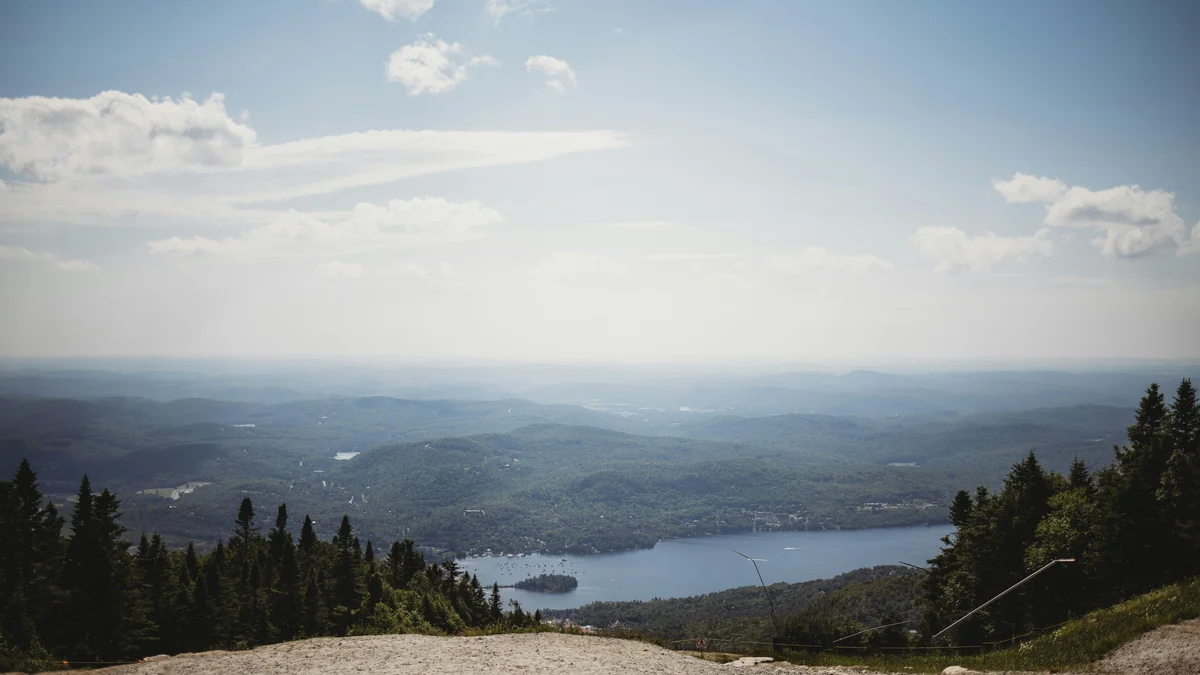
A private helicopter flight covering 70 kilometres over Mont-Tremblant — the resort and village, the dense forests of Mont-Tremblant National Park, and Lakes Tremblant and Mercier — departing from a dedicated heliport just outside the resort.
Visitor guide
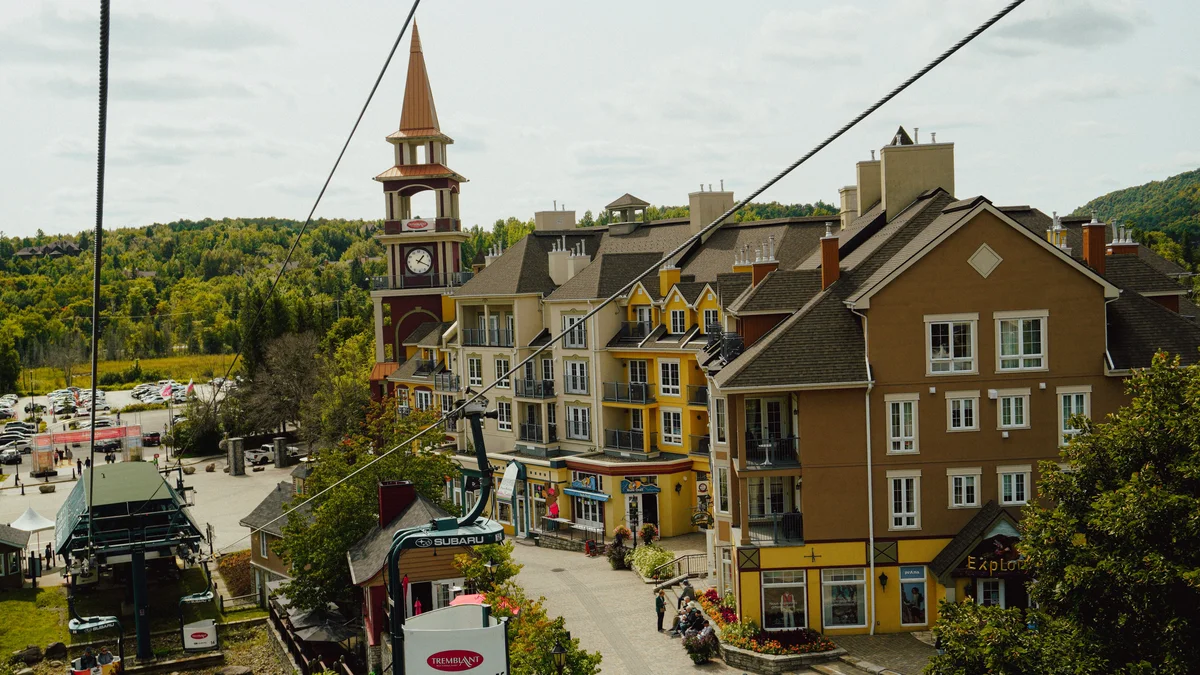
The pedestrian village at the foot of Mont Tremblant is the base of one of eastern Canada's best-known ski resorts, a car-free cluster of brightly painted buildings, shops, restaurants and hotels in the Laurentians of Quebec. It was built from scratch by Intrawest after it bought the resort in 1991, and its look was modelled on traditional French-Canadian and European alpine towns. It is a separate place from the municipal town of Mont-Tremblant, which lies about 5 kilometres away.
The story starts in 1938, when American Joseph Bondurant Ryan came to the region prospecting and climbed the mountain. By most accounts he decided on the spot to build a mountain resort there. The Mont Tremblant Lodge opened on 12 February 1939, and the lodge building is still part of the village today. Ryan died in 1950; his widow, Mary Ryan, ran the resort until the mid-1960s, with sources giving 1965 or 1966 for the sale. Ownership then changed hands several times over the following decades, and by the late 1980s the base area had become tired and run down.
Intrawest bought Tremblant in 1991, and it is widely described as the company's first resort acquisition after Blackcomb in British Columbia. The old base facilities were cleared and the pedestrian village was laid out around a series of plazas and steep, cobbled lanes, with a deliberately Quebecois, European-flavoured colour palette. The resort has since passed to Alterra Mountain Company, which took ownership in 2018. The village now has well over 75 shops and restaurants according to resort-side accounts, though the exact count shifts as businesses open and close.
The village sits at the base of the lifts, and an open-air cabriolet (a short gondola opened in 1994) links its upper and lower levels, so you can ride between them rather than climb the hill. The main 8-person gondola, the Express, was built in 1998 and takes skiers and summer visitors up the mountain. A second gondola, the Casino Express, opened in 2009 and serves the casino at the base of the Soleil side. Many hotels and condominiums are concentrated in the village itself, while more rental condos and chalets nearby are served by shuttle buses.
The village is a four-season hub. In winter it is where skiers and snowboarders gather; in warmer months the same lanes fill with walkers heading for the lake, the gondola, golf and hiking. The resort also hosts a long-running Ironman 70.3 triathlon, which included the 2014 Ironman 70.3 World Championship, and the village plazas serve as a gathering point for event weekends.
Tremblant is French for 'trembling'. Wikipedia attributes the name to the Algonquin people, who referred to it as the trembling mountain. A popular retelling is that a spirit inside the mountain made it shake when angered, but that is a legend rather than documented history.
Lac Tremblant lies directly beside the village, and the resort's own lifts lead up to the mountain's four sides. Mont-Tremblant National Park, a much larger Sepaq-managed protected area, begins a short drive north of the municipal town and offers lakes, trails and canoeing in a more natural setting. The older town centre of Mont-Tremblant, with its own shops and restaurants, is a few kilometres away.
See every tour and attraction we cover in Mont Tremblant.