TorontoOntario · 36 tours
 Niagara FallsOntario · 25 tours
 New York CityNew York · 30 tours
 Las VegasNevada · 8 tours
 San FranciscoCalifornia · 16 tours
 VancouverBritish Columbia · 17 tours
 DubaiUAE · 54 tours
 Abu DhabiUAE · 5 tours
 Buenos AiresArgentina · 23 tours
 AthensGreece · 31 tours
 AucklandNew Zealand · 38 tours
 CancunMexico · 54 tours
No destinations match “”. Try searching all tours instead — that search understands full questions, not just place names.
A striking Brutalist parabolic-arch church designed by Salvadoran architect and sculptor Rubén Martínez and inaugurated in 1971, in the heart of San Salvador's historic center. Rather than traditional windows, its curved concrete walls are filled almost entirely with rainbow-colored stained glass, flooding the interior with color, and it houses a set of sculptural Stations of the Cross unlike any other church in the city.
Private Tours
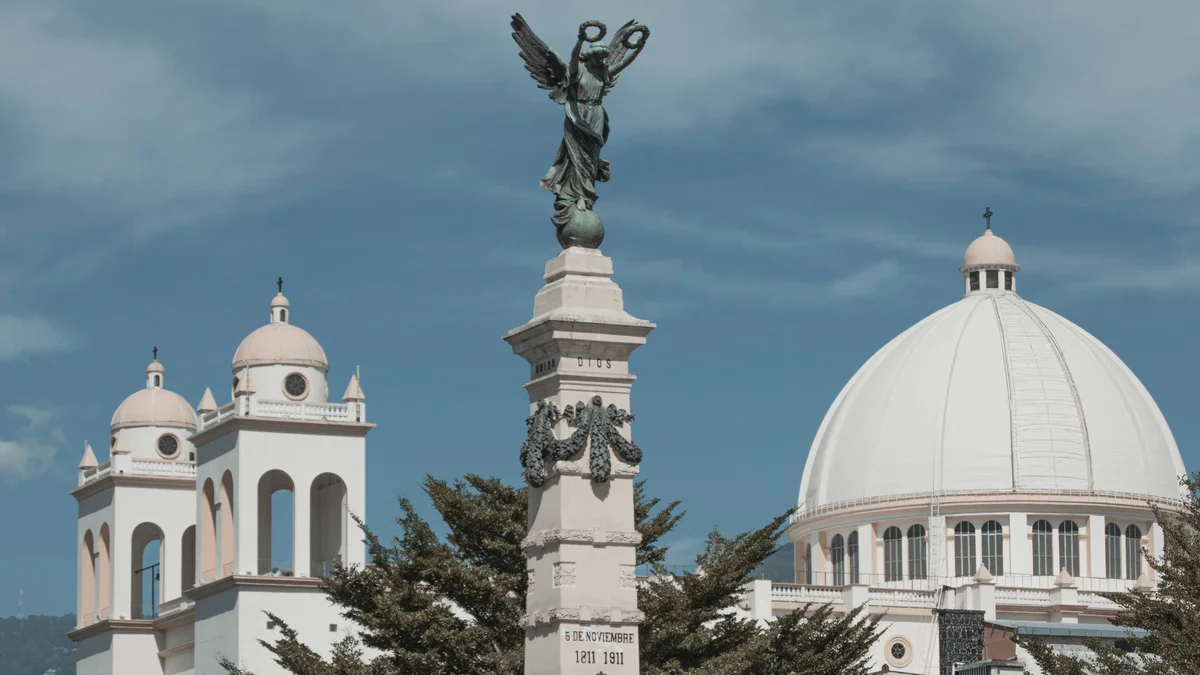
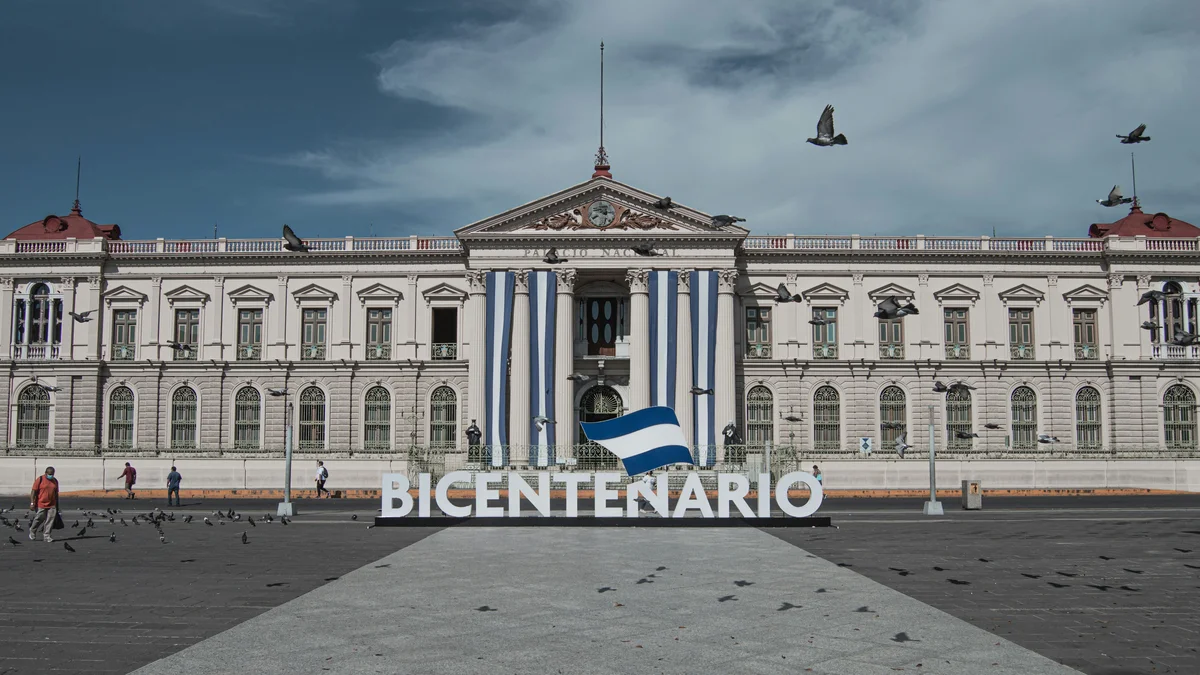
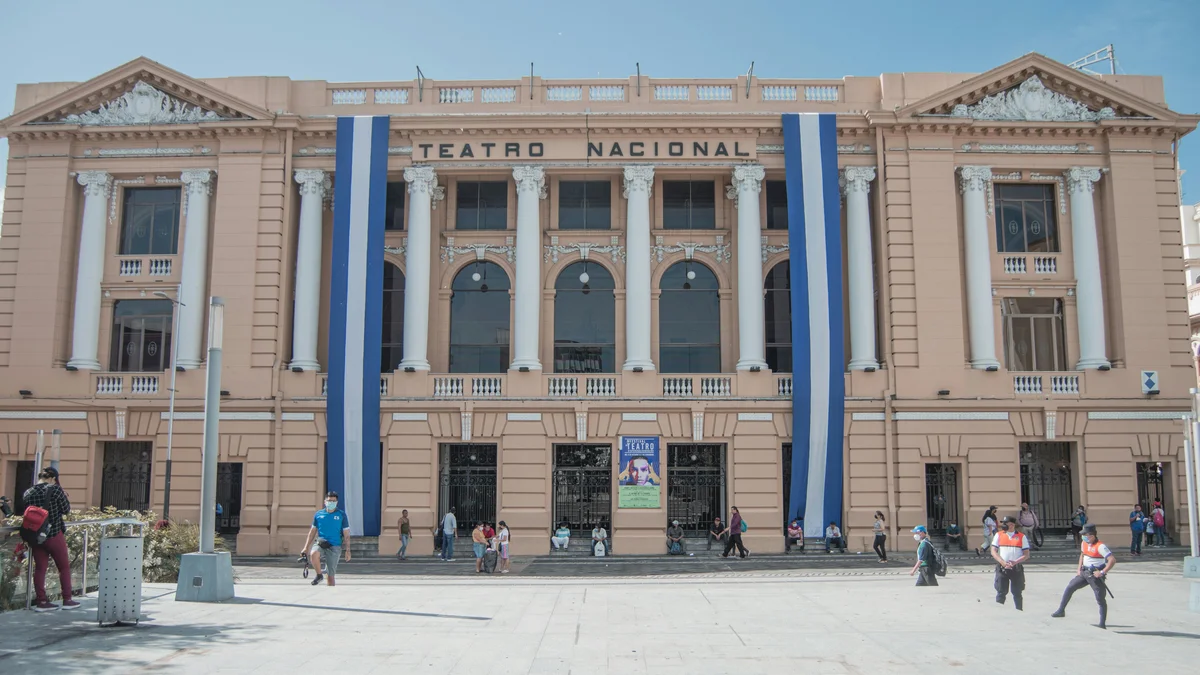
A private guide leads you on foot through San Salvador's historic center: the National Theatre, the Metropolitan Cathedral, Iglesia El Rosario, the neoclassical National Palace, the craft market, and the National Library, learning the capital's history and culture at your own pace.
 Private Tours
A private walking tour of San Salvador's historic squares and markets with a local, street-smart guide, covering the city's civil war history, the crypt of Archbishop Óscar Romero, the National Library, and the capital's real transformation from one of the world's most dangerous cities to one of its safest.
Visitor guide
Iglesia El Rosario is a modernist church in the historic centre of San Salvador, El Salvador, designed by the Salvadoran architect and sculptor Rubén Martínez and built between about 1964 and 1971. Its bare concrete exterior gives little hint of the interior, where tiers of coloured glass fill the space with light. It is widely regarded as one of the finest examples of modern architecture in the country.
According to Spanish-language reporting summarised in available sources, Friar Domingo Iturgaiz commissioned Martínez in 1962 to sketch the church, and the design drew on the liturgical principles of the Second Vatican Council. Those principles called for churches that support active participation by the congregation, and the building departs from the usual plan in which the altar sits at one end. Instead the main altar is raised on the north side wall like a stage, which made the design controversial when it was proposed. Some accounts say Martínez drafted the plans in only six days and that Pope John XXIII took a personal interest, but these details come from secondary reporting and should be treated with caution.
Atlas Obscura describes the exterior as Brutalist concrete, while noting that the building is nonetheless considered one of the finest examples of modern architecture in El Salvador. The structure is a parabolic or arched form with a tiered, arched ceiling lined with glass panels. Those panels bathe the altar and pews in brilliantly coloured light, and the effect has earned the interior the nickname Stairway to Heaven. Accounts say the light is most striking in early morning and evening, when the sun shines most directly through the glass.
The use of natural light through stained glass is also characteristic of Martínez's other work, including his home museum. Martínez, who lived from 1929 to 2023, was also known for works such as the Monument to the Constitution and the Christ of Peace, and he received the National Culture Award in 2019.
Iglesia El Rosario holds the remains of José Matías Delgado, the priest known as the Father of the Salvadoran Fatherland and a key figure in the independence struggle. His burial here adds a layer of national history to a building otherwise associated with twentieth-century experimentation.
In 2024 public works crews carried out exterior work that drew public criticism, with some commentators saying the concrete had been painted white. The Ministry of Public Works said the church had not been painted and that its original design remained intact, describing the work as waterproofing and repairs. A historian disputed that account, arguing from an archival photograph that the bell tower had been altered, while the ministry said the tower was repaired because it was about to collapse. These claims are contested and the details are not independently confirmed here.
Because the church is an active place of worship in the heart of San Salvador's historic centre, visiting involves respecting services and local custom. It is easy to combine with other historic-centre sites, such as the Metropolitan Cathedral and the National Palace. A private guided visit can explain the architectural ideas behind the building and put it in the context of mid-century Latin American modernism.
See every tour and attraction we cover in San Salvador.