TorontoOntario · 36 tours
 Niagara FallsOntario · 25 tours
 New York CityNew York · 30 tours
 Las VegasNevada · 8 tours
 San FranciscoCalifornia · 16 tours
 VancouverBritish Columbia · 17 tours
 DubaiUAE · 54 tours
 Abu DhabiUAE · 5 tours
 Buenos AiresArgentina · 23 tours
 AthensGreece · 31 tours
 AucklandNew Zealand · 38 tours
 CancunMexico · 54 tours
No destinations match “”. Try searching all tours instead — that search understands full questions, not just place names.
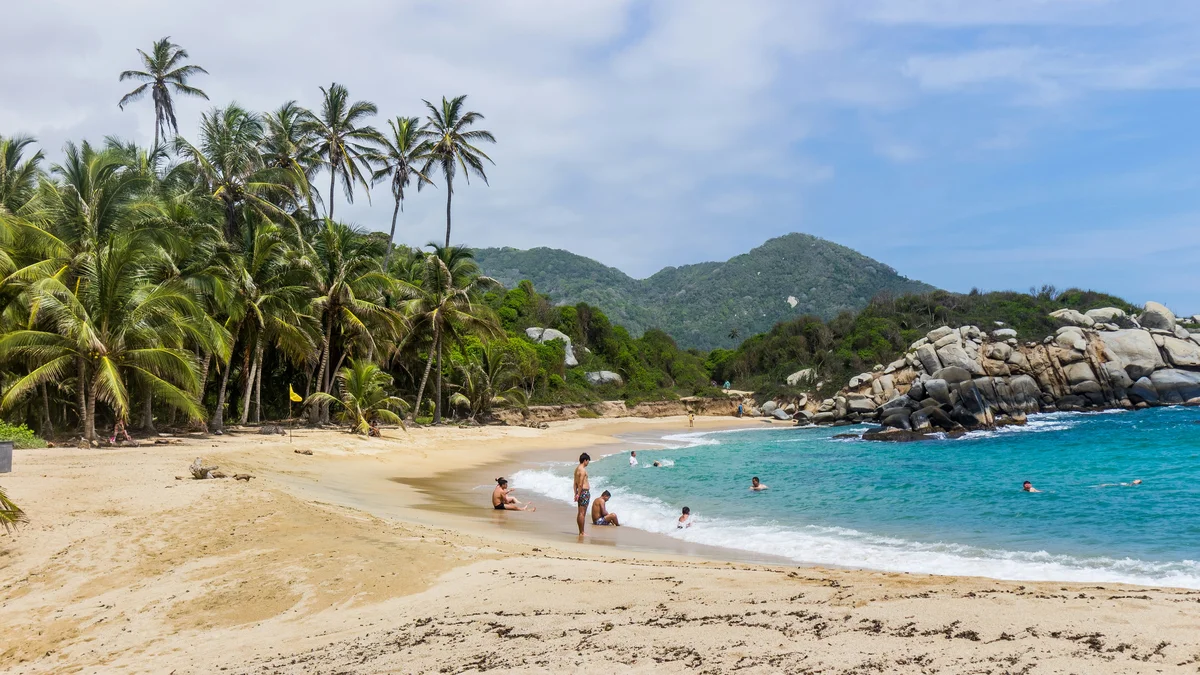
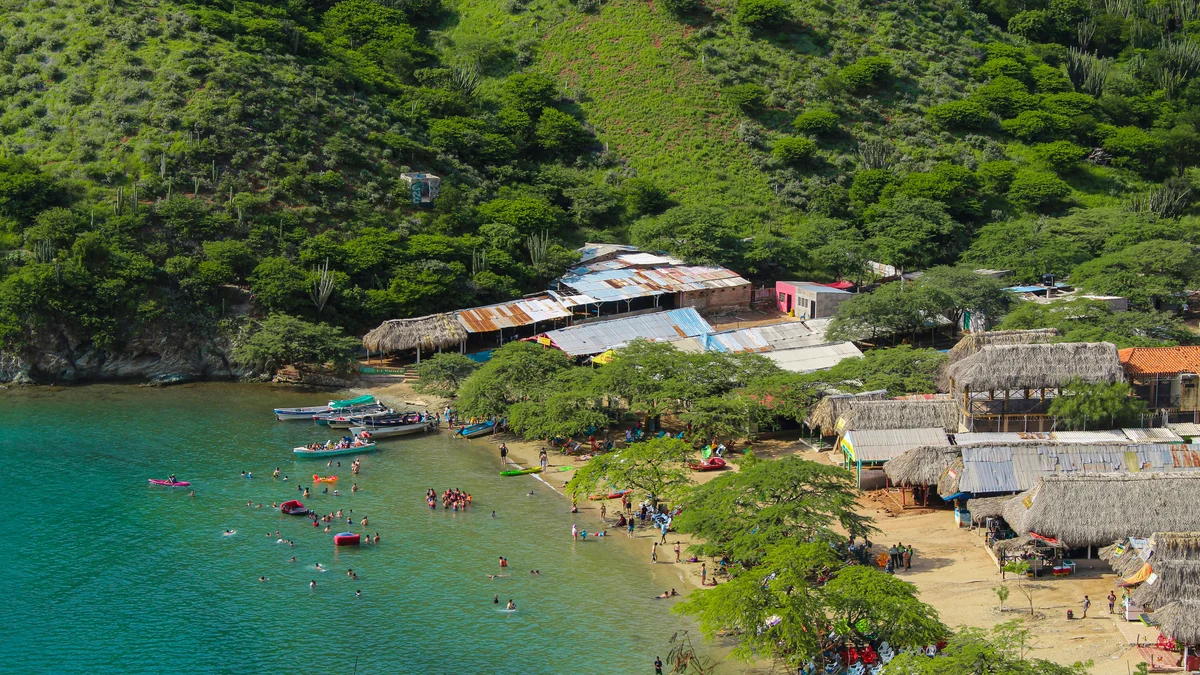
A protected coastal park stretching along the Caribbean where the Sierra Nevada de Santa Marta mountains meet the sea, combining jungle-backed white-sand beaches with coral reefs just offshore. Cabo San Juan and Playa Cristal are among its most photographed beaches, and the park closes for several short conservation periods each year to let the ecosystem rest.
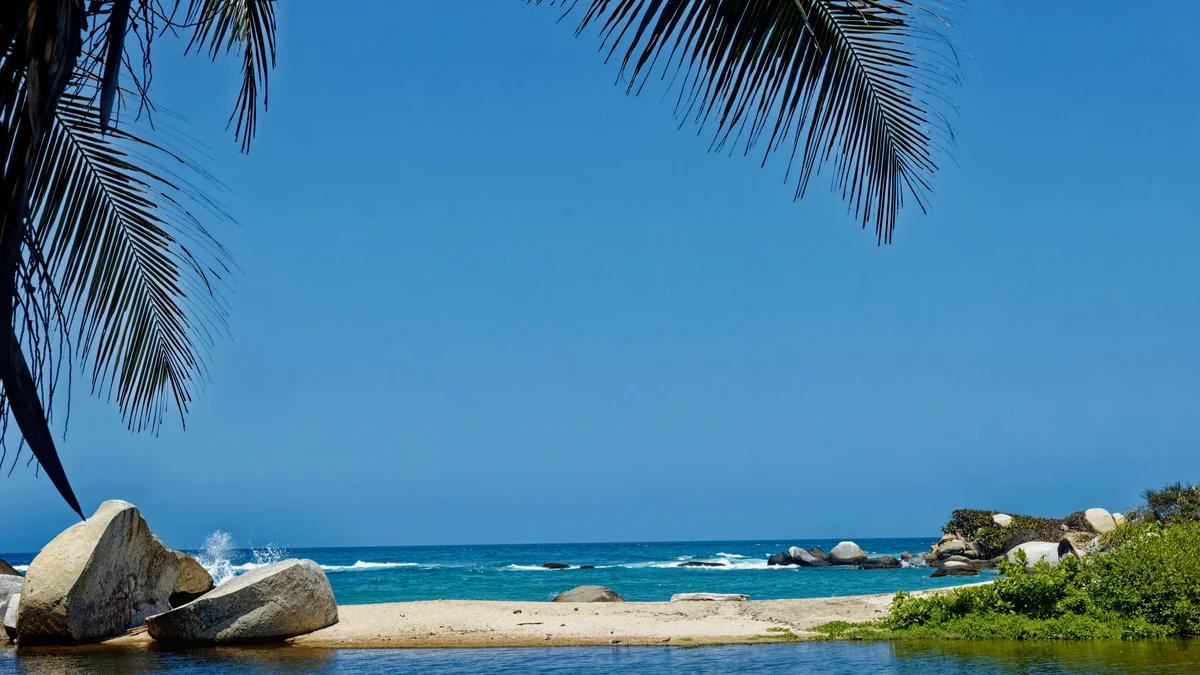 Private Tours Popular Pick
A private full-day hike through Tayrona National Park to Cabo San Juan, one of Colombia's most iconic Caribbean beaches, with a bilingual guide, private transportation, and entry assistance included.
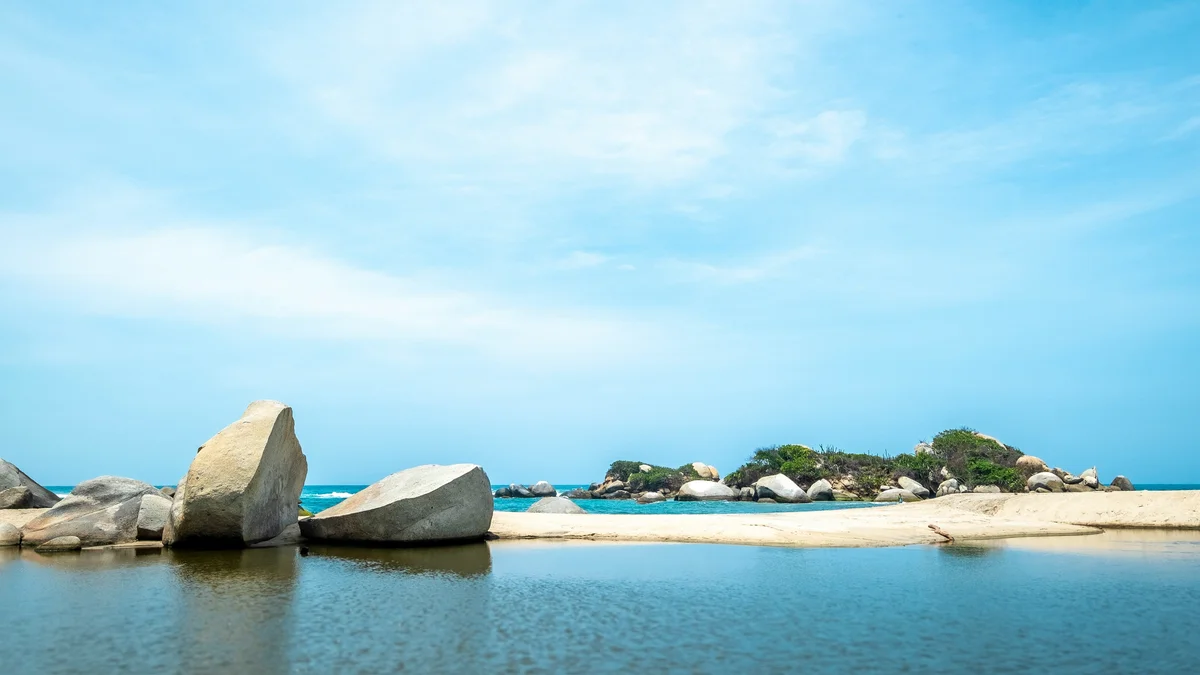 Private Tours
A private sailing trip from Santa Marta to Granate, the first bay of Tayrona National Park, with time to swim, snorkel, sunbathe, and paddle before sailing back at sunset.
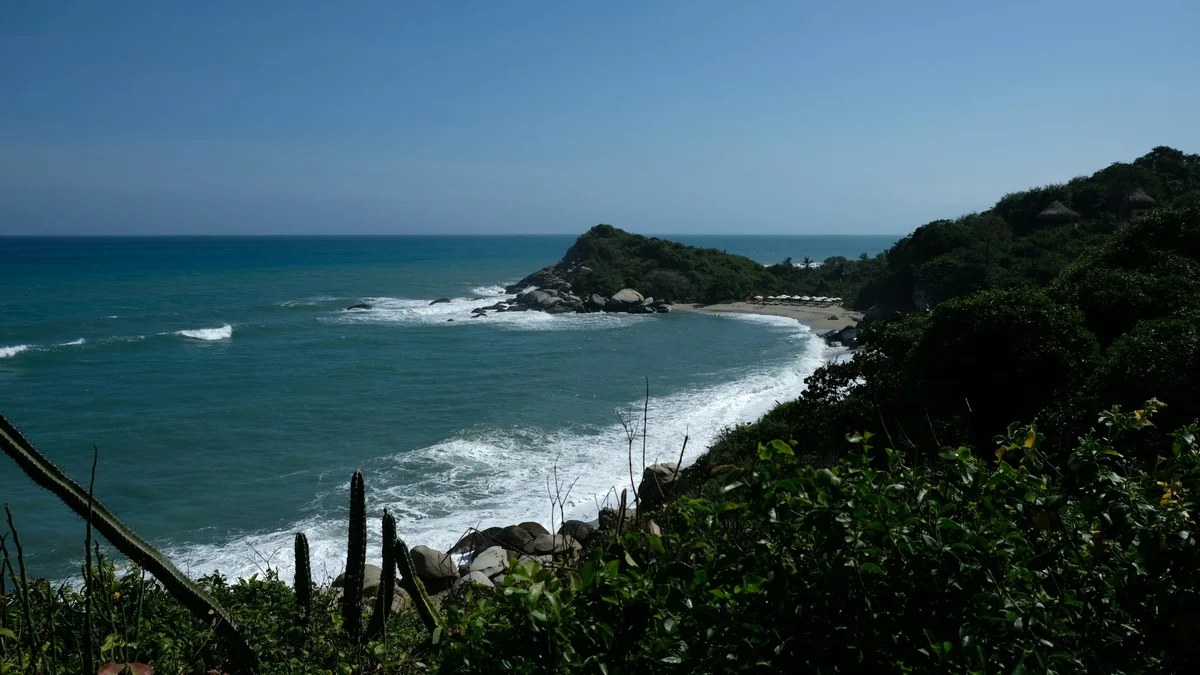 Private Tours
A private hiking tour from Minca into Tayrona National Park, covering one of Colombia's most beautiful coastal hikes to the iconic beaches of Cabo San Juan with your own bilingual local guide.
 Private Tours
A full-day private tour to Playa Cristal, widely considered the most beautiful beach in Tayrona National Park, with turquoise water, white sand, and rich marine life, ending with a smooth private return to Santa Marta.
Visitor guide
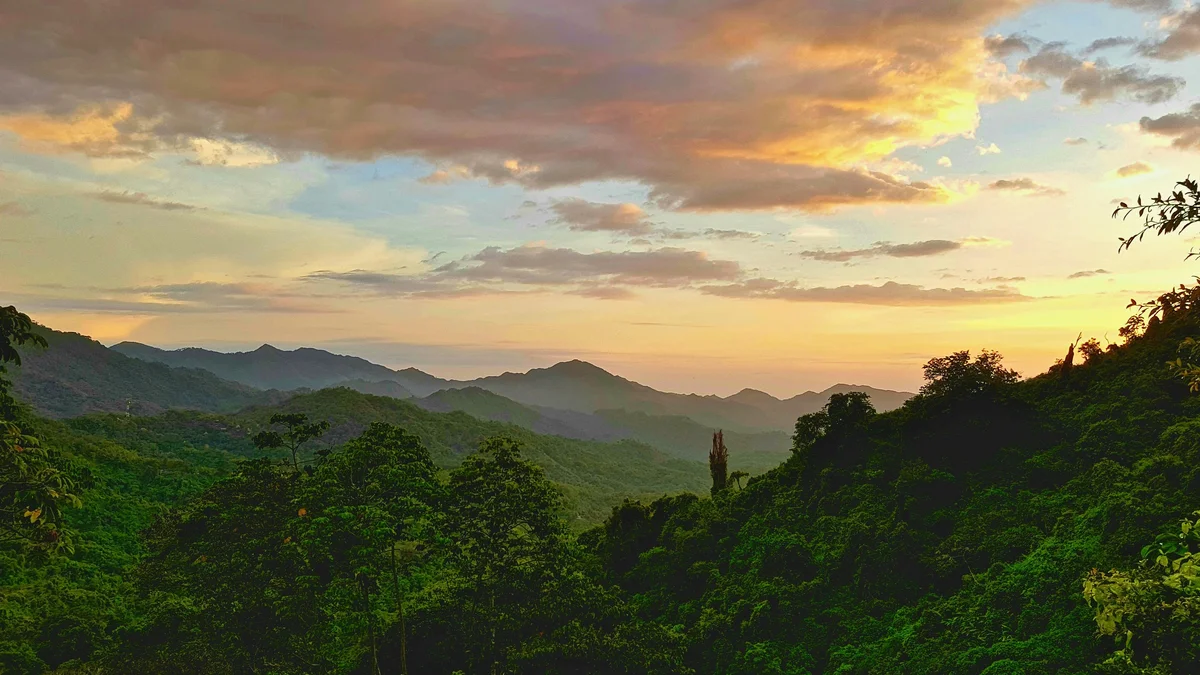
Tayrona National Natural Park, or Parque Nacional Natural Tayrona, is a protected area on Colombia's northern Caribbean coast, within the jurisdiction of Santa Marta. It lies about 34 kilometres from the city centre, where the foothills of the Sierra Nevada de Santa Marta reach the sea.
Wikipedia gives about 150 square kilometres of land and roughly 30 square kilometres of Caribbean waters, while park-authority documents give about 150 square kilometres in total in older figures and about 193 square kilometres after a 2017 boundary revision, so any figure is approximate. Its terrain runs from arid sea level up to around 900 metres, which creates a range of climates and habitats in a small area. Temperatures at sea level typically range from about 27 to 35 degrees Celsius, and the climate is tropical and hot, with rainfall varying from almost none to heavy depending on the month.
Several rivers and creeks cross the park, including the Piedras, Cañaveral, Santa Rosa and Cinto, draining from the snowy peaks behind. Wikipedia notes that Taganga marks its southern end and that the western boundary follows the coast northeast to the Piedras River.
The park is considered rich in biodiversity. Researchers have catalogued about 108 mammal species and about 300 bird species, including the mantled howler monkey, the oncilla, deer, more than 70 species of bats, the military macaw and the lance-tailed manakin. It is also home to about 31 reptile species, 15 amphibians and over 770 plant species.
Offshore, the park has coral reefs and records of 110 coral species, 700 molluscs and over 400 fish species. Tayrona is one of three national parks in the Colombian Caribbean with coral reefs, and it has protected sites used for scuba diving, from shallow training areas to drift dives with currents.
The park takes its name from the Tairona people, who built stone pathways, terraces and settlements in the area up to the 16th century. The park has an archaeological museum at Chairama near Cañaveral. El Pueblito, once a popular hike to a Tairona site, has been closed since 2019 at the request of the Indigenous residents, which reflects the area's continuing importance to the Kogi, Arhuaco, Wiwa and Kankuamo peoples.
Park-authority records say it was declared in 1964 by Executive Resolution 191 of the Colombian Institute for Agrarian Reform (INCORA), and its current name and boundaries were set in 1969.
Tayrona received about 545,760 visitors in 2022 according to Wikipedia, making it the second most visited national park in Colombia that year. Places Wikipedia lists as attracting visitors include Los Naranjos Path, Castilletes Beach, The Pool, the Piedras River and the Chairama museum at Canaveral.
Access, entry rules and trail openings are managed by the park authority and can change, as the closure of El Pueblito shows, so it is best to check current status with the operator. The heat and humidity are significant, so water, sun protection and light clothing are important. A private guided visit from Santa Marta can handle the transfer to the park entrance and the timing of the walk.
See every tour and attraction we cover in Santa Marta.