TorontoOntario · 36 tours
 Niagara FallsOntario · 25 tours
 New York CityNew York · 30 tours
 Las VegasNevada · 8 tours
 San FranciscoCalifornia · 16 tours
 VancouverBritish Columbia · 17 tours
 DubaiUAE · 54 tours
 Abu DhabiUAE · 5 tours
 Buenos AiresArgentina · 23 tours
 AthensGreece · 31 tours
 AucklandNew Zealand · 38 tours
 CancunMexico · 54 tours
No destinations match “”. Try searching all tours instead — that search understands full questions, not just place names.
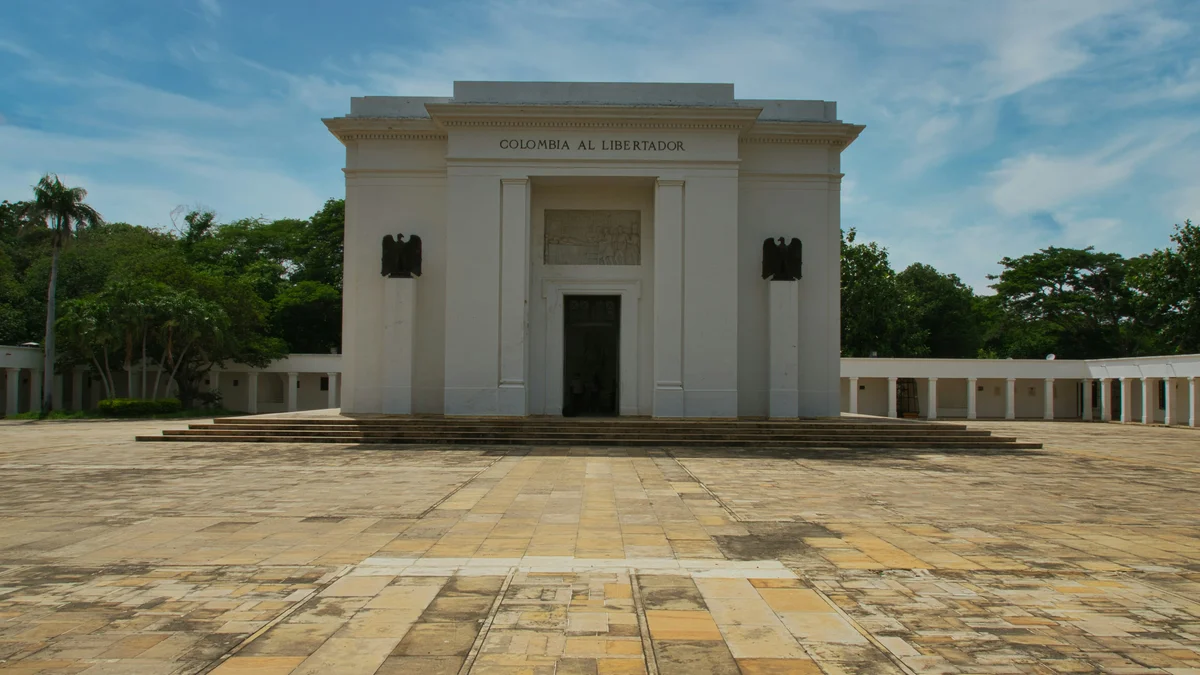
A colonial-era sugar hacienda on the edge of Santa Marta where Simón Bolívar, the South American independence leader known as 'El Libertador,' spent his final days and died in December 1830. The estate is now a museum and botanical park, with period rooms, monuments, and gardens tracing his life and the wars of independence he led.
Visitor guide
The Quinta de San Pedro Alejandrino is a colonial-era hacienda on the edge of Santa Marta, Colombia, best known as the place where Simon Bolivar, the liberator of much of South America, died on 17 December 1830. Today it operates as a museum, historic landmark and garden.
According to Wikipedia, the quinta was built in 1608 and lies in the Mamatoco area of Santa Marta's tourist district, near the Caribbean coast. In Bolivar's time the estate produced rum, honey and panela, the unrefined cane sugar used across Colombia. The museum's own history page says the estate was awarded in 1808 to the Spanish-born Joaquin de Mier y Benitez, who expanded sugar cane cultivation for panela, rum and honey.
Bolivar spent his last weeks in Santa Marta, reportedly planning to leave for Europe, and died of tuberculosis at the age of 47. Some accounts mention other causes, but tuberculosis is the cause given by most sources. He was first buried in Santa Marta Cathedral, and his remains were later moved to Caracas. For Latin America, the death of the liberator in this house is a significant moment, which is why Santa Marta is described as the place of his death.
The estate today works as a museum and historic site. Rooms in the main house are furnished in the style of Bolivar's time, and sources mention the bed in which he died and a life-size mould made from his death mask. The Altar de la Patria, a monument dominated by a statue of Bolivar, is the grounds' best-known commemoration.
In 1986 the Museo Bolivariano de Arte Contemporaneo opened on the estate, with works of art from countries that Bolivar liberated. This adds a modern layer to a site otherwise devoted to the nineteenth-century story.
The quinta is also described as a botanical garden, with labelled trees, some of them very old, and shaded paths. Travel writers mention a large Asian fig tree among the highlights. The setting is a calm contrast to Santa Marta's busy waterfront, and its shade helps in the heat.
The quinta is a short ride from the historic centre and the beaches, so it combines well with a half-day of Santa Marta sightseeing. A guide gives context on Bolivar's final weeks and the independence era, which the displays alone may not fully convey.
Wikipedia describes the hacienda as a tourist site, museum and historical landmark in the Mamatoco area, near the Caribbean Sea. Its estate setting, with a main house surrounded by gardens and trees, gives a sense of what a sugar-producing country estate near the coast looked like in the early nineteenth century, when Bolivar arrived in ill health at the end of a long political and military career.
Opening times, entrance arrangements and exhibits are managed by the site and may change, so they should be confirmed with the operator before travel. Light clothing and a hat are useful because the grounds are warm and humid.
See every tour and attraction we cover in Santa Marta.