TorontoOntario · 36 tours
 Niagara FallsOntario · 25 tours
 New York CityNew York · 30 tours
 Las VegasNevada · 8 tours
 San FranciscoCalifornia · 16 tours
 VancouverBritish Columbia · 17 tours
 DubaiUAE · 54 tours
 Abu DhabiUAE · 5 tours
 Buenos AiresArgentina · 23 tours
 AthensGreece · 31 tours
 AucklandNew Zealand · 38 tours
 CancunMexico · 54 tours
No destinations match “”. Try searching all tours instead — that search understands full questions, not just place names.
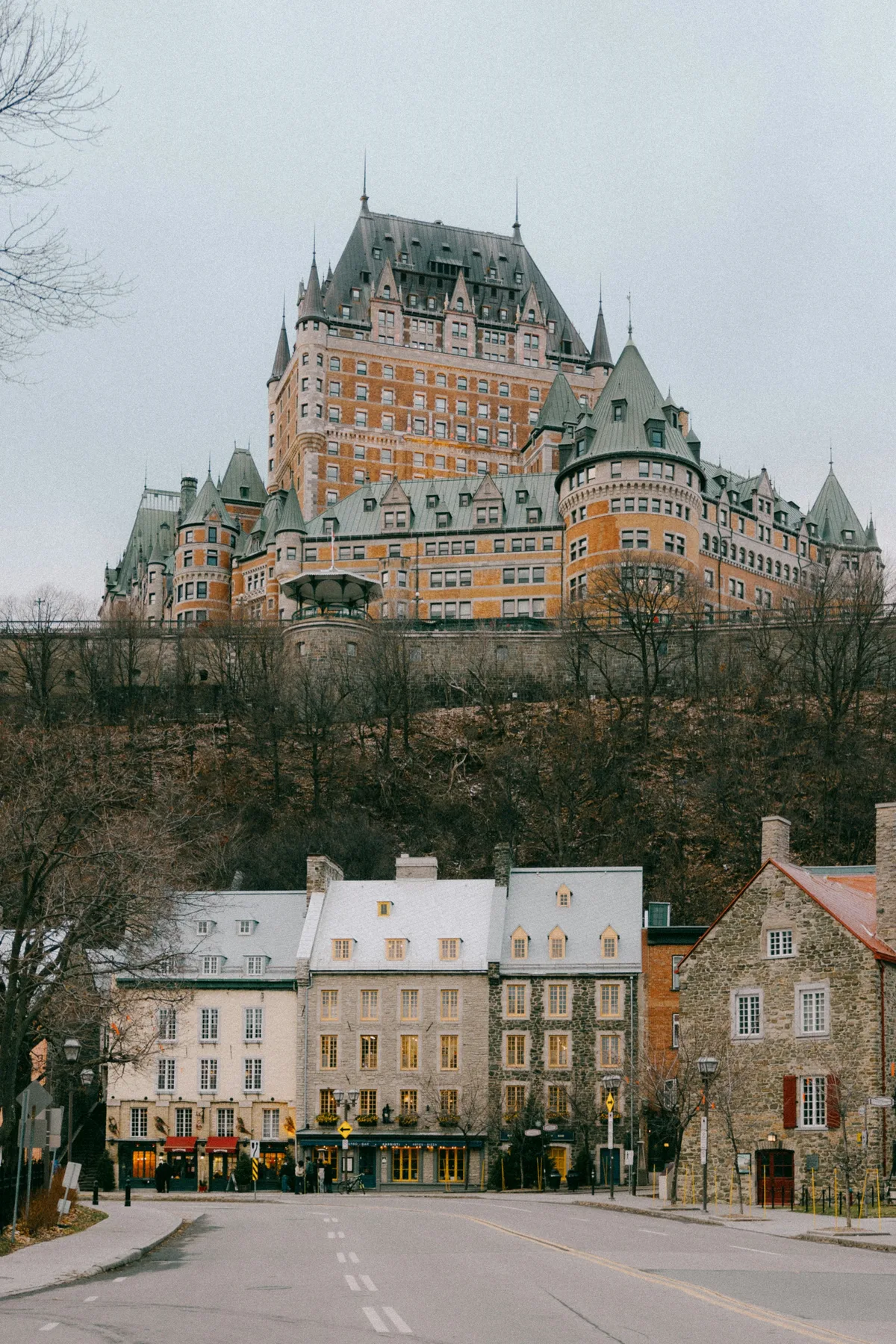
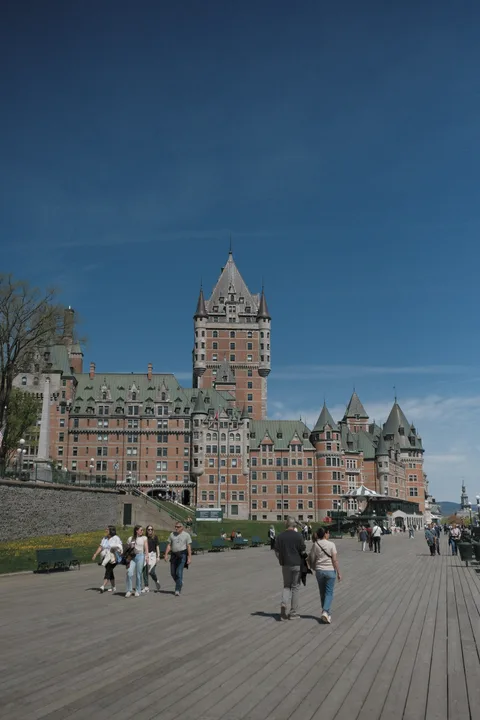
The grand, château-style hotel that has defined Québec City's skyline since 1893, overlooking the St. Lawrence River.
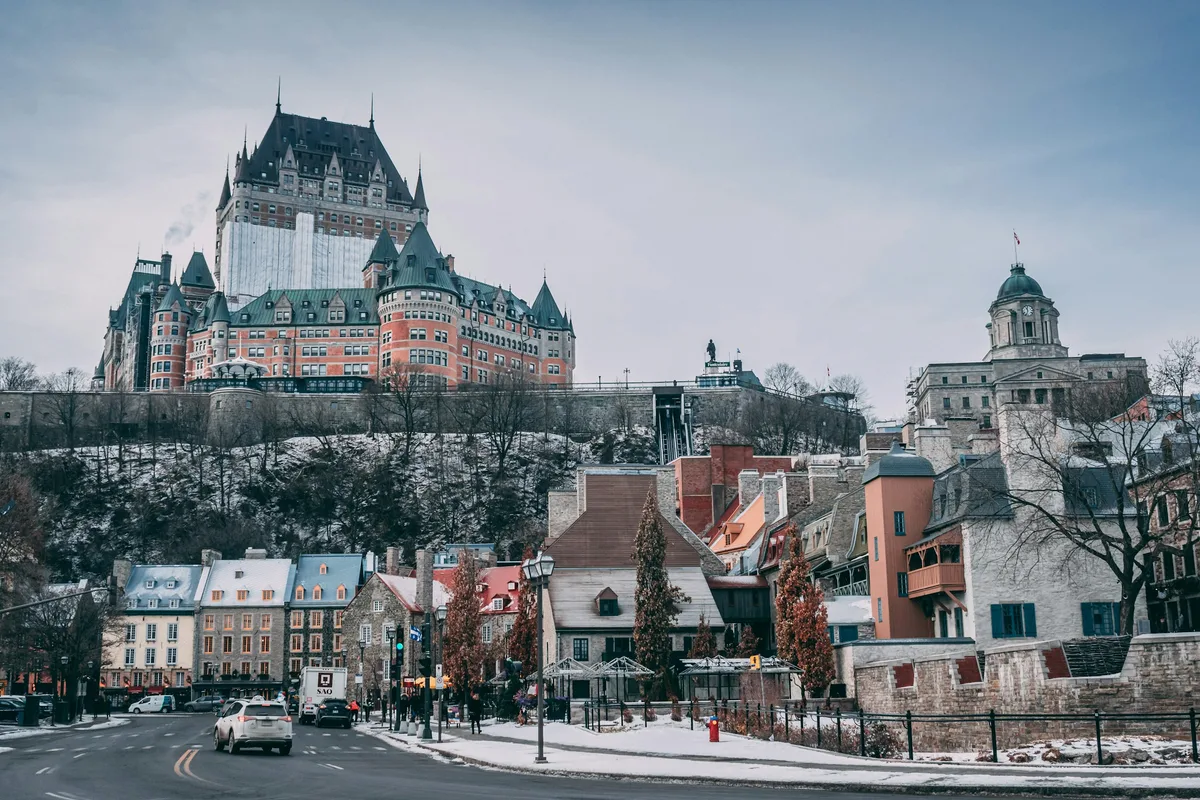 Private Tours
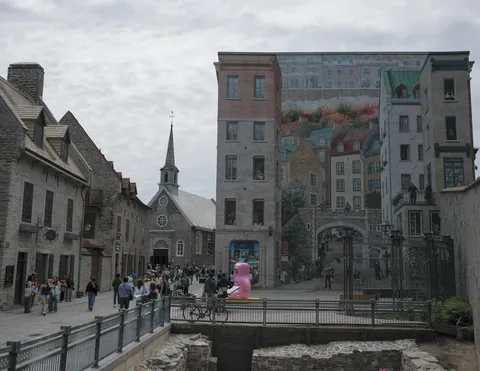
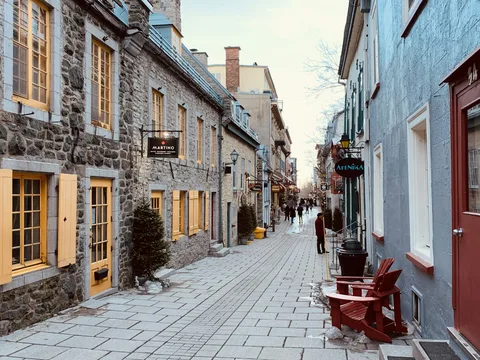
A private, guided walking tour of historic Old Québec — a UNESCO World Heritage Site — covering Terrasse Dufferin, the Notre-Dame de Québec Basilica-Cathedral, Place Royale, and Quartier Petit-Champlain, with a local guide the whole way.
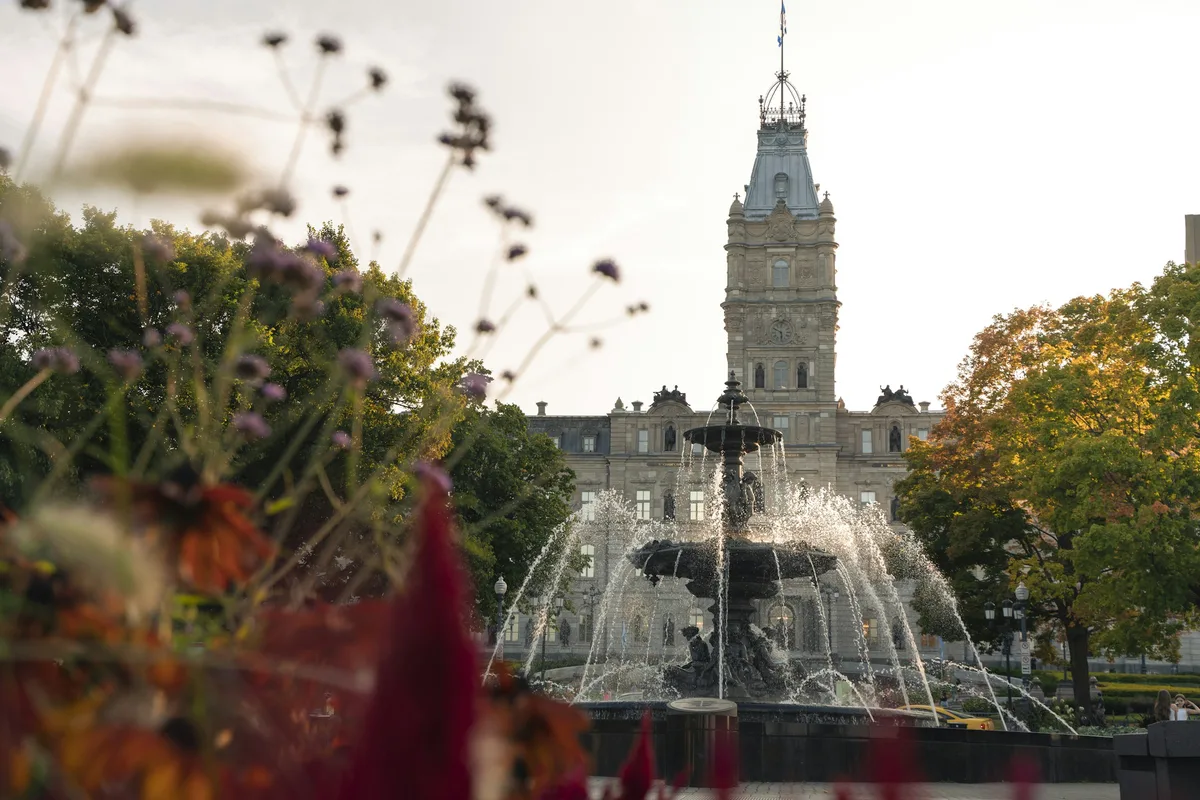 Private Tours
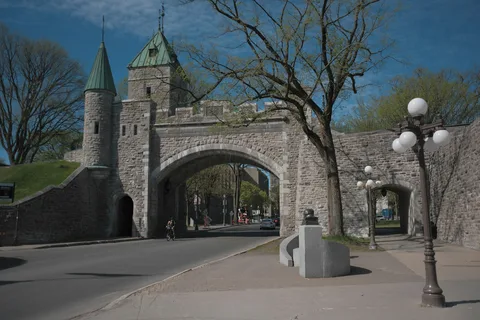
A private walking tour through both Upper and Lower Town of Old Québec — including a ride on the historic funicular, the Fortifications of Québec, and the Parliament Building — with hotel pickup in the Old Québec area.
Visitor guide
Fairmont Le Château Frontenac is the turreted, copper-roofed hotel that dominates the skyline of Old Québec from the edge of Cap Diamant. Opened on 18 December 1893 and designated a National Historic Site of Canada in 1981, it is among the best known of the grand railway hotels built by Canadian Pacific.
The hotel was designed by the American architect Bruce Price in the Châteauesque style and built by the Canadian Pacific Railway, with its general manager William Van Horne overseeing the project. Groundbreaking took place in May 1892. The site had earlier held the Château Haldimand, built in the 1780s and demolished in 1892, and before that the seat of the French and British governors. Lord Dufferin's plans for the 1870s had envisioned rebuilding the Château Saint-Louis here; when the city's hotel scheme stalled on financing, businessmen with Canadian Pacific ties took the project over.
The name honours Louis de Buade, Comte de Frontenac, governor of New France from 1672 to 1682 and again from 1689 to 1698. The building has grown since opening. According to Parks Canada, the 1908-09 enlargement was designed by W. S. Painter, and the 1920-24 enlargement by Edward and William Sutherland Maxwell, who were brothers; the central tower dates from the 1920-24 phase. A wing built in 1993 added a pool, fitness centre and terrace. Wikipedia notes that the tower reaches about 80 metres, and that it was the tallest building in Québec City from 1924 until 1930. Ownership has changed several times in recent decades, and the hotel took on the Fairmont name in 2001.
In August 1943 and September 1944 the Allied leaders met in Québec City for wartime strategy talks, with U.S. President Franklin Roosevelt, British Prime Minister Winston Churchill and Canadian Prime Minister Mackenzie King taking part. The hotel is associated with both conferences; today some suites are themed after historical figures including Churchill and Roosevelt, which the hotel presents as inspiration rather than a record of who slept where.
The building is best appreciated from outside. Dufferin Terrace runs directly beside it, the Old Québec funicular begins nearby, and across the river at Lévis the building appears as part of the Old Québec skyline. The hotel is often described as the most photographed hotel in the world; this is a popular claim with no measurement behind it, so treat it as local pride. The hotel currently has about 610 guest rooms and suites. Whether the public lobby, restaurants or guided interior tours are open to non-guests varies, so contact the hotel for current arrangements.
Early morning and the evening light give the best photographs of the roofline from the terrace or from the Place d'Armes. The surrounding streets are steep and cobbled in places, which is one reason a private vehicle is convenient: with Voyzo, a private vehicle and driver can pick you up door to door and drop you at the terrace end, so you start your Old Québec walk at the top of the hill rather than climbing it.
Place d'Armes, the Notre-Dame de Québec basilica, the Citadelle and the Plains of Abraham are all within walking distance in Upper Town, and the funicular and Breakneck Steps lead down to Petit-Champlain and Place Royale.
See every tour and attraction we cover in Quebec City.