TorontoOntario · 36 tours
 Niagara FallsOntario · 25 tours
 New York CityNew York · 30 tours
 Las VegasNevada · 8 tours
 San FranciscoCalifornia · 16 tours
 VancouverBritish Columbia · 17 tours
 DubaiUAE · 54 tours
 Abu DhabiUAE · 5 tours
 Buenos AiresArgentina · 23 tours
 AthensGreece · 31 tours
 AucklandNew Zealand · 38 tours
 CancunMexico · 54 tours
No destinations match “”. Try searching all tours instead — that search understands full questions, not just place names.
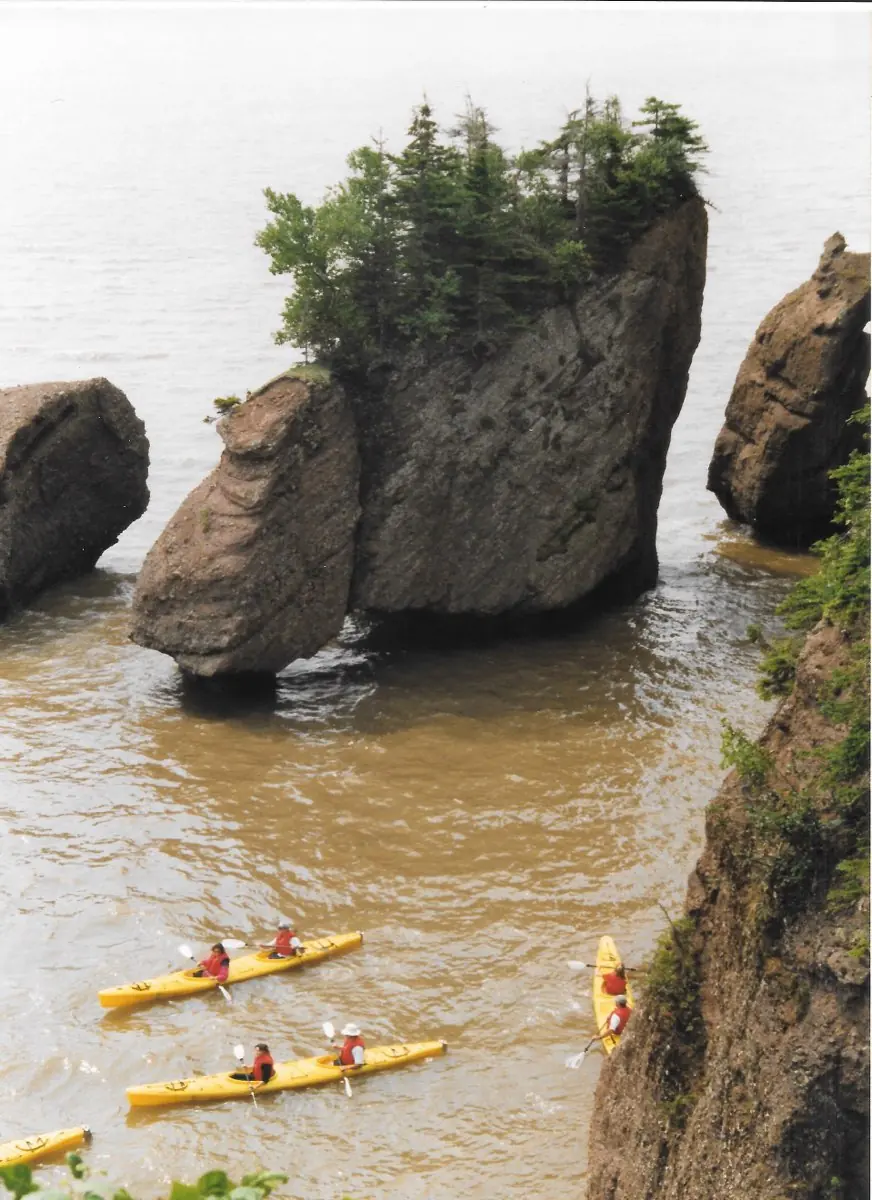
Flowerpot-shaped rock formations you can walk around at low tide, nearly submerged at high tide.
Visitor guide
The Hopewell Rocks, also called the Flowerpot Rocks, are a group of sea stacks on the upper Bay of Fundy shoreline at Hopewell Cape, New Brunswick. They are protected within Hopewell Rocks Provincial Park, and the main draw is walking on the sea floor at low tide and seeing the same spot covered by water hours later.
The stacks are made of red-brown conglomerate, sandstone and minor mudstone from the Carboniferous-age Hopewell Cape Formation. After the glaciers retreated, water seeping into cracks in the cliff slowly separated pillars from the shore, and the tides and waves then cut away at the bases faster than the tops. That is why many stacks are narrow at the bottom and broader above, and why trees and plants growing on top give them the flowerpot look. The stacks stand roughly 12 to 21 metres (40 to 70 feet) tall.
The erosion is ongoing. On 14 March 2016 part of Elephant Rock collapsed, with park officials estimating 100 to 200 tonnes of rock coming down; park staff have said freeze-thaw action in spring, when water enters cracks and refreezes, weakens the stone. Treat the shapes as a snapshot of a slowly changing coastline rather than permanent monuments.
The Bay of Fundy has among the highest tides in the world, and at Hopewell the water can rise by something in the order of 14 to 16 metres between low and high tide; sources quote the high figure differently, and the range varies with the moon cycle. The tide turns roughly every six hours, so a visit can show both the exposed ocean floor and the stacks standing in the water. The park itself recommends checking tide times (in Atlantic Time) before you go and notes that admission can be used across two consecutive days so that visitors can see both high and low tide.
The park says there are over twenty free-standing stacks along about two kilometres of shoreline; other sources cite 17 named formations, so counts vary by what is classed as a stack. Playful names include Elephant, Bear, Dinosaur and Mother-in-Law. Several access points lead to the shore: a main staircase with a viewing platform, a ramp at North Beach, and the Demoiselle trail that descends gently to the shore. A shuttle runs from the Interpretive Centre to the top of the stairs. The ocean-floor walk is only available around low tide, and the park advises sturdy footwear because the ledges can be slippery and shift underfoot.
The wide mudflats of the Fundy basin are biologically productive, and shorebirds are often seen feeding in the area. The park is self-guided, though interpretive staff are on the grounds.
Fundy National Park and the Fundy Trail Parkway lie further along the same coast, and Moncton's tidal bore and Magnetic Hill make a natural pairing for the same day or the next.
See every tour and attraction we cover in Moncton.