TorontoOntario · 36 tours
 Niagara FallsOntario · 25 tours
 New York CityNew York · 30 tours
 Las VegasNevada · 8 tours
 San FranciscoCalifornia · 16 tours
 VancouverBritish Columbia · 17 tours
 DubaiUAE · 54 tours
 Abu DhabiUAE · 5 tours
 Buenos AiresArgentina · 23 tours
 AthensGreece · 31 tours
 AucklandNew Zealand · 38 tours
 CancunMexico · 54 tours
No destinations match “”. Try searching all tours instead — that search understands full questions, not just place names.
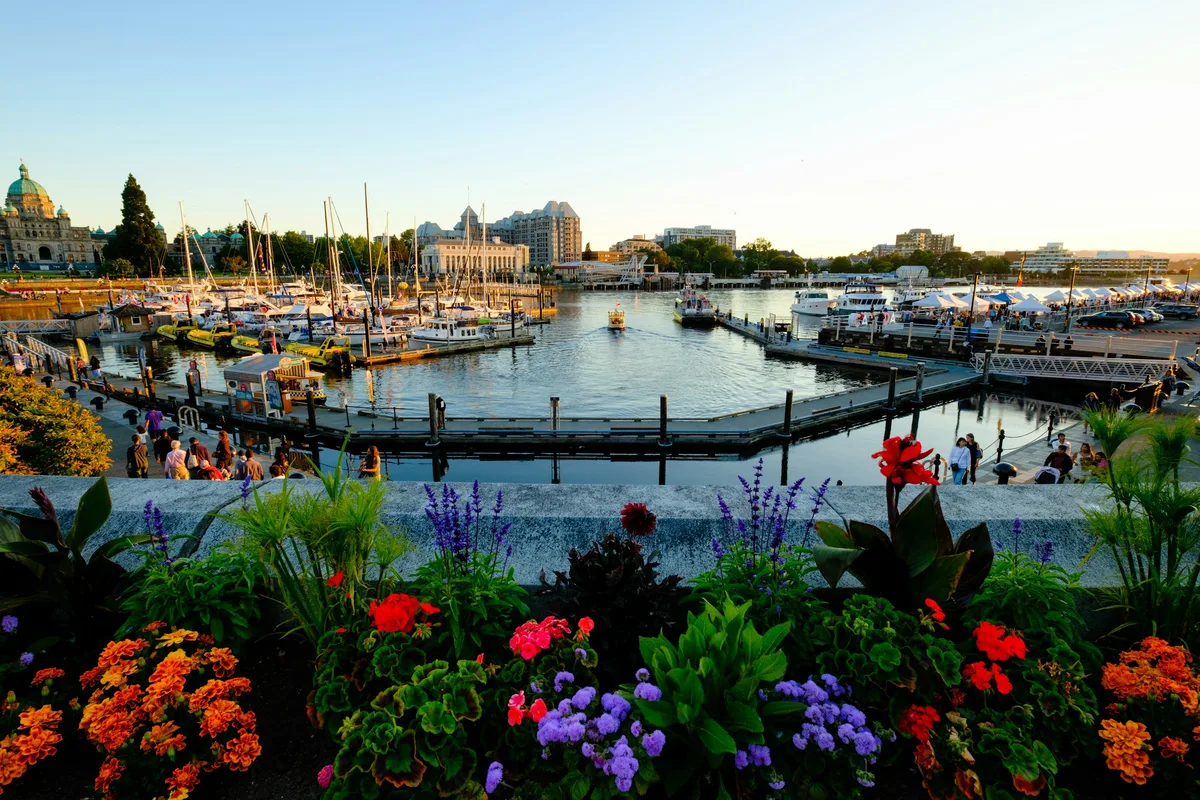
The waterfront heart of Victoria, ringed by the British Columbia Parliament Buildings, the Fairmont Empress Hotel, float planes, and harbour ferries.
Visitor guide
Victoria's Inner Harbour is the working and ceremonial heart of British Columbia's capital, framed by the Parliament Buildings, the Fairmont Empress hotel and the Royal BC Museum. Seaplanes, harbour ferries and visiting boats share a small body of water that has been central to life here since long before the city existed.
The harbour lies in the traditional territory of the Lək̓ʷəŋən (Lekwungen) peoples, whose descendants include the Songhees and Esquimalt Nations; the Greater Victoria Harbour Authority acknowledges this on its website. Accounts commonly describe the harbour as a place for gathering shellfish and trade, and the traditional name is often given as Whosaykum, meaning roughly "muddy place"; spellings and translations vary by source, so treat that as a commonly cited rendering rather than a definitive one.
In 1843 the Hudson's Bay Company established Fort Victoria overlooking the harbour. Victoria became capital of the Colony of Vancouver Island in 1849, the townsite was laid out in 1852, and the city was incorporated in 1862. It became capital of British Columbia in 1871.
The shape of today's waterfront comes mostly from the decades around 1900. Construction of the provincial Parliament Buildings began in 1893, designed by Francis Rattenbury, and they opened on 10 February 1898. Wikipedia reports that building of the stone James Bay Causeway began in 1901, and the Canadian Pacific Railway's Empress Hotel opened overlooking the harbour in 1908. The Johnson Street Bridge, at the head of the Inner Harbour, opened in 1924.
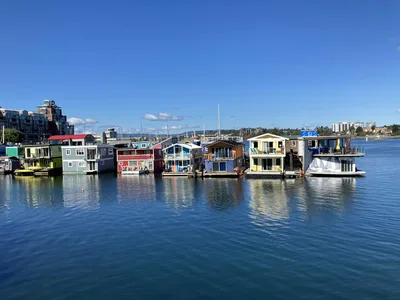
The Inner Harbour is entered between Laurel Point and Songhees Point and extends northeast to the Johnson Street Bridge, with depths reaching around 20 metres. Floatplane services depart from here, with Wikipedia noting that in 2007 the Victoria-Vancouver harbour link was Canada's busiest air route by weekly flights. International passenger ferries such as the MV Coho (to Port Angeles, Washington) and fast catamarans to Seattle also use terminals along the harbour. Small harbour ferries and water taxis operate within the harbour, and Fisherman's Wharf is a short ride away.
The Greater Victoria Harbour Authority, a not-for-profit, manages the Causeway and Ship Point marinas on the Inner Harbour, along with the nearby Steamship Terminal and Hyack Terminal. The Causeway area is used for events throughout the year, and Ship Point hosts a summer market; schedules change, so check with the authority.
Typical stops include a walk along the causeway in front of the Empress, the Parliament Buildings lit at night, the Royal BC Museum on the waterfront and the shops and cafés of Government Street. For more on Indigenous history, look for interpretive information along the harbour walks and at the museum.
Mornings are quiet and evenings are lively. Visits are easiest on foot, as the core sights are all within a few blocks, but the Songhees side and Fisherman's Wharf are farther along the water.
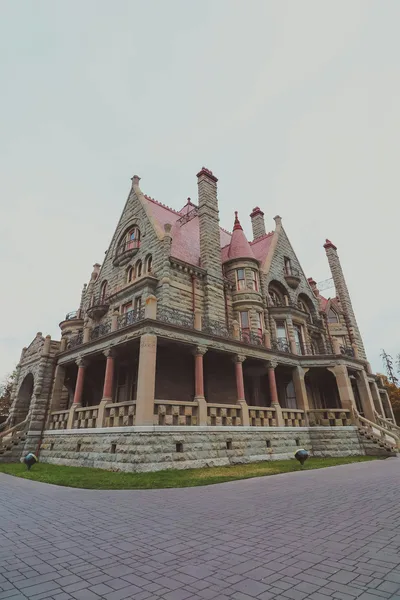
With a private vehicle and driver and door-to-door pickup, the Inner Harbour becomes an easy anchor stop: arrive from a hotel or the ferry, walk the causeway at your own pace, and carry on to Craigdarroch Castle or Fisherman's Wharf.
See every tour and attraction we cover in Victoria.