TorontoOntario · 36 tours
 Niagara FallsOntario · 25 tours
 New York CityNew York · 30 tours
 Las VegasNevada · 8 tours
 San FranciscoCalifornia · 16 tours
 VancouverBritish Columbia · 17 tours
 DubaiUAE · 54 tours
 Abu DhabiUAE · 5 tours
 Buenos AiresArgentina · 23 tours
 AthensGreece · 31 tours
 AucklandNew Zealand · 38 tours
 CancunMexico · 54 tours
No destinations match “”. Try searching all tours instead — that search understands full questions, not just place names.
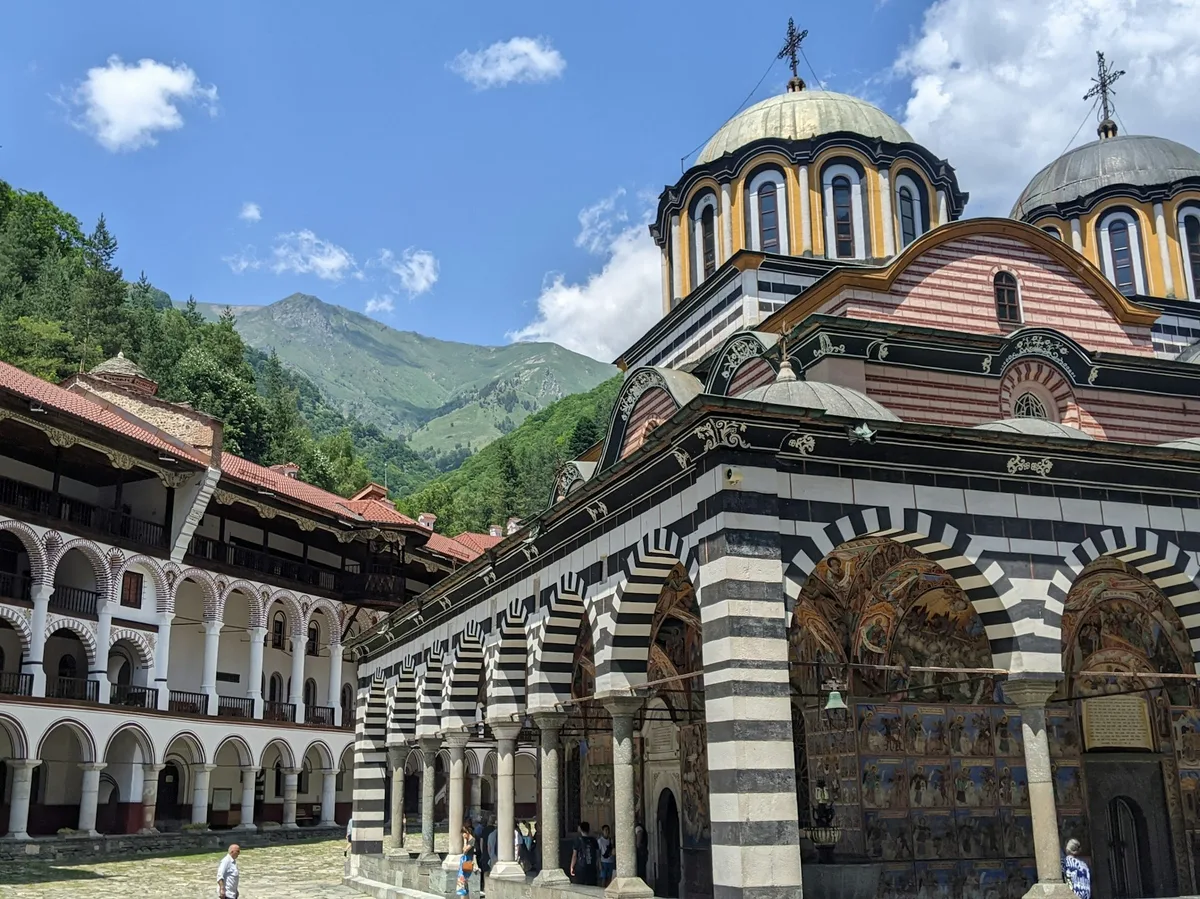
Founded in the 10th century and nestled in the Rila Mountains, this is Bulgaria's largest and most important Eastern Orthodox monastery, famed for its striped arches, vivid frescoes, and rich collection of icons.
 Multi-Day Tours
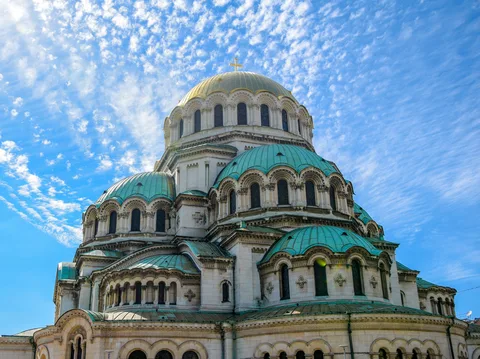
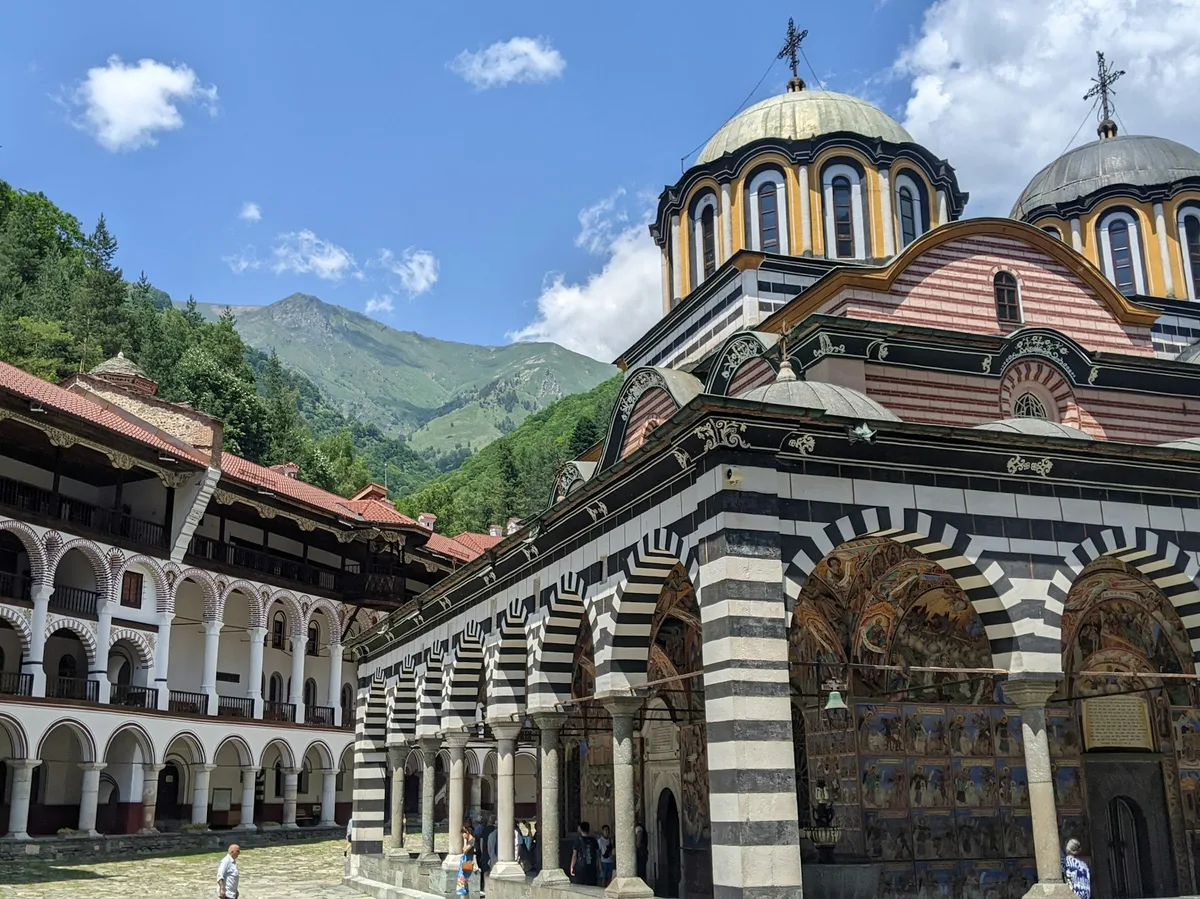
An 8-day private circuit built for photographers, from Sofia's cathedrals to Rila Monastery, a scenic mountain train through the Rhodopes, the Valley of Roses, and the fortress town of Veliko Tarnovo.
 Multi-Day Tours Popular Pick
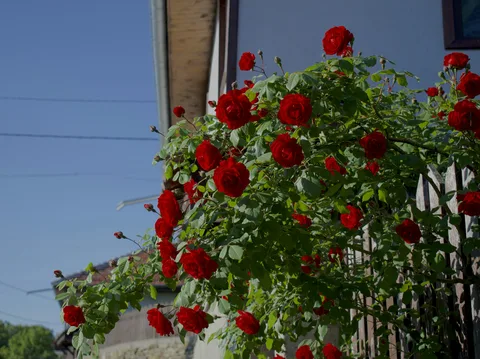
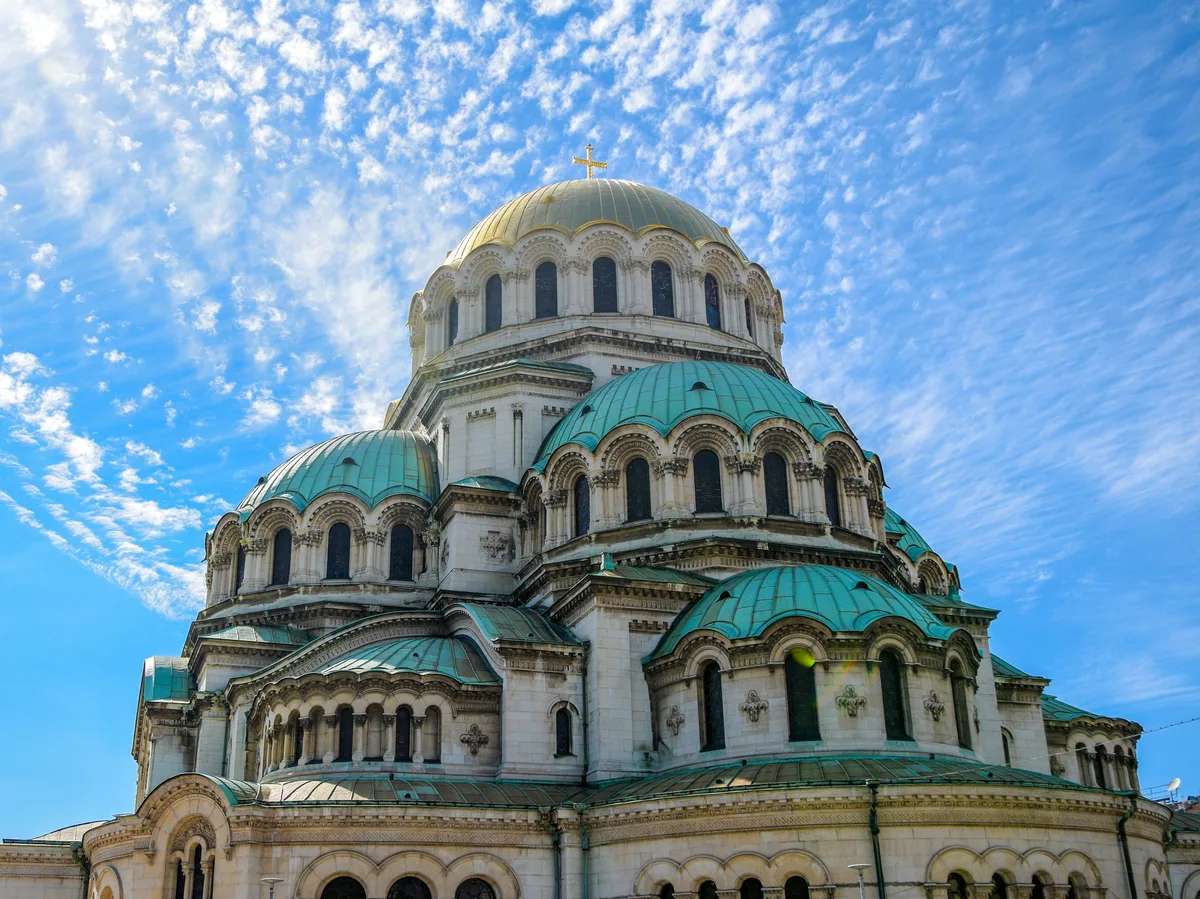
An 8-day deep dive into Bulgaria's Thracian and Roman past — Sofia, the Starosel Thracian royal complex, the Valley of Roses, the Rhodope sanctuaries of Orpheus, Perperikon, Plovdiv, and Rila Monastery.
 Multi-Day Tours
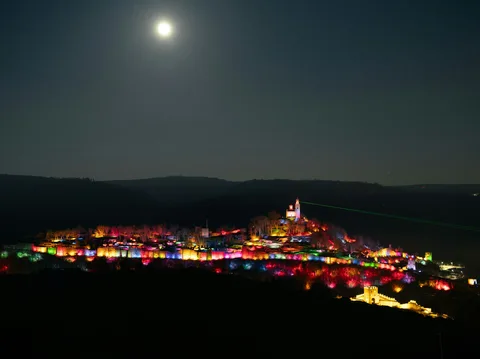
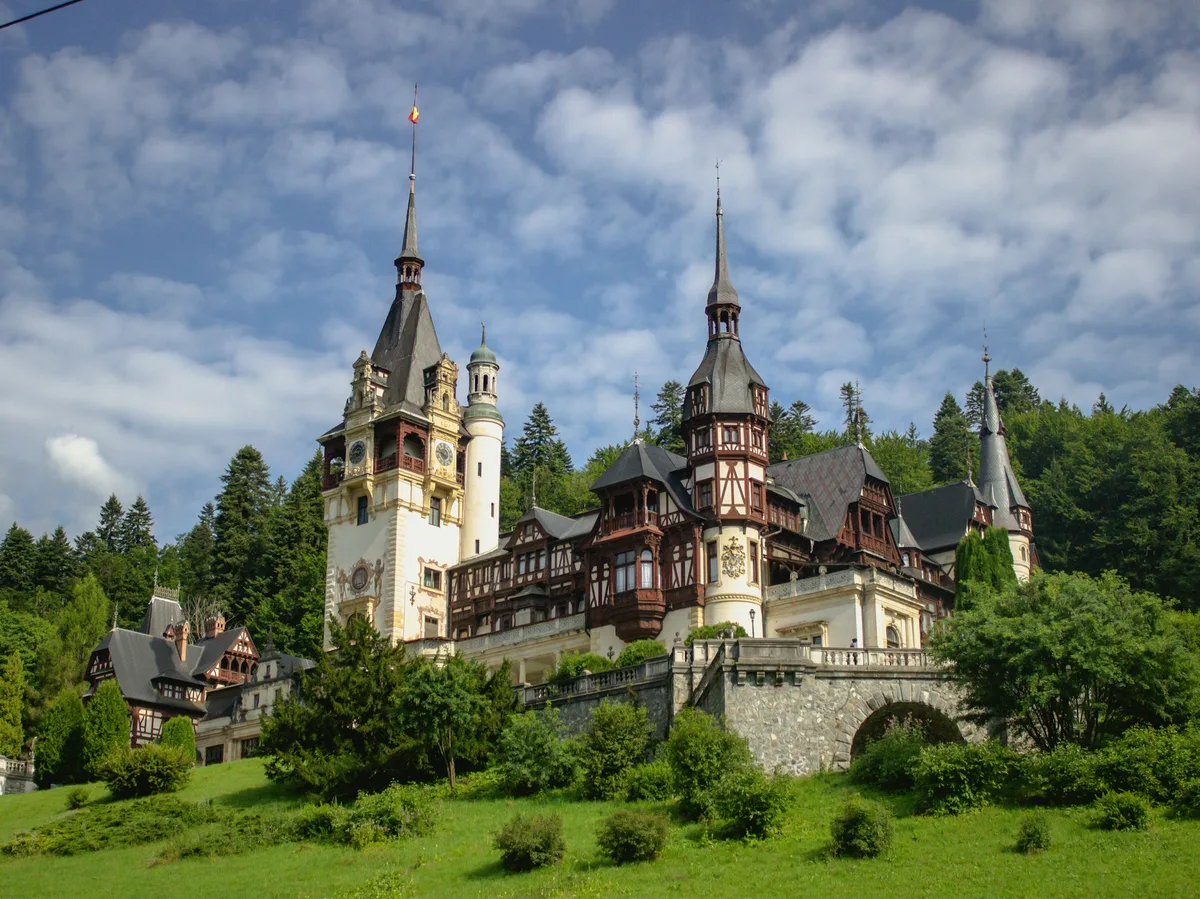
Voyzo's longest itinerary — a guided 21-day journey from Sofia through Bulgaria's Rila Monastery, Plovdiv, the Black Sea coast, and Veliko Tarnovo, before crossing into Romania for Bucharest, Transylvania's painted monasteries, Bran and Peleș castles, and Sighișoara.
Visitor guide
Rila Monastery is the largest and most famous Eastern Orthodox monastery in Bulgaria, set at about 1,147 metres in the Rilska River valley of the Rila Mountains, roughly 117 kilometres south of Sofia. Founded in the 10th century and traditionally linked to the hermit Saint Ivan of Rila, it has been a UNESCO World Heritage Site since 1983.
Tradition links the monastery to Saint Ivan of Rila, a hermit who lived in a nearby cave, and holds that his students built the first complex. Wikipedia dates the foundation to the 10th century. In 1334 to 1335 the feudal lord Hrelja built the tower that still stands in the courtyard, with a small church beside it dating to 1343.
In the mid-15th century the monastery suffered raids and destruction, and it was rebuilt in the late 15th century with the support of Sultana Mara Brankovic, the Russian Orthodox Church and the Rossikon monastery on Mount Athos. The relics of Ivan of Rila were moved from Tarnovo to the monastery in 1469. The monastery preserved Bulgarian language and culture through the long period of foreign rule, and Neofit Rilski founded a school there. It was also a hideout for revolutionaries including Vasil Levski, Gotse Delchev and Peyo Yavorov.
A fire in 1833 led to reconstruction between 1834 and 1862 under the architect Alexi Rilets, funded by wealthy Bulgarians across the country in the age of the Bulgarian National Revival. A belfry was added to the tower in 1844. The residential part has four storeys with about 300 chambers.
The main church, dedicated to the Nativity of the Virgin, was built by the architect Pavel Ioanov between 1834 and 1837. It has five domes and a gold-plated, wood-carved iconostasis. Its frescoes, finished in 1846, were painted by masters from Bansko, Samokov and Razlog, among them Zahari Zograf and Dimitar Zograf.
The monastery's museum is known for Rafail's Cross, a wooden cross carved from a single piece of wood and completed in 1802. The library holds around 250 manuscripts and about 9,000 old printed works. About 60 monks live in the community today, according to Wikipedia.
The monastery was declared a national historical monument in 1976 and named a UNESCO World Heritage Site in 1983. It has been under the Holy Synod of the Bulgarian Orthodox Church since 1991. Pope John Paul II visited on 25 May 2002, and the monastery appears on the reverse of the 1 lev banknote issued in 1999.
The monastery lies within the Rila Mountains, the highest range in the Balkan Peninsula, and the drive from Sofia climbs through forested valleys. A private guided visit gives context for the frescoes and history that is hard to take in alone, and the quiet of the courtyard is best experienced without a rushed schedule.
See every tour and attraction we cover in Bulgaria.