TorontoOntario · 36 tours
 Niagara FallsOntario · 25 tours
 New York CityNew York · 30 tours
 Las VegasNevada · 8 tours
 San FranciscoCalifornia · 16 tours
 VancouverBritish Columbia · 17 tours
 DubaiUAE · 54 tours
 Abu DhabiUAE · 5 tours
 Buenos AiresArgentina · 23 tours
 AthensGreece · 31 tours
 AucklandNew Zealand · 38 tours
 CancunMexico · 54 tours
No destinations match “”. Try searching all tours instead — that search understands full questions, not just place names.
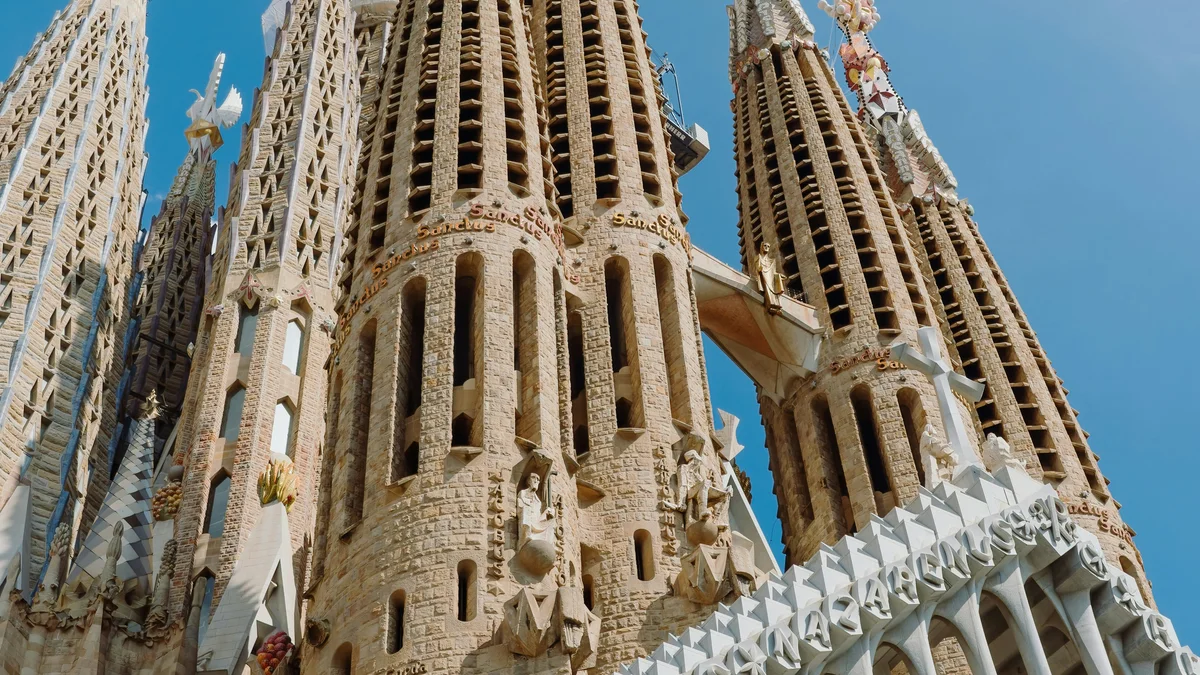
The Sagrada Família is Antoni Gaudí's still-unfinished basilica, under continuous construction since 1882 and now one of the most visited monuments in Spain. Gaudí took over the project in 1883 and worked on it until his death in 1926, by which point less than a quarter of the building was complete; construction has continued ever since, funded almost entirely by visitor admissions and donations. Its interior is famous for tree-like columns and stained glass that floods the nave with color, a striking contrast to the elaborate stone façades outside.
Visitor guide
The Sagrada Familia is a Catholic basilica in the Eixample district of Barcelona, Spain, designed by the architect Antoni Gaudi. Construction began in 1882 and has continued for well over a century. It is part of the UNESCO World Heritage listing of Gaudi's works and is among Barcelona's best-known landmarks.
According to Wikipedia, the bookseller Jose Maria Bocabella conceived the project after a visit to the Vatican in 1872, imagining an expiatory temple funded by donations. Construction began on 19 March 1882 under the architect Francisco de Paula del Villar, who planned a conventional Gothic Revival church. Villar resigned in March 1883, and Gaudi took over, radically changing the design.
Gaudi was named Architect Director in 1884 and worked on the building until his death in 1926, when it was only partly complete, estimated at 15 to 25 percent. His style blended Gothic forms with curving Art Nouveau lines, and he drew heavily on nature. The plan is a Latin cross with five aisles, and the design contains no exact right angles.
The Nativity facade, on the east, was begun in the 1890s (the basilica's own history page dates the start of work to 1891) and was the first to be completed. Its three porticoes represent Hope, Faith and Charity. The Passion facade, on the west, follows Gaudi's 1917 design; construction began in 1954, and the sculptor Josep Maria Subirachs led the sculpture work from 1987. The Glory facade, on the south, is planned as the main entrance and the largest of the three, and its construction began in 2002.
Gaudi planned 18 spires. The central Tower of Jesus Christ is given as 172.5 metres, and Wikipedia reports that Gaudi made it one metre shorter than the hill of Montjuic.
The interior is known for columns that branch like trees, supporting vaults that reach about 45 metres in the central nave. The vault above the crossing rises about 60 metres, and the apse vault about 75 metres. The columns sit on a regular grid, and the design lets in natural light that varies in colour through the stained glass.
Gaudi built models and used geometric forms such as hyperboloids and paraboloids to shape the structure. Many of his working models and drawings were damaged when the crypt and workshop were set on fire in July 1936 during the Spanish Civil War. Work resumed later using surviving material, published plans and photographs.
Pope Benedict XVI consecrated the church on 7 November 2010 and proclaimed it a minor basilica. UNESCO's 1984 inscription covered several of Gaudi's works in Barcelona, and in 2005 the listing was extended to include the Crypt and Nativity facade of the Sagrada Familia.
The construction has depended on private donations and, in more recent decades, visitor tickets. After 136 years of building without a licence, the trustees agreed in 2018 to pay for a building permit, which the city issued in June 2019.
The building is an active place of worship as well as a monument under continuing construction, so what visitors see depends on the stage of work. A private guided visit helps explain the symbolism of the facades, and Voyzo can arrange this with a private vehicle and driver.
See every tour and attraction we cover in Barcelona.