TorontoOntario · 36 tours
 Niagara FallsOntario · 25 tours
 New York CityNew York · 30 tours
 Las VegasNevada · 8 tours
 San FranciscoCalifornia · 16 tours
 VancouverBritish Columbia · 17 tours
 DubaiUAE · 54 tours
 Abu DhabiUAE · 5 tours
 Buenos AiresArgentina · 23 tours
 AthensGreece · 31 tours
 AucklandNew Zealand · 38 tours
 CancunMexico · 54 tours
No destinations match “”. Try searching all tours instead — that search understands full questions, not just place names.
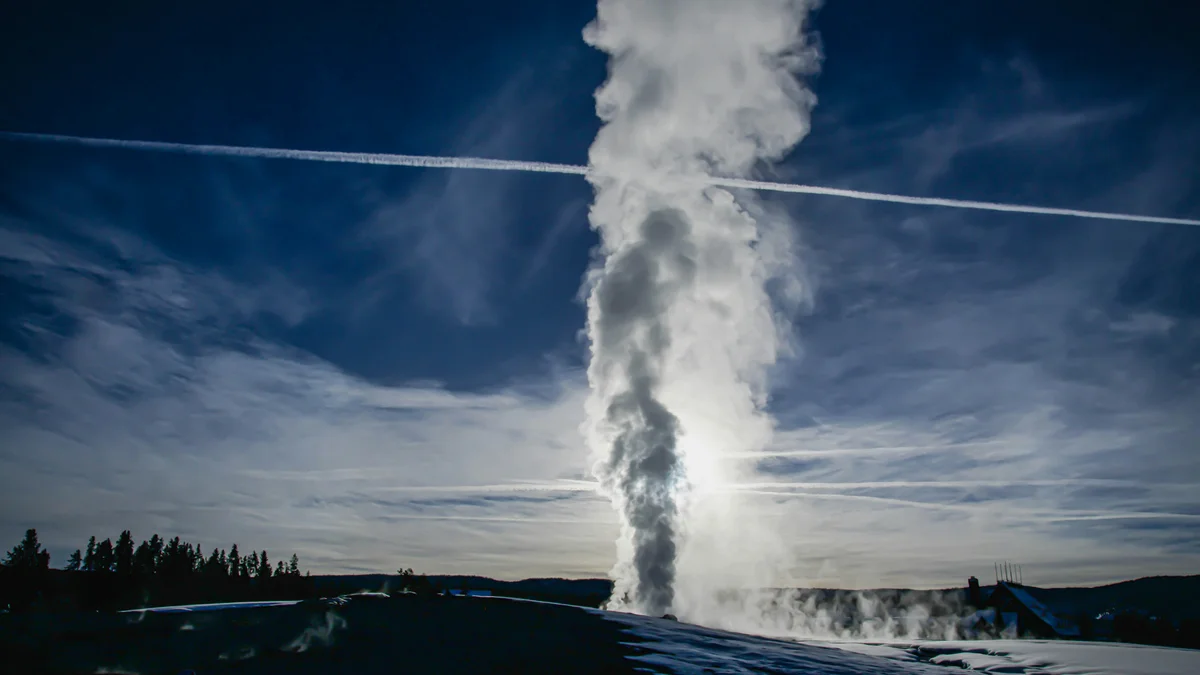
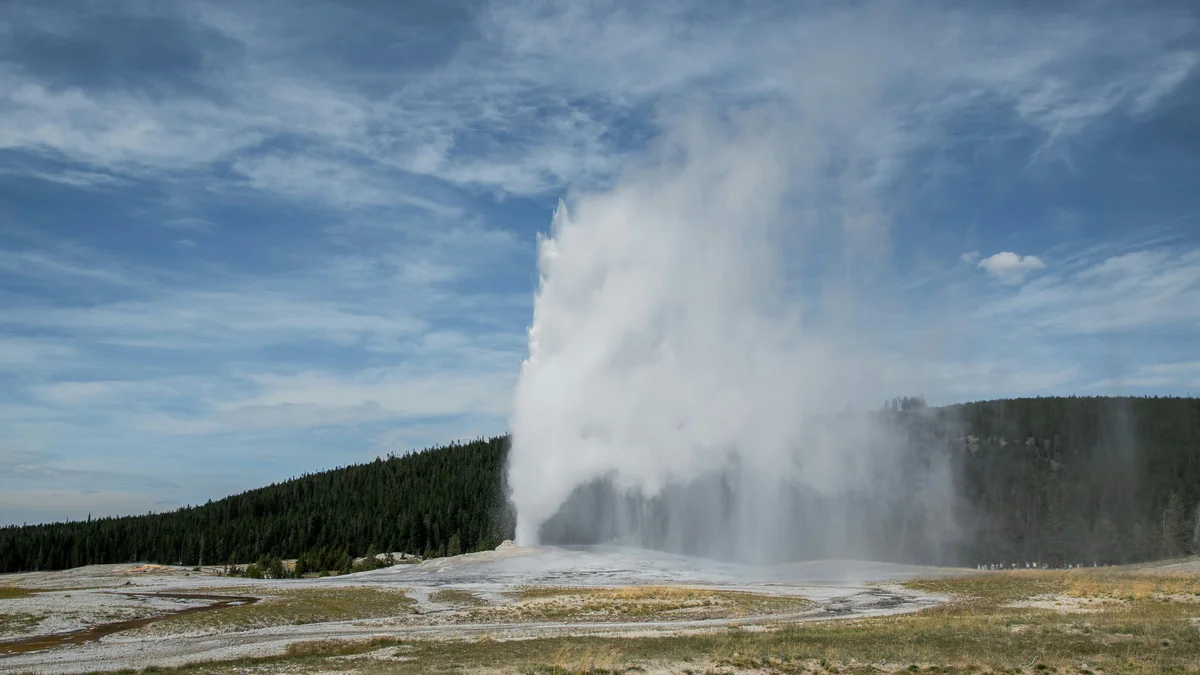
Old Faithful is Yellowstone's signature geyser, erupting roughly every 90 to 100 minutes on average and shooting boiling water 106 to more than 180 feet into the air. It earned its name in 1870 for how reliably it performs compared to the park's thousands of other geothermal features, and today the National Park Service posts real-time predicted eruption windows at the visitor center. It's the anchor of the Upper Geyser Basin, which the National Park Service says has the largest numbers of geysers in the park.
Visitor guide
Old Faithful is the geyser that made Yellowstone's thermal country famous, a cone geyser in the Upper Geyser Basin that has been erupting on a recognisable rhythm for as long as people have written about it. It is not the tallest or the most powerful geyser in the park, but its reliability and its easy boardwalk access have made it the one almost every first-time visitor wants to see.
Old Faithful was named on September 18, 1870, by Henry D. Washburn during the Washburn-Langford-Doane Expedition, and it is generally described as the first geyser in the park to receive a name. Expedition member Nathaniel Langford later wrote that it spouted at regular intervals nine times during the party's stay, with columns of water roughly 90 to 125 feet high. In the park's early years visitors treated the crater as a natural laundry.
Each eruption sends roughly 3,700 to 8,400 US gallons (about 14,000 to 32,000 litres) of boiling water skyward. Heights range from about 106 feet to more than 180 feet, with a typical eruption reaching around 130 feet according to the National Park Service, and an eruption usually lasts between about one and a half and five minutes. Researchers who lowered probes into the conduit between 1983 and 1994 recorded water at 244 degrees Fahrenheit (118 degrees Celsius) at a depth of 72 feet, and later video probes saw superheated steam entering the channel.
Part of what makes Old Faithful dependable is that it is not thought to be plumbed into neighbouring features in the basin, so its behaviour is less affected by what other geysers are doing. Even so, the timing is not fixed. The NPS notes that the average interval has lengthened over the decades, partly because of earthquakes: before the 1959 Hebgen Lake earthquake the average was a little over an hour, and a 1983 Idaho quake also lengthened waits. As of January 2025 the NPS reported a median interval of about 102 minutes, give or take 10, with individual intervals ranging from roughly 54 to 118 minutes. Wikipedia gives a somewhat shorter long-term average of about 92 minutes, so treat any single figure as approximate. Rangers predict eruptions for Old Faithful and five other geysers, and the NPS posts those predictions at its visitor facilities and in its app.
Old Faithful sits in a basin the NPS says holds at least 150 geysers in about one square mile, along with many hot springs. Yellowstone as a whole has nearly 500 geysers, which the NPS says is close to 60 percent of all the geysers in the world. Boardwalks loop through the basin, so a visit can easily stretch beyond the main geyser to the other features in the basin, and the NPS posts predictions for several of them.
Beside the viewing area stands the Old Faithful Inn, built in 1903-1904 and described by the NPS as nearly 700 feet long and seven stories high. It is a National Historic Landmark and one of the few remaining log hotels in the country. Even visitors who are not staying there often step inside to see the lobby and its timber framing.
See every tour and attraction we cover in Yellowstone National Park.