TorontoOntario · 36 tours
 Niagara FallsOntario · 25 tours
 New York CityNew York · 30 tours
 Las VegasNevada · 8 tours
 San FranciscoCalifornia · 16 tours
 VancouverBritish Columbia · 17 tours
 DubaiUAE · 54 tours
 Abu DhabiUAE · 5 tours
 Buenos AiresArgentina · 23 tours
 AthensGreece · 31 tours
 AucklandNew Zealand · 38 tours
 CancunMexico · 54 tours
No destinations match “”. Try searching all tours instead — that search understands full questions, not just place names.
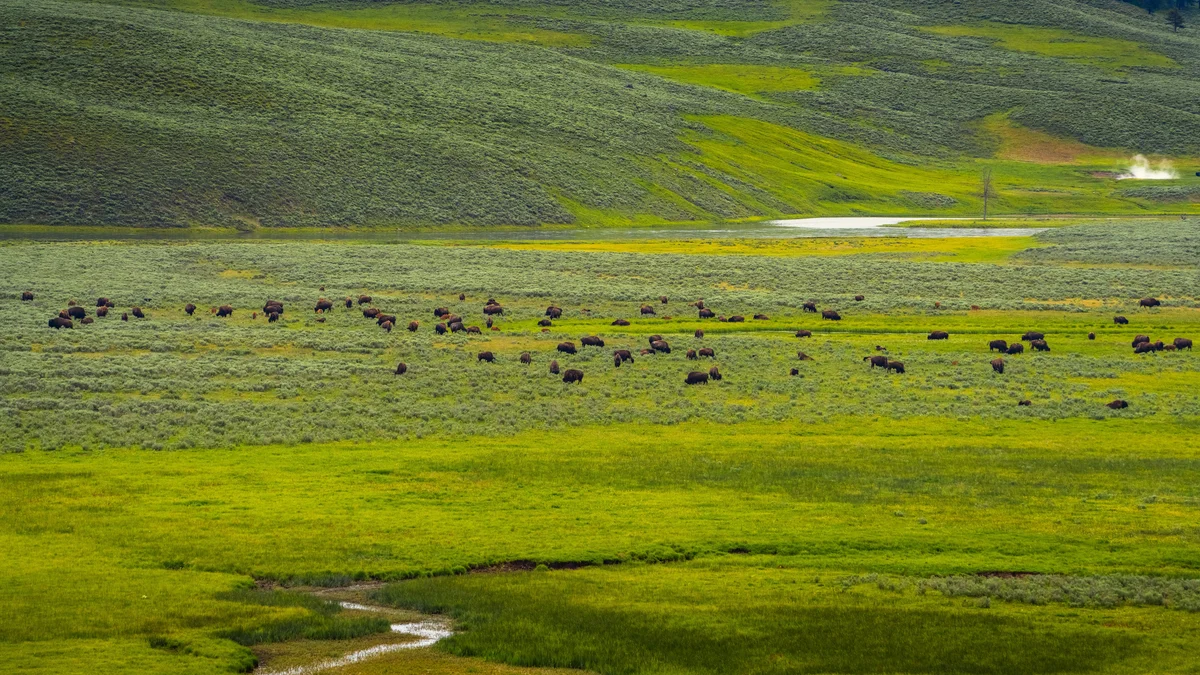
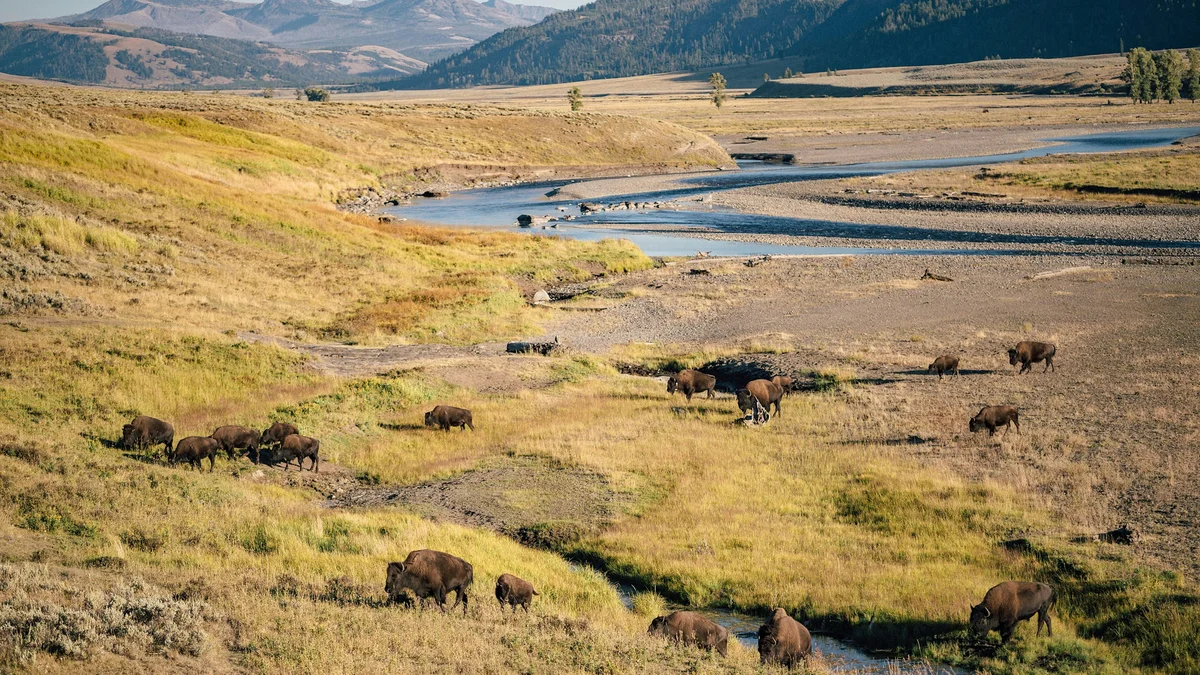
Lamar Valley is a broad, glacially carved valley in Yellowstone's remote northeast corner, nicknamed the "American Serengeti" for its concentration of large mammals. It's widely regarded as one of the best places in North America to spot wild wolves, along with grizzly bears, pronghorn, and large bison herds grazing the open grasslands. Wolves were reintroduced to Yellowstone in 1995, and Lamar Valley remains a primary territory for several of the park's packs, with early morning and dusk the most active viewing windows.
Visitor guide
Lamar Valley, in the northeast of Yellowstone National Park, is a broad grassland valley along the Lamar River and one of the park's best-known places for watching wildlife. It is often compared to an African savanna for the herds of grazers and the predators that follow them, and it is a long way in character from the geyser basins in the middle of the park.
The Lamar River is about 40 miles (64 kilometres) long and lies entirely inside Yellowstone. It rises in the Absaroka Range on the park's eastern edge, flows northwest, collects Soda Butte Creek and Slough Creek, and joins the Yellowstone River near Tower Junction. It was once called the East Fork of the Yellowstone; geologist Arnold Hague renamed it during the 1884-85 park survey in honour of Secretary of the Interior L.Q.C. Lamar. The river runs through country affected by the 1988 fires and is known for Yellowstone cutthroat trout.
The National Park Service describes the northern range as home to some of the largest wild bison and elk herds in North America, with deer and pronghorn on the grasslands, and coyotes common. Bobcats, cougars and red foxes are occasionally reported. Wolves are the valley's signature draw: they were reintroduced to Yellowstone in 1995, and the NPS calls the northern range one of the best places in the world to watch them. Elk make up about 90 percent of their winter prey, and the valley's packs have included the Lamar Canyon and Junction Butte packs. Pack ranges and numbers change, so there is no guarantee of a sighting.
The NPS also points out how a wolf kill feeds others: ravens arrive almost immediately, coyotes wait nearby, and bears often displace the wolves. Watching that chain unfold from a roadside pullout is part of what draws repeat visitors.
In the valley, the Lamar Buffalo Ranch is a small historic district tied to bison recovery. The NPS says that in 1901 only about 25 bison were counted in the park, and Congress funded the purchase of 21 animals from private owners; the herd was fed and bred in Lamar Valley in what the NPS describes as the first effort to preserve a wild species through intensive management. Sources differ slightly on the ranch's founding date between 1906 and 1907. Bison from the ranch were released to breed with the free-roaming herd, and the NPS notes that Yellowstone's bison today are among the largest herds in North America and are considered genetically free of cattle ancestry.
The ranch was listed on the National Register of Historic Places in 1982. Its buildings include a ranger station and corral from 1915, a log barn from 1927 and a bunkhouse from 1929. Today it serves as a base for educational field programmes run by Yellowstone Forever and partners, and it runs on a solar array.
See every tour and attraction we cover in Yellowstone National Park.