TorontoOntario · 36 tours
 Niagara FallsOntario · 25 tours
 New York CityNew York · 30 tours
 Las VegasNevada · 8 tours
 San FranciscoCalifornia · 16 tours
 VancouverBritish Columbia · 17 tours
 DubaiUAE · 54 tours
 Abu DhabiUAE · 5 tours
 Buenos AiresArgentina · 23 tours
 AthensGreece · 31 tours
 AucklandNew Zealand · 38 tours
 CancunMexico · 54 tours
No destinations match “”. Try searching all tours instead — that search understands full questions, not just place names.
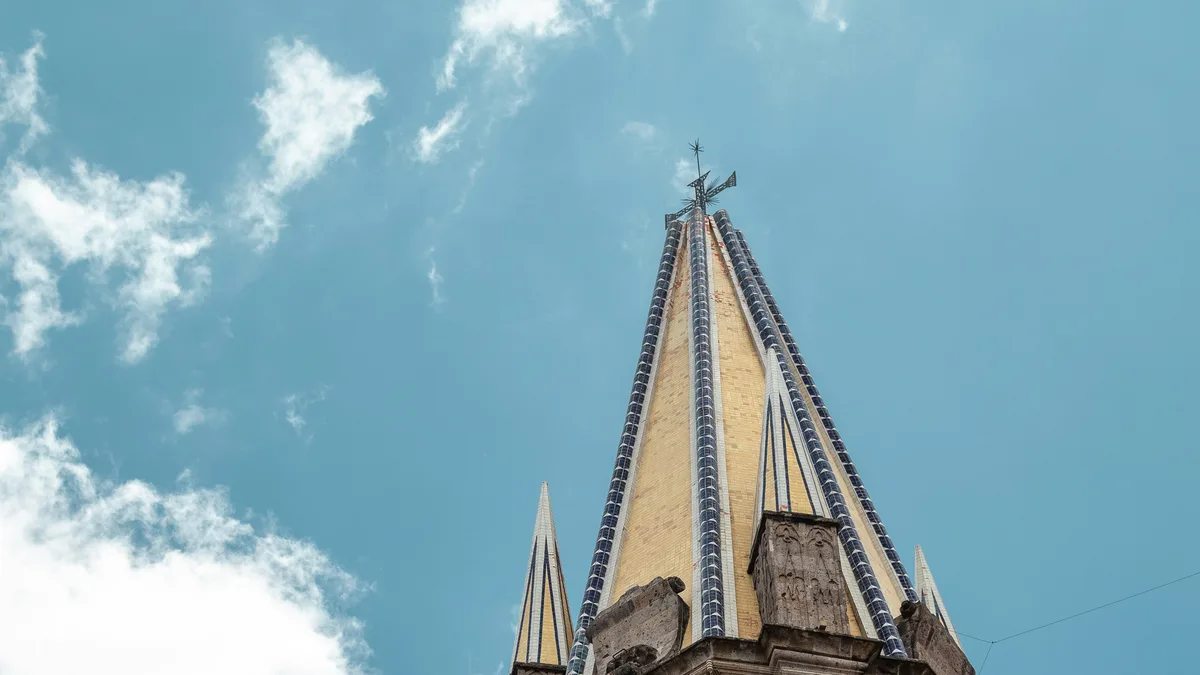
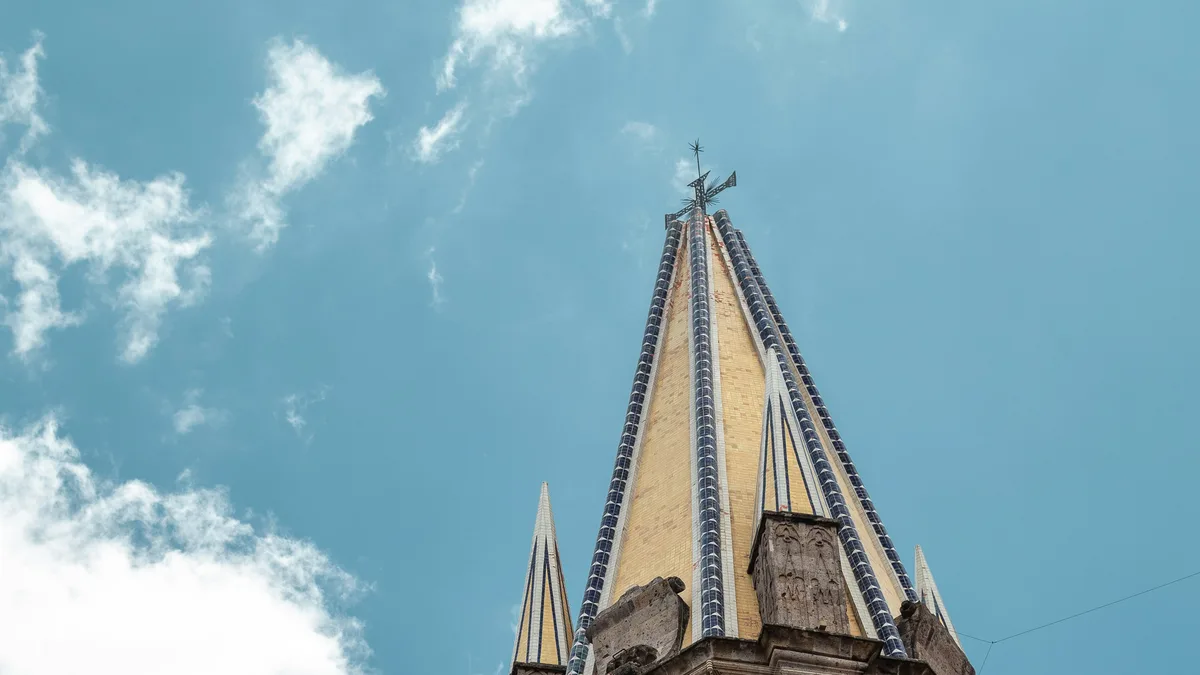
Begun in 1561 and completed in 1618, this neo-Gothic cathedral's twin yellow-tiled spires are the defining silhouette of downtown Guadalajara. It anchors the Plaza de Armas and the surrounding network of five connected plazas at the heart of the historic center.
 Private Tours
A private, 3-4 hour walk through Guadalajara's historic core with a local guide holding a degree in tourism and local economic development, covering more than ten of the city's fundamental landmarks.
 Private Tours
A private 3-hour tour combining the Cathedral, Government Palace, and City Hall with tastings of Jalisco's own tortas ahogadas, pozole, and birria at Mercado de San Juan de Dios.
Visitor guide
The Guadalajara Cathedral, formally the Cathedral-Basilica of the Assumption of Our Lady, is the Roman Catholic cathedral of the Archdiocese of Guadalajara in the Centro district of Guadalajara, Jalisco, Mexico. Its two tall, tile-covered spires are among the most recognisable features of the city skyline, and the building is a minor basilica.
According to Wikipedia, the first cathedral on the site was a simple adobe building with a thatched roof, raised in 1541 and made the city's cathedral when the region became a diocese in 1548. In 1574 a fire, reportedly started when neighbours fired guns into the air during Mass and struck the building, caused severe damage.
A replacement was commissioned under King Philip II of Spain; the master builder Martin Casillas is traditionally credited with the design, though INAH's catalogue says he directed the works only from about 1602 to 1618 and names Diego de Espinosa as the first master builder. Groundbreaking took place on 31 July 1561, but funds were scarce and work moved slowly; a royal decree in 1649 urged that it be finished. The building was completed in February 1618, and the Blessed Sacrament was moved in that April, though the formal consecration only came in October 1716.
The cathedral's best-known feature is a product of disaster. An earthquake on 31 May 1818 brought down the original towers and the dome, and their replacements were destroyed by another earthquake in 1849. Bishop Diego Aranda then commissioned Manuel Gomez Ibarra, a Guadalajara native also known for work on the Hospicio Cabanas, to design new towers.
Built between July 1851 and July 1854, these towers are covered in yellow and blue Talavera-style tile mosaics. Each rises from a square base with four pinnacles into a conical spire topped with a Greek cross. Their neo-Gothic character contrasts with the older Spanish Renaissance lines of the main facade, and the building as a whole reflects several centuries of rebuilding.
The cathedral follows a basilica plan with three naves divided into six bays by columns, and measures roughly 78 by 73 metres. Wikipedia lists adobe, yellow quarry stone and tezontle, a red volcanic rock common in Mexican construction, among its materials. The main facade uses colossal pilasters to frame the largest entrance, and the doorways are semicircular arches.
Inside, the central nave holds an altar of marble and silver, and the walls and side altars carry religious paintings by various artists. The rear dome is decorated with stained glass showing biblical scenes, described as imported from France. Altars honour the Assumption, Our Lady of Guadalupe, Our Lady of Sorrows and Our Lady of Zapopan, the patron of Guadalajara, along with a number of saints.
The north nave contains a chapel to El Senor de las Aguas, and the south nave a chapel to Nuestra Senora de la Soledad. The crypt holds the remains of cardinals and bishops of the diocese and of martyrs of the Cristero War. Local tradition also tells the story of Santa Innocencia, a mummified girl said to have been killed by her father for converting to Catholicism; this is a legend rather than a documented history.
The cathedral is listed as a National Monument of Mexico and is considered one of the older cathedrals in the Americas. Like many historic buildings in the region it has been affected by repeated earthquakes over the centuries, and concerns have been recorded about a slight tilt in the north tower and structural wear to the dome.
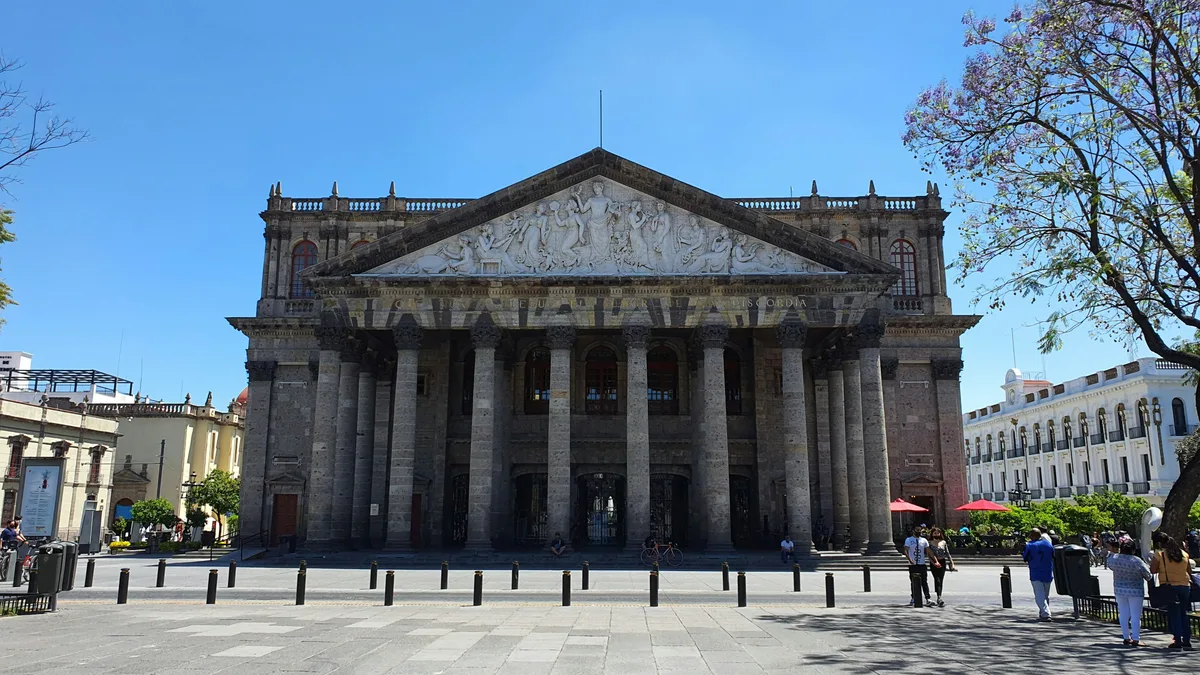
It stands in the middle of Guadalajara's historic centre, within walking distance of the Plaza de Armas, the Teatro Degollado and other landmarks. A private guided visit with a driver suits the site well, as a guide can place the building within the wider story of the city and its neighbouring plazas.
See every tour and attraction we cover in Guadalajara.