TorontoOntario · 36 tours
 Niagara FallsOntario · 25 tours
 New York CityNew York · 30 tours
 Las VegasNevada · 8 tours
 San FranciscoCalifornia · 16 tours
 VancouverBritish Columbia · 17 tours
 DubaiUAE · 54 tours
 Abu DhabiUAE · 5 tours
 Buenos AiresArgentina · 23 tours
 AthensGreece · 31 tours
 AucklandNew Zealand · 38 tours
 CancunMexico · 54 tours
No destinations match “”. Try searching all tours instead — that search understands full questions, not just place names.
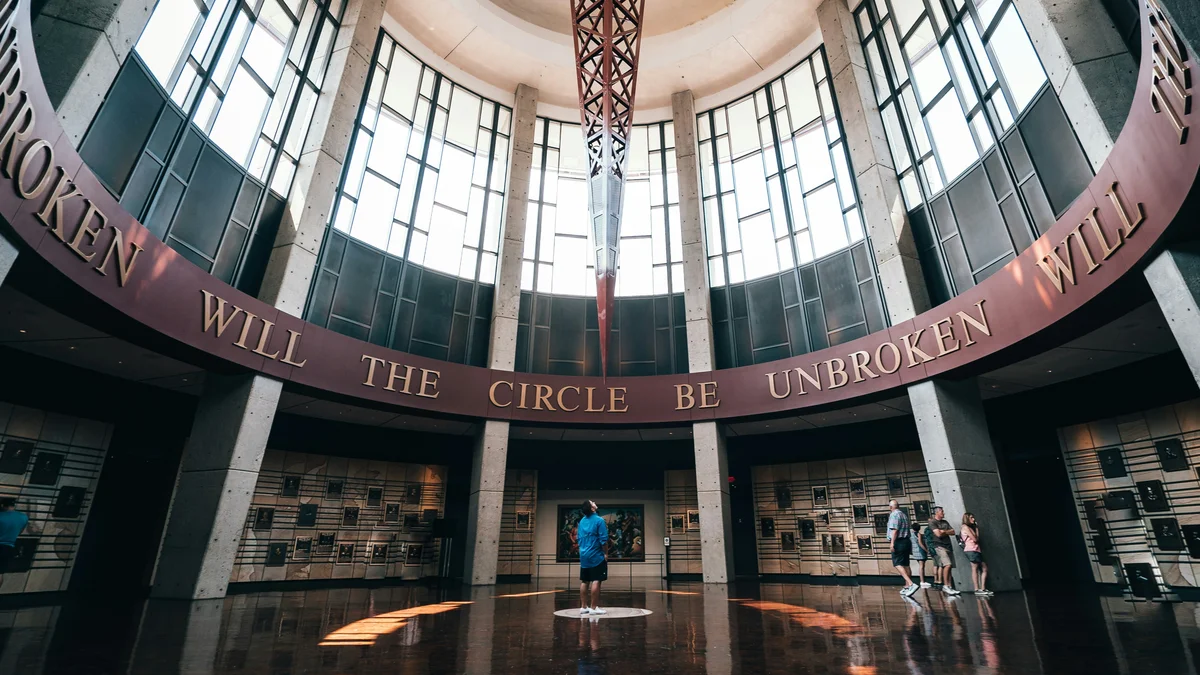
This Nashville institution traces the full history of country music through genuine stage costumes, instruments, and personal artifacts from the genre's biggest names, including Elvis Presley's gold-plated Cadillac and Hank Williams's handwritten lyrics. Its rotunda, ringed with the bronze plaques of Hall of Fame inductees, bears the inscription 'Will the Circle Be Unbroken' beneath a soaring skylight shaped like a radio tower. The museum also operates the historic RCA Studio B on Music Row, where Elvis, Dolly Parton, and countless others once recorded.
 Private Tours Popular Pick
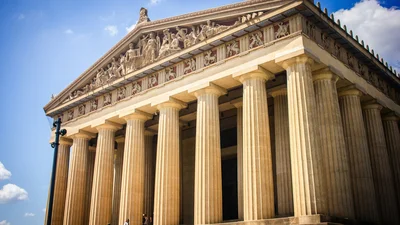
A private tour for your group only (up to 6 guests), led by a real Nashville singer-songwriter — Centennial Park and the Parthenon, Music Row, Broadway's Honky Tonk Row, 12 South, the Gulch, the Bluebird Cafe, and Marathon Village, plus a private performance from your guide.
 Private Tours
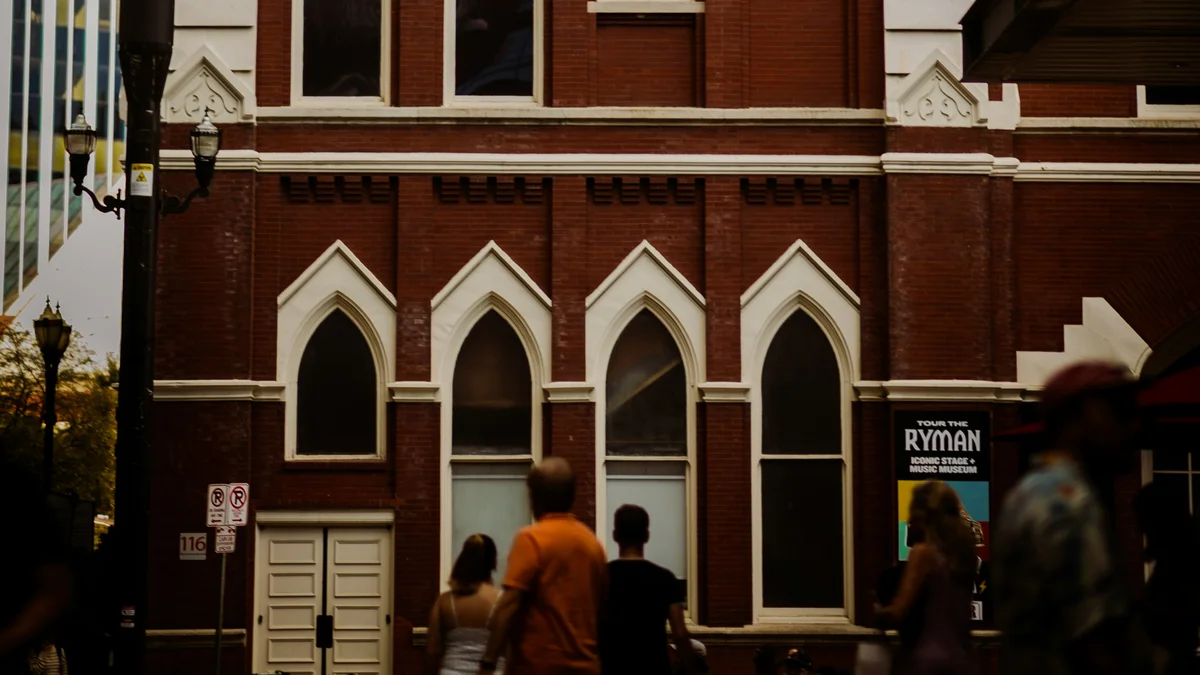
A private, fully customizable tour for your group only — real stops at the Ryman Auditorium, Printer's Alley, and Music Row, with the itinerary built around your own interests.
Visitor guide
The Country Music Hall of Fame and Museum is Nashville's main institution for preserving and interpreting the history of country music, run by the Country Music Foundation, a nonprofit chartered in Tennessee in 1964. Its collections span recordings, photographs, film and instruments, and its Hall of Fame honors the genre's most influential figures. The museum operates in a downtown Nashville building that it has occupied since 2001.
The Hall of Fame itself came first: the Country Music Association created it in 1961, and its first three inductees were Hank Williams, Jimmie Rodgers and Fred Rose. Roy Acuff, elected in 1962, was the first living member. The museum opened on April 1, 1967, in a barn-shaped building at the head of Music Row, a concept modeled on the National Baseball Hall of Fame in Cooperstown, New York. Further additions followed in 1974, 1977 and 1984.
In May 2001 the museum moved to a new facility in downtown Nashville's arts and entertainment district, initially about 140,000 square feet. A $100 million expansion in 2014 roughly doubled the complex to 350,000 square feet, adding galleries, archival storage, classrooms, retail and event space, and the building also includes the Taylor Swift Education Center.
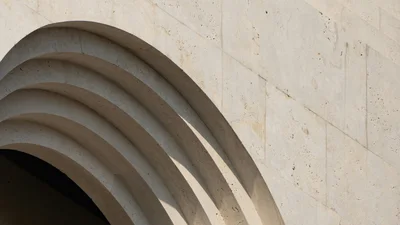
The downtown building was designed by the Nashville firm Tuck-Hinton Architects. The design is full of music references: seen from above the plan is said to form a bass clef, the sweeping arch suggests the tailfin of a 1959 Cadillac, the front windows echo piano keys, and a diamond-shaped tower replicates the WSM radio tower first built in 1932 south of Nashville. The cylindrical rotunda's four tiered roof discs represent the 78 rpm record, the LP, the 45 and the CD. Materials were drawn from the Mid-South, including Georgia yellow pine and Crab Orchard stone.
The core exhibition is Sing Me Back Home: A Journey Through Country Music, which tells the story through artifacts, photographs, recorded sound and video. New limited-run exhibitions open each year, including the annual American Currents: State of the Music. The museum reports holding more than 250,000 sound recordings, roughly 500,000 photographic items, over 30,000 moving images and more than 900 instruments.
Vehicles are a highlight of the displays: Elvis Presley's 1960 "Solid Gold" Cadillac limousine, Webb Pierce's 1962 Pontiac Bonneville convertible and Jerry Reed's 1980 Pontiac Trans Am from Smokey and the Bandit II. The museum also holds Thomas Hart Benton's mural The Sources of Country Music, which Wikipedia describes as his final work, left unfinished at his death in his studio.
Check the operator for current hours, ticketing, exhibitions and Studio B access, as these change. The museum fits comfortably into a Voyzo private tour of Nashville, where a private vehicle and driver with door-to-door pickup keeps the day flexible around a museum visit and other music-history stops.
See every tour and attraction we cover in Nashville.