TorontoOntario · 36 tours
 Niagara FallsOntario · 25 tours
 New York CityNew York · 30 tours
 Las VegasNevada · 8 tours
 San FranciscoCalifornia · 16 tours
 VancouverBritish Columbia · 17 tours
 DubaiUAE · 54 tours
 Abu DhabiUAE · 5 tours
 Buenos AiresArgentina · 23 tours
 AthensGreece · 31 tours
 AucklandNew Zealand · 38 tours
 CancunMexico · 54 tours
No destinations match “”. Try searching all tours instead — that search understands full questions, not just place names.
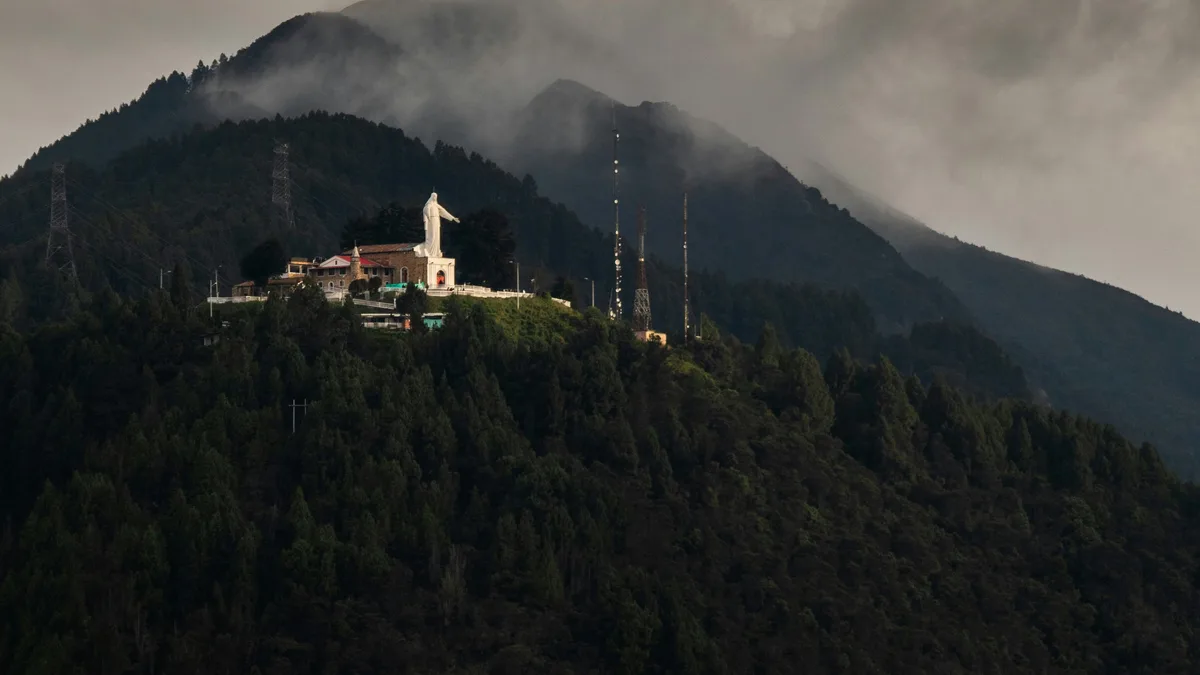
A mountaintop sanctuary rising to 10,300 feet above Bogota, reached by cable car, funicular, or a steep walking trail. The 17th-century church at the summit is still an active pilgrimage site, and the panoramic views stretch across the entire city on a clear day.
 Private Tours
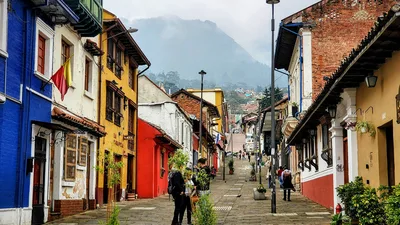
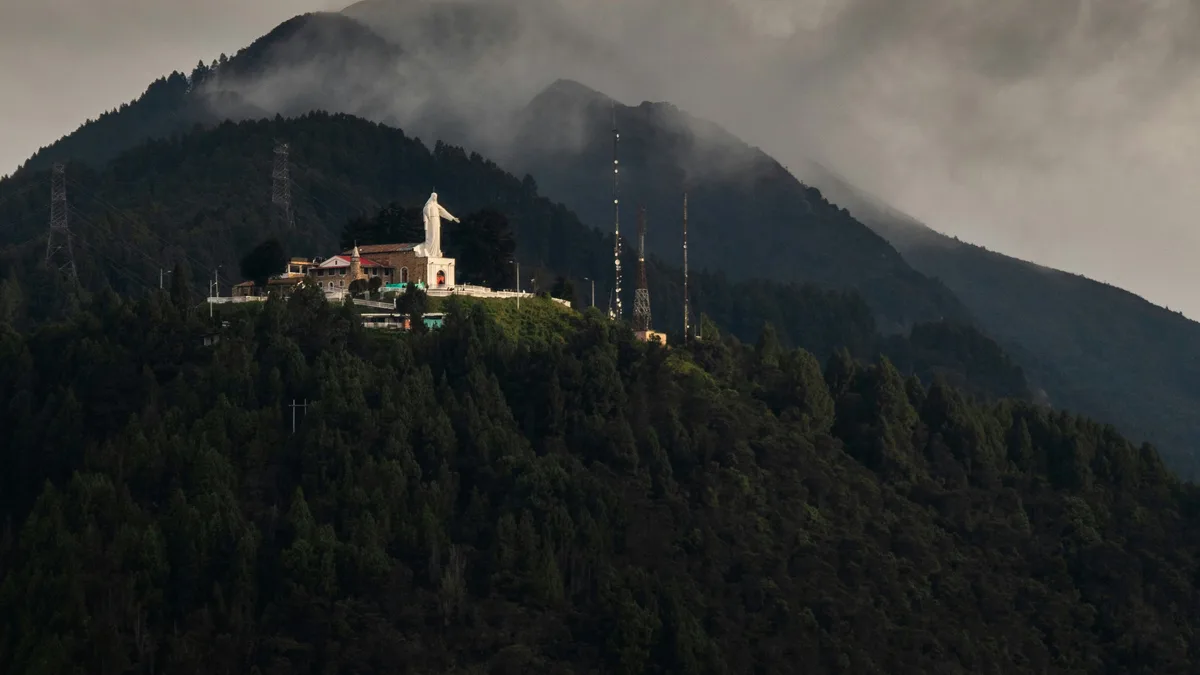
A private guide takes you up Monserrate by cable car or funicular, then through the colonial streets of La Candelaria to the Gold Museum and the Botero Museum.
 Private Tours
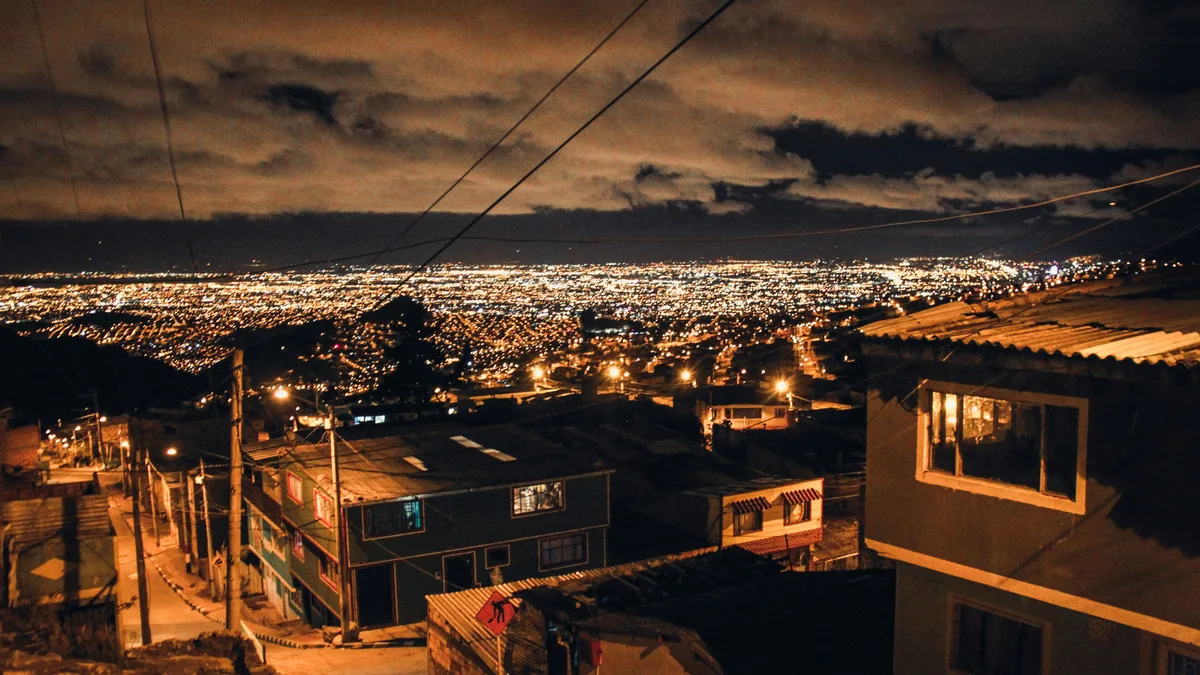
A private guide shows you Bogota by night — La Catedral Primada, La Candelaria, Plaza de Bolivar, and a night ascent of Monserrate — before a Colombian dinner.
 Private Tours
A full-day private tour combining Bogota's colorful farmers market with La Candelaria and Monserrate, covering more ground than a half-day tour.
Visitor guide
Monserrate is a mountain and Catholic sanctuary rising above Bogota, Colombia, in the eastern hills of the Andes. At roughly 3,150 metres above sea level (sources quote up to about 3,172 metres), its summit offers wide views over the capital, and the shrine at the top has been a pilgrimage site for centuries.
According to Spanish-language Wikipedia, Monserrate sits on the Cordillera Oriental east of the city, with an elevation of about 3,152 metres and a prominence of roughly 550 metres. The hill was known until the mid-century as the Cerro de las Nieves, though the sources give conflicting dates for when the name changed. On a clear day the whole sprawl of Bogota is visible from the viewpoints near the summit, with the city stretching across the savanna.
Hermitages were first built on the hill in 1620 by the Fernandez de Valenzuela family. Pedro Fernandez de Valenzuela, with authorisation from the president of the Nuevo Reino de Granada, built a chapel dedicated to the Holy Cross of Monserrate. A monastery was later founded by Pedro Solis de Valenzuela, and the chapel and the adjoining house were expanded in the second half of the 1650s. English-language Wikipedia dates the sanctuary to between 1650 and 1657.
A pilgrim path was laid out from the Church of Las Nieves in the city to the summit, with small chapels marking the way. Pilgrims have walked it for generations, which is why the climb still has a devotional character as well as a scenic one.
The sanctuary houses a carving called the Senor Caido de Monserrate, a figure of the fallen Christ attributed to Pedro de Lugo y Albarracin and, according to Colombia's tourism board, made in 1640. It is the focus of pilgrimage. The present neo-Gothic basilica was designed by Arturo Jaramillo and completed in the 1920s (sources give 1920 or 1925), and in the 1960s the church facade and the funicular entrance building were remodelled in a neocolonial style.
There are three ways up. The funicular was inaugurated on 18 August 1929, and the cable car, or teleferico, followed on 27 September 1955. The walking path has been renovated in recent years, and its opening days and hours are set by the authorities, so it should be checked before any plans are made. The climb is steep at altitude, which makes the funicular or cable car a gentler option.
The path from the city was laid out with small chapels along the way, so the climb has long been a form of devotion. The sanctuary remains an active place of worship, so quiet and modest dress are appropriate inside the basilica, and the grounds are shared between pilgrims and sightseers.
At roughly 3,000 metres, the air is thin and the weather can change quickly, with cool temperatures, wind and sudden rain. Warm layers are advisable even when Bogota's streets feel mild. A private guided visit is a comfortable way to combine Monserrate with La Candelaria, since the foot of the hill is close to the historic centre.
See every tour and attraction we cover in Bogota.