TorontoOntario · 36 tours
 Niagara FallsOntario · 25 tours
 New York CityNew York · 30 tours
 Las VegasNevada · 8 tours
 San FranciscoCalifornia · 16 tours
 VancouverBritish Columbia · 17 tours
 DubaiUAE · 54 tours
 Abu DhabiUAE · 5 tours
 Buenos AiresArgentina · 23 tours
 AthensGreece · 31 tours
 AucklandNew Zealand · 38 tours
 CancunMexico · 54 tours
No destinations match “”. Try searching all tours instead — that search understands full questions, not just place names.
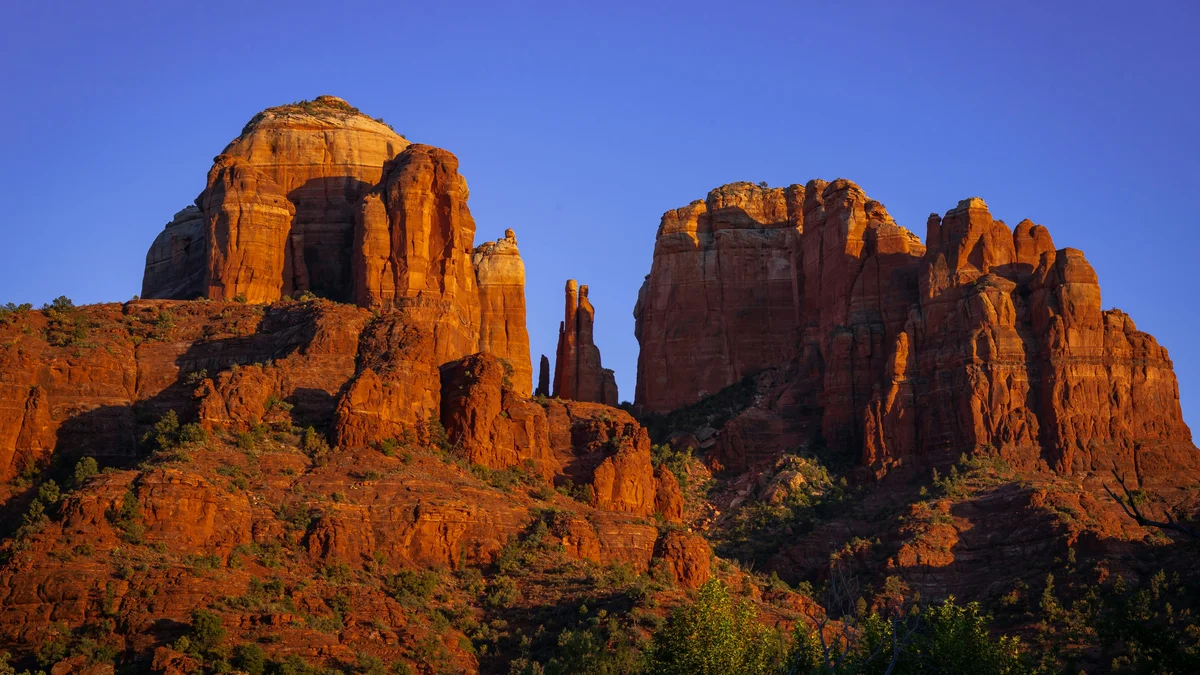
Cathedral Rock is one of Sedona's most photographed red rock formations, a cluster of sandstone spires rising above Oak Creek south of the village. The Cathedral Rock Trail is a short but steep climb of roughly 1.1 miles round trip (Forest Service figure) to a saddle between the spires, and the formation is also one of the sites many visitors associate with Sedona's vortex energy.
 Private Tours
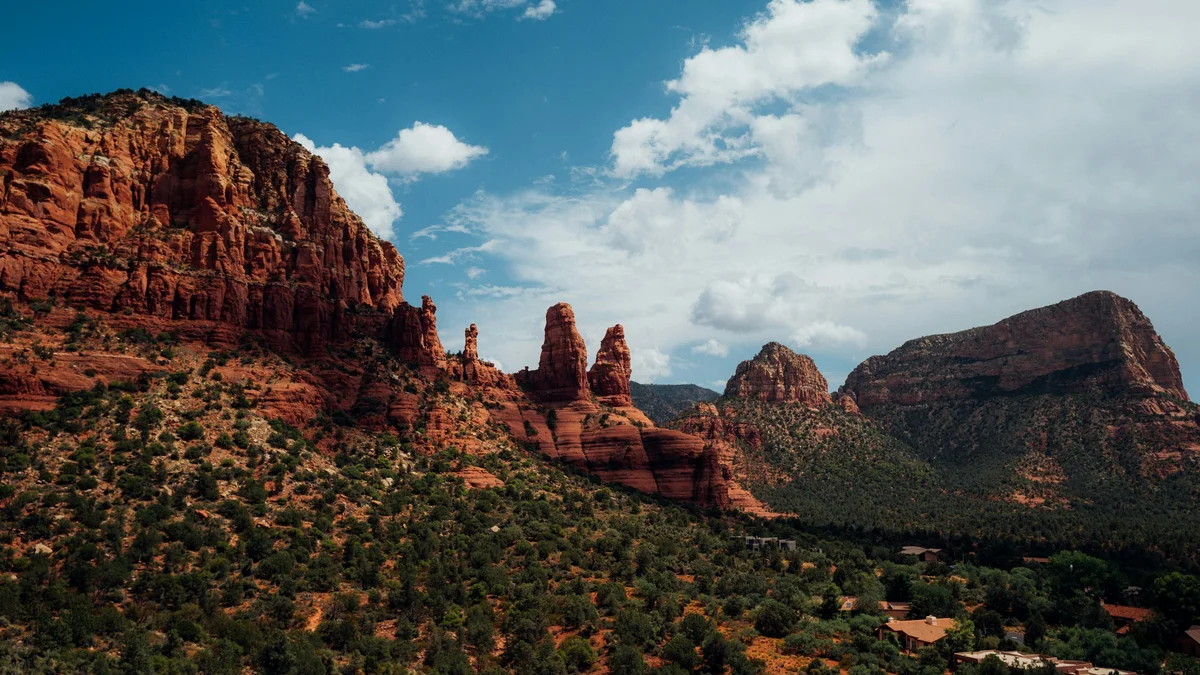
A private, hotel-pickup half-day tour through Sedona's best-known red rock scenery, with your own guide and vehicle the whole way.
 Private Tours
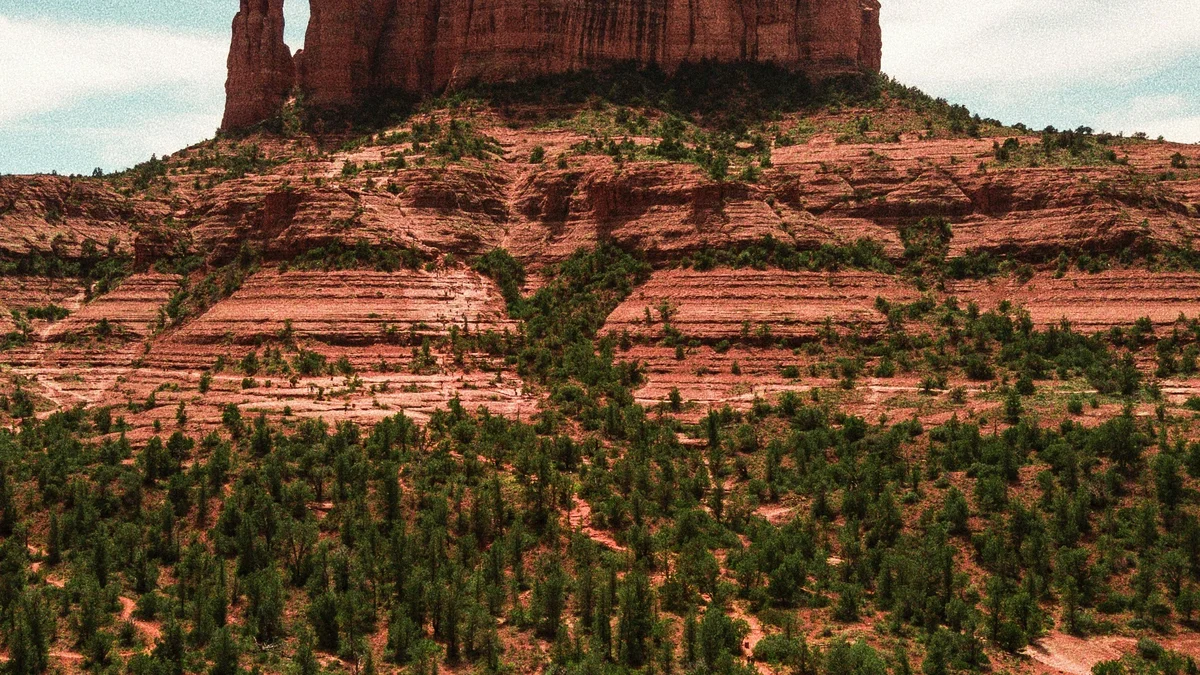
A private, moderately challenging guided hike toward Cathedral Rock, with a local guide sharing the geology, plant life, and human history of the area.
Visitor guide
Cathedral Rock is a cluster of red sandstone buttes and spires southwest of Sedona, Arizona, about a mile west of State Route 179 inside the Coconino National Forest. Its summit is listed at about 4,967 feet (1,514 m), and its silhouette is among the most photographed in Arizona.
The formation is carved from the Permian-age Schnebly Hill Formation, a red sandstone laid down roughly 280 to 300 million years ago near the western edge of the supercontinent Pangaea. Sources describe the setting as coastal dunes and tidal flats beside the ancient Pedregosa Sea, and the red color comes from iron oxide such as hematite. Along the lower trail you can see ripple marks left in the sediment, and a dark basalt dike may be visible at the first saddle. Erosion over millions of years has sculpted the sandstone into towers, gaps and ledges.
The Schnebly Hill Formation is the most prominent red layer around Sedona, about 800 to 1,000 feet thick, and it is found only in the Sedona vicinity. It has three named members (Bell Rock, Fort Apache and Sycamore Pass) and lies below the pale Coconino Sandstone and above the Hermit Formation. It is named after Sedona Schnebly, the same woman for whom the town is named. Published figures for the summit height differ slightly, and Cathedral Rock's prominence is listed at about 284 feet.
Cathedral Rock has not always been labeled consistently. Some early maps called it Court House Rock, while the nearby Courthouse Butte was marked as Church House Rock, a swap that has caused confusion ever since.
The Cathedral Rock Trail (Forest Service Trail 170) begins at the Back O' Beyond trailhead and is a short but steep climb to the saddles, or gaps, between the spires. It is a scramble over slickrock rather than a stroll, and parts of it require hands as well as feet. It is popular, so parking can be tight at busy times; vehicles in the Coconino National Forest recreation sites typically need a Red Rock Pass or equivalent, so check the Forest Service for current requirements and conditions. Weather, heat and trail condition all matter on exposed slickrock, and the route is better for steady hikers than for casual strollers.
Sedona's first European-American settler, John J. Thompson, arrived in Oak Creek Canyon in 1876, and the post office opened in 1902 with about 55 residents. The name came from Sedona Schnebly, whose husband Theodore was the first postmaster; her mother said she invented it because it sounded pretty. The surrounding Coconino National Forest was designated by Theodore Roosevelt on July 2, 1908, after starting out in 1898 as a forest reserve around the San Francisco Peaks, and now covers roughly 1.86 million acres. Hollywood also found the red rocks early: Wikipedia reports that more than 60 productions were shot around Sedona between 1923 and the 1970s, often standing in for Texas, California or Nevada.
At the foot of the rock, beside Oak Creek, lies the former Crescent Moon Ranch. A Prescott cattleman, John Lee, first homesteaded it in 1880 as the OK Ranch, and later families grew apples and peaches for markets in Jerome and Flagstaff. In 1936 Andrew Baldwin bought it and renamed it Palo Bonito; the Baldwins built a house and a 12-foot water wheel that pumped water and generated electricity. The old ford here, Red Rock Crossing, is also called Baldwins Crossing, and Wikipedia says it washed out in a flood in 1978. Tourism had overtaken farming in Sedona by the late 1970s, and the Forest Service and the Trust for Public Land acquired the ranch in 1980. The Forest Service says the ranch was added to the National Register of Historic Places in April 2021.
Sedona lies within the traditional homelands of Yavapai and Apache peoples. The red rocks are also central to Sedona's modern identity as a New Age destination: proponents of "vortexes" list Cathedral Rock alongside Bell Rock, Airport Mesa and Boynton Canyon as sites of spiritual energy. That idea grew out of late-20th-century New Age movements, notably including the 1987 Harmonic Convergence, rather than from any documented older tradition, and it is a matter of belief rather than science. Many visitors simply come for the scenery.
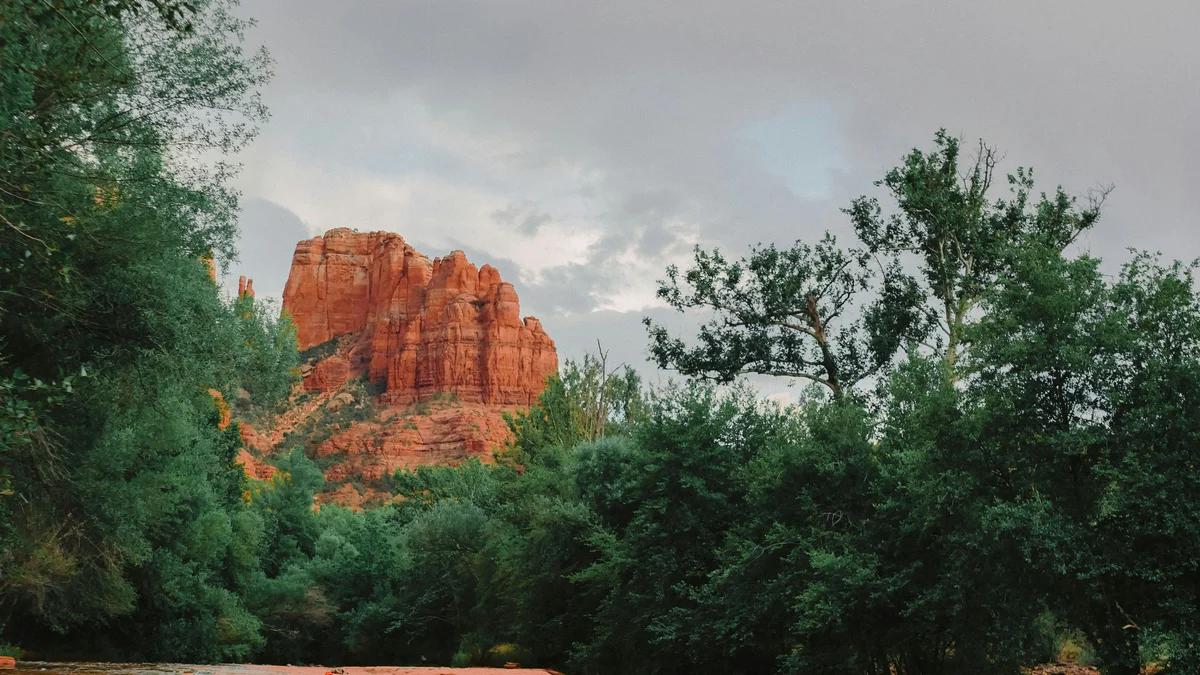
The classic image of Cathedral Rock mirrored in Oak Creek is taken from the Crescent Moon Ranch and Red Rock Crossing area to the west, where the formation rises above cottonwoods and water. Sunrise and sunset light bring out the deepest reds. Other views come from the Back O' Beyond area, along Oak Creek, and from nearby trails.
A Voyzo private tour in Sedona can fold Cathedral Rock into a scenic itinerary with a private vehicle and driver and door-to-door pickup, whether the plan is a hike to the saddle or a photo stop at the creek. Bring water, sturdy shoes and sun protection, and check current Forest Service guidance on conditions and permits.
See every tour and attraction we cover in Sedona.