TorontoOntario · 36 tours
 Niagara FallsOntario · 25 tours
 New York CityNew York · 30 tours
 Las VegasNevada · 8 tours
 San FranciscoCalifornia · 16 tours
 VancouverBritish Columbia · 17 tours
 DubaiUAE · 54 tours
 Abu DhabiUAE · 5 tours
 Buenos AiresArgentina · 23 tours
 AthensGreece · 31 tours
 AucklandNew Zealand · 38 tours
 CancunMexico · 54 tours
No destinations match “”. Try searching all tours instead — that search understands full questions, not just place names.
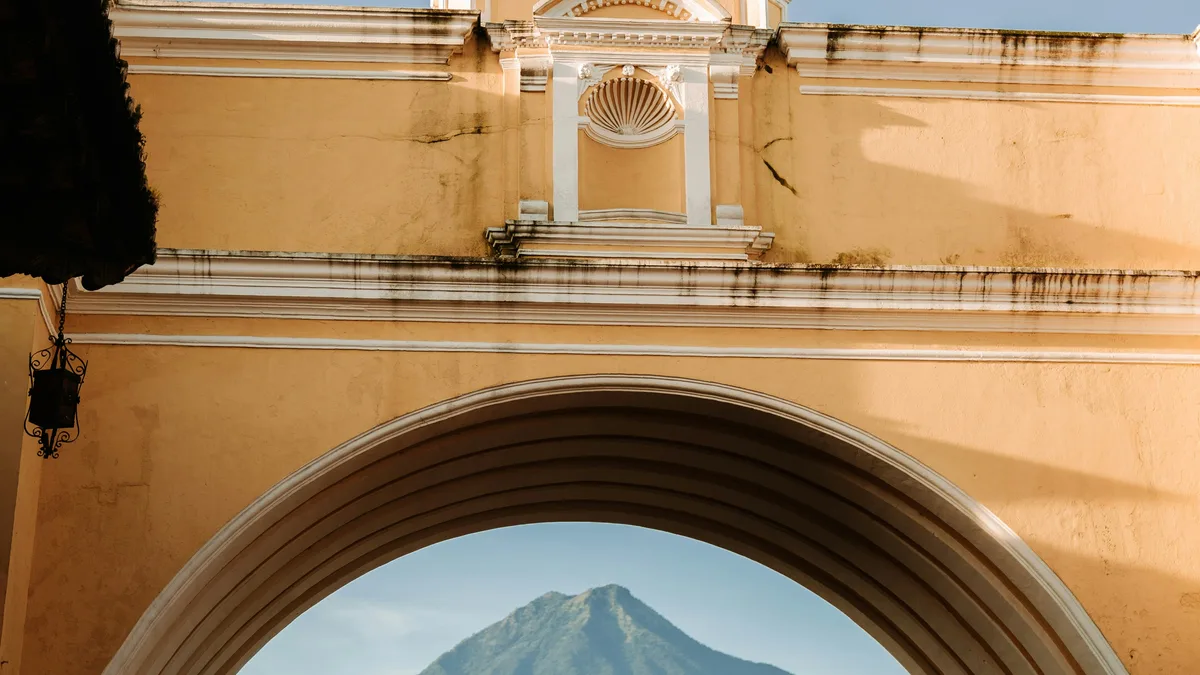
A 16th-century yellow stone arch built to connect a former convent's cloisters, now Antigua's best-known landmark. Its famous view frames Volcán de Agua directly through the archway, and the clock tower on top was added in the 19th century.
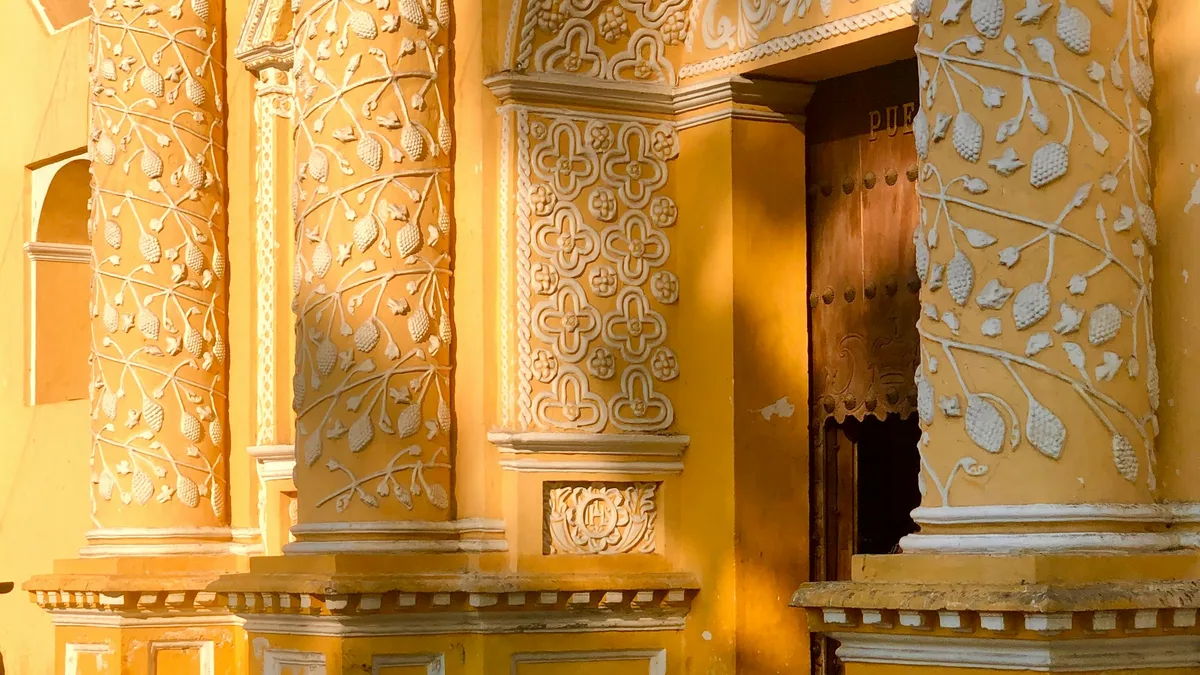 Private Tours
A private guide leads you through Antigua's cobblestone core, from the Cerro de la Cruz viewpoint to the Santa Catalina Arch, with real stops along the way, not just a drive-by.
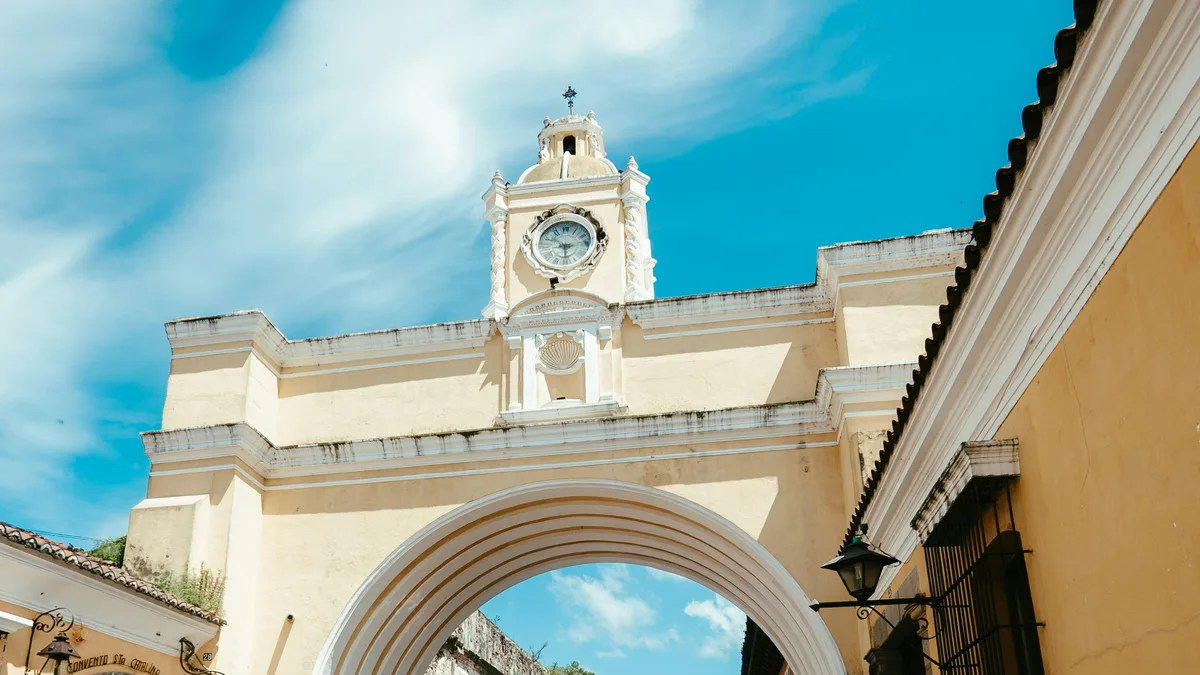 Private Tours
A private, easygoing orientation walk through Antigua's historic center, ideal if you're short on time or want the route shaped around your own interests.
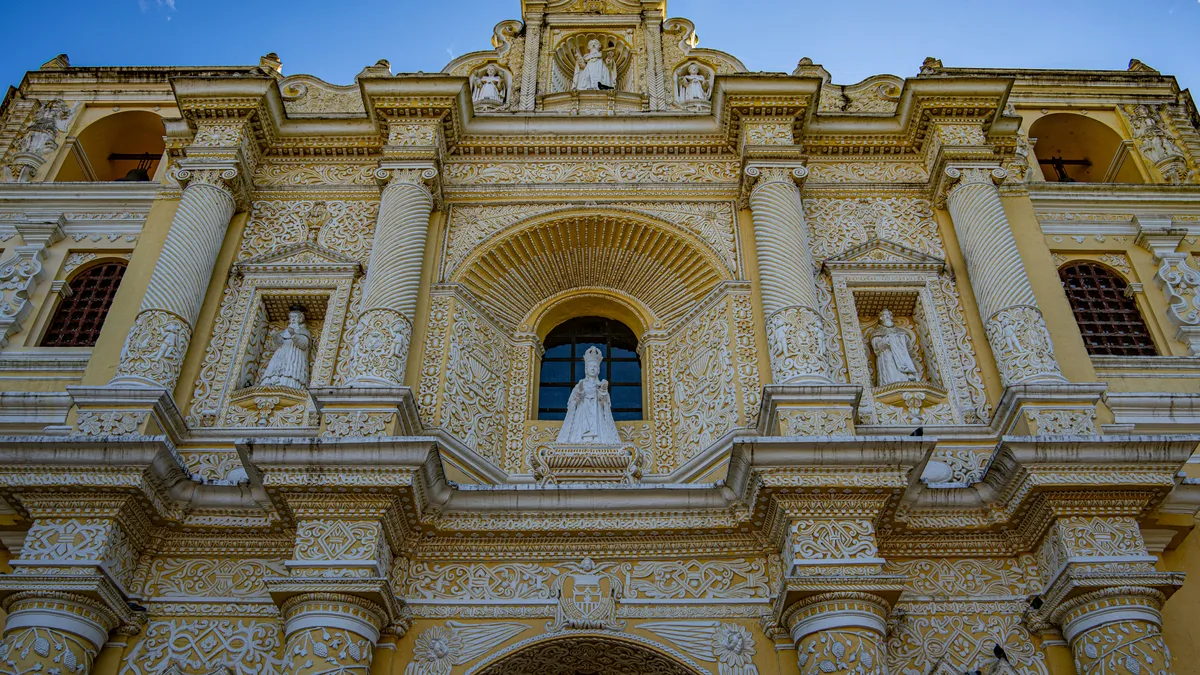 Private Tours
A private walk covering a long, specific list of Antigua landmarks in one route: the Cathedral facade, Captaincy Palace, Fountain of the Sirens, colonial churches, the Jade Museum, and the Santa Catalina Arch.
Visitor guide
The Santa Catalina Arch, or Arco de Santa Catalina, is a yellow Baroque arch that spans a street in Antigua Guatemala, a UNESCO World Heritage city in the highlands of Guatemala. Built in the 17th century and topped by a clock tower, it is one of the best-known landmarks of the city.
The arch was built to link the Santa Catalina convent with a school on the opposite side of the street, so that cloistered nuns could pass between the two buildings without being seen outside. Wikipedia gives the construction date as 1693. Another visitor guide says the arch was approved and finished in 1694 after the city had refused the convent's request to close the avenue entirely, so sources differ by a year. Some accounts describe the two buildings as the Convent of the Virgin and the Convent of Santa Catalina, while Wikipedia names a convent and a school.
The arch is Baroque in style, and sits on a straight stretch of the city's grid of streets, a few blocks north of the central park, in the 5th Avenue North area. It carries an enclosed passage across the street, and the opening beneath allows traffic and pedestrians to pass.
A clock was added on top of the arch in the 19th century. Wikipedia places this in the 1830s, during the era of the Central American Federation, while another visitor guide says a first clock was installed in 1861 and the tower was later replaced. Because sources differ, the date is best described simply as the 19th century. The clock tower gives the arch its characteristic silhouette. The Guatemala Post Office Building in Guatemala City is described as being based on the arch.
Antigua is an earthquake-prone city, and its monuments have been repaired many times. According to a visitor guide, repairs to the arch are recorded in 1843 and 1853, and a major restoration ran from 1939 to 1947 under Rafael Perez de Leon. Wikipedia lists a further restoration in 2017. One source says the convent was destroyed by earthquakes and never restored, and the buildings around the arch today reflect the many phases of the city's history.
The arch is best known for the view it frames. Looking south along the street, the arch encloses the cone of the Volcan de Agua, which rises to about 3,760 metres and is a long-extinct stratovolcano. On clear mornings the volcano appears centred in the archway, an image that has appeared on many postcards and calendars of Guatemala. The volcano takes its name, meaning Volcano of Water, from a mudflow in 1541 that destroyed the earlier capital.
The arch is part of the Antigua Guatemala World Heritage Site, inscribed by UNESCO in 1979. It is a short walk from the central park, the cathedral ruins and other churches, so it often features early in a walking tour of the old town. Because the street is a popular photo stop, a private guide can help choose a quiet moment, and the arch makes a convenient meeting point for exploring the rest of Antigua's historic centre.
See every tour and attraction we cover in Antigua Guatemala.