TorontoOntario · 36 tours
 Niagara FallsOntario · 25 tours
 New York CityNew York · 30 tours
 Las VegasNevada · 8 tours
 San FranciscoCalifornia · 16 tours
 VancouverBritish Columbia · 17 tours
 DubaiUAE · 54 tours
 Abu DhabiUAE · 5 tours
 Buenos AiresArgentina · 23 tours
 AthensGreece · 31 tours
 AucklandNew Zealand · 38 tours
 CancunMexico · 54 tours
No destinations match “”. Try searching all tours instead — that search understands full questions, not just place names.
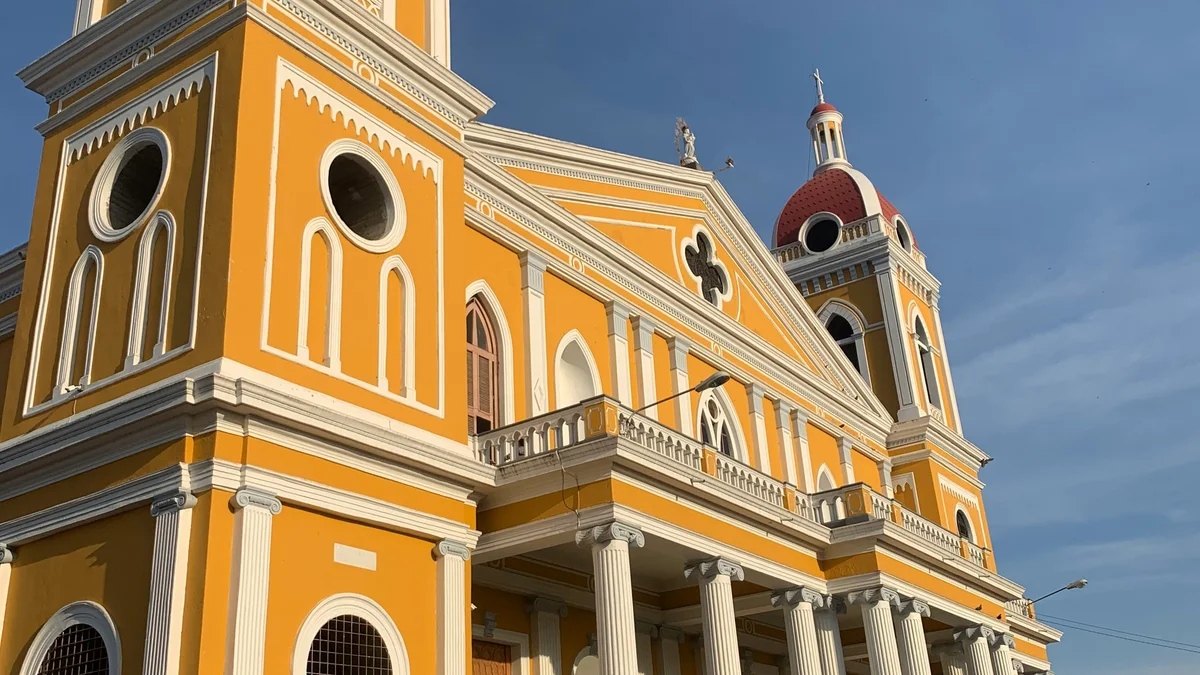
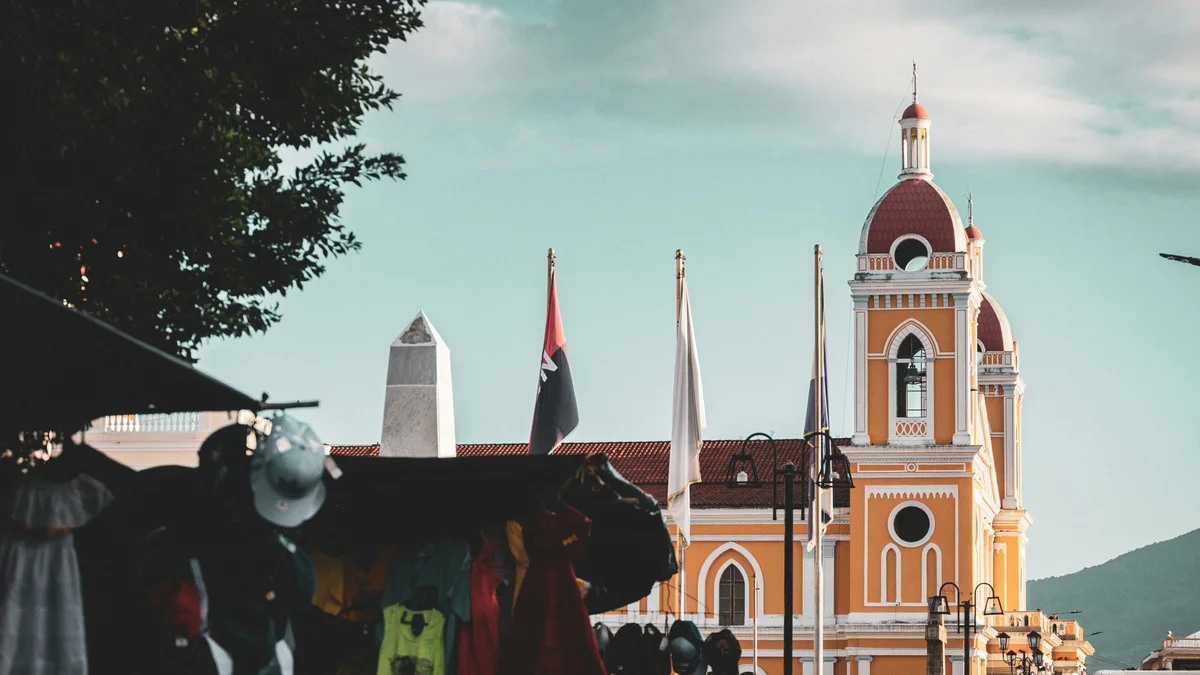
The Cathedral of the Immaculate Conception of Mary, better known simply as Granada Cathedral, anchors the east side of Parque Central with its bright yellow facade and twin bell towers. The current building dates mainly to a late-19th and early-20th-century rebuild after earlier structures were destroyed, including during William Walker's 1856 occupation, and it remains Granada's single most photographed landmark.
Visitor guide
Granada Cathedral, listed in Catholic directories as the Cathedral of the Immaculate Conception of Mary, is the main church of the Roman Catholic Diocese of Granada in Nicaragua. It stands on the east side of the city's central park, known as Parque Central or Parque Colón, and is recognisable by its bright yellow neoclassical facade. It is about 40 kilometres southeast of Managua.
According to Wikipedia, the first cathedral was built around 1525 with local stone, brick, lime and a straw roof. By 1578 it had been burned twice, and in 1585 it began to be called La Iglesia Bonita, meaning The Beautiful Church. A second church was completed around 1751 using lime, stone and brick. Sources differ on the earliest dates, with one travel account giving 1583 for the first parish church, so the early chronology is best treated as approximate.
Granada's strategic position on Lake Nicaragua made it a target, and pirate attacks as well as fires damaged the city over the centuries. The most severe blow came in 1856, when the filibuster William Walker occupied Granada. Travel accounts report that he used the church as a fortress and that it was destroyed during the conflict, and Wikipedia's article on Granada says the fire that followed destroyed much of the colonial-era architecture.
The cathedral seen today is largely a product of the late 19th and early 20th centuries. Construction was reported to have stalled for lack of funds before work resumed. Wikipedia states that in 1916 an iron frame for the central dome was brought from the United States and that the dome was built by 1928. The cathedral had only one tower until a second was completed by late 1931, with funding attributed to Nicaraguan President José María Moncada Tapia. One travel source credits architect Andrés Zapata with the design, while Wikipedia names no architect.
Wikipedia lists the cathedral's total area as 3,614.87 square metres and describes the style as neoclassical. Some sources describe it as a fusion of neoclassical and baroque influences, and travel descriptions mention three naves, four chapels, stained glass and ceiling frescoes inside. Details vary by source, and the article's own category list contains a stray reference to 1972, which seems inconsistent with the text.
The cathedral anchors the Parque Central, where the Plaza de la Independencia and other public spaces draw locals and visitors. The bishop of the diocese is named in Wikipedia as Jorge Solórzano Pérez. Because the cathedral is an active place of worship, interior access can depend on services and local arrangements.
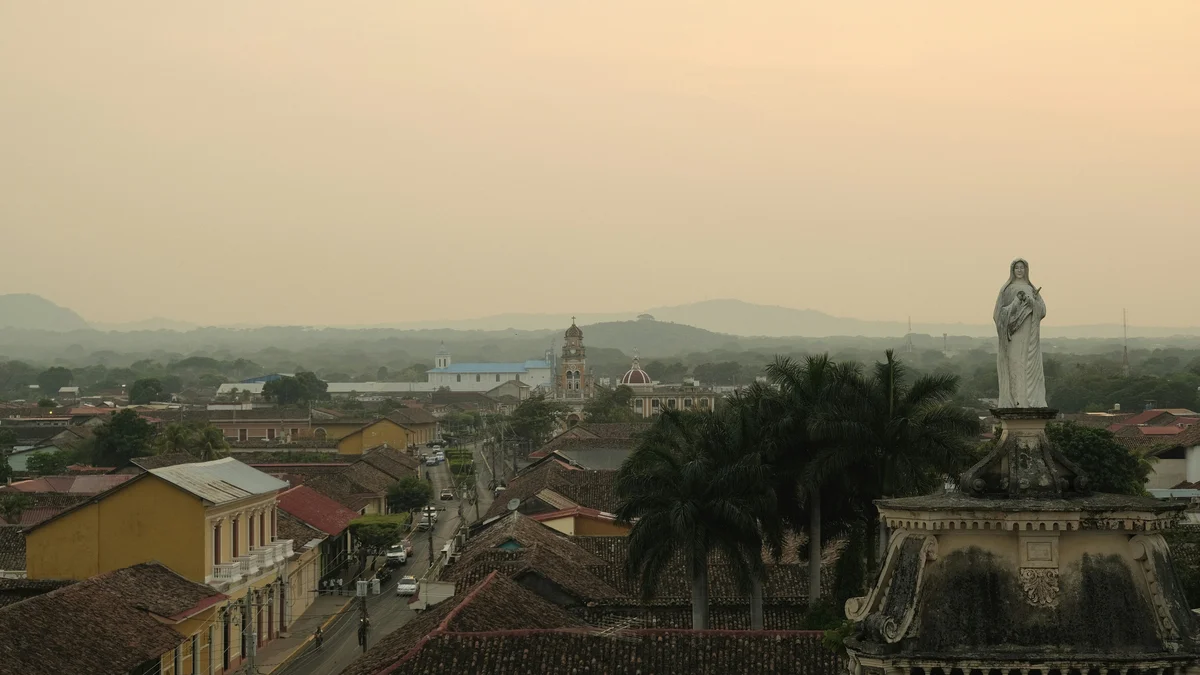
A short walk from the park are other major landmarks such as the Church of La Merced and the Convent of San Francisco. A private guided walk can explain how Granada's religious buildings reflect the city's pirate-raided, Walker-burned and carefully rebuilt past.
The yellow and white colour scheme gives Granada's central square a distinctive look, and it is often described as the city's most photographed landmark. That popularity is a matter of travel reputation rather than a measured ranking, so it is best taken as a general impression of how central the building is to Granada's image.
See every tour and attraction we cover in Granada.