TorontoOntario · 36 tours
 Niagara FallsOntario · 25 tours
 New York CityNew York · 30 tours
 Las VegasNevada · 8 tours
 San FranciscoCalifornia · 16 tours
 VancouverBritish Columbia · 17 tours
 DubaiUAE · 54 tours
 Abu DhabiUAE · 5 tours
 Buenos AiresArgentina · 23 tours
 AthensGreece · 31 tours
 AucklandNew Zealand · 38 tours
 CancunMexico · 54 tours
No destinations match “”. Try searching all tours instead — that search understands full questions, not just place names.
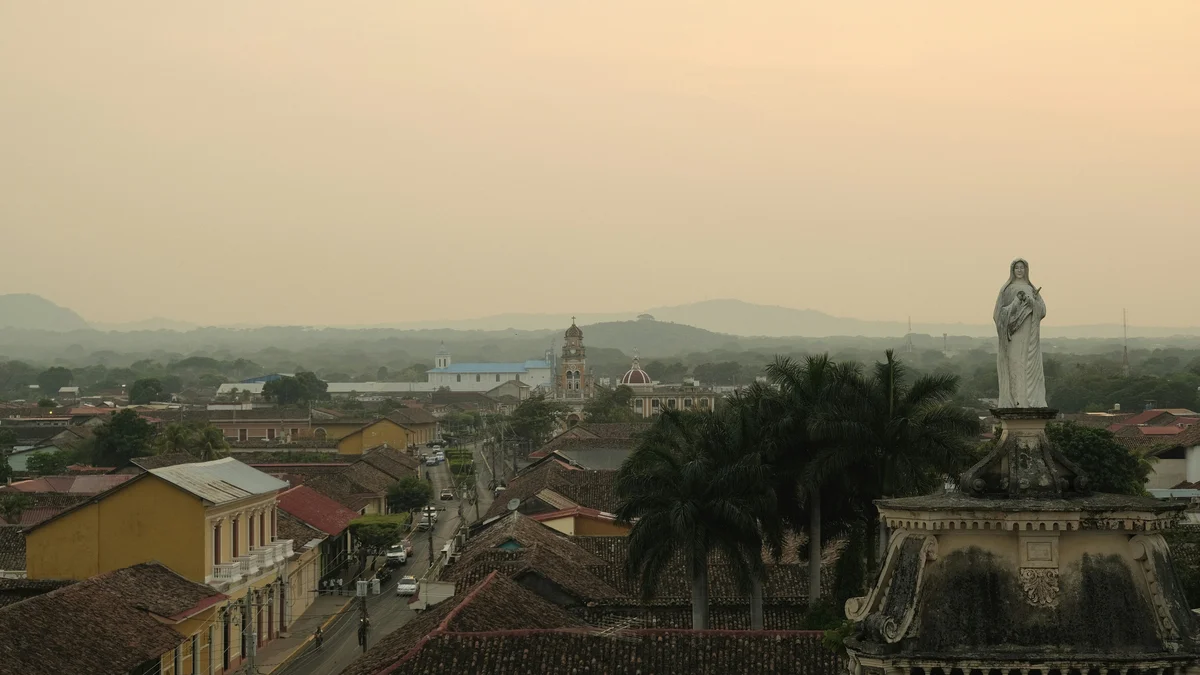
Built by the Spanish in the early 1700s as a gunpowder magazine and defensive fort at the western edge of the colonial center, La Pólvora's stone walls and corner turrets still stand largely intact today. Its elevated position makes it a real vantage point over Granada's rooftops toward Mombacho Volcano, and it now functions as a small cultural site open to visitors.
Visitor guide
Fortaleza La Pólvora is an 18th-century Spanish colonial fort in the colonial city of Granada, Nicaragua. It was built to defend the city against pirate raids and has thick stone walls, small corner towers and views over the city toward Lake Nicaragua. It is sometimes called Fuerte La Pólvora, meaning the Powder Fort.
Granada's position on Lake Nicaragua made it vulnerable to English, French and Dutch pirates who sailed up the San Juan River. According to a Spanish-language historical biography, construction of the fort began on 5 January 1748 and concluded on 16 January 1749, led by Alonso Fernández de Heredia, the commandant general of arms, with plans credited to Luis Díez Navarro. Another source gives a start of 15 January 1748, so the exact day varies by source. Heredia justified the project as a way to protect Granada from raids arriving through the bays of San Juan del Sur, Brito and Escalante.
The fort formed part of a wider Spanish defensive system. One source places it alongside the San Pablo fort on Las Isletas and the Castle of the Immaculate Conception on the San Juan River, and describes it as designed to protect the city from constant pirate raids.
Lonely Planet says the fort was originally called the Fortaleza de Armas when it was built in 1748. Frommer's says the city decided to build it to guard munitions, and notes that pólvora is Spanish for gunpowder. Another source says it was built to store gunpowder because of humidity problems at El Castillo fortress. The sources do not firmly agree on why the name La Pólvora stuck, so the gunpowder link is best treated as likely rather than certain.
Descriptions emphasise its sturdy, medieval-style structure, with thick stone walls and heavy oak doors. Frommer's counts five small towers, one of which visitors have been able to climb, and Lonely Planet describes it as lavishly turreted and with some of the best views in town, over the water-stained church domes toward Lake Nicaragua.
Over time the building served various purposes, including housing troops as a garrison and acting as a prison. Frommer's states that it was used as a jail during the Somoza dictatorship, and one travel blog claims it was the last Somoza stronghold to fall in 1979, though that claim is not supported by the other sources found. It has since been described as a small museum and cultural space. Sources do not agree on opening arrangements, and one listing mentions renovation work, so any visit should be confirmed locally.
The fortress stands at the edge of Granada's colonial centre and can be combined with the cathedral, La Merced and the convent museum on a walking visit. A private guided tour can explain how the fort fits into Granada's defence against pirates.
See every tour and attraction we cover in Granada.