TorontoOntario · 36 tours
 Niagara FallsOntario · 25 tours
 New York CityNew York · 30 tours
 Las VegasNevada · 8 tours
 San FranciscoCalifornia · 16 tours
 VancouverBritish Columbia · 17 tours
 DubaiUAE · 54 tours
 Abu DhabiUAE · 5 tours
 Buenos AiresArgentina · 23 tours
 AthensGreece · 31 tours
 AucklandNew Zealand · 38 tours
 CancunMexico · 54 tours
No destinations match “”. Try searching all tours instead — that search understands full questions, not just place names.
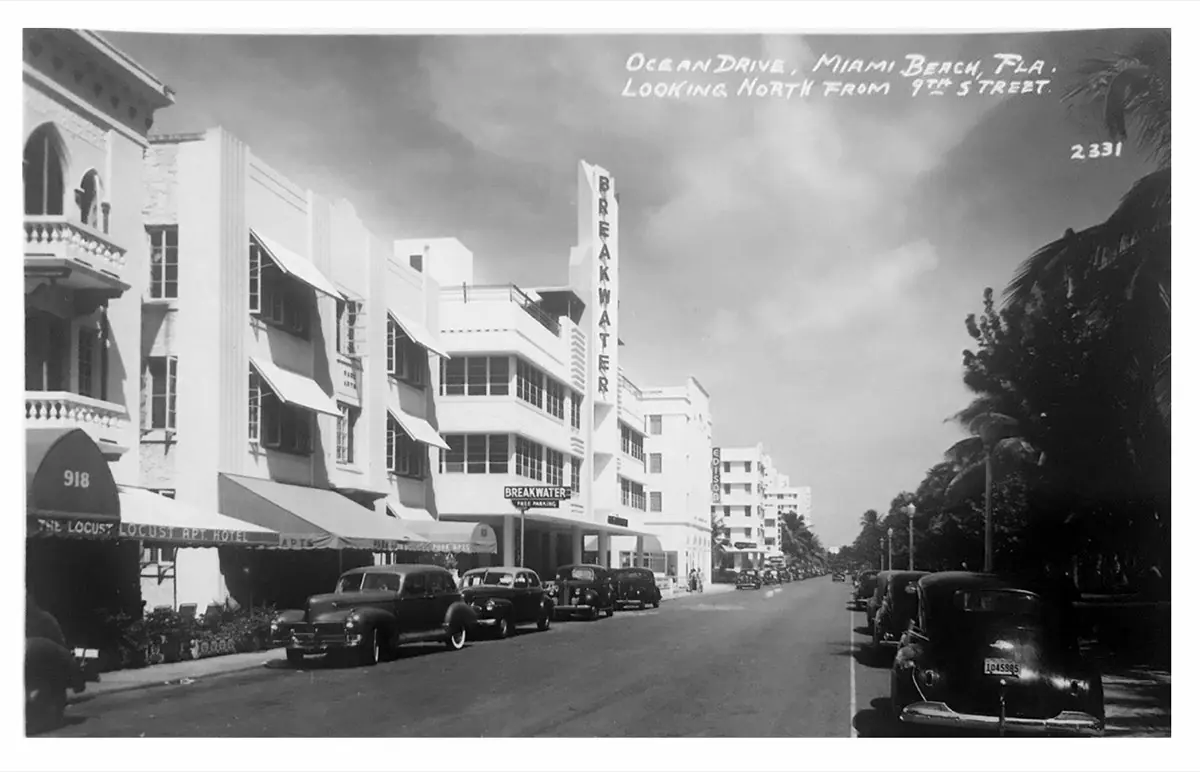
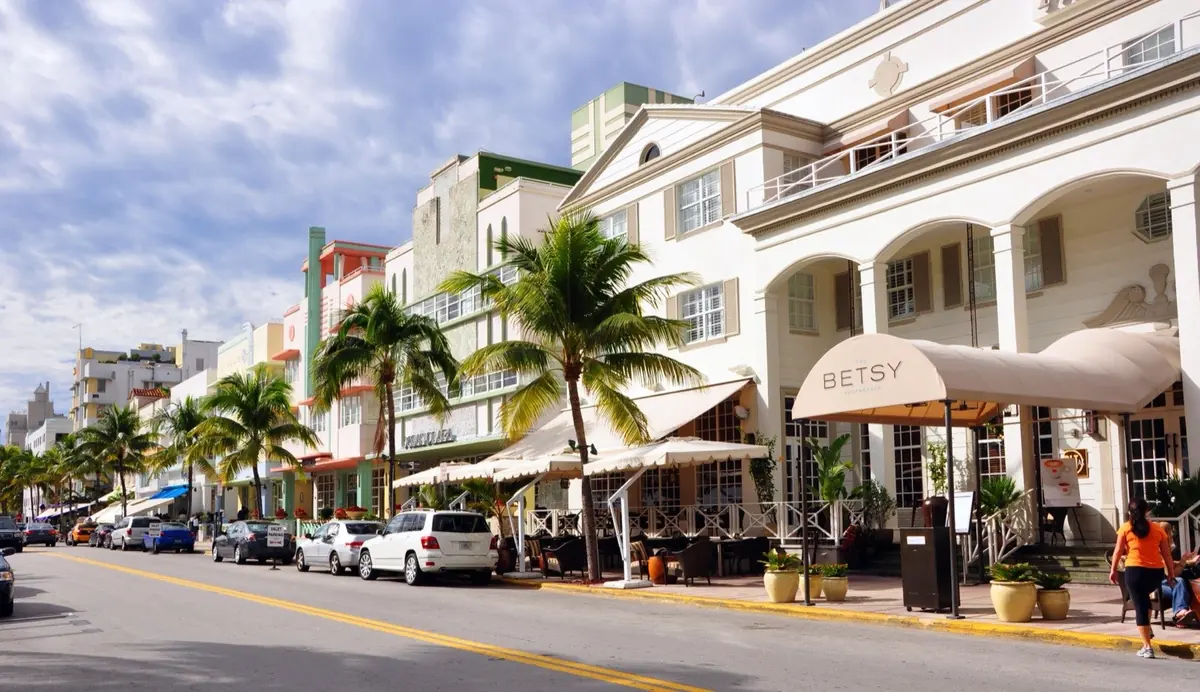
Miami's classic postcard image — pastel 1930s hotels lined up along the sand.
Visitor guide
Ocean Drive is the oceanfront street at the heart of South Beach in Miami Beach, Florida, running about ten blocks between 5th and 15th Streets, one block east of Collins Avenue. It lies within the Miami Beach Architectural District, widely known as the Art Deco District, and the American Planning Association named it a Great Street in 2007.
Miami Beach was incorporated in 1915, and wealthy residents soon moved in. The American Planning Association says that over the following two decades well over a thousand Mediterranean Revival, Art Deco and Streamline Moderne buildings went up. Art Deco arrived in earnest after Miami's real estate market declined in 1925 and the 1926 hurricane; the modern, low-rise hotels along the drive, none taller than ten stories, were largely built in the 1930s and early 1940s.
After World War II the hotels declined over roughly thirty years, and some officials and developers favoured clearing the area for high-rise development. Barbara Capitman founded the Miami Design Preservation League in 1976, and the Miami Beach Architectural District won federal listing on May 14, 1979. Gaining local protection ordinances took roughly another decade. In the mid-1980s fashion photographers, models and television productions helped revive interest in the street.
The city's redesign plan won an honorable mention in the APA's 1986 National Planning Awards. It rezoned the area to mixed use, widened west-side sidewalks to 15 feet, created a 20-foot promenade and outdoor stage on the east side, and set up a business improvement district. Voters approved a $3 million bond in September 1986 after the "Our Drive, Ocean Drive" campaign, and the work took about three years.
The district is described as holding around 960 historic buildings, although counts vary by source, with some listing 800 or more. Ocean Drive's hotels face Lummus Park and the beach. Examples listed in the district documentation include the Amsterdam Palace (1930, at 1114-16 Ocean Drive), the Tides (1936), the Netherlands (1935), the Cardozo (1939), the Carlyle (1941), and the Park Central (1937). The Colony Hotel is credited to architect Henry Hohauser and dated to 1935 in one source; other accounts give different years, so date it with care. Architects whose work shapes the street include Hohauser, L. Murray Dixon and Albert Anis.
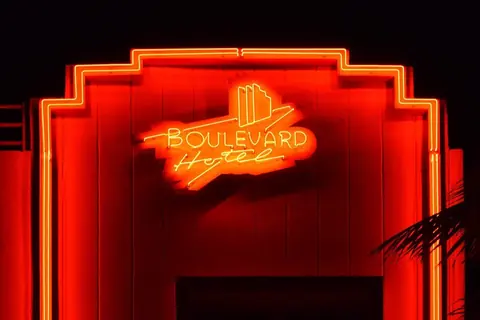
The Amsterdam Palace address is also Casa Casuarina, a Mediterranean Revival mansion completed in 1930 for Alden Freeman and modelled on the Alcazar de Colon in Santo Domingo. It later became an apartment building and today operates as the Villa Casa Casuarina, a hotel with a restaurant, since 2015. The street's look is defined by rounded corners, porthole windows, glass block, "eyebrow" window shades and neon in pastel colours.
Lummus Park and the beach are directly across the street. Lincoln Road's pedestrian mall, the Collins Avenue and Washington Avenue hotel streets, and the Old City Hall (1927) on Washington Avenue lie within the same district, a short distance west.
See every tour and attraction we cover in Miami.