TorontoOntario · 36 tours
 Niagara FallsOntario · 25 tours
 New York CityNew York · 30 tours
 Las VegasNevada · 8 tours
 San FranciscoCalifornia · 16 tours
 VancouverBritish Columbia · 17 tours
 DubaiUAE · 54 tours
 Abu DhabiUAE · 5 tours
 Buenos AiresArgentina · 23 tours
 AthensGreece · 31 tours
 AucklandNew Zealand · 38 tours
 CancunMexico · 54 tours
No destinations match “”. Try searching all tours instead — that search understands full questions, not just place names.
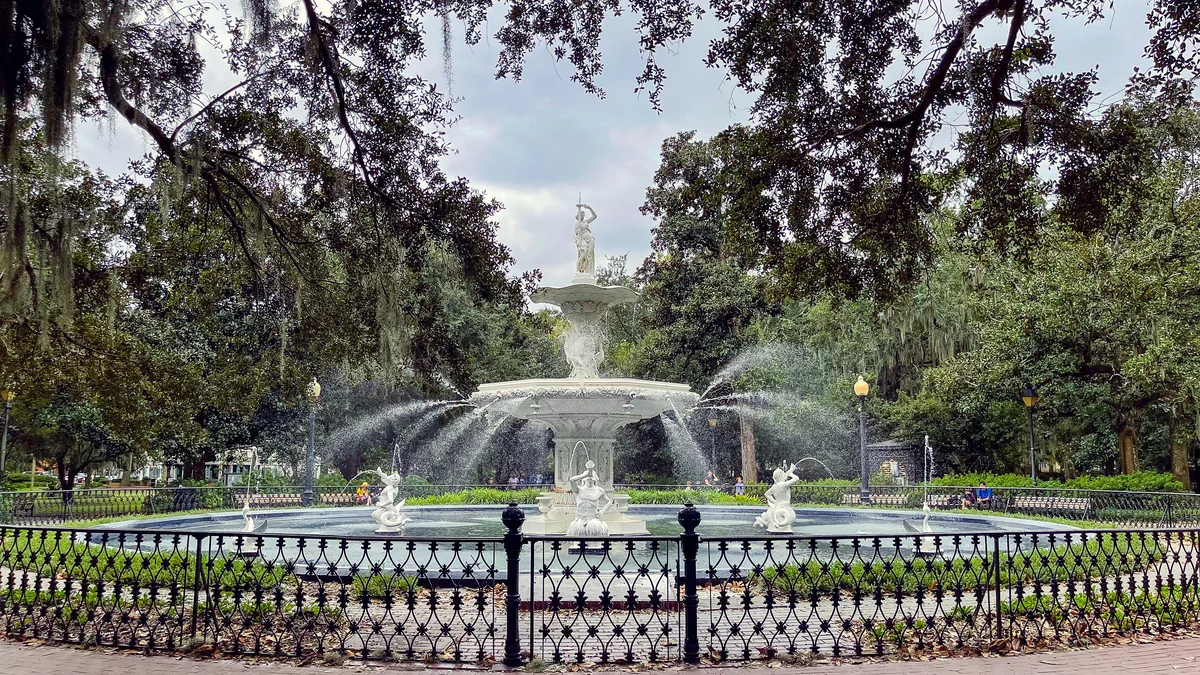
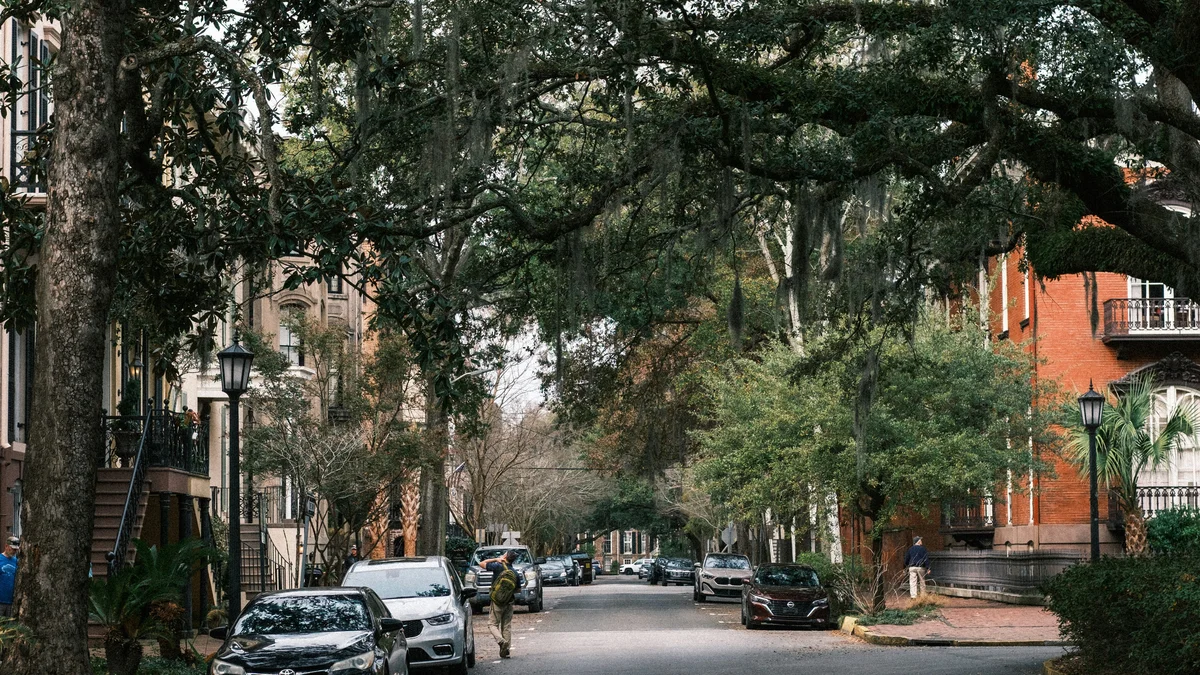
A 30-acre park anchoring the south end of Savannah's Historic District, famous for its 1858 fountain modeled on ones in Paris. The park's live oaks, walking paths, and Spanish moss make it one of the most photographed spots in the city, and its setting inspired scenes in Midnight in the Garden of Good and Evil.
 Private Tours
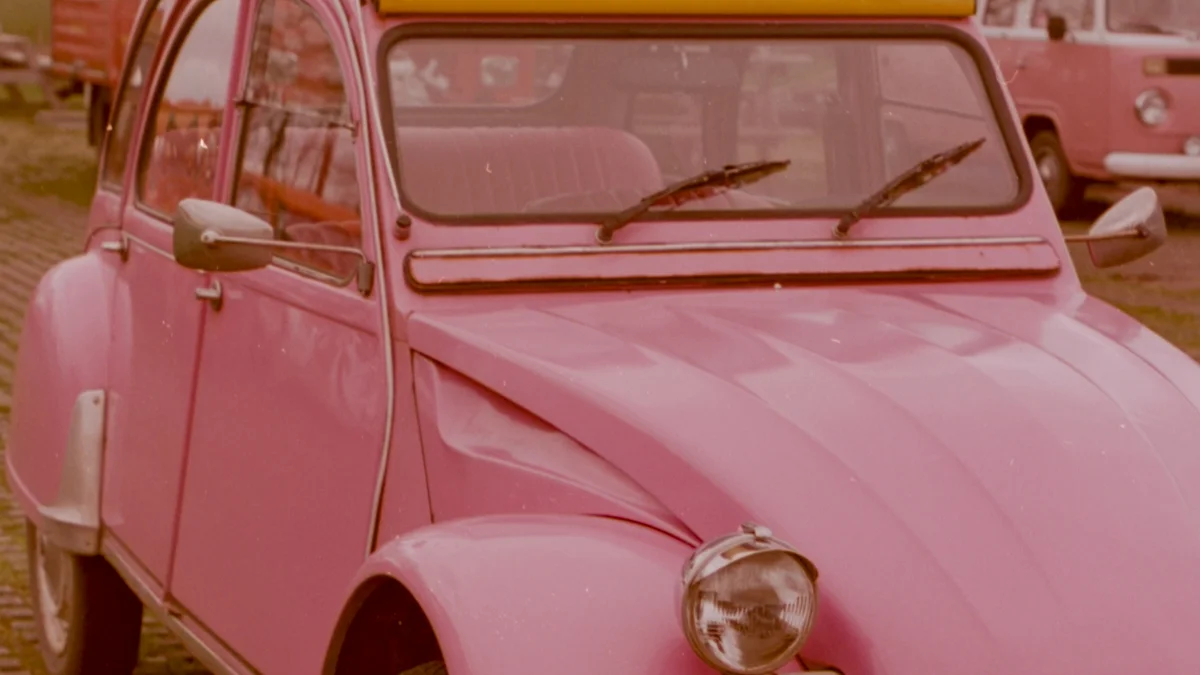
A private, personalized ride through Savannah's Historic District in a vintage Citroën, with stops at Forsyth Park, Colonial Park Cemetery, and the Mercer Williams House Museum.
 Private Tours
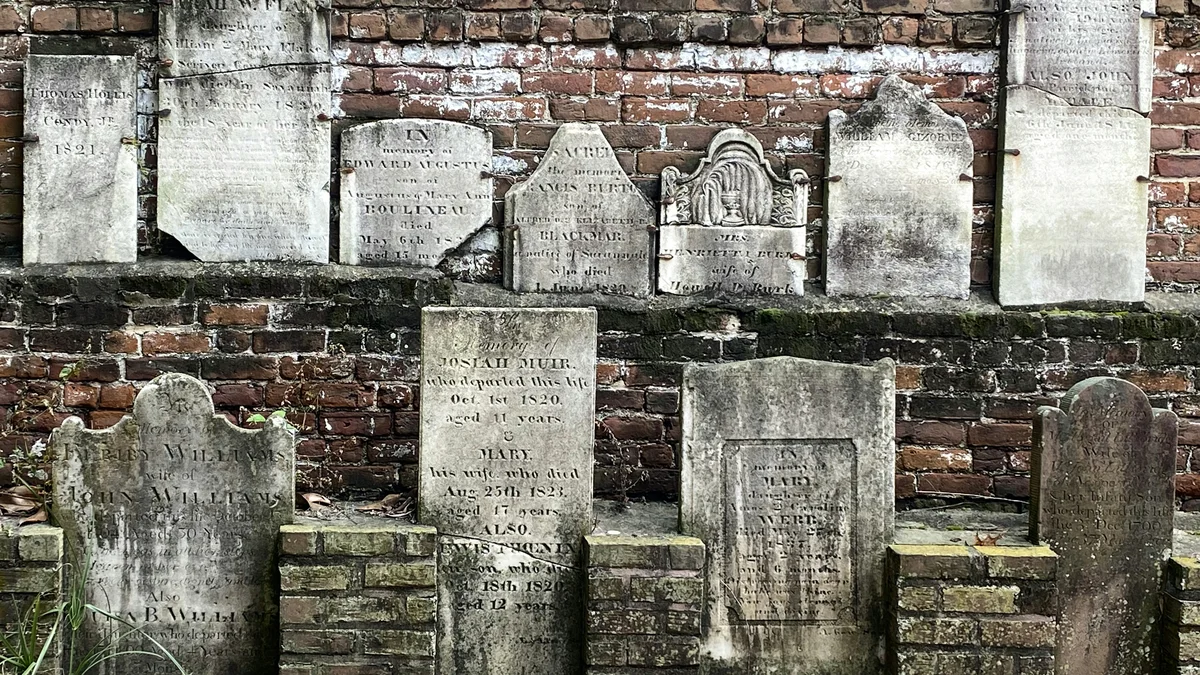
A private guided stroll through Savannah's Historic District, covering Colonial Park Cemetery and the Davenport House Museum.
Visitor guide
Forsyth Park is a 30-acre public park at the southern end of Savannah's Historic District, best known for its large white fountain and oak-shaded paths. It is bordered by Gaston, Drayton and Whitaker Streets and Park Avenue, and it is operated by the city.
According to Wikipedia, the park began in the 1840s on 10 acres donated by William Brown Hodgson, and it was expanded in 1851 and named for Georgia Governor John Forsyth; the same article gives conflicting acreage figures for the early land, so treat the early details as approximate. By 1853 all of Savannah's original planned wards had been settled. That year, on August 11, the city adopted an ordinance setting aside part of the old Cantonment area as a Military Parade Ground, with control given to the captains of the city's volunteer companies.
An 18.9-acre parade ground was later added at the south end. On November 10, 1859, the city exchanged the former parade ground at the Cantonment Oglethorpe site for this southern extension, and the old site was later subdivided as Lloyd Ward. City ordinances in 1914 and 1923 affirmed the military companies' rights to use the extension in exchange for tax exemption and city maintenance, and the 1914 ordinance said that playground use of parts of it would not give up those rights. The park is a contributing property of the Savannah Historic District, a National Historic Landmark District, which was listed on the National Register of Historic Places on November 13, 1966.
The fountain was installed in 1858 and made by Janes, Beebe and Company, a New York iron foundry owned by Adrian Janes that also produced ironwork for the U.S. Capitol dome and railings for the Brooklyn Bridge. Its design is attributed to Michel Lienard, with one account crediting John Howard for a version derived from Lienard's work, and the City of Savannah says it was inspired by a model from a foundry near Paris; it is often compared to the fountains of the Place de la Concorde, a comparison some historians doubt. Visitor sources say it was ordered from a catalog, and similar fountains stand in Poughkeepsie, New York; Madison, Indiana; and Cusco, Peru. It sits on a direct line with the Bull Street corridor, and it is turned green every St. Patrick's Day to mark Savannah's Irish heritage.
Wikipedia says the fountain has appeared in several films, including The Longest Yard, Cape Fear and Forrest Gump, as well as the screen adaptation of Midnight in the Garden of Good and Evil. The park's layout follows the mid-19th-century fashion for large urban parks modelled on the Parisian idea of residential districts arranged around green space.
The large monument to Confederate dead was designed by Robert Reid, a Welsh-born Canadian architect, and built of Nova Scotia sandstone. The Ladies' Memorial Association of Savannah began raising money around 1869 and chose the Forsyth Park site in 1874. The cornerstone was laid on June 16, 1874, with a time capsule that, according to Wikipedia, included a copy of the Georgia Ordinance of Secession. The shaft rises 48 feet without its base and statue. Shipped from Canada, it reached Savannah on December 25, 1874, and was dedicated on May 24, 1875.
Originally it was topped by a statue called Silence, with a second figure, Judgment, at the base. In 1879 George Wymberley Jones De Renne paid for a bronze Confederate soldier by David Richards to replace Silence; it was hoisted into place on May 22, 1879. The city renamed the monument the Civil War Memorial in 2018.
The Fragrant Garden, designed for visitors with limited sight, features plants chosen for scent and texture. Accounts of its origins differ: some tie it to a former mock fort, and the Trustees' Garden Club credits landscape architect Georges Bignault in 1963. The Spanish-American War memorial, The Hiker (officially The Georgia Volunteer), is by sculptor Theo Alice Ruggles Kitson. Wikipedia says Savannah received it because the city supplied more Spanish-American War soldiers per capita than any other Georgia city, and that the first version of the design was made for the University of Minnesota in 1906.
The park also has walking paths, play areas, tennis and basketball courts and open lawns, and public concerts are held there from time to time. It is the home field of the Savannah Shamrocks Rugby Club.
Ten blocks surround the northern half of the park, and Wikipedia notes their historic buildings, including the 1857 Edmund Molyneux House, now the Oglethorpe Club, and W. B. Hodgson Hall of 1876, designed by Detlef Lienau and listed on the National Register. The author John Berendt lived in the Forsyth Park Apartments in the park's southwest corner while writing Midnight in the Garden of Good and Evil, published in 1994.
Check the City of Savannah for current conditions, events and garden hours. A private vehicle and driver with door-to-door pickup suits a Savannah visit well, since the Historic District's streets are easier to enjoy without a car to park.
See every tour and attraction we cover in Savannah.