TorontoOntario · 36 tours
 Niagara FallsOntario · 25 tours
 New York CityNew York · 30 tours
 Las VegasNevada · 8 tours
 San FranciscoCalifornia · 16 tours
 VancouverBritish Columbia · 17 tours
 DubaiUAE · 54 tours
 Abu DhabiUAE · 5 tours
 Buenos AiresArgentina · 23 tours
 AthensGreece · 31 tours
 AucklandNew Zealand · 38 tours
 CancunMexico · 54 tours
No destinations match “”. Try searching all tours instead — that search understands full questions, not just place names.
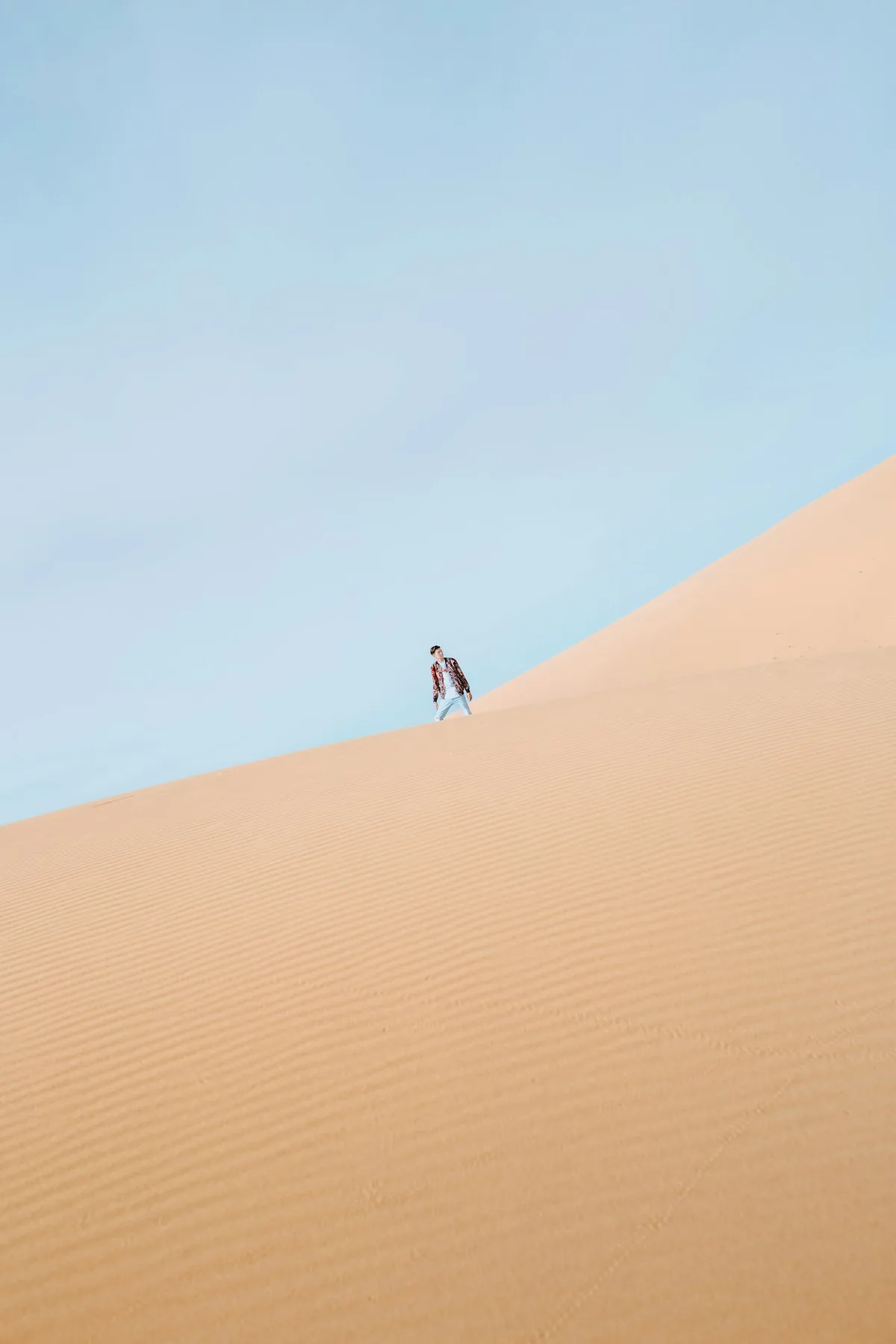
A vast desert in southern Mongolia known for the dinosaur-fossil site at Bayanzag ('Flaming Cliffs'), the towering Khongoryn Els sand dunes, and the ice-filled Yolyn Am gorge.
 Multi-Day Tours
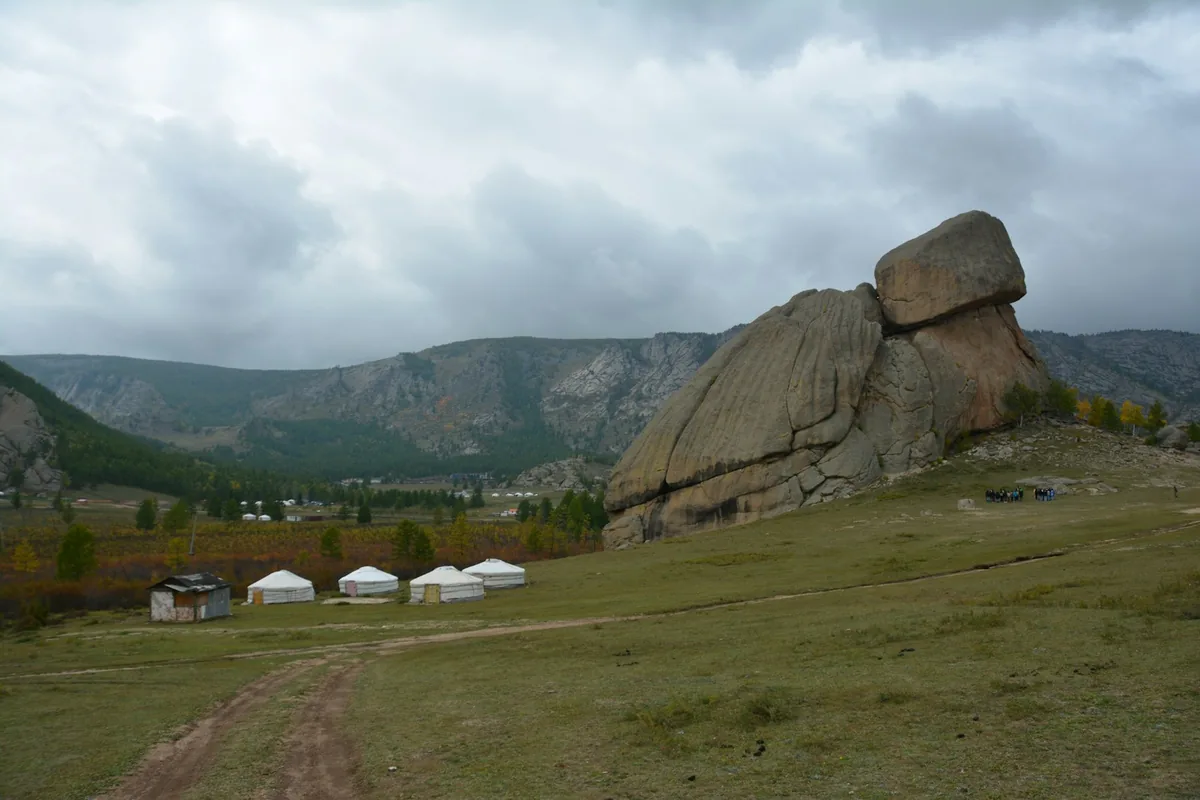
An 8-day trip pairing Ulaanbaatar's sights and the Gobi Gurvan Saikhan National Park's Flaming Cliffs and sand dunes with the opening ceremony of Mongolia's Naadam Festival.
 Multi-Day Tours
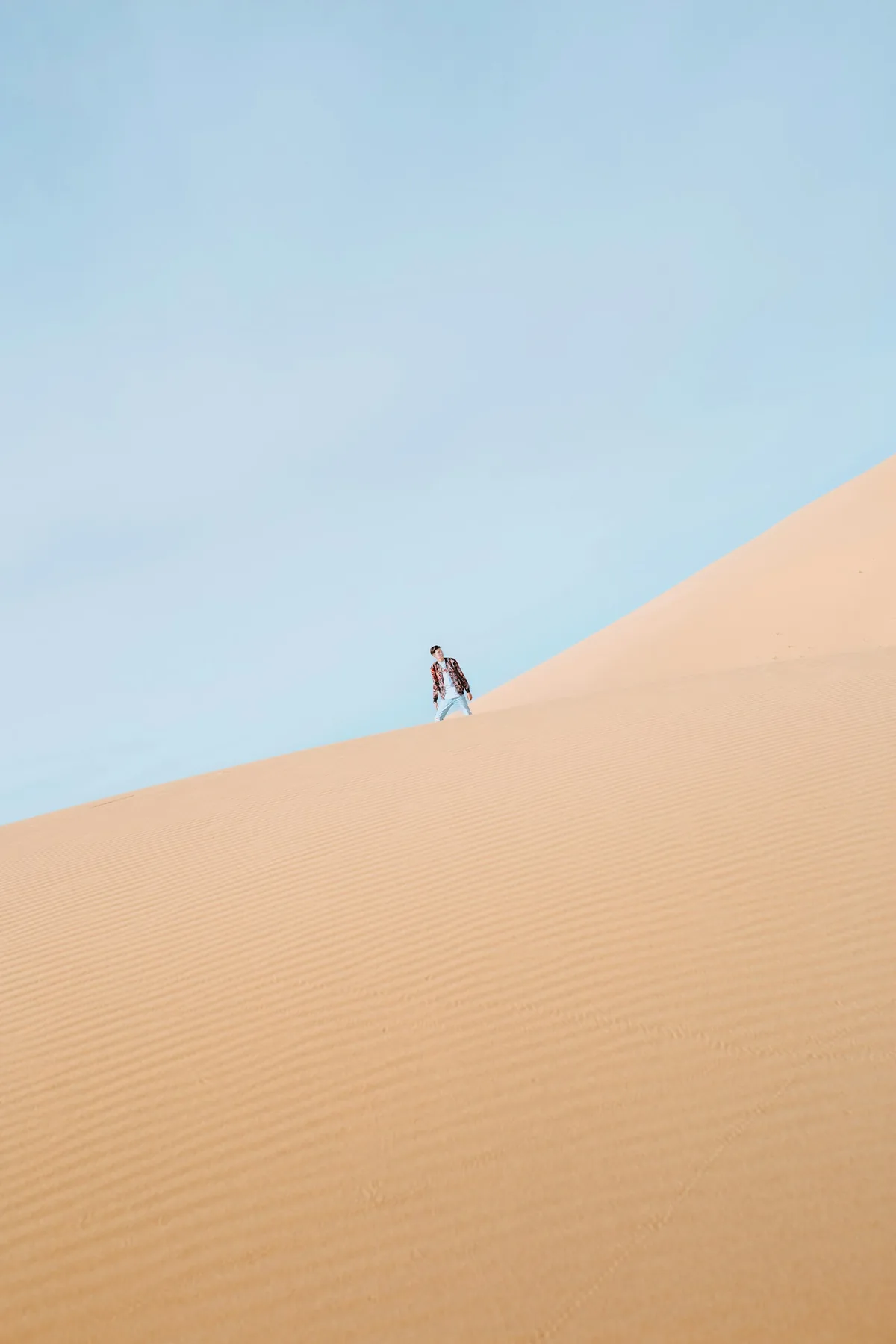
A 10-day route from Ulaanbaatar through central Mongolia's monasteries and nomadic villages to the South Gobi's Flaming Cliffs, Khongor sand dunes, and Yolyn Am gorge.
 Multi-Day Tours
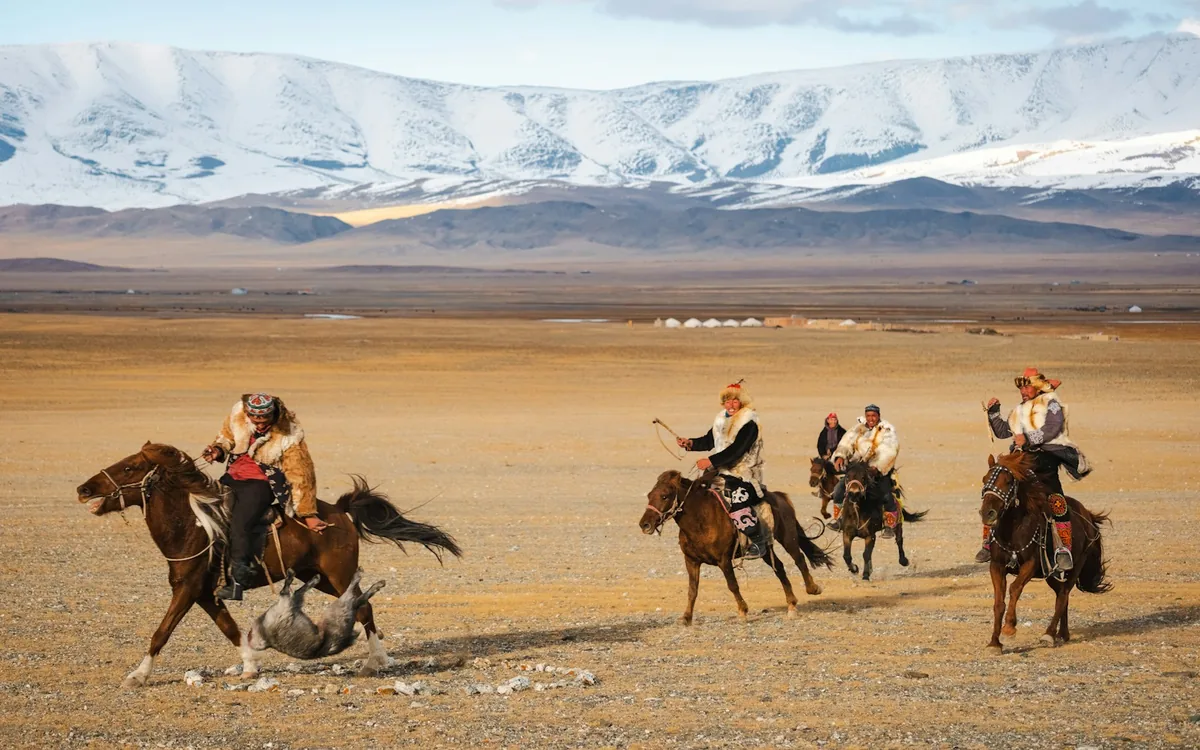
A 14-day route pairing the South Gobi's Flaming Cliffs and singing sand dunes with the Khangai Mountains' Orkhon Valley, remote monasteries, and Hustai National Park's wild horses.
 Multi-Day Tours
A 20-day, full-country traverse — Khövsgöl Lake in the far north, the Orkhon Valley and Khangai Mountains, and the South Gobi's Flaming Cliffs and Khongor dunes, ending at Gorkhi-Terelj.
Visitor guide
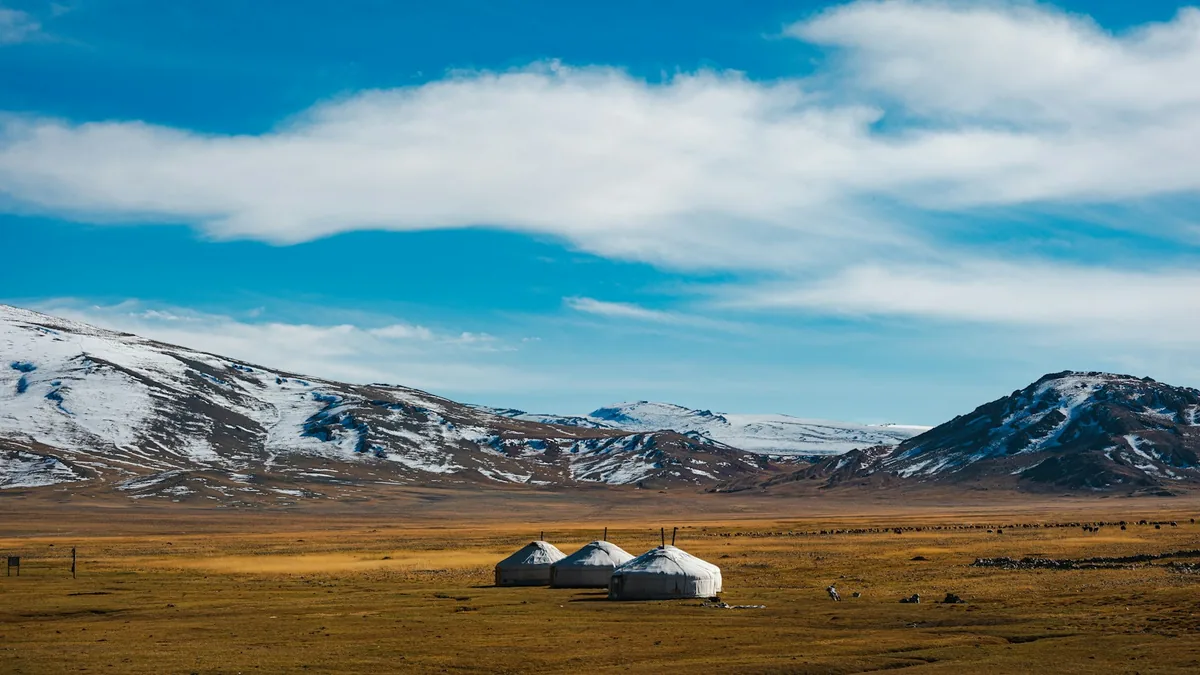
The Gobi Desert is a vast cold desert and grassland region spanning southern Mongolia and northern China. The Mongolian portion is famous for dinosaur fossils at Bayanzag, the Khongoryn Els sand dunes and the ice-filled gorge of Yolyn Am inside Gobi Gurvansaikhan National Park.
According to Wikipedia, the Gobi is the sixth-largest desert in the world, covering roughly 1,295,000 square kilometres and stretching about 1,600 kilometres from southwest to northeast. The name comes from the Mongolian word gov, meaning dryland, a term applied to waterless regions across the Mongolian Plateau. Much of the Gobi is not sandy at all; large areas resemble exposed bare rock or gravel plain.
The desert sits on a plateau roughly 910 to 1,520 metres above sea level, which keeps it cold. Annual rainfall averages about 194 millimetres, mostly in summer, and temperatures can swing from about minus 40 degrees Celsius in winter to around 45 degrees in summer, with daily swings of as much as 35 degrees. Frost and occasional snow can settle even on its dunes.
Vegetation is mostly drought-adapted shrubs such as saltwort and sagebrush, low grasses, and saxaul, a hardy desert shrub that is conspicuous in some areas. Wildlife includes black-tailed gazelles, wild Bactrian camels, Mongolian wild asses known as khulan, and many lizards. Snow leopards, Gobi bears and wolves are described as occasional visitors. Mongolian herders keep camels, sheep, goats and horses, and sacred stone cairns called ovoo mark the landscape.
Bayanzag, also called the Flaming Cliffs, lies in Omnogovi Province. Its red and orange sandstone takes its English name from American paleontologist Roy Chapman Andrews, who visited in the 1920s. The cliffs expose rocks of the Djadochta Formation and are best known as the place where dinosaur eggs were first discovered. Fossils recorded here include Protoceratops, Velociraptor, Oviraptor and Pinacosaurus, along with early mammals studied in a 1969 paper by Zofia Kielan-Jaworowska. Removing fossils without permits is illegal.
The park, established in 1993 and expanded in 2000, covers about 27,000 square kilometres and is described by Wikipedia as the largest national park in Mongolia. It is named for the Gurvan Saikhan Mountains, whose name means Three Beauties. Khongoryn Els, nicknamed the Singing Sands, is a dune field more than 100 kilometres long, with crest heights reported variously, from about 80 metres to about 300 metres, and sand that is said to produce a low sound when it shifts. A small river runs along the northern edge of the dunes and supports pasture for camels and horses.
Yolyn Am, whose name means Lammergeier Valley, is a narrow gorge in the eastern Gurvan Saikhan range. It holds a deep ice field that historically lasted all year, though the modern ice tends to melt away by September. Argali, Siberian ibex, snow leopard and several vulture species live in the area.
Nomadic peoples including Mongols, Uyghurs and Kazakhs have long lived across the region, and trade routes crossed the desert for thousands of years. Explorers such as Nikolai Przhevalsky, Sven Hedin and Roy Chapman Andrews mapped and studied it. Distances between sights are large and tracks are often unpaved, so a private guided visit with a driver suits the scale of the Gobi. The desert is also under pressure from overgrazing and desertification, which Wikipedia attributes mainly to human activity and climate change.
See every tour and attraction we cover in Mongolia.