TorontoOntario · 36 tours
 Niagara FallsOntario · 25 tours
 New York CityNew York · 30 tours
 Las VegasNevada · 8 tours
 San FranciscoCalifornia · 16 tours
 VancouverBritish Columbia · 17 tours
 DubaiUAE · 54 tours
 Abu DhabiUAE · 5 tours
 Buenos AiresArgentina · 23 tours
 AthensGreece · 31 tours
 AucklandNew Zealand · 38 tours
 CancunMexico · 54 tours
No destinations match “”. Try searching all tours instead — that search understands full questions, not just place names.
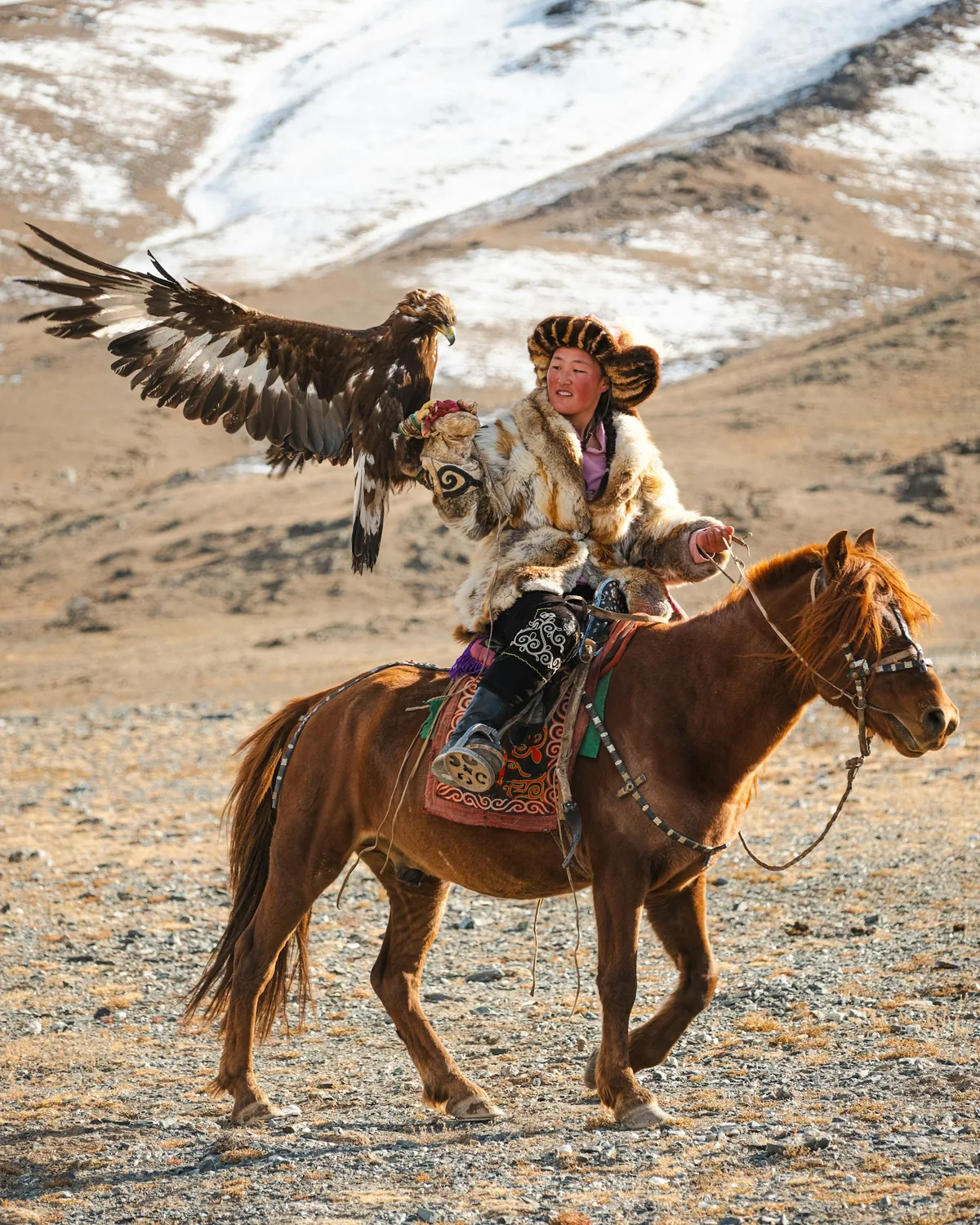
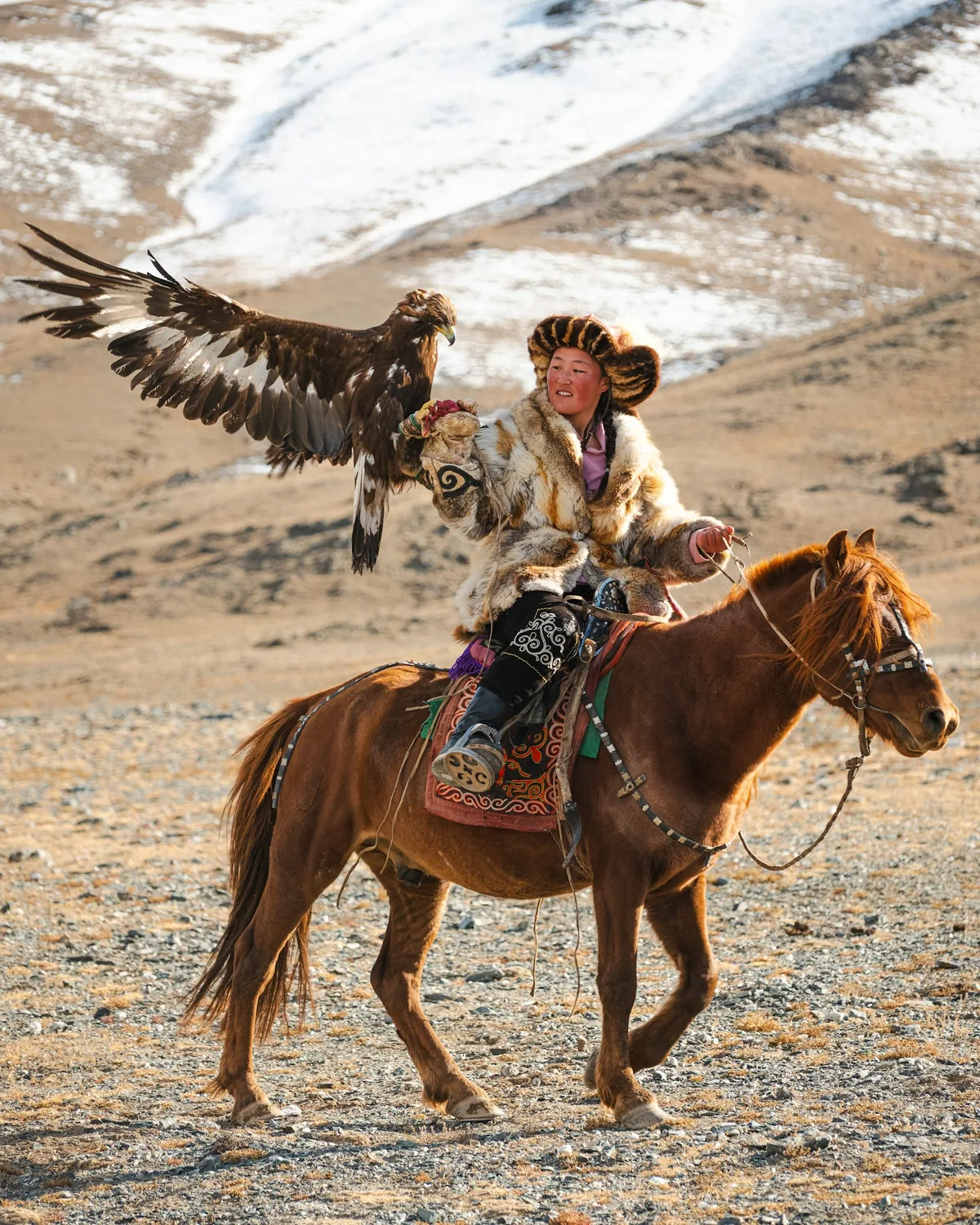
A remote mountain range in far-western Mongolia, home to Kazakh eagle-hunting families and the annual Golden Eagle Festival held near Ölgii.
Visitor guide
The Altai Mountains are a great mountain system where Russia, China, Mongolia and Kazakhstan meet. Their Mongolian section, centred on Bayan-Olgii Province, is home to Kazakh eagle-hunting families and the annual Golden Eagle Festival near the provincial capital Olgii.
According to Wikipedia, the Altai range covers about 845,000 square kilometres and stretches roughly 2,525 kilometres from northwest to southeast. The Irtysh and Ob rivers rise there. The highest peak is Belukha at 4,506 metres on the Russia-Kazakhstan border, followed by Khuiten Peak at 4,374 metres on the Mongolia-China border. Several other Mongolian summits, including Sutai, Monkhkhairkhan and Tsambagarav, exceed 4,000 metres.
The Mongolian Altai, called the Ek-tagh, rises in a steep escarpment from the Dzungarian depression and descends more gently to the Mongolian plateau. Lakes including Uvs, Khyargas, Dorgon and Khar lie in the basins around it, and passes through the range are few and difficult.
Bayan-Olgii, established as a province in 1940, is Mongolia's highest province and its only Kazakh-majority and predominantly Muslim one; Wikipedia gives Kazakhs as about 93 percent of the population. Many Kazakhs settled here to preserve a nomadic way of life during the communist era in Kazakhstan. Animal husbandry is the main economic activity. The province includes Altai Tavan Bogd National Park, covering 6,362 square kilometres, which shelters argali, ibex, red deer, moose and golden eagles. Tolbo Lake, a large saline lake about 50 kilometres south of Olgii, lies at 2,080 metres.
Hunting with trained golden eagles on horseback is a Kazakh tradition across the Eurasian steppe. Wikipedia estimates about 250 eagle hunters work in Bayan-Olgii today. Their main quarry is red and corsac fox, hunted in the cold winter months when foxes are easier to see against the snow. A hunter with an eagle is called a burkitshi.
The Golden Eagle Festival, held each autumn near Olgii and usually in October, showcases eagle handling, traditional dress and horsemanship. Sources differ on its founding year, with one tourism operator citing 1999. An academic study notes that since 2000 the festival has turned falconry partly into a demonstration for visitors. UNESCO's multinational intangible cultural heritage listing for falconry, which covers eagle-hunting traditions and counts Mongolia among its nominating countries, is the usual basis for this claim; the inscription years differ by source.
The wider Altai has a deep human past. Denisova Cave, on the Russian side, yielded the remains of Denisovans, and the region's early herders and Scythian-era graves are well documented. Within Altai Tavan Bogd National Park lies a UNESCO-listed set of Mongolian Altai petroglyph sites, spanning several thousand rock carvings and Turkic monoliths. The Tsagaan Salaa rock paintings alone are reported to include over 10,000 drawings along a river valley.
The Mongolian Altai is remote, with long distances between settlements and rugged terrain. Ölgii has regular air links to Ulaanbaatar, and roads beyond town are often unpaved. A private guided visit with a driver suits the region, particularly for reaching herder camps and festival grounds.
See every tour and attraction we cover in Mongolia.