TorontoOntario · 36 tours
 Niagara FallsOntario · 25 tours
 New York CityNew York · 30 tours
 Las VegasNevada · 8 tours
 San FranciscoCalifornia · 16 tours
 VancouverBritish Columbia · 17 tours
 DubaiUAE · 54 tours
 Abu DhabiUAE · 5 tours
 Buenos AiresArgentina · 23 tours
 AthensGreece · 31 tours
 AucklandNew Zealand · 38 tours
 CancunMexico · 54 tours
No destinations match “”. Try searching all tours instead — that search understands full questions, not just place names.
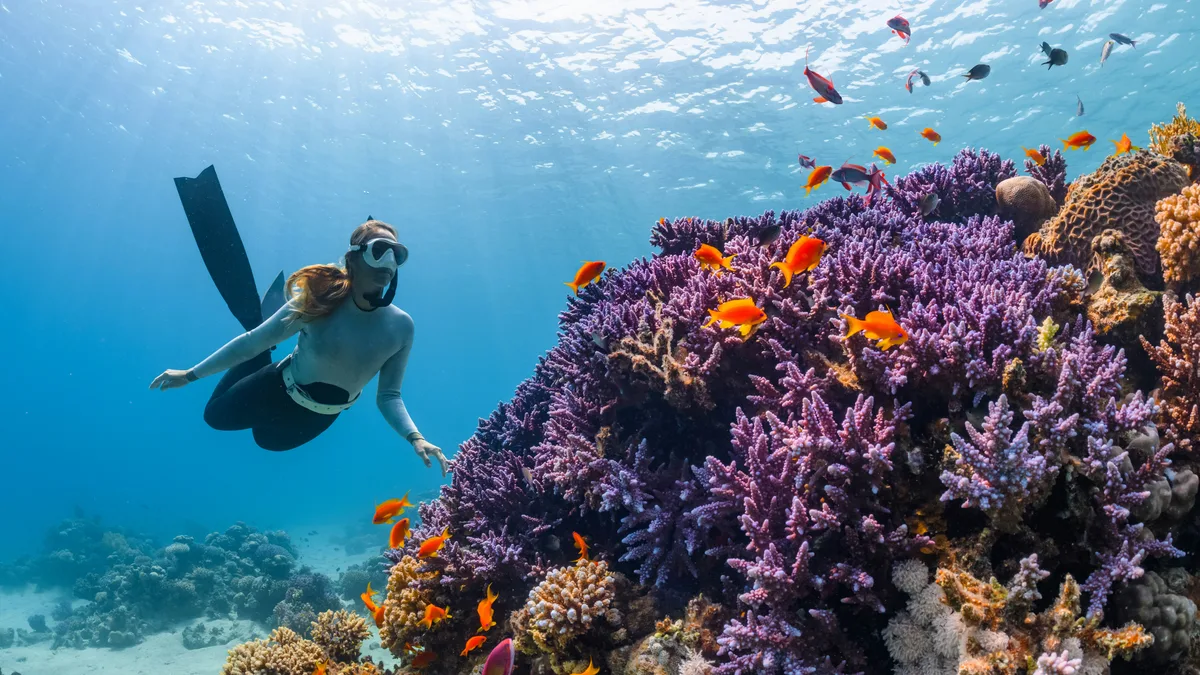
One of Cozumel's most celebrated dive and snorkel sites, Palancar Reef is part of the Mesoamerican Reef, the world's second-largest barrier reef system. Its coral formations include dramatic canyons, caves, and swim-throughs, home to a genuine diversity of tropical fish, sponges, and soft corals in clear Caribbean water.
 Private Tours
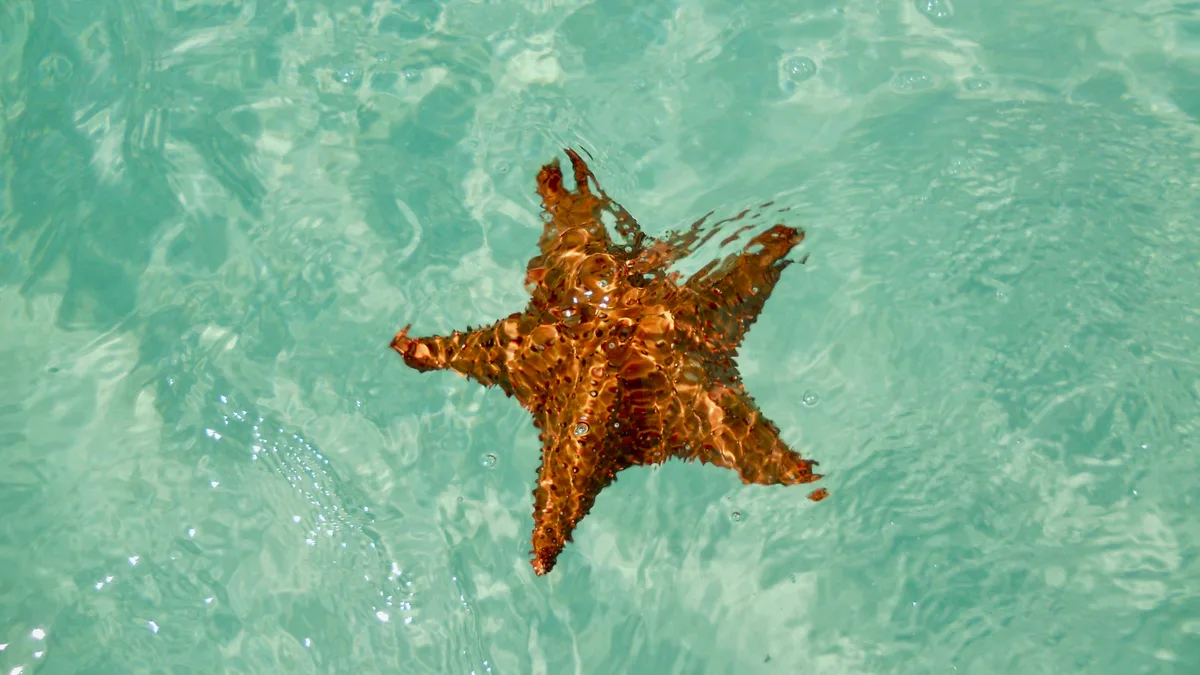
Depart from Money Bar Beach Club on a fully private boat charter to El Cielo's shallow sandbar and the coral gardens of Colombia and Palancar reefs, with a captain and crew dedicated entirely to your own group.
 Private Tours
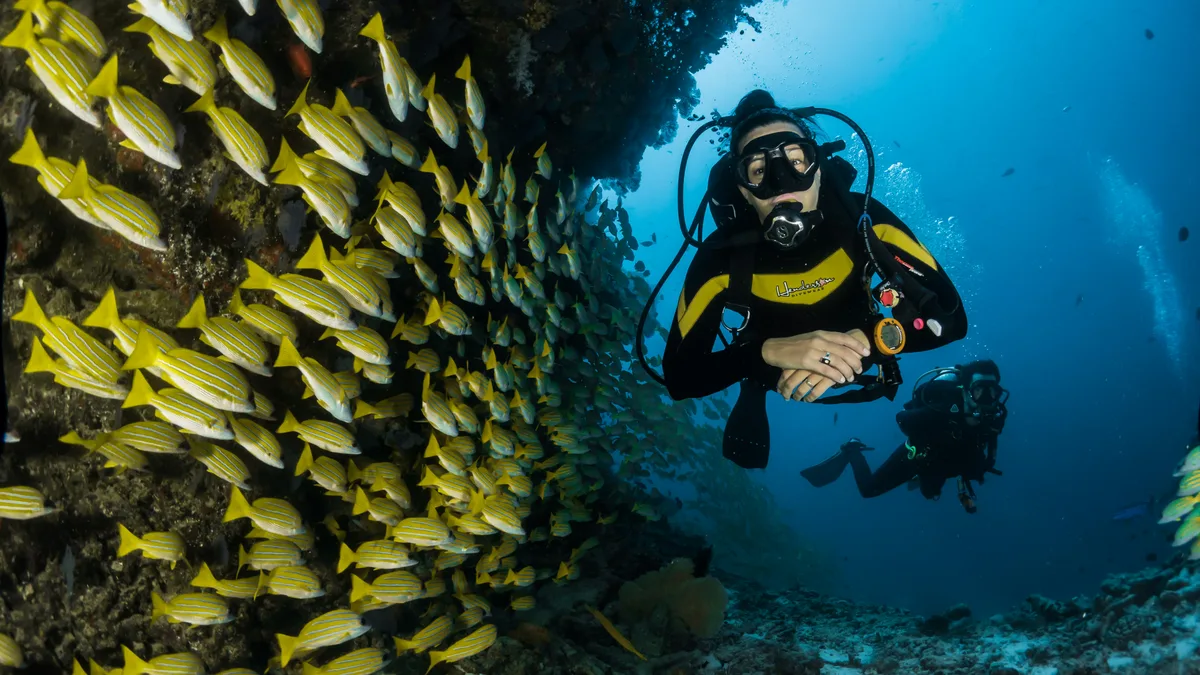
Learn the basics of scuba diving one-on-one with a PADI-certified instructor in a private setting built for complete beginners, then descend along part of Cozumel's famous Mesoamerican Reef.
Visitor guide
Palancar Reef is a large coral reef system on the southwest side of Cozumel island in the Caribbean Sea off Mexico's Yucatan Peninsula. It lies within the Arrecifes de Cozumel National Park and is one of the island's best-known scuba diving destinations.
English Wikipedia describes Palancar as a large coral reef divided into several sections by depth and coral formation, many containing swim-throughs. Dive sections are named Palancar Horseshoe, Caves, Gardens, Shallows and Deep, with dive depths ranging from roughly 15 to 34 metres. Spanish Wikipedia says deep reef formations along the southwestern shelf edge extend over more than nine kilometres, and that the western shelf ends at about 20 to 30 metres before dropping steeply past 400 metres.
Protection began on 11 June 1980, when a federal refuge zone for marine flora and fauna was declared on Cozumel's west coast. The Arrecifes de Cozumel National Park was decreed in the Diario Oficial on 19 July 1996 under President Ernesto Zedillo, according to Spanish Wikipedia. The park is part of the Mesoamerican Reef System, launched through the Tulum Declaration of 5 June 1997, and the park itself was designated a Ramsar site on 2 February 2005; the island's northern mangroves and wetlands were designated separately on 2 February 2009.
Coral species listed for the park include brain coral, fire coral and several black coral species. Fish and other animals recorded include green and spotted morays, trumpetfish, queen and rainbow parrotfish, French angelfish, seahorses, groupers, several sharks and rays, and green, loggerhead and hawksbill turtles. English Wikipedia lists angelfish, barracuda, nurse sharks, ocean sunfish, spiny lobster and yellowtail amberjack for Palancar itself. The splendid toadfish is an endemic species of Cozumel.
A popular story credits Jacques Cousteau with bringing Cozumel's reefs to international attention in 1960. Spanish Wikipedia says this is false and that he did not visit or film there in that period; it credits the filmmaker Rene Cardona with filming the reefs and a 1960s travel article with drawing early tourists. Wikipedia notes that in 2019 the protected-areas commission announced a temporary closure of a reef section for assessment of its health.
According to English Wikipedia, Cozumel's reefs sit mostly on underwater cliffs and are part of the Mesoamerican Barrier Reef System, supporting more than 1,000 marine species including hard and soft corals. Black coral on deeper reefs was once famous but was overharvested from the 1960s to the mid-1990s and, as of 2016, had not recovered. The island itself is about 48 kilometres long and 16 kilometres wide, lies about 19 kilometres from the mainland, and was a Maya port and pilgrimage center devoted to the goddess Ixchel from about 1250 CE.
The same article says Hurricanes Emily and Wilma in 2005 together reduced live coral cover by 56 percent, with Wilma causing much greater damage, and that a deepwater cruise pier built in the 1990s is cited as a reef threat. The national marine park bans touching or removing marine life within its boundaries, and in September 2019 the park began a rotating reef-rest strategy that temporarily closes some reefs to tourism to address stony coral tissue loss disease. Because closures can change, current access should be checked with park authorities rather than assumed.
Palancar is reached by boat from the island's dive operators. A private tour with a driver can handle the transfer to the departure point, with the dives run by certified operators.
See every tour and attraction we cover in Cozumel.