TorontoOntario · 36 tours
 Niagara FallsOntario · 25 tours
 New York CityNew York · 30 tours
 Las VegasNevada · 8 tours
 San FranciscoCalifornia · 16 tours
 VancouverBritish Columbia · 17 tours
 DubaiUAE · 54 tours
 Abu DhabiUAE · 5 tours
 Buenos AiresArgentina · 23 tours
 AthensGreece · 31 tours
 AucklandNew Zealand · 38 tours
 CancunMexico · 54 tours
No destinations match “”. Try searching all tours instead — that search understands full questions, not just place names.
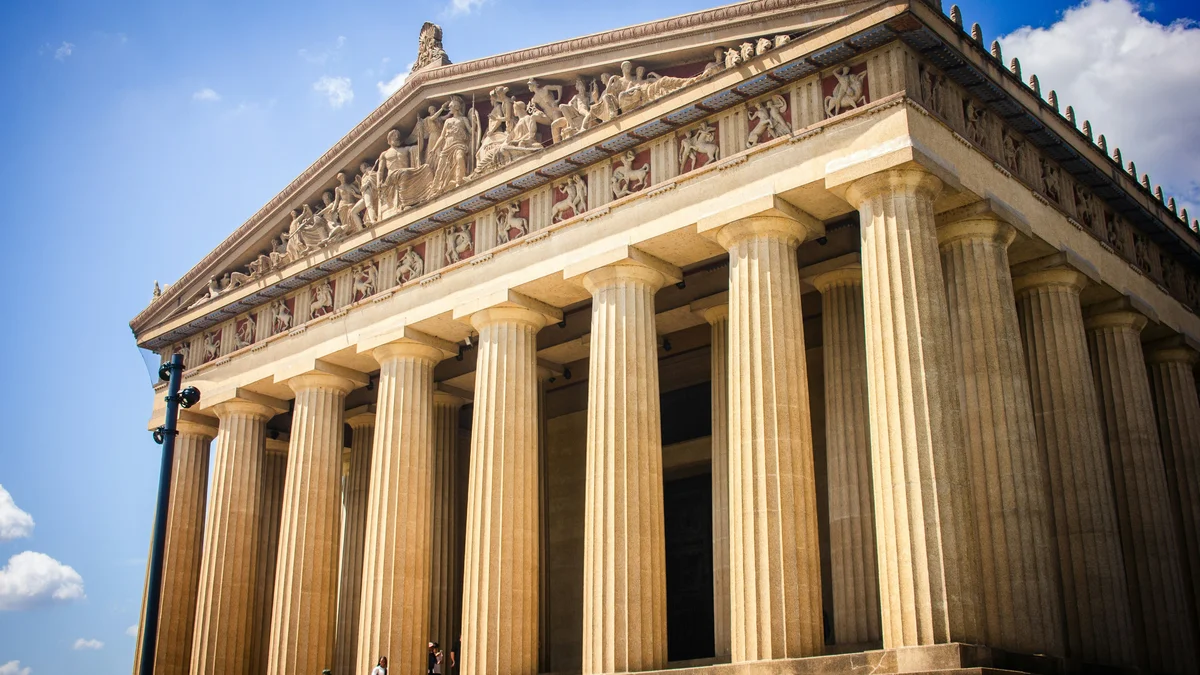
Built in 1897 as the centerpiece of Tennessee's Centennial Exposition, this full-scale replica of the Athenian Parthenon was originally meant to be temporary but proved so popular that Nashville, nicknamed the 'Athens of the South' for its early emphasis on education, rebuilt it in permanent materials in the 1920s. Inside stands a 42-foot gilded statue of Athena, billed locally as among the tallest indoor sculptures in the Western Hemisphere, created by local artist Alan LeQuire. The building now serves as an art museum within Centennial Park, with Doric columns and plaster-cast copies of the pediment sculptures of the original in Greece.
 Private Tours Popular Pick
A private tour for your group only (up to 6 guests), led by a real Nashville singer-songwriter — Centennial Park and the Parthenon, Music Row, Broadway's Honky Tonk Row, 12 South, the Gulch, the Bluebird Cafe, and Marathon Village, plus a private performance from your guide.
 Private Tours
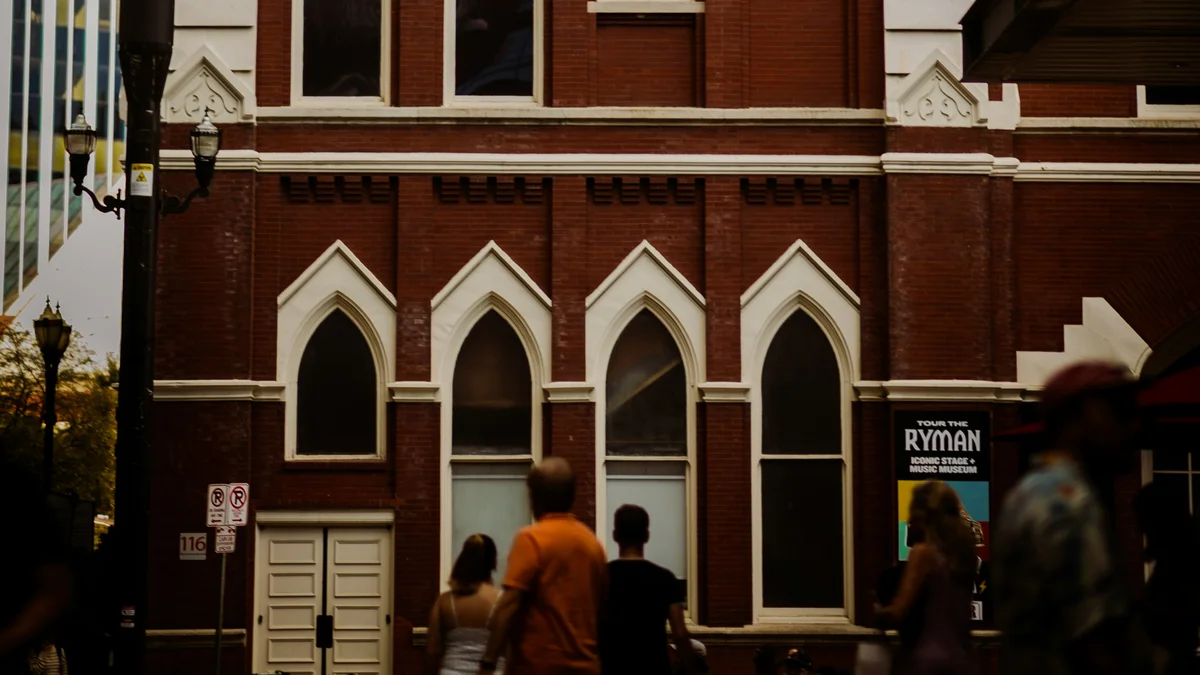
A private, fully customizable tour for your group only — real stops at the Ryman Auditorium, Printer's Alley, and Music Row, with the itinerary built around your own interests.
Visitor guide
The Parthenon in Nashville's Centennial Park is a full-scale replica of the ancient Parthenon in Athens, built for the 1897 Tennessee Centennial Exposition. It now serves as the city's art museum and houses a 42-foot re-creation of the statue of Athena that stood in the original temple. The reproduction is one of the most unusual landmarks in the American South.
By the 1920s the structure had deteriorated and was replaced in lasting materials. Reconstruction began in 1920 on the original foundations, in reinforced concrete and brick, under local architect Russell Hart, who consulted the classical scholar William Dinsmoor on accuracy. The exterior was finished in 1925 and the interior in 1931. The city's walking-tour account describes it as an exact-size, exact-detail replica of the Athenian temple. The building was added to the National Register of Historic Places on February 23, 1972, and the exterior was cleaned and restored in 2001 along with upgraded lighting.
The exposition itself ran in Centennial Park and was themed around Nashville's nickname, the "Athens of the South," a reference to the city's many colleges and universities. The original 1897 building displayed more than 1,000 artworks, and a 40-foot Athena by sculptor Enid Yandell stood in front of its east end.
By the 1920s the temporary structure needed replacing. Reconstruction began in 1920 on the original foundations, this time in concrete, with local architect Russell Hart involved. The exterior was finished in 1925 and the interior in 1931. The building was added to the National Register of Historic Places on February 23, 1972, and the exterior was cleaned and restored in 2001 along with upgraded lighting.
The centerpiece is Alan LeQuire's re-creation of the Athena Parthenos in the naos, the main inner room. It was commissioned in 1982 by the Centennial Park Board, took about eight years and was unveiled on May 20, 1990; according to the Parthenon, the gilding and painting were not finished until 2002. The statue stands 42 feet tall, holds a 6-foot figure of Nike in her hand, and is gilded with more than 8 pounds of gold leaf. Local sources bill it as among the tallest indoor sculptures in the Western Hemisphere. The city's parks department describes both the building and the statue as full-scale replicas of the Athenian originals.
The centerpiece is Alan LeQuire's re-creation of the Athena Parthenos in the naos, the main inner room. It was commissioned in 1982 and unveiled on May 20, 1990, and its gilding and painting were finished in 2002, according to the Parthenon. The statue stands 42 feet tall, holds a 6-foot figure of Nike in her hand, and is gilded with more than 8 pounds of gold leaf. The city's parks department describes both the building and the statue as full-scale replicas of the Athenian originals.
The Parthenon's sculptural decoration includes plaster casts of the Parthenon Marbles, copies of the pediment sculptures that adorned the Athenian temple around 438 B.C. The originals are in the British Museum in London.
The lower level holds the permanent Cowan Collection, 63 paintings by nineteenth- and twentieth-century American artists, donated by James M. Cowan between 1927 and 1929. Additional galleries host temporary exhibitions.
See every tour and attraction we cover in Nashville.