TorontoOntario · 36 tours
 Niagara FallsOntario · 25 tours
 New York CityNew York · 30 tours
 Las VegasNevada · 8 tours
 San FranciscoCalifornia · 16 tours
 VancouverBritish Columbia · 17 tours
 DubaiUAE · 54 tours
 Abu DhabiUAE · 5 tours
 Buenos AiresArgentina · 23 tours
 AthensGreece · 31 tours
 AucklandNew Zealand · 38 tours
 CancunMexico · 54 tours
No destinations match “”. Try searching all tours instead — that search understands full questions, not just place names.
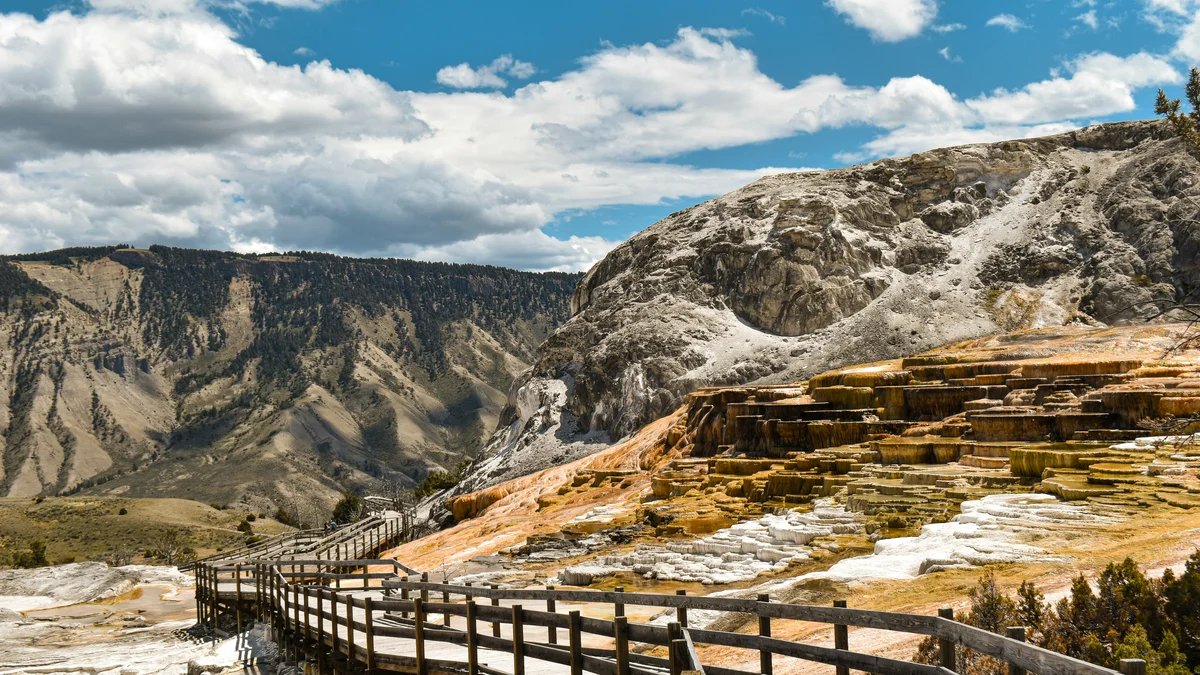
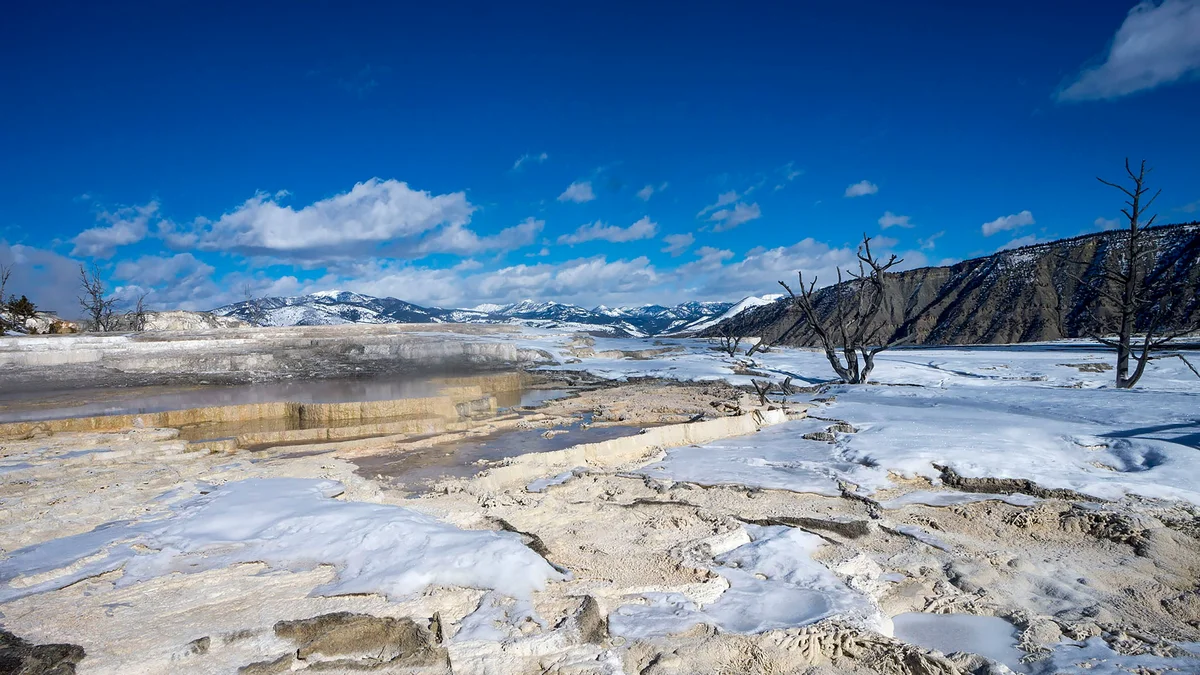
Mammoth Hot Springs sits near Yellowstone's North Entrance and is built from limestone rather than the volcanic rock found elsewhere in the park, which is why its terraces form in ever-shifting, travertine-white and mineral-stained layers. Hot water dissolves the limestone underground and deposits it on the surface as it cools, so the terraces are constantly changing shape, sometimes within months. Boardwalks wind through both the Lower and Upper Terraces, and the area is also a common spot to see elk grazing right in the historic Fort Yellowstone grounds nearby.
Visitor guide
Mammoth Hot Springs is a complex of steaming white terraces in the north of Yellowstone National Park, built not from the silica that surrounds most of the park's geysers but from travertine, a calcium carbonate rock. It sits at about 6,735 feet (2,053 metres) beside the buildings of Fort Yellowstone.
The National Park Service explains that most of Yellowstone's thermal formations are siliceous sinter and geyserite, while the Mammoth terraces are travertine. Hot water carrying dissolved carbon dioxide forms a weak acid that dissolves limestone underground. When the water reaches the surface, carbon dioxide escapes and calcium carbonate settles out as chalky white rock. Wikipedia adds that the water travels along a fault from the Norris Geyser Basin area and cools to about 170 degrees Fahrenheit (80 degrees Celsius) before emerging; the NPS notes that scientists have suggested either the main Yellowstone magma chamber or a smaller nearer heat source.
The deposits grow quickly. A 2010 article in the NPS publication Yellowstone Science reported travertine forming at about 5 millimetres per day, with one monitored site gaining 0.3 to 0.6 metres in ten months, and described the terraces as up to 73 metres thick and covering more than 4 square kilometres. Wikipedia describes Terrace Mountain as considered the largest carbonate-depositing spring in the world, a superlative worth treating with caution.
Individual springs here switch on and off, and their flow can wander from one part of the hillside to another. The NPS notes that Mound Terrace was inactive for decades before it began flowing again. Dry terraces turn grey as they weather while active ones stay bright white, so the hillside looks different from one trip to the next. Colour in the warm runoff comes from algae and bacteria that tint the travertine brown, orange, red and green.
The NPS reports that for hundreds of years Shoshone and Bannock people collected minerals from the terraces to make white paint. Fort Yellowstone and the Mammoth Hotel stand on Hotel Terrace, an older terrace formation, and sinkholes on the Parade Ground are a reminder that the ground beneath is still thermally active. Wikipedia lists around 70 named springs and terraces, among them Liberty Cap, Cleopatra Terrace and Orange Mound Spring.
Boardwalks cover both the Lower and Upper Terraces. The NPS describes the Upper Terrace trailhead as giving close views of Dryad, Canary, Grassy and Cupid springs. The NPS advises that most of these boardwalks are not maintained during winter, so check its pages for current access, trail conditions and any closures. Stay on the boardwalks: the travertine is fragile and the ground can be hot and unstable.
For a private tour, a Voyzo vehicle and driver with door-to-door pickup can make the northern part of the park straightforward to combine with other stops, and your group can walk the terraces at its own pace.
See every tour and attraction we cover in Yellowstone National Park.