TorontoOntario · 36 tours
 Niagara FallsOntario · 25 tours
 New York CityNew York · 30 tours
 Las VegasNevada · 8 tours
 San FranciscoCalifornia · 16 tours
 VancouverBritish Columbia · 17 tours
 DubaiUAE · 54 tours
 Abu DhabiUAE · 5 tours
 Buenos AiresArgentina · 23 tours
 AthensGreece · 31 tours
 AucklandNew Zealand · 38 tours
 CancunMexico · 54 tours
No destinations match “”. Try searching all tours instead — that search understands full questions, not just place names.
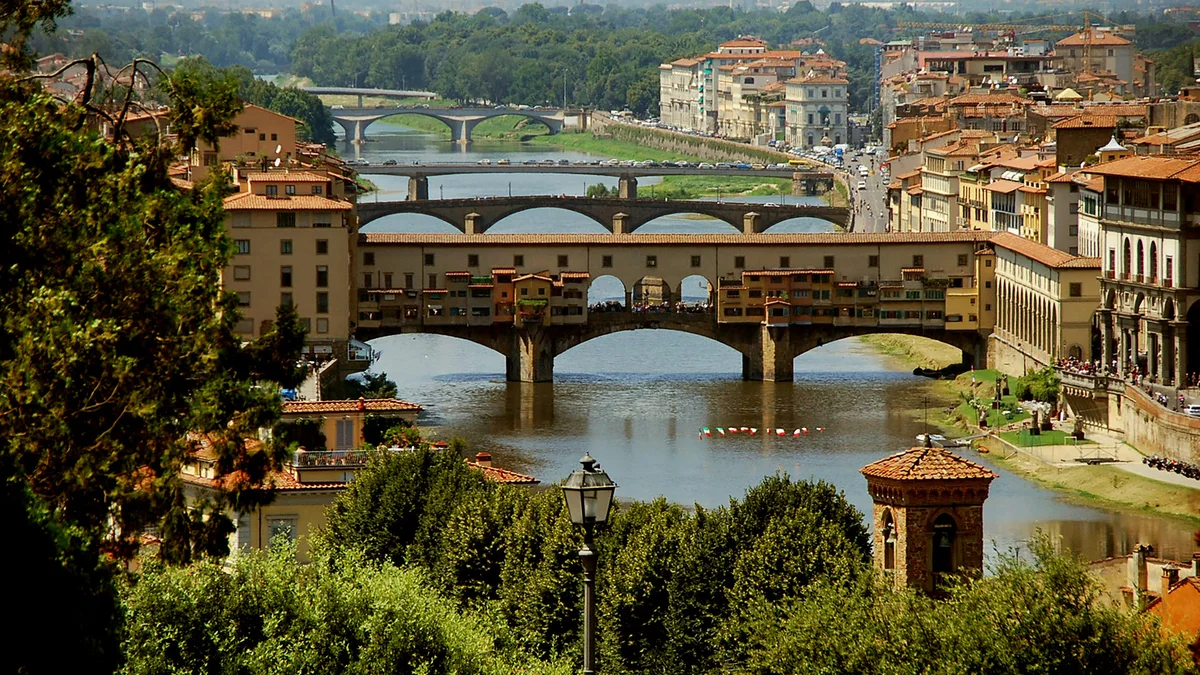
Florence's oldest bridge spanning the Arno River, the Ponte Vecchio has been lined with shops since medieval times, historically housing butchers and now home to jewelers and goldsmiths. It is the only bridge in Florence to survive the German army's demolitions during World War II, and its elevated Vasari Corridor once let the Medici family cross the river unseen.
Visitor guide
The Ponte Vecchio, meaning Old Bridge, is a medieval stone bridge over the River Arno in Florence, Italy. Wikipedia describes it as the only bridge in Florence spared from destruction during World War II, and it is noted for the shops built along it. It connects the area around the Piazza della Signoria and the Duomo with the Oltrarno district and the Palazzo Pitti.
The bridge spans the Arno at its narrowest point, where a bridge is believed to have been built in Roman times when the Via Cassia crossed the river. The Roman piers were of stone and the superstructure of wood. The bridge first appears in a document of 996, was destroyed by a flood in 1117 and rebuilt in stone, and was swept away again in 1333 except for two of its central piers. It was rebuilt in 1345, and the current bridge has stood since about 1339 to 1345. A dedication stone under a small loggia records the flood and the rebuilding.
The name Old Bridge came into use when the Ponte alla Carraia, then called the New Bridge, was built nearby. Giorgio Vasari attributed the design to Taddeo Gaddi, but modern historians suggest Neri di Fioravanti as a possible builder. The bridge has three shallow segmental arches, the main arch spanning about 30 metres and the side arches about 27 metres each.
The bridge has always hosted shops and merchants. Butchers, tanners and farmers first occupied them. In 1593 a decree by Grand Duke Ferdinando I excluded butchers, so that only goldsmiths and jewellers could trade there, a rule Wikipedia says remains in effect. The back shops visible from upriver were added in the seventeenth century. Today the tenants are jewellers, art dealers and souvenir sellers. A bust of the goldsmith Benvenuto Cellini stands on the eastern side, placed there in 1900.
In 1565 Cosimo I de' Medici had Giorgio Vasari build a corridor to connect the Palazzo Vecchio with the Palazzo Pitti, and part of it runs above the Ponte Vecchio. This allowed the Grand Duke and his family to move safely and easily between their official residence and the Pitti.
On 4 August 1944, during the German retreat, all the bridges in Florence were mined and destroyed except the Ponte Vecchio, which according to many locals and guides was spared by an order from Hitler, though Wikipedia presents this as a popular account. Access was blocked by the destruction of buildings at either end, which have been rebuilt. The bridge was severely damaged in the 1966 flood of the Arno.
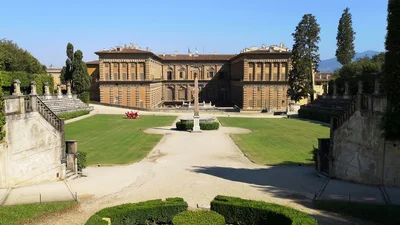
The bridge is closed to vehicles and is crossed by a steady flow of pedestrians because it links the Duomo and Piazza della Signoria on one side with the Oltrarno on the other. A private guided visit with a driver can combine it with the Uffizi, Pitti Palace and Boboli Gardens.
See every tour and attraction we cover in Florence.