TorontoOntario · 36 tours
 Niagara FallsOntario · 25 tours
 New York CityNew York · 30 tours
 Las VegasNevada · 8 tours
 San FranciscoCalifornia · 16 tours
 VancouverBritish Columbia · 17 tours
 DubaiUAE · 54 tours
 Abu DhabiUAE · 5 tours
 Buenos AiresArgentina · 23 tours
 AthensGreece · 31 tours
 AucklandNew Zealand · 38 tours
 CancunMexico · 54 tours
No destinations match “”. Try searching all tours instead — that search understands full questions, not just place names.
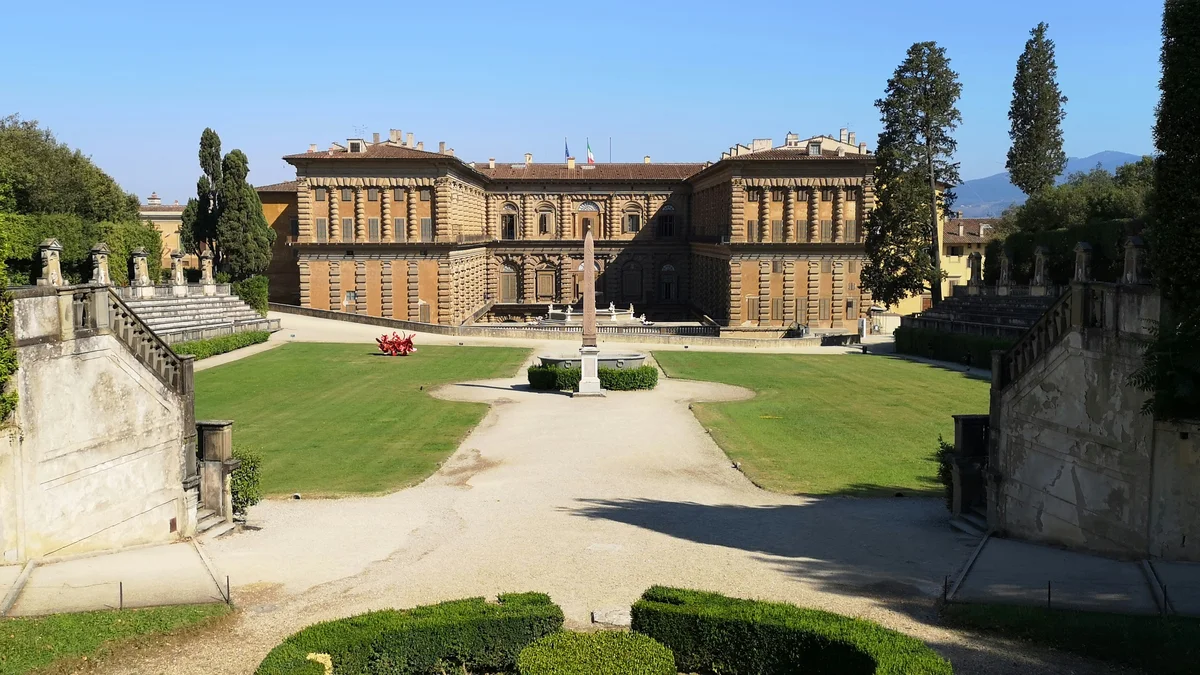
The Pitti Palace, once the residence of the powerful Medici, Habsburg-Lorraine, and Savoy ruling families, now houses the Palatine Gallery's collection of works by Titian, Raphael, and Caravaggio. Behind the palace, the Boboli Gardens is one of Italy's earliest and most influential formal Italian gardens, begun in 1549 with statuary, grottoes, and sweeping views over Florence.
Visitor guide
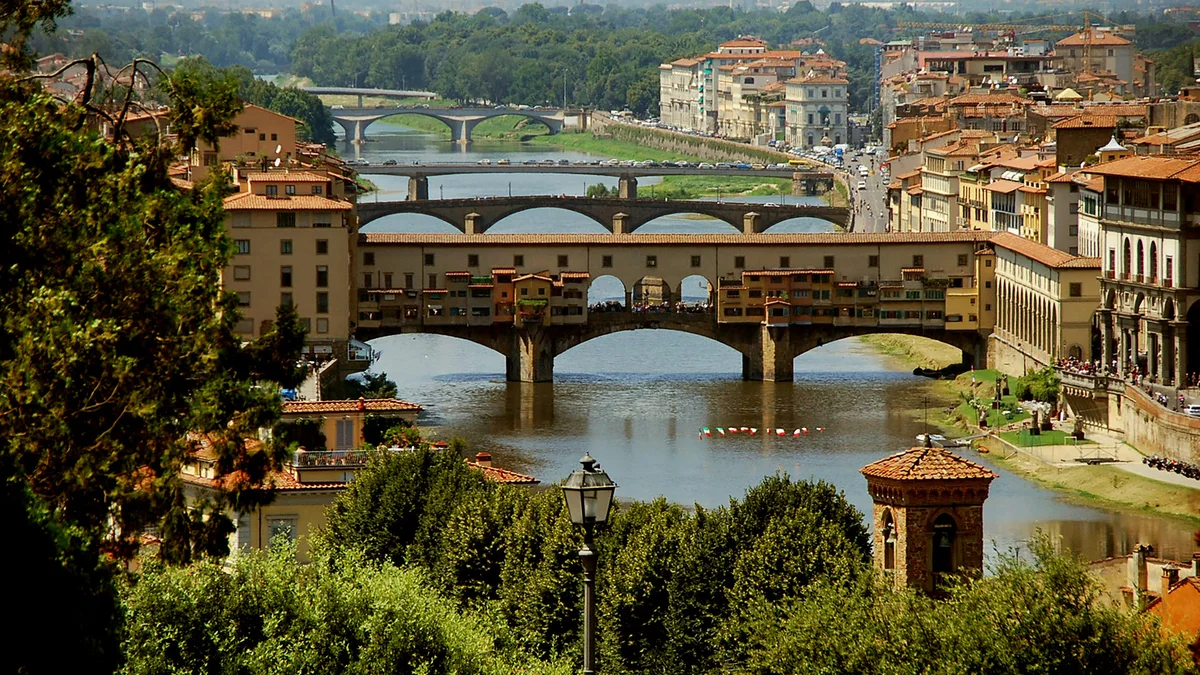
The Boboli Gardens and the Pitti Palace together form one of Florence's major Medici sites on the south bank of the Arno, a short distance from the Ponte Vecchio. The Palazzo Pitti is a vast Renaissance palace that is now the largest museum complex in Florence, and the Boboli Gardens are the large formal park laid out behind it. Both are part of the Historic Centre of Florence, a UNESCO World Heritage Site.
The core of the palace dates from 1458, when the banker Luca Pitti commissioned it. Wikipedia says its early history is a mix of fact and myth, such as the story that Pitti wanted the windows larger than the entrance of the Palazzo Medici. Vasari believed Brunelleschi was the architect, but Brunelleschi died twelve years before construction began and Luca Fancelli is generally credited. Its rusticated stonework and rows of arched windows give a severe, powerful look reminiscent of a Roman aqueduct. Work stopped after Pitti's financial losses, and he died in 1472 with the building unfinished.
The Medici bought the palace in 1549 when it was sold to Eleonora di Toledo, wife of Cosimo I. Cosimo had Vasari enlarge it, more than doubling its size, and Vasari also built the Vasari Corridor linking the Palazzo Vecchio to the Pitti. It became the permanent home of the Medici under Francesco I. Later it was used by Napoleon, served briefly as a royal palace of united Italy under the House of Savoy, and was donated to the Italian people by King Victor Emmanuel III in 1919.
The palace is now divided into several museums. The Palatine Gallery holds over 500 principally Renaissance paintings, with works by Raphael, Titian, Perugino, Correggio and Rubens, and is still displayed like a private collection rather than chronologically. Pietro da Cortona frescoed the grand ducal reception rooms, the Planetary Rooms, in the high Baroque style. Other sections include the Royal Apartments, the Gallery of Modern Art, the Treasury of the Grand Dukes, the Porcelain Museum, the Costume Gallery and the Carriages Museum.
The Boboli Gardens were laid out as the garden of the Pitti Palace in the mid-16th century for Eleonora di Toledo. Niccolo Tribolo began the work and died in 1550, and Bartolomeo Ammannati continued it, with Vasari and Bernardo Buontalenti contributing. According to Wikipedia, they are among the first formal 16th-century Italian gardens and influenced aristocratic gardens across Europe. The gardens were enlarged in the 17th century to their present extent of roughly 30 hectares, according to Italy's national tourism portal.
The main axis rises from an amphitheatre behind the palace to the Fountain of Neptune, nicknamed the Fountain of the Pitchfork. An Egyptian obelisk stands in the amphitheatre. A long cypress avenue, the Viottolone, leads to the Isolotto, an oval island pond with the Fountain of the Ocean. Garden grottoes, including the Large Grotto completed between 1583 and 1593 by Ammannati and Buontalenti, show Mannerist design and once housed Michelangelo's Prisoners, now replaced by copies.
The gardens climb the Boboli Hill, so there are slopes and steps, and the grounds are extensive. A private guided visit with a driver can help you decide how much of the palace and the gardens to see.
See every tour and attraction we cover in Florence.