TorontoOntario · 36 tours
 Niagara FallsOntario · 25 tours
 New York CityNew York · 30 tours
 Las VegasNevada · 8 tours
 San FranciscoCalifornia · 16 tours
 VancouverBritish Columbia · 17 tours
 DubaiUAE · 54 tours
 Abu DhabiUAE · 5 tours
 Buenos AiresArgentina · 23 tours
 AthensGreece · 31 tours
 AucklandNew Zealand · 38 tours
 CancunMexico · 54 tours
No destinations match “”. Try searching all tours instead — that search understands full questions, not just place names.
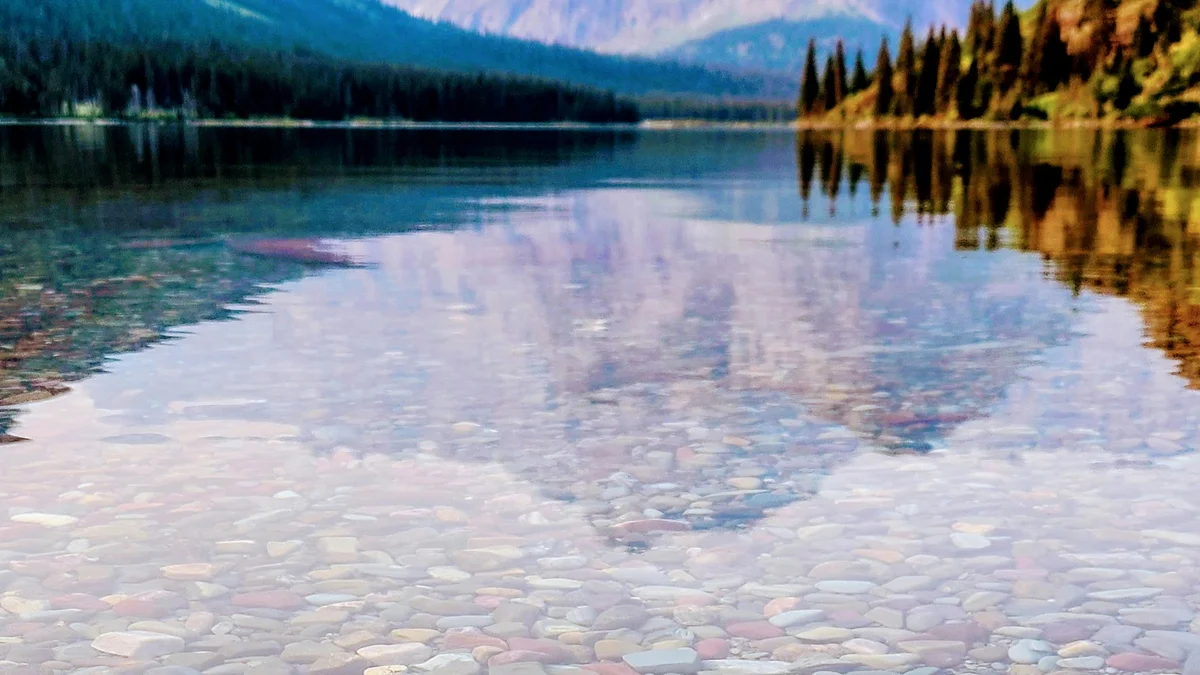
Carved out by glaciers and stretching nearly 10 miles, Lake McDonald is the largest lake in Glacier National Park and one of its most photographed spots. Its exceptionally clear water reveals a colorful bed of smooth stones near the shore, with the peaks of the Livingston Range rising directly behind it, and the historic Lake McDonald Lodge sits along its eastern shore.
Visitor guide
Lake McDonald is the largest lake in Glacier National Park, Montana, about 10 miles long and more than a mile wide, covering roughly 6,800 acres (the National Park Service lists 6,875) on the park's west side. Going-to-the-Sun Road follows its southern shore, which makes it the easiest of the park's big lakes to reach.
The lake sits at about 3,153 feet and fills a valley shaped by a combination of erosion and glacial activity. The National Park Service gives the maximum depth as about 464 feet (141 m); some other sources cite 472 feet (144 m), so treat it as approximate. Streams feed the lake, and McDonald Creek drains it toward the Middle Fork of the Flathead River. Dense forest of spruce, fir, and larch surrounds the water.
The National Park Service says the Kootenai name translates as roughly "Sacred Dancing," possibly referring to ceremonies held near the foot of the lake; Wikipedia gives the Kootenai name as the Place Where They Dance. The present name probably honors the trader Duncan McDonald, who carved his name on a nearby tree in 1878.
In the 1890s, settlers and entrepreneurs began catering to visitors. Milo Apgar and Charlie Howe offered cabins, meals, pack horses, and boat trips around 1892 at the foot of the lake, the area still called Apgar. George Snyder built the Snyder Hotel at the head of the lake in 1895, and visitors reached it by steamboat. John and Oliver Lewis bought the hotel in 1906 and converted it into a general store.
The Lewises built a new lodge in winter 1913-1914 from local stone and western red cedar, hauling materials by boat or sled across the frozen lake. According to the NPS, the Swiss-inspired design has 65 rooms, and because no road reached it until 1921, the front faces the water to greet guests arriving by boat. Lewis sold the lodge to the National Park Service in 1930. It was first the Lewis Glacier Hotel; the name Lake McDonald Lodge came later.
The lake holds westslope cutthroat trout, rainbow trout, bull trout, lake trout, mountain whitefish, kokanee, and other species. Wikipedia notes that the nutrient-poor water is not considered a prime fishing destination. Grizzly bears, black bears, moose, and mule deer live in the surrounding forest and are reported most often on the north shore. Treat every encounter as a wildlife-viewing situation; follow NPS guidance on distances and bear safety.
Apgar, at the lake's western end, has an NPS visitor center. Services, boating, and lodging vary by season, so check the NPS and the lodge's operator for current details. Because Going-to-the-Sun Road is the main access, its seasonal opening and any vehicle reservations affect plans; check the NPS.
A private tour with a driver and door-to-door pickup lets you combine the lake with the rest of the west side of the park at your own pace.
See every tour and attraction we cover in Glacier National Park.